
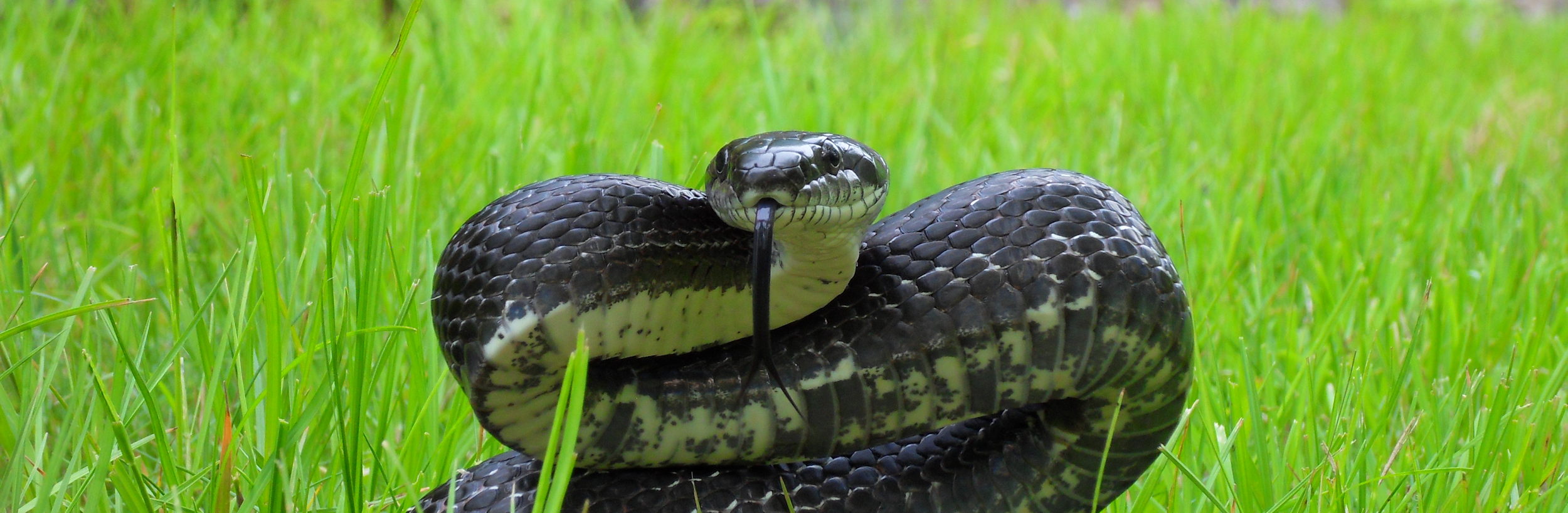
Snake
Danger noodles, squiggly boys, slithery friends, snakes come in many shapes, sizes, and colours throughout the realms.
Basic Information
Anatomy
Snakes are elongated, limbless reptiles. Most have elongated fangs near the front of their mouths, though not all are venomous. They have smooth, flexible scales for skin, which is replaced as the snake grows, flaking off and drying into a hard shell that the snake exits when their new scales are ready.
Being limbless, snakes move with a unique slithering motion, creating a wave shape with their bodies that even allows some to move across shifting surfaces like sand or water. Their eyes are lidless, and characterized by a narrow, vertical pupil in a wide, typically-yellow iris. Their tongues are long, and usually forked at the end, and their jaws are especially flexible, allowing snakes to swallow prey larger than their heads.
Genetics and Reproduction
Most snakes lay eggs in large clutches, but a few give birth to live young.
Ecology and Habitats
Most snakes are cold-blooded, and prefer temperate to tropical environs, becoming sluggish in cold temperatures.
Dietary Needs and Habits
Obligate carnivores, snakes require meat to survive.
Additional Information
Perception and Sensory Capabilities
Adept with their sense of smell, most snakes can "taste" the air with their tongues to better read the scents around them.
Scientific Name
Serpentes
Origin/Ancestry
Beast
Geographic Distribution