

Living Water
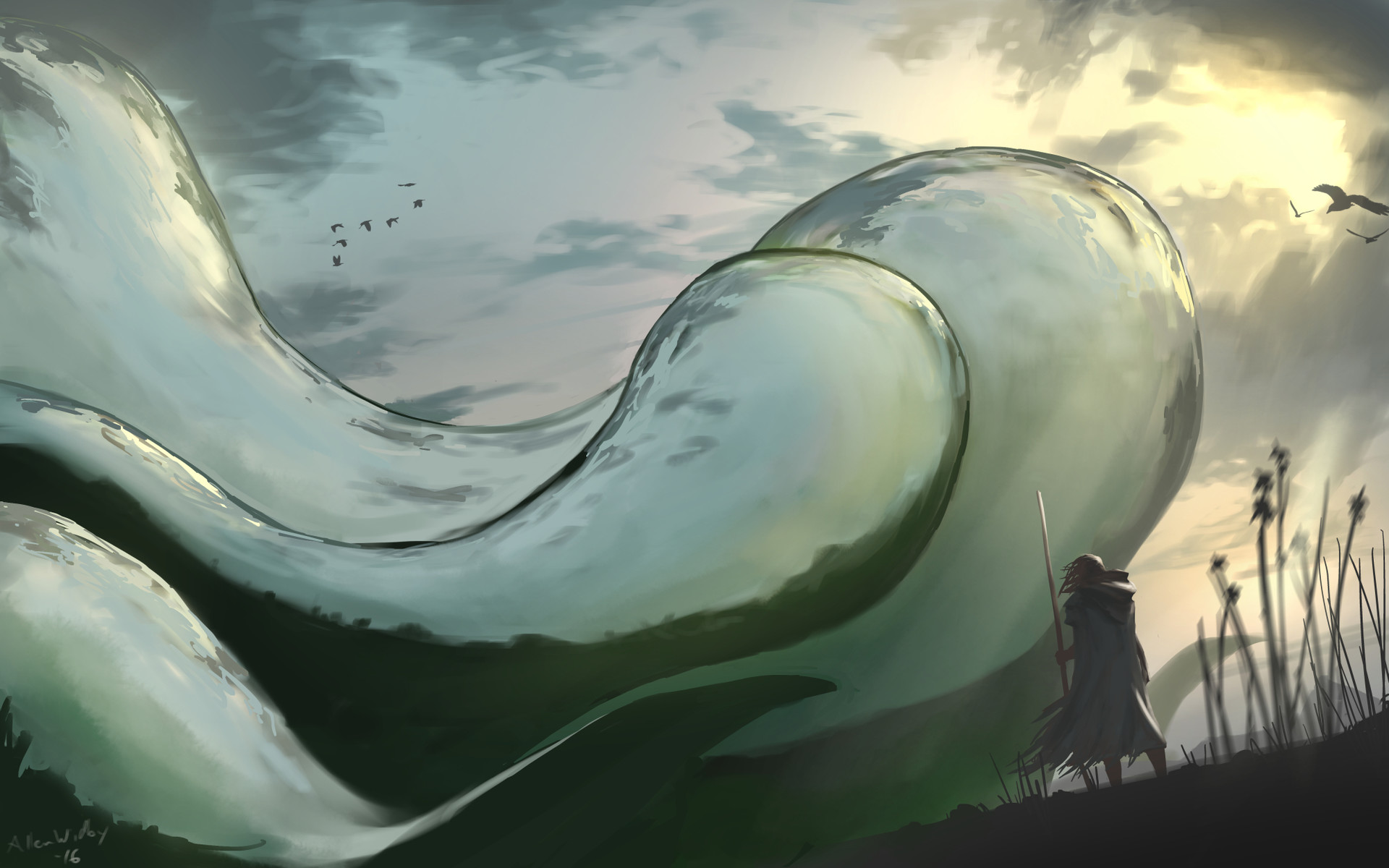
Lurking in standing water and often mistaken for malevolent water elementals, these transparent oozes are sluggish but effective ambushers.
Basic Information
Anatomy
A Living Water's body is homogenous, transparent, and amorphous. They appear to grow relative to the bulk of creatures it has consumed. This body is acidic, and can break down all known organic compounds.
This kind of ooze is especially runny compared to others, but is still able to form its body into tentacle-like pseudopods, which use suction pressure to grasp prey and surfaces.
Mature aballin often have coins or small metal trinkets floating in their bodies. It is thought these function as a lure for intelligent, but avaricious, prey.
This kind of ooze is especially runny compared to others, but is still able to form its body into tentacle-like pseudopods, which use suction pressure to grasp prey and surfaces.
Mature aballin often have coins or small metal trinkets floating in their bodies. It is thought these function as a lure for intelligent, but avaricious, prey.
Ecology and Habitats
Driven as all oozes are by insatiable hunger, living water often lies in ambush in ponds, puddles, tide pools, and other bodies of standing water. They can also lurk in bodies of water that undergo minor movement, such as the eddies of a stream or the edge of a lake, especially if there is vegetation such as reeds or lilies to help hide their presence.
Dietary Needs and Habits
While the ooze primarily targets more animate creatures, living plants have also been observed in its clutches.
Behaviour
This ooze is, like most of its kind, an ambush predator. When prey comes in range of its pseudopods, the ooze attempts to pull it into its body. Smaller prey may be engulfed as the ooze rises in a wave form.
As the living water's acidity is relatively low, creatures that do not need to breathe can usually free themselves, but breathing creatures will drown in the fluidic body.
As the living water's acidity is relatively low, creatures that do not need to breathe can usually free themselves, but breathing creatures will drown in the fluidic body.
Additional Information
Perception and Sensory Capabilities
Whether or not it is a magical ability is debated among naturalists, but the living water's ability to absorb all parts of its victims so completely that its body is not so much as tinted by any remaining matter is utterly uncanny.
Scientific Name
Aballin
Origin/Ancestry
Ooze
Geographic Distribution