
Eleanor de Louis
Of all the many things one might say about Lady Eleanor, what intrigues me most is the quiet nature of her recent behavioral transformation. We are creatures of habit and routine, and as centuries pass, those patterns only deepen. Many would point to her Brujah lineage as the source of her restless spirit, suggesting that change and defiance run in her blood. Perhaps. But such a simple explanation overlooks the complexities of nearly nine centuries spent at the highest echelons of the Camarilla; both as a princess and as a Justicar of her clan.
Not long ago, she left her city behind and retreated to Vienna, where she now holds the position of Primogen; a role that, by all accounts, was bestowed upon her rather than claimed. That subtle shift, more than any overt rebellion, is what keeps me watching. How does a woman who once embodied elegance and tradition now wears defiance like armor, walking as a gothic rebel in a world that values order above all?
"When the world is ruled by monsters, salvation lies in becoming one."
Mortal Years
Eleanor was born in an age when little could survive the erosion of time. What is known of her mortal life comes largely from her own accounts, often wrapped in the assumptions of others. She often wielded her humble beginnings as a badge of pride, particularly in the complicated relationship she shared with Nova Arpad, the blueblood with whom she spent years as both neighbor and uneasy ally.As Eleanor would often tell the Ventrue princess, she had been granted the gift of the night not for her lineage, nor by any hereditary claim, but solely for her skill, her cunning, and her unyielding will. Nova would often laugh at this notion - yet, in time, she admitted that Eleanor was both a worthy ally and a formidable opponent.
Her story begins in southern France, in a village now swallowed by time. There, Eleanor lived as so many orphaned, destitute girls did on the eve of the 12th century: as a commodity, owned by one man and bought by many others. Yet salvation came not in the form of a gallant knight or merciful priest, but in the shape of a woman.
Her name was Catherine d'Avignon: a noblewoman of wealth and poise, who saw in Eleanor what the world had tried to beat out of her: beauty, ambition, and an indomitable will to survive. With quiet intent and the weight of her purse, Catherine bought the girl’s freedom and remade her as a maiden in her service.
Eleanor’s early adulthood unfolded in the perfumed courts of the French aristocracy. She still entertained men, but now only those her patron chose; each encounter no longer an act of survival, but of strategy. Catherine taught her to wield beauty as a blade, to charm and disarm, to draw truths from men without them ever sensing the danger. Most of all, she taught Eleanor the art of asking the right questions. In return, Catherine tightened her grip on power, and Eleanor enjoyed safety, education, and the intoxicating taste of influence.
The Embrace
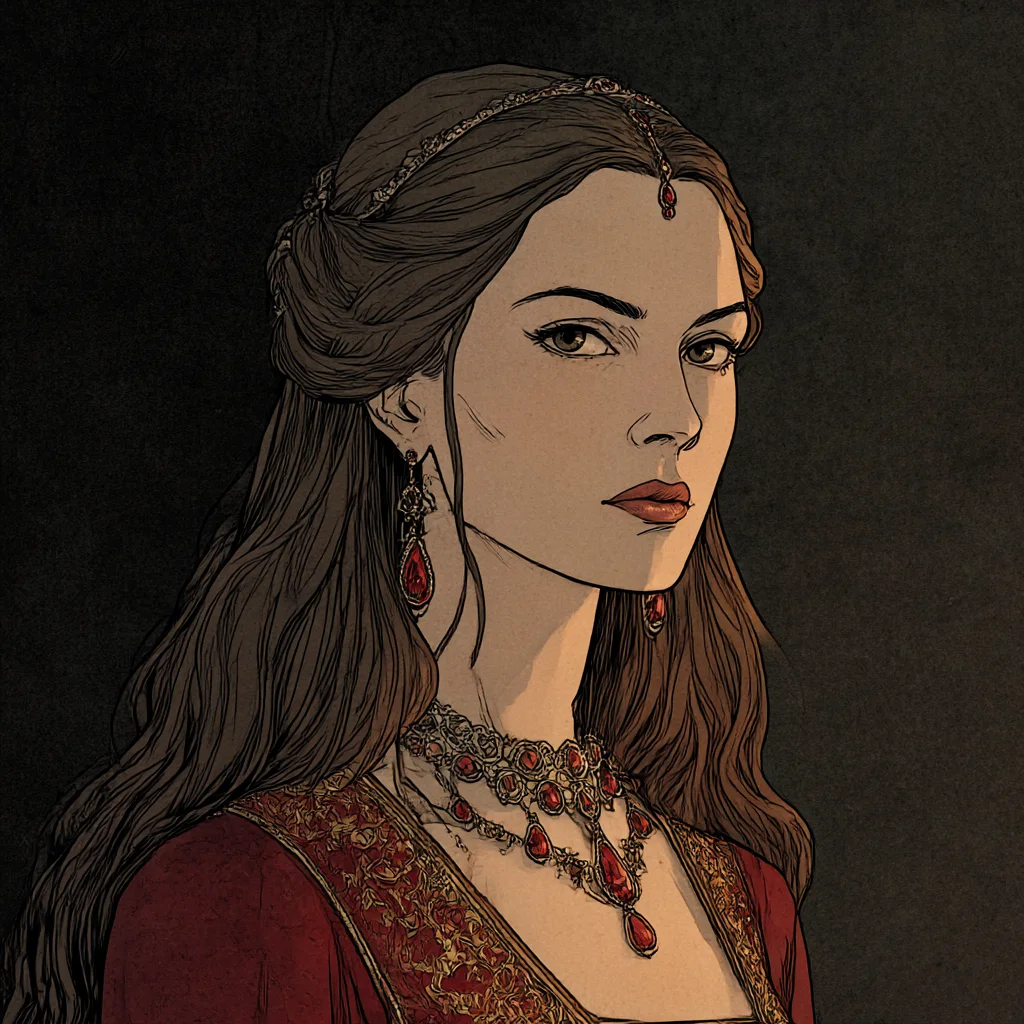
For more than a decade, Eleanor remained at Catherine's side, mastering the etiquette and intrigues of nobility. She learned to read and write, to appreciate art, and to navigate the subtle dances of politics. Eventually, she followed her patron to Lyon, where she had arranged for Eleanor to marry the firstborn son of a local lord; a young man named Michel Gaspard de Lyon.
When their first son was born, Catherine fulfilled the promise she had whispered long ago: she drew Eleanor into the night and embraced her. To the girl from the unmapped village, that moment was no death. It was a long-awaited rebirth: the first breath of unlife that would carry Eleanor de Louis across the centuries.
Early Years
Not long after her Embrace - by most accounts scarcely a decade later - Eleanor left France. At her sire’s command, she traveled to a land unlike anything she had ever known, a place that would shape the course of her entire unlife: Transylvania. The Land Beyond the Forest, as the valley nestled within the bosom of the Carpathian Mountains was then called, could not have been further from the elegance and refinement of her homeland.
Her sire had brokered an arrangement on her behalf, one that promised immense gain for them both; provided the young Brujah succeeded in her mission.

Catherine d'Avignon
ProgenyStella
Michel Gaspard de Lyon
Jean Monroe
Julia Russeau (adopted)
Road/PathPath of Entelechy
The Council of Ashes
Her task came from a fabled vampiric alliance of the region, known simply as the council of Ashes. Born from an initiative of the Ventrue - the clan of the Kings - this council was composed of local princes and Kindred lords bound together by an uneasy pact. Their shared ambition was to bring the ideals and governance of the West to the remote mountains and pagan villages of the Magyar lands.
Eleanor’s orders were clear: she and two other Kindred were to oversee the construction of a tower at the northeastern edge of Transylvania, securing the Tihuta Pass. The council would provide the coin to obtain whatever resources were needed, but the work had to be completed within a year. Success would earn them not only land to rule but perhaps even seats among the alliance of the lords.
It was an opportunity too great to ignore and Eleanor, ever ambitious, would not let it slip from her grasp. Without delay, she set out alongside her new companions: Bishop Christiano Abadelli and Sir Henry. None of them knew it back then, but the three would be bound together for the next nine centuries.
The Tihuta Pass
The castle at Tihuta Pass was, in the end, built. Eleanor and the two Kindred who shared the task liked to present it as a smooth undertaking, yet the truth was far less forgiving. Their trials began the moment they stepped beyond the protection of their patrons, as they soon learned that the land beyond the forest was cold, closed, and hostile to outsiders.
Barely a few days into their journey, the carriage was waylaid near the village of Klausnberg. The assailants came not of chance, but at the order of the area’s own vampiric prince: Mitru the Hunter, a Gangrel with little taste for foreigners. That single strike spoke more plainly than any council debate: not all in the council of Ashes welcomed the western hand upon their soil.
The three might have perished there, had it not been for the chance arrival of another of their kind: a nobleman and diplomat from distant Constantinople, Lord Misa Vykos. He drew them from the wreckage, and guided them toward the stronghold of Count Radu, the most reclusive of the Council’s princes. There, with honeyed phrases and deft turns of promise, Vykos saw to it that the three fell into his debt before resuming his own journey, by lending them the coin they had lost to Mitru’s ambush.
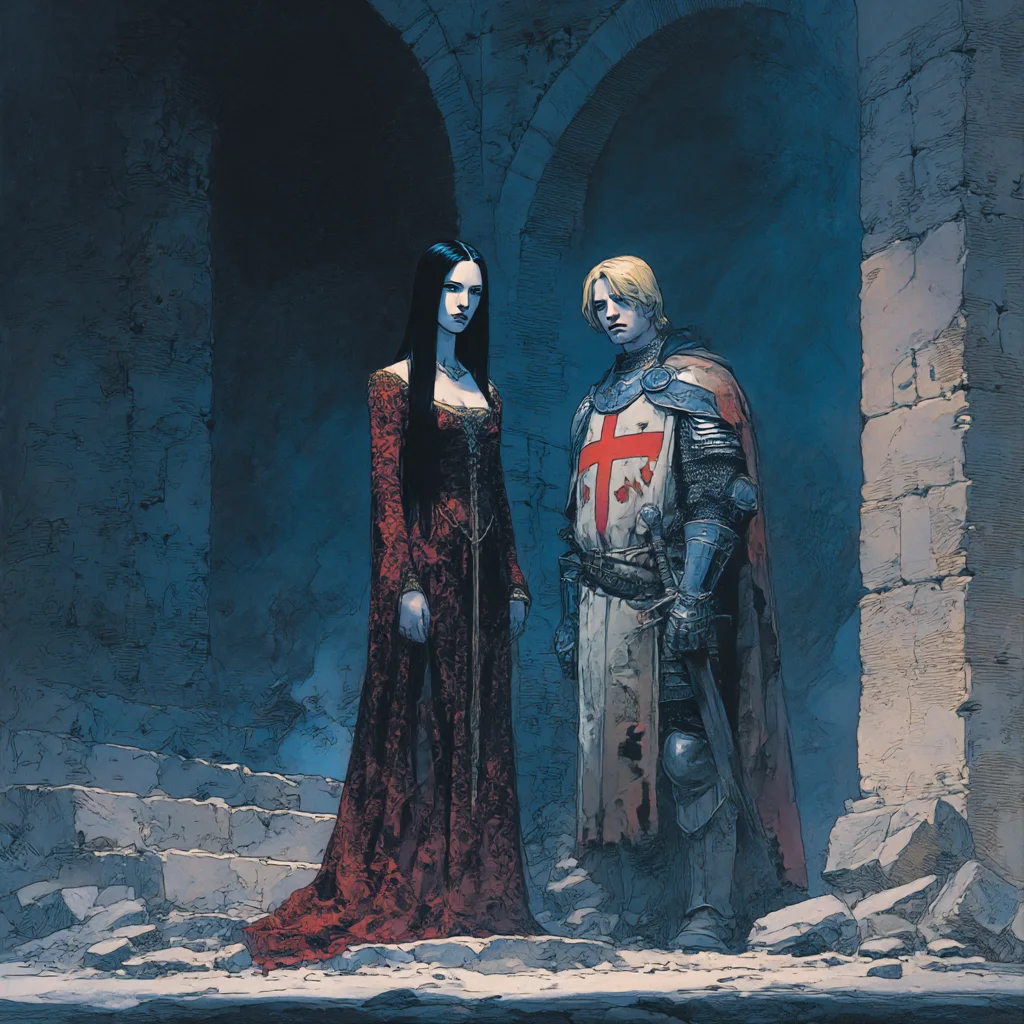
Count Radu, for his part, proved a lord of a different sort: courteous where Mitru was cruel, a keeper of the old civility. It was he who pointed them toward Tihuta Pass. When they arrived, hope stirred once more, only to meet an unexpected complication. Two travelers had already taken shelter in the fort’s ruins, and at least one greeted them as though he had been awaiting their arrival.
God's Chosens
"You are His chosen, and I but a humble servant. In visions, He spoke, and so Lucita and I followed His word to this place. He bid me search, for here I would find the ancient writings He revealed to me. He said they were of great importance… and now I see why, Chosens. It was not only the knowledge of this place I was meant to uncover, but also to find you here."
Whatever Eleanor, Henry, and Christiano unearthed within the ruins of the old fort before the construction of the castle ended remains largely shrouded in mystery. Yet it must have been something of weight, for that single venture was enough to bind the three together as steadfast allies. What is certain is that it was there they first encountered a notorious pair of Kindred: Loucita de Aragón, the shadowed assassin of Iberia, and Anatole, a child of Malkav who swore he was always in the right place at precisely the right time.
The details of that meeting are elusive, yet it undeniably laid the foundation for a bond that would endure for years. Time and again, Anatole would seek out the three, delivering cryptic warnings born of his unsettling visions. Though none could fathom why he insisted on calling them The Chosen, the name took root, shaping their identity and steering their course through Transylvania’s dark heart in the years that followed.
Transylvania: A Land of Secrets
"No matter how I try to describe Transylvania, the words fail me. They always will. For this is a land that can only be understood by setting foot upon it; if, of course, one has the courage. At first, it will frighten you, and rightly so. It is a wild place, so unlike the West that it took me years to attune myself to its rhythm. Refuse to adapt, and it will break you before you even realize it."
Princess of Alba Iulia
When Eleanor first set foot in Bălgrad - the city the council had entrusted her - the place was little more than a fortified village, wary of strangers and hostile to her claim. The Saxons called the place Alba Iulia, and it was under their influence that the Council of Ashes had risen. The land’s native Tzimisce voivodes, ancient vampire warlords who called Transylvania their ancestral seat, saw her as an interloper. They tested her will, plotted her downfall, and waited for her to flee.
She did not.
Over the years, Eleanor weathered intrigue, war, and the eventual dissolution of the council, growing so attached to her city that she often called it her truest home. As centuries passed, Eleanor had outlasted rivals and allies alike, becoming the oldest and most enduring princess of the region. Which is why it remains curious - almost unthinkable - that after the Week of Nightmares a decade ago, she and her closest allies walked away from Alba Iulia without explanation.
Kupala
Many Kindred who have lived in Transylvania, Eleanor included, have spoken in hushed tones of the influence posed by the mysterious Kupala: a restless, probing presence that can unsettle even the most disciplined unlife. Over centuries, Eleanor encountered the strange power of that spirit - or demon - at various points, always sensing its intent and strength. Some nights it whispered; other nights it roared. Whatever its true nature, she and others sought to contain it, wary of what might happen if the force were left unchecked.
"I still burn with the desire to cast Kupala out of Transylvania, yet I know now that this hunger is born of my pride: the vanity of a creature long unmoored from the burden of consequence. I have changed; Christiano was right. [...] And so I ask myself: what sense is there in clinging to the thought of reclaiming a city of merely thirty thousand souls? What toll must I render in the end, to seize something so small, when weighed against the hidden immensity of the world’s true design?"
Master Zelios and Geomancy
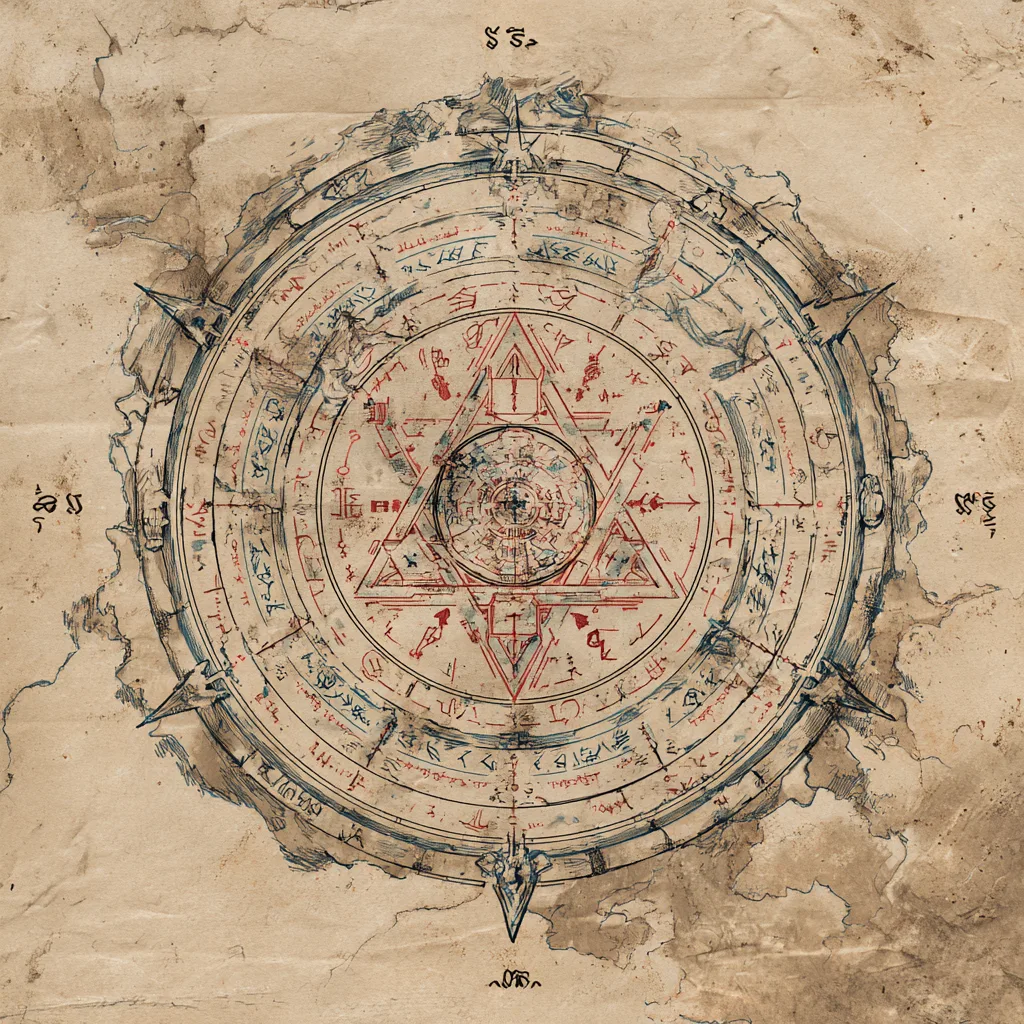
Long before Eleanor fully understood the forces she was entangled with, her life had already brushed against Kupala’s influence. The castle she would eventually rule in Alba Iulia was no ordinary fortress. It had been conceived by a Nosferatu architect named Zelios, a man whose travels had taken him across distant lands, learning their secrets and mastering their arcane geometries. Upon his return, armed with knowledge of geomancy, Zelios marked the first stones of several castles and specific regions of Transylvania, with symbols designed to harness the land itself.
According to legend, these markings combined into a vast geomantic lattice that redirected the region’s leylines, forming a cage intended to contain the strange spirit of Kupala. Eleanor, in her role as ruler, became part of this ancient endeavor. Following the pattern dictated by the geomantic symbols, she traveled to remote and dangerous locations to activate the runes.
These journeys brought her and her allies into contact with some really extraordinary Kindred: some of the eldest Tzimisce, guardians of the land and its secrets, the legendary Count Dracula, and figures wrapped in myth like Tremere himself.
Yet her efforts also drew the gaze of Kupala, a restless and inscrutable force. Over time, Eleanor learned that the spirit was neither fully understood nor easily contained, and that her actions both attracted its attention and restrained its will. Her encounters with Kupala became a defining thread in her reign: a quiet, persistent danger interwoven with her power, her alliances, and her mastery over the lands she ruled.
Relationships
Nine centuries is time enough to shape the fate of kingdoms, let alone the course of a single existence. To imagine how many bonds can be made and unmade in that time is to invite futility. From what I have learned, Lady Eleanor was never one for obscurity as her stature and lineage placed her at the heart of countless intrigues. As a Justicar of the Brujah during the 19th century, and also a member of Adana di Sforza’s bloodline - one of the Seven Founders of the Camarilla - her connections stretched across courts, covenants, and continents.
Her influence in Transylvania spread steadily, reaching deep into Hungary, in perpetual struggle with Nova Árpád, the Ventrue princess who once created the Council of Ashes. On the same time, her dealings with the Tzimisce were no less thorned as Eleanor’s name is whispered even in the tale of Vlad Tepes’ Embrace.
Yet when all others fell away - when courtiers, vassals, and enemies were reduced to dust - two Kindred remained constant in the long nights of her unlife. Christiano and Henry: one a paramour, the other a knight. Together, they were not only companions, but the axis around which her long unlife turned.
The Paramour and the Knight
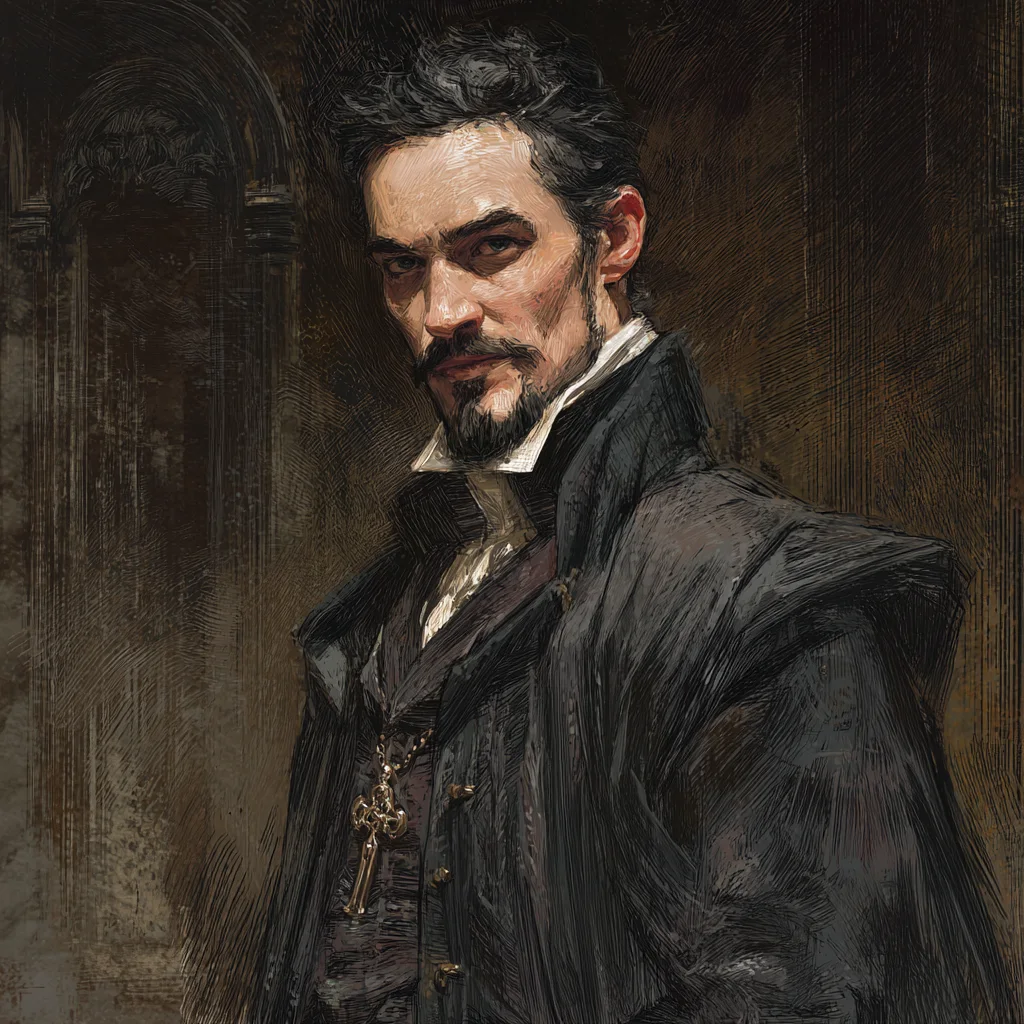
A child of Malkav and a man of the cloth, Christiano carried a mind fractured by a peculiar derangement: an all-consuming sexomania that often led him into scandal. Yet beneath the eccentricity, he was brilliant, kind and endlessly devoted. His bond with Eleanor deepened until thought became a bridge; across centuries they could sense one another, as though tethered by the same unseen vein. Through every triumph and fall, Christiano remained her anchor to humanity, her fiercest advocate, and the love of her immortal life.
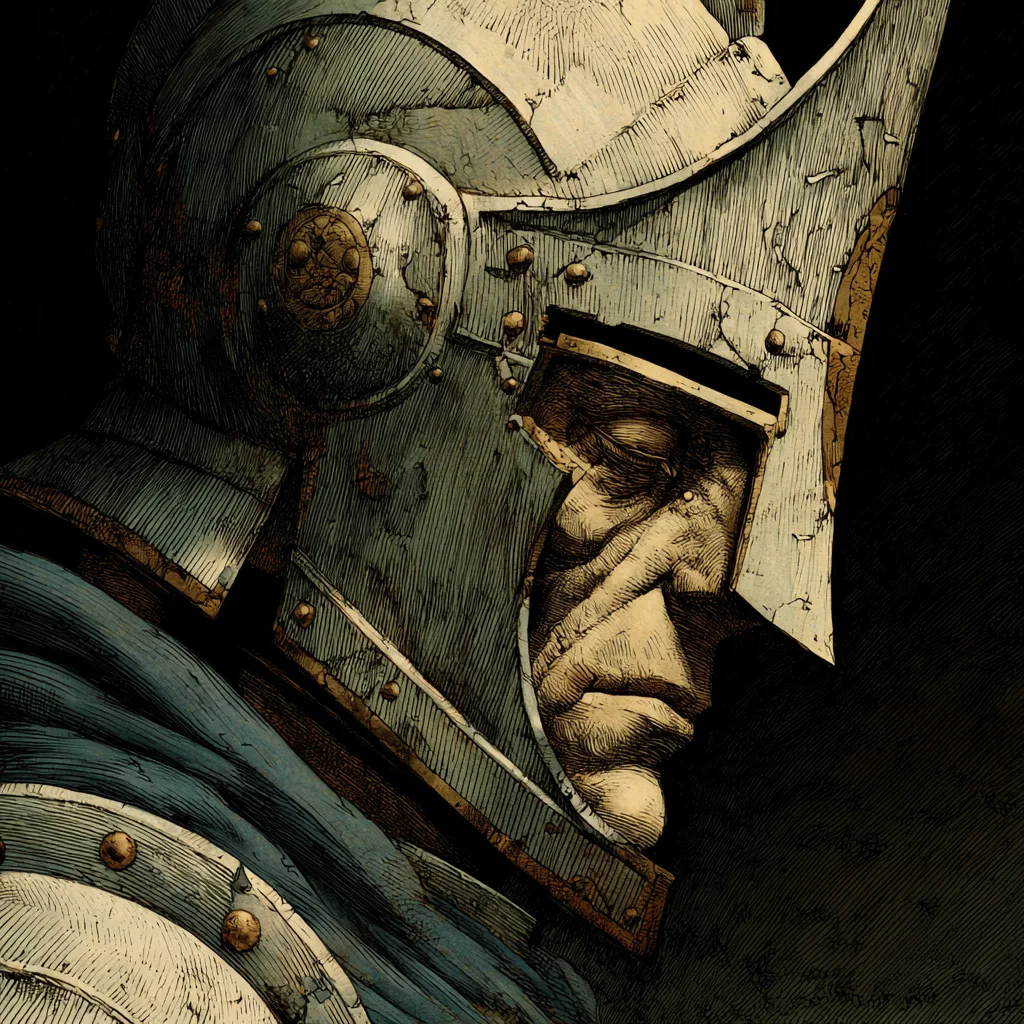
Sir Henry, by contrast, was silence made flesh. A crusader in life and a Nosferatu in undeath, he loathed his cursed nature yet bore it with penitence. Towering and laconic, he swore a vow to stand at Eleanor’s side and never once betrayed it.
He commanded her city’s defenses with unshakable resolve, spoke only when words were necessary, and refused the vanity of progeny. In his eyes, loyalty was worship. From the day of his oath onward, he never called her by name again; to him, she was always “Princess” or “My liege.”
Together, Christiano and Sir Henry completed Eleanor's coterie. One was warmth and devotion, the other duty and steel. They were those Eleanor trusted absolutely, the only voices that could pierce her ego and prideful nature. The three of them never stayed away from each other for long, something that makes the last decade all the more bizarre.
Neither reappeared after she moved to Vienna under her new adopted appearance. Asked about it, Eleanor grows defensive. Christiano, she says, is "always near"; Henry, merely "occupied elsewhere." Truth, lie, or deliberate obfuscation, none can tell. Yet their shadows linger over her story, echoing vows never broken.
Twilight of a Reign
Centuries have a way of eroding certainty, yet Eleanor de Louis remains a constant in the chronicles of blood. The places she ruled, the alliances she forged, and the forces she confronted - both mortal and otherwise - still bear her mark. Even now, as she pursue a new life and path, the echoes of her deeds resonate in every stone of Alba Iulia, in the whispers of the Tzimisce, and in the lingering presence of Kupala.
Her story is one of transformation: from a girl sold and freed, to a Philosopher Brujah of unyielding ambition, to a princess whose influence outlasted the councils and wars of men and Kindred alike. And yet, despite centuries of power and mastery, it is the quiet bonds that remain her truest legacy.
Comments