

Dramwear
“Don’t hit the street, don’t meet defeat~With a DRAM on your back, you’ll land on your feet!”
Overview
Descent Reduction and Mitigation Equipment—universally called “dram”—was born from the hard lessons of Earth’s towering megahabs. With skywalks that cross canyons of steel and balconies that overlook hundreds of stories of empty air, falls became an everyday threat for workers, thrill-seekers, and the unlucky. NovaTech Engineering seized on the opportunity to blend survival gear with fashion, producing jackets, vests, and even dresses that combined practical lifesaving systems with kaleidoscopic style.
Today, dram jackets are as much a statement piece on New Chicago’s skywalks as they are a rescue tool. Whether tie-dye swirls or high-vis orange, their puffed aerocarbon look has become part of Earth’s skyline culture.
Design and Function
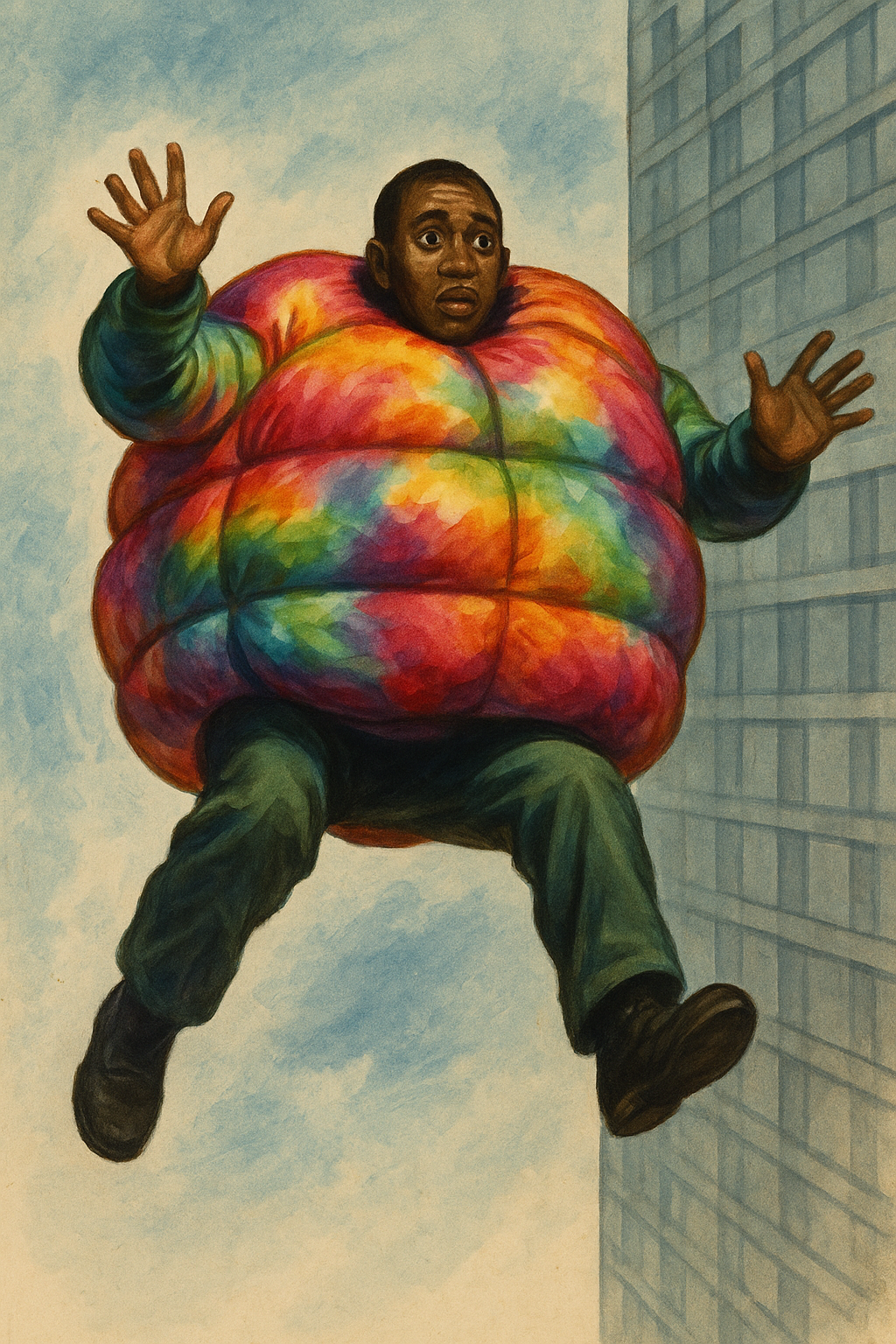
At first glance, a dram looks like an ordinary puffy jacket. But its padding conceals compressed hydrogen bands—rings of ultra-pure H₂ held at intense pressure within aerocarbon containment. When activated, the bands release violently, inflating into large buoyant chambers that slow the wearer’s descent for about ten seconds.
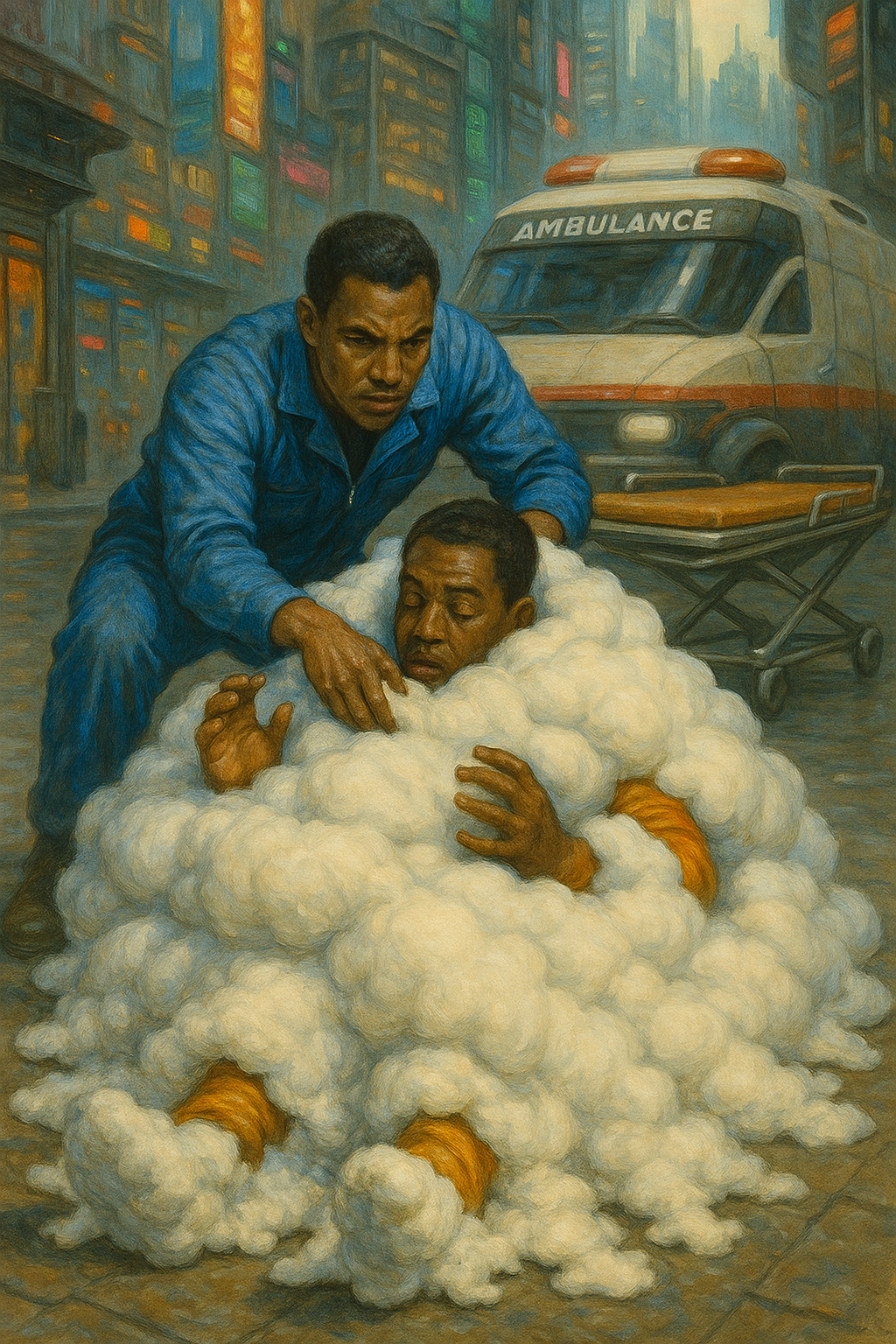
As the expansion continues, the jacket eventually ruptures, releasing a shimmering cloud of hydrogen and dropping the user again—hopefully after rescue teams have already spotted them. Later-generation models added ribbed ground sensors that detonate a layer of kinetic gel just before impact, dispersing force across the body. While this protects skin and bones, organs still suffer trauma from the sudden stop, and wearers must be extracted quickly before they suffocate in the gel.
Fashion and Culture
Though its origins are practical, the dram is a fashion empire. Aerocarbon fibers allow for bright dyes and reflective tie-dye effects, aligning with Earth’s bold, kaleidoscopic aesthetic. Wealthy urbanites wear custom dram jackets not because they expect to fall—but because not wearing one feels naked at altitude.
Outside Earth, drams appear more rarely, usually in industrial safety colors like orange or yellow for construction workers in orbital platforms or maintenance crews in tall habitats. Among freerunners and thrill-seekers, the dram jacket is both a badge of courage and a dare to fate.
Operational Caveats
The dram’s record is mixed. While survival rates from falls above 20 stories hover around 5%, chances improve dramatically at lower heights. It is not foolproof—nothing can make a terminal-velocity impact safe. Instead, it buys time for rescue and reduces trauma severity, making the difference between a corpse and a critical patient.
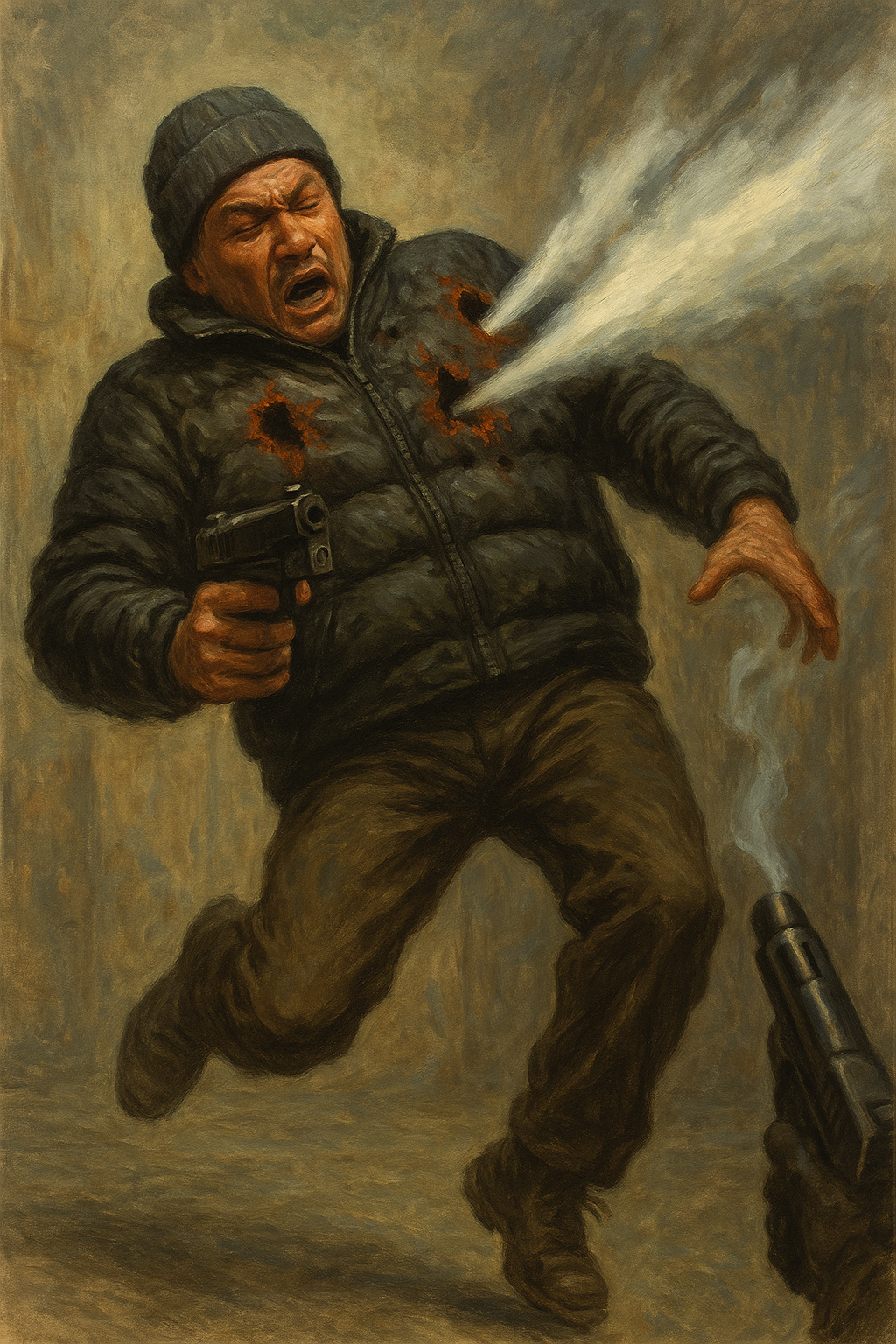
The jackets also come with risks. If a laser penetrates the aerocarbon, the compressed hydrogen inside can ignite, jetting flame and potentially throwing the wearer off balance. Military versions mitigate this with vest designs, ripcord activation, and a secondary ripcord for rapid discard. Even so, they are rare in professional forces, more liability than asset.
Manufacturer and Economy
NovaTech Engineering, better known for Terraforming systems, found an unexpected cash cow in dram sales. A dram jacket is a mandatory purchase for many Earth workers and a status symbol among megahab elites. Profits flow steadily, and the company treats drams as both public good and cultural export—an icon of Earth life.

Type: Protective/Survival Clothing
TL: 10
Legality Class: 4 (common civilian item)
Weight: 6 lbs. (vest 4 lbs.)
Cost: $1,200 (fashion versions $1,500+, military vest $2,000)
Location: Torso, arms (sometimes full-body in dresses/coats)
Passive Properties
- DR 4 (vs. lasers only) – Aerocarbon outer layers resist superficial energy weapon hits.
- Insulation: Counts as Clothing, Arctic (+1 to resist cold); designed for windy high-altitudes.
- Flammability Hazard: If penetrated, roll 9 or less for compressed hydrogen ignition; causes 1d burning jet damage to random hit location and may propel wearer 1d×2 yards.
Active Properties
When triggered (manual ripcord or auto-fall sensor):
- Slow Descent: Functions as Parachute skill (defaults to DX-5 or Parachuting). Roll at +4 if within a megahab environment with ample air resistance. Success halves falling speed.
- Kinetic Gel Ribbing (late models): On ground contact, converts lethal crushing damage into Blunt Trauma only. Still applies full knockback and possible HT rolls for internal organ shock.
- Time Limit: Inflation lasts ~10 seconds; jacket ruptures afterward, wearer resumes freefall.
Game Effects
- Provides +4 on HT rolls vs. falling damage if activated at any height above 20 yards.
- Converts full lethal fall damage into blunt trauma only if the kinetic gel system activates (usually within 3 yards of the ground).
- Survival Rates: GM should assume roughly a 5% survival chance for 50+ story falls, scaling higher for shorter distances (halve effective damage dice before applying gel/blunt conversion).
Optional Drawbacks
- Suffocation Hazard: After gel expansion, wearer is Pinned and must be rescued (Escape roll at -8 if attempting to free self).
- Bulk: Counts as a winter coat for encumbrance and layering.
- Social: On Earth, considered fashionable (gives +1 Reaction from urbanites if flashy off-world, considered gaudy or silly (-1 Reaction outside megahabs).

Comments