

Standard Freight
For many Travellers, freight jobs offer a practical way to offset travel costs or earn a profit as they move through the stars. Most ports, trade networks, and logistical hubs classify cargo in Lots—standardized units of volume and weight that facilitate calculations of space and costs across various vessels and systems. These Lots can consist of loose pallets, crates, or individual items; however, they are most commonly packed in standardized cargo containers. Containers simplify the handling of large volumes of freight, ensuring safety and efficiency, especially in the vacuum of space.
Below is a guide to the most commonly encountered container types in the universe, ranging from the smallest, versatile options to massive, specialized containers.
A Container Equivalent Unit (CEU) is a standardized measure of cargo volume based on the capacity of a single Universal Container. Each container type is expressed in CEUs to allow for easy comparison and efficient planning in freight logistics.
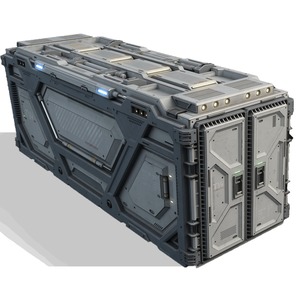
The go-to choice for most general cargo, this container handles everything from consumer goods to small machinery and perishable items. Compact yet capacious, the Universal Container is the backbone of interstellar shipping. Its standardized rectangular shape and dimensions of 3m x 3m x 6m make it a perfect fit for most cargo holds, while its versatility allows for easy stacking, transportation, and handling. It’s the container a Traveller is most likely to encounter in day-to-day trade jobs.
These cylindrical modules are specially designed for standard modular cutters and have become so popular that many tramp vessels, cargo liners, freighters, and transports use them as well. Modules serve a wide range of purposes, making them common in specialized transport jobs, though they are not typically used for generalized Lots.
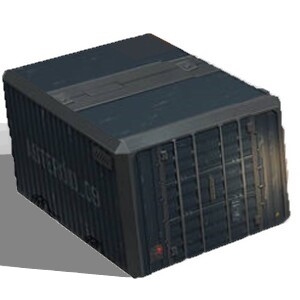
Resembling an up-scaled Universal Container, this rectangular container is manageable for most mid-sized freighters. Ideal for consolidating large quantities of goods that aren’t necessarily sensitive or fragile, the Quad is frequently used for raw materials or bulk consumer goods. This heavy-duty container is popular on high-traffic shipping lanes where cargo is transported en masse.
Suited for bulky, heavy cargo such as mining equipment, machinery, and construction supplies, this container is often used in industrial applications. Commonly referred to as a "Trep," its trapezoidal shape allows for secure stacking and handling, particularly for heavy items that might shift during transit. This design is ideal for challenging shipping routes or destinations where cargo may face rugged conditions upon arrival.
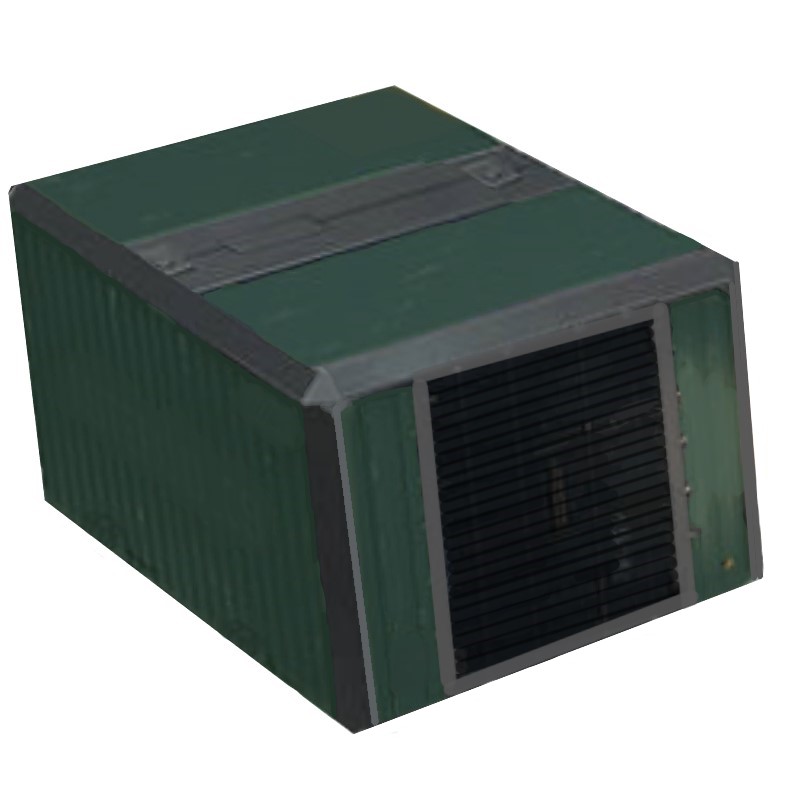
This massive rectangular container, equivalent to a 3x3x3 stack of Universal Containers, is the largest commonly used container in interstellar trade and offers unmatched storage capacity. It is favored for significant shipments where transporting large volumes of goods in a single trip is essential, or for single items that, due to size, shape, or number, don’t fit within other containers.
Each of these containers is designed to withstand the unique challenges of interstellar travel, from extreme temperatures and cosmic radiation to micro-meteor impacts and sudden pressure changes. By relying on standardized container types, cargo operations across the galaxy can remain efficient and consistent, allowing Travellers and logistics hubs alike to streamline the often complex process of moving goods between worlds.
For the savvy Traveller, understanding these container types can mean the difference between a successful freight job and a logistical nightmare.
Universal Container
Volume: 4 tons, 1 CEUThe go-to choice for most general cargo, this container handles everything from consumer goods to small machinery and perishable items. Compact yet capacious, the Universal Container is the backbone of interstellar shipping. Its standardized rectangular shape and dimensions of 3m x 3m x 6m make it a perfect fit for most cargo holds, while its versatility allows for easy stacking, transportation, and handling. It’s the container a Traveller is most likely to encounter in day-to-day trade jobs.
Module
Volume: 30 tons, 7.5 CEUThese cylindrical modules are specially designed for standard modular cutters and have become so popular that many tramp vessels, cargo liners, freighters, and transports use them as well. Modules serve a wide range of purposes, making them common in specialized transport jobs, though they are not typically used for generalized Lots.
Quad
Volume: 32 tons, 8 CEUResembling an up-scaled Universal Container, this rectangular container is manageable for most mid-sized freighters. Ideal for consolidating large quantities of goods that aren’t necessarily sensitive or fragile, the Quad is frequently used for raw materials or bulk consumer goods. This heavy-duty container is popular on high-traffic shipping lanes where cargo is transported en masse.
Trep
Volume: 65 tons, 16.25 CEUSuited for bulky, heavy cargo such as mining equipment, machinery, and construction supplies, this container is often used in industrial applications. Commonly referred to as a "Trep," its trapezoidal shape allows for secure stacking and handling, particularly for heavy items that might shift during transit. This design is ideal for challenging shipping routes or destinations where cargo may face rugged conditions upon arrival.
Stack
Volume: 108 tons, 27 CEUThis massive rectangular container, equivalent to a 3x3x3 stack of Universal Containers, is the largest commonly used container in interstellar trade and offers unmatched storage capacity. It is favored for significant shipments where transporting large volumes of goods in a single trip is essential, or for single items that, due to size, shape, or number, don’t fit within other containers.
Each of these containers is designed to withstand the unique challenges of interstellar travel, from extreme temperatures and cosmic radiation to micro-meteor impacts and sudden pressure changes. By relying on standardized container types, cargo operations across the galaxy can remain efficient and consistent, allowing Travellers and logistics hubs alike to streamline the often complex process of moving goods between worlds.
For the savvy Traveller, understanding these container types can mean the difference between a successful freight job and a logistical nightmare.
