
Fennexianu
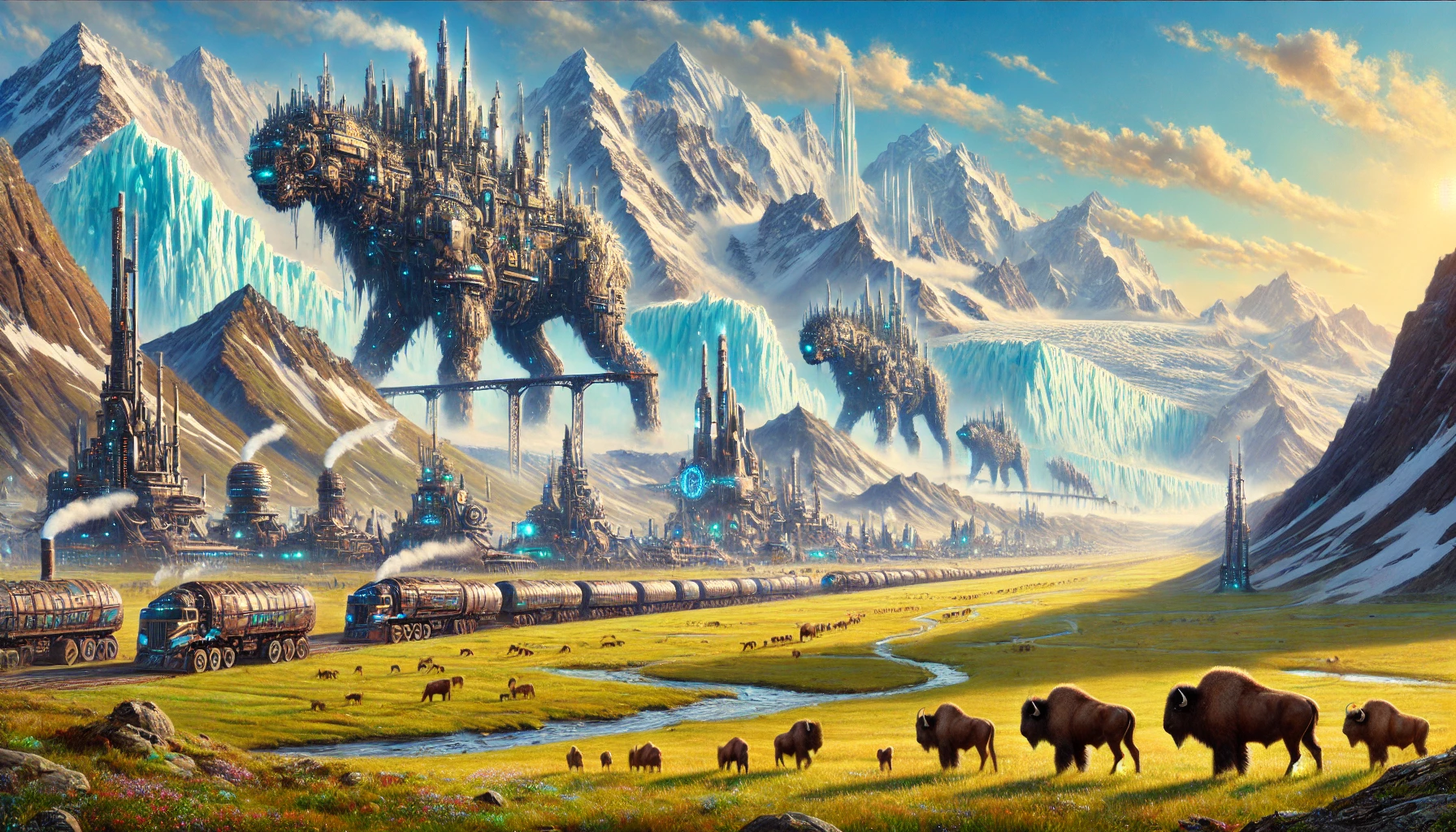
Fennexianu is a land where human resilience meets the enormity of nature. Its vast grassy plains, fertile and alive with native beasts, stretch outward until they meet the harsh frontiers of towering glaciers and walls of ice. The people of Fennexianu live in constant awareness of these frozen giants, fearing the day they might collapse and unleash floods that would drown their homeland for eternity. From this belief was born both their faith and their innovation: the great creatures known as the Fennia. These colossal beings, revered by the earliest tribes as guardians of the plains, became the foundation for survival. With reverence and ingenuity, the tribes armored their beloved companions and constructed sprawling cities upon their backs—winding streets, humble dwellings, and proud halls rising without piercing flesh or bone. To live upon a Fennia was to live in motion, carried safely above the earth that might one day betray them.
But as centuries passed and industry grew, reverence gave way to exploitation. The Fennia, once honored, were pressed into burdens beyond their nature, their strength harnessed to bear the ever-expanding weight of human ambition. The cities upon their backs became centers of commerce, power, and ceaseless movement, no longer symbols of harmony but engines of survival and control. Recognizing the growing toll, the Council of Fennexianu decreed that these walking cities may roam only within their homeland, a measure meant to protect both the creatures and the land itself. And so the Fennia stride endlessly across the plains, year after year, carrying their living cities like wandering mountains. To the people, they are both fortress and ark, a promise that when the floods come—as legend insists they one day will—their homes will endure upon the backs of giants.
But as centuries passed and industry grew, reverence gave way to exploitation. The Fennia, once honored, were pressed into burdens beyond their nature, their strength harnessed to bear the ever-expanding weight of human ambition. The cities upon their backs became centers of commerce, power, and ceaseless movement, no longer symbols of harmony but engines of survival and control. Recognizing the growing toll, the Council of Fennexianu decreed that these walking cities may roam only within their homeland, a measure meant to protect both the creatures and the land itself. And so the Fennia stride endlessly across the plains, year after year, carrying their living cities like wandering mountains. To the people, they are both fortress and ark, a promise that when the floods come—as legend insists they one day will—their homes will endure upon the backs of giants.
