

Corvus Network
Corvus Network
A clandestine operational intelligence mesh operating within, alongside, and sometimes beneath Starfleet Intelligence.
Overview
The Corvus Network is an unofficial, invitation-only intelligence and asset coordination system embedded within the larger Starfleet framework. It exists at the intersection of Starfleet Intelligence, and select trusted operatives chosen by Gabriel Corvus, a legendary figure in clandestine operations. The network is not a formal organization; it is a dynamic, decentralized protocol of trust, authentication, and mission flexibility.
Named for Corvus himself, the network operates on the principle of agility over bureaucracy—designed to move people, data, or objects with precision, speed, and minimal institutional interference.
Structure and Functionality
Decentralized Mesh
- Unlike formal Starfleet chains of command, the Corvus Network runs on a peer-based validation model, where verified operatives connect directly without the need for centralized dispatch.
- Nodes in the network can be entire starships, small craft, individual officers, or even embedded agents working covertly in deep cover.
Corvus Coin Interface
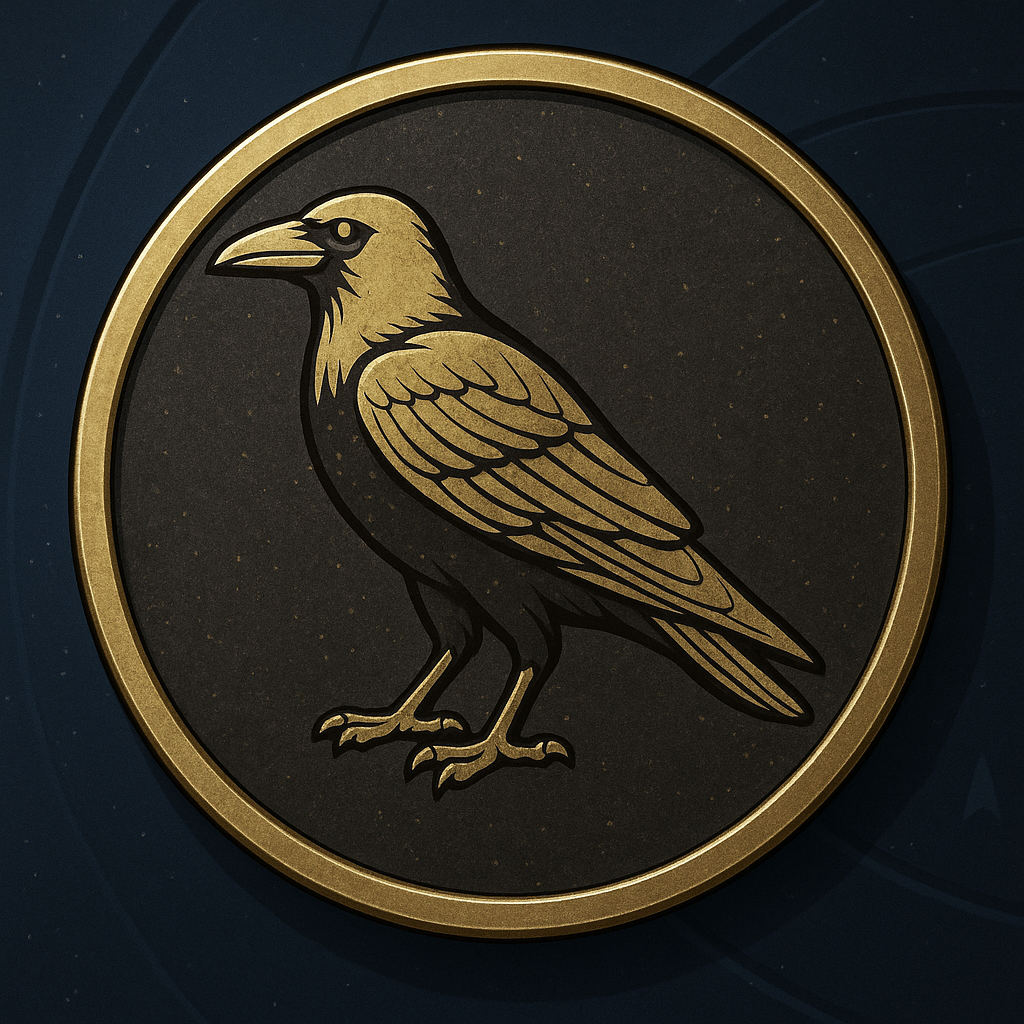
- The Corvus Challenge Coin serves as the access key to the network.
- When brought into proximity with any LCARS system—from starships to outposts—it unlocks hidden subroutines.
- These subroutines include:
- Intelligence uplink/downlink protocols.
- Rendezvous booking with cooperative assets.
- Encrypted message boards and drop points.
- Access to limited intelligence files, support requests, or blacksite information.
Mission-Based Flexibility
- Not all Corvus Network operatives control the assets they ride with. For example:
- A Corvus-linked XO may subtly steer ship decisions toward mission goals.
- A CSEC or CTAC may be used as a field hand or facilitator.
- On the other end, a commanding officer may willingly turn their whole ship into an operational node.
Operative Classes
- Full Operative (Command-Level Access):
- Can redirect ships, assign missions, initiate emergency extraction protocols.
- Often captains of Starfleet Intelligence ships, such as the USS Cicero (Ross-class).
- Embedded Operative (Role-Based Access):
- Usually senior officers (XO, CSEC, CTAC, CMO) with limited operational scope.
- Receive and act on intelligence, perform retrievals, and pass on covert messages.
- Asset Operative (Request-Based Access):
- May be individuals of value—scientists, couriers, diplomats—temporarily granted access to move through the system safely.
Purpose Beyond Information
While the flow of intelligence data is one purpose, the Corvus Network is just as often used to transport things:
- Individuals (VIP extractions, asylum seekers, defectors).
- High-risk or volatile technology.
- Pathogens, artifacts, or objects too dangerous to pass through conventional clearance.
In this way, the Corvus Network becomes a kind of shadow logistics platform, always moving, never visible.
Starfleet’s Official Position
Starfleet is aware of the Corvus Network's existence—but chooses to look the other way, so long as it operates within acceptable ethical boundaries and produces results. Officially, there is no record of the network. Unofficially, its success rate and subtlety are considered vital assets.
This creates tension with:
- Starfleet Command, which resents the circumvention of hierarchy.
- Starfleet Intelligence proper, whose operatives may see Corvus agents as freelancers.
- Section 31, who both compete and cooperate with the network.
Why "Corvus"?
The network is named for Gabriel Corvus, who is more myth than man in some circles. Said to have personally recruited many of the network’s founding members, Corvus represented the ideal: an agent who didn’t just follow orders, but reshaped the mission space itself.
The name invokes:
- Trust by association.
- An operational standard few can meet.
- A legacy of black ops, surgical strikes, and recovered artifacts no one else could touch.
Accessing the Network
- Access is invitation-only, always initiated by a full operative.
- The Corvus Coin binds to the operative’s DNA and LCARS identity.
- Once registered, any LCARS console (given access) reveals a hidden layer of functionality.
In-Game and Narrative Implications
- Players may be part of the network without knowing it.
- A single Corvus-linked crewmember can draw an entire ship into the shadows.
- Missions may originate from cryptic LCARS entries, anonymous subspace bursts, or a simple request from someone you thought was just a doctor.
- Revealing one’s status can be dangerous—or a powerful negotiating tactic.
Closing Notes
The Corvus Network is a system within a system, invisible to most, essential to a few. It lives in backchannels, coded subroutines, and the quiet gestures between operatives who know exactly what’s at stake. It is Starfleet’s last resort when diplomacy fails, and plausible deniability must remain intact.
It is trust, encrypted.
Agent Gabriel Corvus – Chief Handler, Starfleet Intelligence
Comments