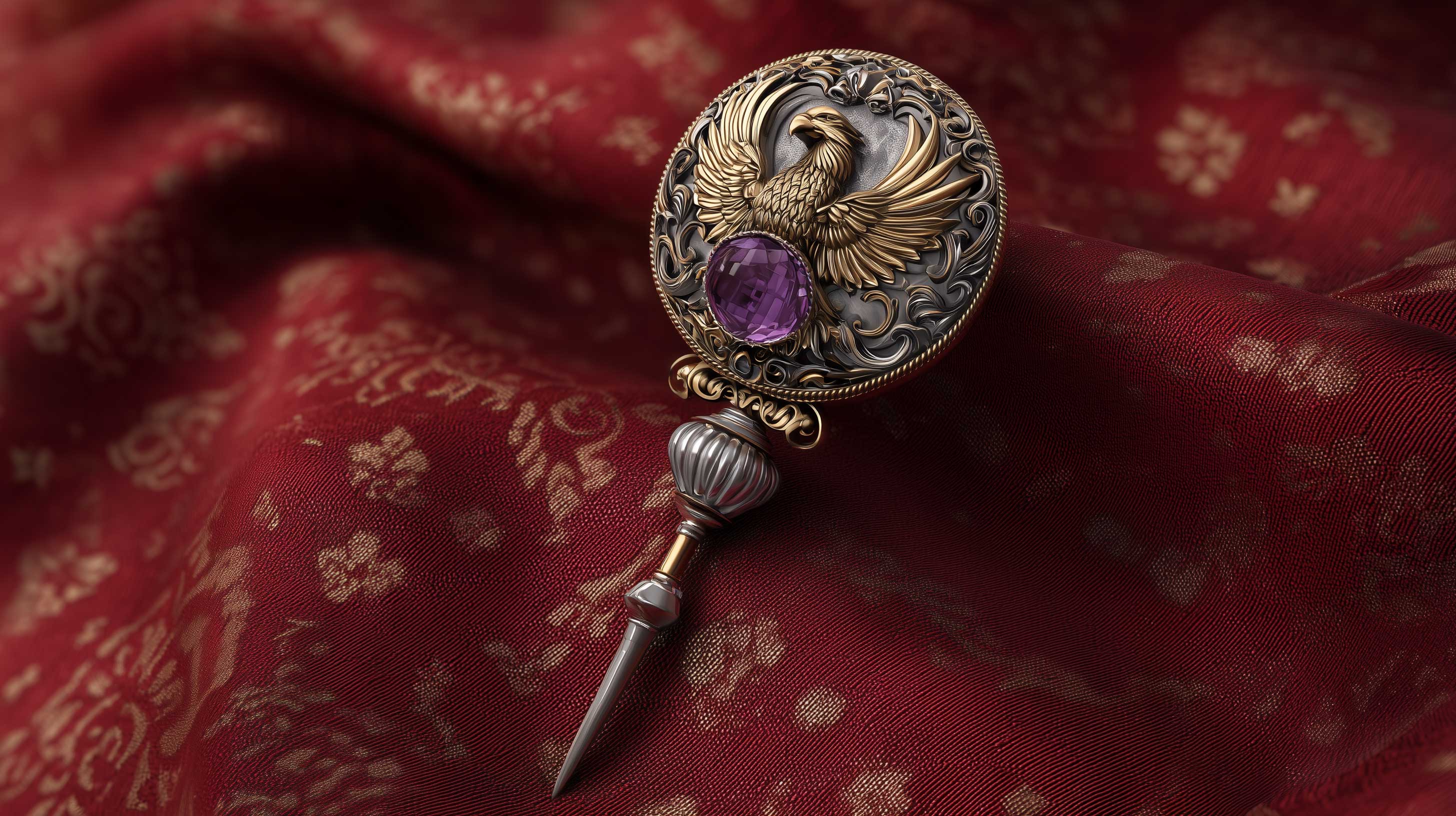
Aspes
The silver bears the weight of blood, the gold remembers the name—an Aspes is not worn, it is carried by the generations.
In the ancient city-state of Alada, where legend and law were often inseparable, Aspes were more than just ornamental broaches—they were emblems of heritage, power, and blood-right. Worn exclusively by the noble class, the Aspes symbolized the bearer’s ancestry to one of the Twelve Founding Tribes who first united to form the city that would one day rule the world.
The Mark of the Twelve
Each of the Twelve Tribes of Alada had its own leading family, and each family bore a distinct insignia—a golden emblem shaped into their ancestral symbol, affixed upon a base of polished silver. These Aspes served both ceremonial and practical functions: they fastened the hooded cloaks worn by nobles and visibly marked their status and origin. The head of each noble house held the privilege of adding a singular gem to the broach, a unique stone signifying their tribe—sapphire, opal, garnet, onyx, and others, each steeped in myth and significance.
To wear an Aspes was to announce one’s station. To forge or steal one was to commit a crime against the very fabric of the city’s social order. The laws were explicit and harsh: only freemen were allowed broaches of lesser metals such as bronze, copper, or iron—and even these were strictly devoid of insignia. Anyone caught wearing the Aspes of a higher caste could face branding, exile, or in extreme cases, death.
The Aspes in Exile and Legacy
As Alada’s influence waned and the Great Migration began, many noble families ventured outward, leading expeditions to claim, settle, and rule new lands. These intrepid scions carried their Aspes with them across mountains and oceans, through war and peace. Though the families branched and mingled, the Aspes remained unchanged—silver base, golden crest, and, for the true heads of line, the sacred gem.
In lands where nobility endured, the Aspes evolved with fashion but retained their symbolic weight. The hooded cloaks faded into history, but the broaches found new homes—pinned to waistcoats, affixed to belts, or reimagined as pendants, signet rings, or family crests carved into furniture. In Edison, nobles often hide their Aspes inside the backs of pocket watches, subtle yet unmistakable to those who know what to look for.
Conversely, in regions where the noble class was overthrown, the Aspes became dangerous relics. Those bearing them in public risked harassment, arrest, or worse. In some nations, ownership alone was used to justify political imprisonment or property seizure. As a result, many Aspes were hidden away in walls, buried in gardens, or smuggled to distant relatives in more tolerant lands.
A Living Tradition
Despite centuries of upheaval, the tradition of the Aspes persists. To those descended from the founding tribes of Alada, the Aspes remains a sacred heirloom. It is shown at marriages, funerals, and rites of passage. It is passed down with solemn oaths, or occasionally stolen in family feuds. To this day, when two nobles meet for the first time, they may still greet one another not with titles, but by displaying the Aspes—the silver, the gold, and the story it tells.
Like the families it represents, the Aspes has survived revolution, fashion, and time. Its shape may change, but its meaning—lineage, legacy, and silent pride—remains etched in metal, shining quietly from collarbones and pocket chains alike.
Rare



I really like how the form/function has evolved through time, and in some places is even dangerous to bear.
Explore Etrea | WorldEmber 2025