
Sonya Wallace
Sonya Wallace was born in 1840 AF, in the heart of Ravengard, to a household that balanced modest means with high expectations. Her father, Donovan Wallace, served as an officer in the Eldwell Navy, a man defined by discipline and a fierce loyalty to the uniform he wore. Her mother, Lucretia Salazar-Wallace, ran the small household with quiet efficiency, ensuring their daughter grew up with both structure and affection. Ravengard was a bustling, smoke-scented place in those years, shaped by naval tradition and the rising fervor for industrial sciences. It was here, among steam-thick streets and the clangor of metalwork, that Sonya learned to be curious.
She attended the city’s public school first, always the girl who asked why, the one who stayed behind after class to take apart the schoolroom lantern just to see how it functioned. Her teachers described her as bright, stubborn, and surprisingly fearless. When she was accepted into Lady Hammeworth’s High School for Young Women, she found herself among elite peers who often underestimated her. Sonya excelled regardless, graduating with a focus on the sciences—mechanics, chemistry, and early Electrum studies—subjects that would shape the future she didn’t yet know she wanted.
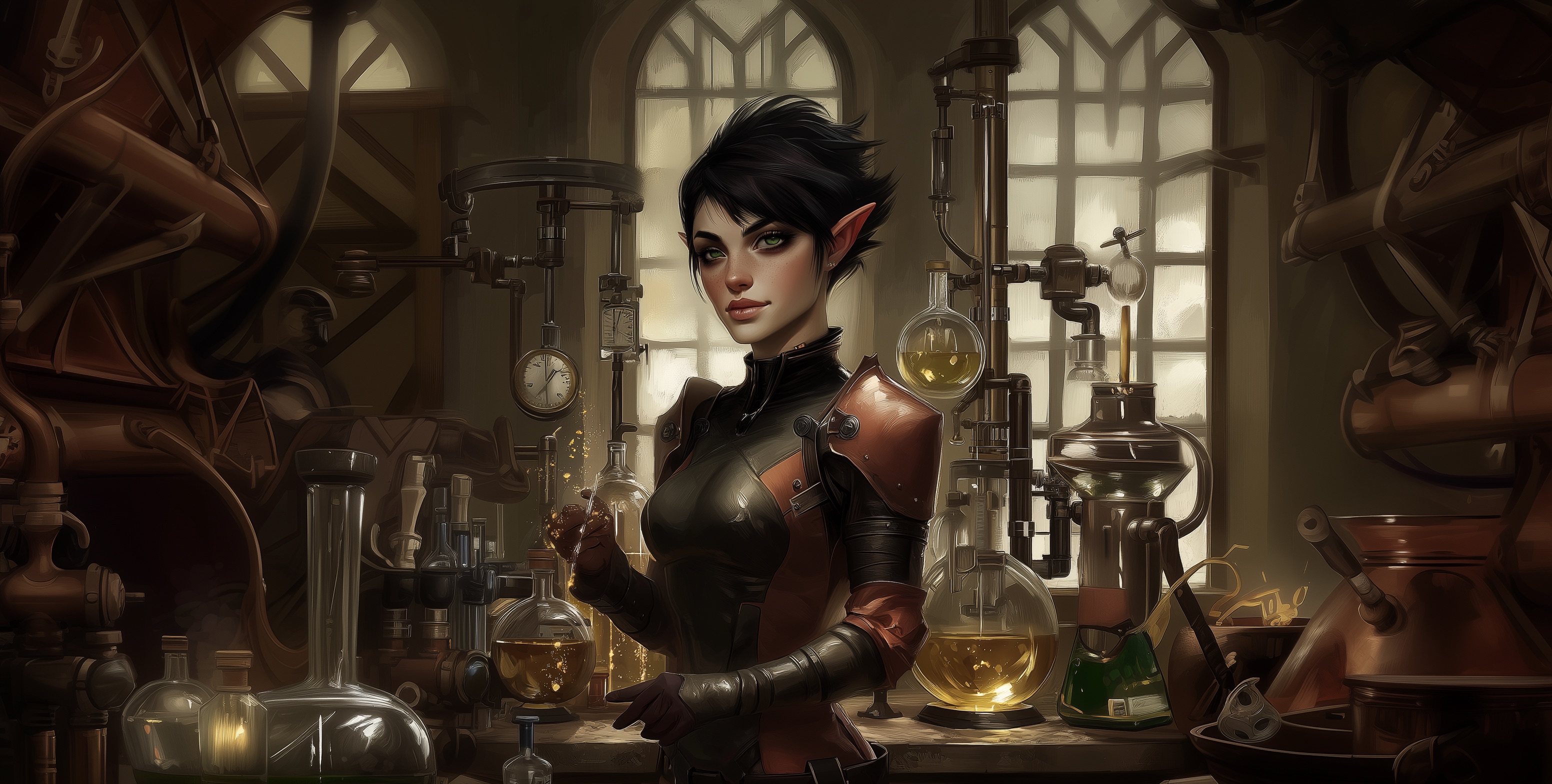
That future solidified the moment she secured a scholarship to the Academy of Sciences and Arts in Edison, one of the Empire’s most respected institutions. It was there the world opened for her: she learned how machines breathed, how metals bent and remembered, how air could be shaped into power. She became fascinated with adaptive prosthetics, pressure-regulated gear, and lightweight alloys used in both naval Engineering and athletic Armor. More importantly, she discovered Pipecross, a chaotic, bruising, exhilarating sport that blended strategy, physics, and raw nerve.
Pipecross consumed her. It became the thing she looked forward to during weeks heavy with calculation and coursework. She played casually at first, then fiercely, then obsessively. By the time she completed her studies and returned to Ravengard, her relationship with the sport had become inseparable from her identity. She continued her work privately, tinkering in rented workshops and designing modifications for her equipment, but it was on the Pipecross field—balanced on pipes, harnessed in gear, flinging herself into controlled chaos—where she felt most alive.
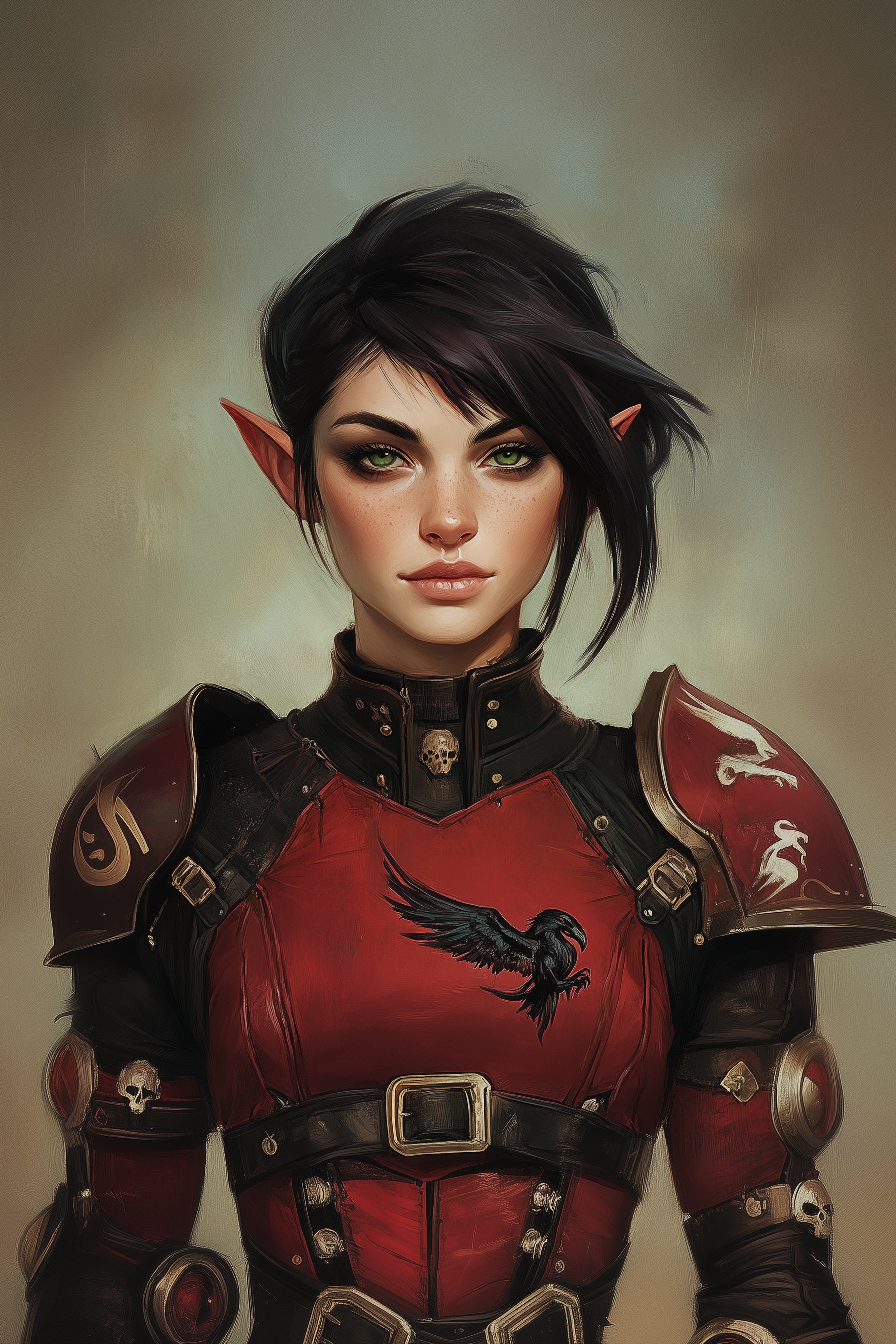
When she eventually joined the Ravengard Pipecross Team, she brought with her not only competitive talent but also Engineering insight. Over the years she refined her personal Pipecross suit, nicknamed the Pipecross rig, into a marvel of protective design: reinforced plating, lightweight pressure joints, shock-dispersing Leather layers, and her signature crimson-and-black color scheme. The raven sigil on her chestplate became synonymous with her style—sharp, resilient, unafraid.
Everything changed in 1869 AF, during the semifinals held at Rookhelm Arena. Sonya had stepped into the match with her usual calm intensity, but the game never had the chance to finish. A terrorist attack, orchestrated by the Cult of Solis, released a lethal gas agent into the stadium. The screams came first, then the soundless collapse of bodies as the poison spread. Hundreds died within minutes—including most of Sonya’s teammates. She survived only because she had sealed her helmet quickly, out of instinct more than awareness. For weeks afterward, she blamed herself for that instinctive motion, convinced it should have been someone else’s life saved instead.
The tragedy fractured Ravengard’s Pipecross culture. In response, Eliza Hartwell, philanthropist and owner of both the Lantern Society’s Pipecross team after negotiating the the Count of Ravengard, made the unprecedented decision to merge the shattered teams into one, the Edison's Phoenixes
Edison's Phoenix Club and Owen

The newly formed group, the Edison's Phoenixes, needed steadiness and vision; Sonya unexpectedly became one of its anchors. Alongside her stood Owen Steven McManaman , the Lanterns’ ex-quarterback turned leader—a man known for his steadiness, humor, and deep well of compassion. Their working relationship turned warm, then intimate. The romance began casually, sparked by shared grief and the stubborn desire to rebuild what had been broken, but over time Sonya found her feelings deepening into something she wasn’t entirely equipped to name. Owen grounded her in a way she rarely admitted needing. His determination steadied her darker days; her fire rekindled his hope.
The Loss of Maris
Years before the Rookhelm attack—when she was still studying at Edison—Sonya lost her younger brother, Maris, in an accident she never speaks of publicly. Maris had idolized her mechanical talent and often visited her workshop. One evening, he tried to replicate one of her pressure-valve experiments while she was away. The apparatus failed violently. By the time Sonya returned, he was already gone.
This loss carved something quiet and cold inside her. She buried herself in work, in Pipecross, in anything that demanded her full attention so she wouldn’t hear the echo of what-ifs. Even now, decades later, she invents with a perfectionist’s severity because she cannot bear the idea of another device failing under her watch. She checks—and rechecks—her teammates’ suits, sometimes irritating them with her vigilance. Owen, more than anyone, understands that this meticulousness is not about control; it is about fear. A fear that she will again lose someone because she wasn’t careful enough.
The Rookhelm tragedy reopened that wound with brutal force. For weeks she did not sleep without waking drenched in sweat. For months she refused to let anyone else handle her equipment inspections. It was Owen’s patience that eventually coaxed her back into balance, though the scar remains: Sonya carries grief like a second spine, invisible yet load-bearing.
Today, Sonya Wallace stands as one of the most respected Pipecross players in the region and an emerging Engineer whose designs increasingly influence professional athletic gear. But beneath her sharp mind and fierce Armor beats the heart of someone who has lost too much and refuses to lose more. When she steps onto the field, her movements carry a defiant kind of grace—a refusal to be defined by tragedy, even as it shapes the contour of her every choice.
She fights not only for victory, but for memory. For the teammates she lost. For the brother she still mourns. For the unity that emerged from devastation. And most of all, for the future she is determined to build—one where no one suffers because of something she should have foreseen.





Is she anything to William Wallace?