
Shadewing
When the hills grow still and the wind hisses low, the Shadewing watches.
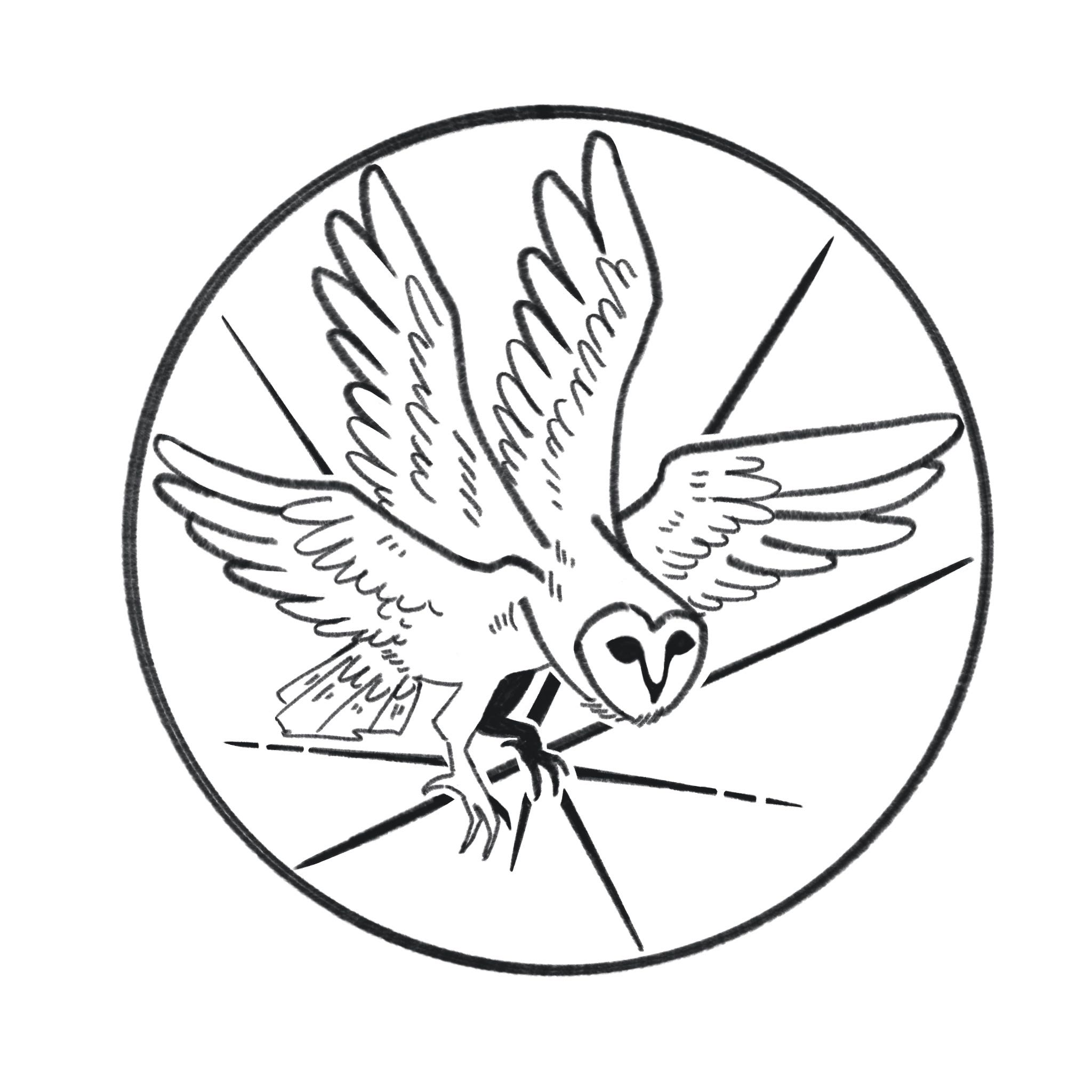
Perched in the misty pinewoods and cliffside groves of Dentpeak, the Shadewing is a nocturnal avian creature often mistaken for an owl at first glance. Roughly the size of a barn owl, it shares the wide, expressive eyes and silent flight of its cousin species—but that is where the similarities end.
The Shadewing’s most striking feature is its mirrored plumage. Its feathers are mottled with silvery-black flecks that shimmer faintly in moonlight or starlight, giving it the illusion of vanishing into the night sky. This camouflage makes the Shadewing nearly invisible when in motion, and unnervingly reflective when still.
Unlike owls, Shadewings possess four wings—a primary pair for flight and a secondary, smaller pair used for gliding control and sudden hovering. These give them an eerie, floating motion, especially when descending directly downward.
Their call is not a hoot but a soft, harmonic trill, like a wind chime caught in a cave’s echo. Locals say this sound brings luck if heard on a clear night—but misfortune if heard through fog.
Shadewings are sap-drinkers, not hunters. They feed by piercing bark with a hooked beak and drinking the fermented, slightly luminous sap of the night pine, a tree native only to the northern reaches of Dentpeak. This diet has led some scholars to speculate a link between the Shadewing and the faint bioluminescence that coats its eyes and talons.
Due to their elusive nature, Shadewings are rarely seen up close, and superstition clings to them like moss to stone. Sailors claim they guide souls. Miners believe they are omens of safe tunnels—or sudden collapse. For the quiet people of Dentpeak, however, the Shadewing is simply a guardian of dusk and shadow, and a creature best left unbothered.

Comments