
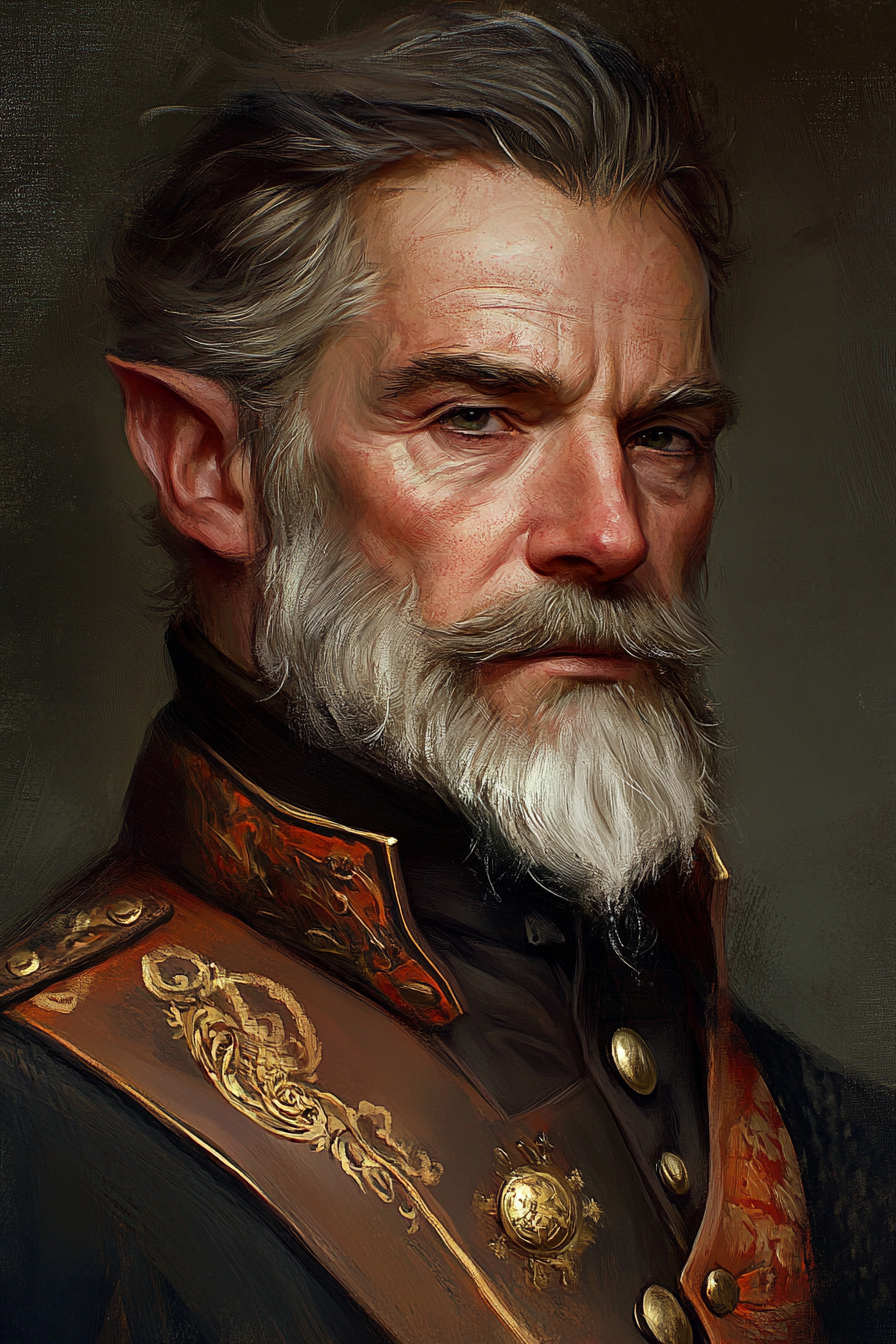
Admiral Barnabas Bramwell Stanhope
Admiral Barnabas Bramwell Stanhope, born in 1790 AF, stands as one of the most enduring pillars of Eldwell naval power. At eighty years of age, his presence alone carries the weight of history—an austere figure whose medals are not worn for display, but borne as quiet testimony to a lifetime spent in service to the Empire. As Commander of the First Fleet and a sitting member of the Military High Command, Stanhope represents continuity, discipline, and the old virtues upon which Eldwell first rose to prominence upon the seas.
Stanhope’s naval career began in his early teens, as was customary for noble sons destined for command. Entering service as a midshipman during a period of expanding imperial ambition, he distinguished himself early through an unshakeable calm under fire and an uncanny ability to read both weather and men. His rise through the ranks was steady rather than meteoric—marked by hard campaigns, long patrols, and several brutal engagements that earned him decorations for valor and strategic excellence. By middle age, he had commanded squadrons in three major theatres and was instrumental in codifying modern Eldwell fleet doctrine, particularly in matters of formation discipline and signal-based coordination.
As Commander of the First Fleet, Stanhope is less concerned with innovation than with reliability. He is known to favor proven captains, well-drilled crews, and conservative deployment strategies, believing that the Empire’s strength lies in cohesion rather than daring gambits. This philosophy has occasionally put him at odds with younger admirals advocating for experimental tactics or aggressive technological integration. Nevertheless, even his critics concede that under Stanhope’s command, the First Fleet has never failed its strategic objectives.
Politics
Politically and socially, Barnabas Stanhope is a conservative noble, shaped by traditions that predate the current Empress. He holds firm views on hierarchy, duty, and the proper roles of nobility and military alike. Yet his loyalty to the Eldwell Empire—and to the Empress herself—is absolute. Unlike some of his peers, his conservatism has never translated into factionalism or sedition. He believes the stability of the Empire outweighs personal ideology, and that obedience to the lawful sovereign is the highest form of service.
Private Life
In private life, Stanhope is a widower, his wife Eleanor having passed decades earlier after a long illness endured largely during his absences at sea. He has two surviving children, both grown: a son who serves in the Imperial diplomatic corps and a daughter married into a lesser naval house. Though distant by temperament, Stanhope is quietly proud of them and maintains a steady correspondence, written in a precise, formal hand that mirrors his speech. Family, to him, is a duty fulfilled through provision and example rather than affection freely shown.
Personality
Personality-wise, Admiral Stanhope is reserved, stern, and deeply principled. He speaks little in council, but when he does, his words carry authority earned rather than demanded. He has little patience for vanity, incompetence, or what he considers unnecessary cruelty. Beneath his rigid exterior lies a man profoundly aware of the cost of command; he is known to personally review casualty lists and to remember the names of captains lost under his orders. Among junior officers, he inspires not warmth, but trust—a belief that under Stanhope, orders will be clear, sacrifices will be justified, and the Empire will endure.

Comments