The Seasons
The seasons are similar around Derelen. Temperate weather rolls over most of the continent, but some areas are bone dry or get snow all year around. The average temperature for temperate weather is 60° Fahrenheit. With exceptions for colder climates, temperatures can be as low as -5° Fahrenheit, whereas warmer climates can reach an average of 85° Fahrenheit.
Each season has a unique name alongside their common one. Spring can be referred to Blossompeak and Summer as Flamecall. Winter is Overdark and Autumn can be Greenwilt.
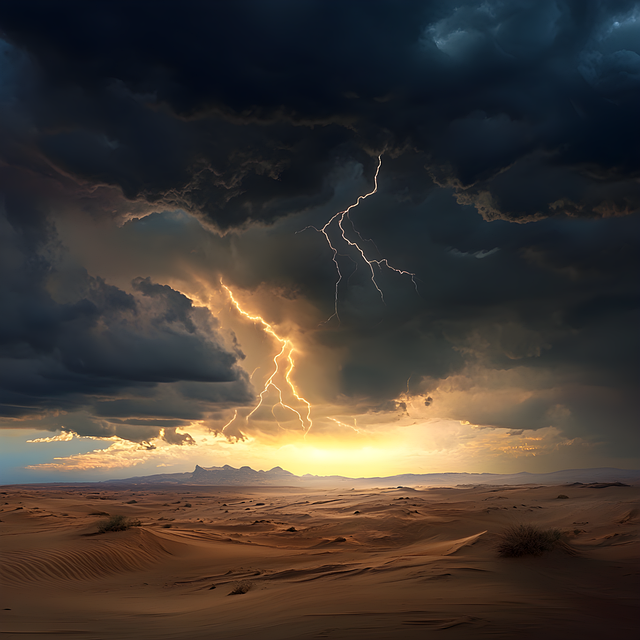
by Iffany (pixabay)
Windy weather can be a hassle, and is especially strong during autumn and winter. If you wish to determine the average wind speed in Derelen for the adventuring day, roll
4d10 and keep the lowest two results. If it is winter or autumn, roll
3d10 and keep the lowest two results. That is the speed at which the wind travels in miles per hour.
To determine the direction the wind blows from, roll a
1d10 and consult the table below. Wind in Derelen typically blows from the west.
Wind Direction
| 1d10 |
Direction |
| 1 |
South |
| 2 |
Southwest |
| 3 |
Southeast |
| 4-6 |
West |
| 7 |
East |
| 8 |
Northwest |
| 9 |
Northeast |
| 10 |
North |
Spring / Blossompeak
Spring lasts for about three months of the Derelen weather cycle. The first month of spring is relatively cool by Derelen standards, approximately 8 degrees cooler than the rest of the season. However, the frost that grips the landscape thaws quick and by the end of the month, the temperatures are more Autumn-like. The rest of the season breathes much life into the Derelen flora, though only about as much life is breathed into a corpse by a necromancer.
The average temperature during spring is 49°F with an average low being 43°F and the average high 55°F. You can roll
17d4 to determine the low temperature and
22d4 to determine the high temperature for the adventuring day. If it is the first two weeks of spring, you can roll
14d4 and
19d4 for the low and high temperatures respectively.
To determine the precipitation for any given day during spring, roll
1d100 and consult the table below.
Spring Precipitation
| 1d100 |
Precipitation |
| 1 |
Thunderstorm |
| 2-4 |
Heavy Rain |
| 5-18 |
Moderate Rain |
| 19-27 |
Light Rain |
| 28-100 |
No precipitation |
Summer / Flamecall
Summer takes place around the middle of the year and constitutes three months of the year. During this time of year, the temperatures plunge skyward and the humid is off the charts.
The average temperature during summer is 80°F with an average low being 75°F and the average high 95°F. You can roll
20d4 to determine the low temperature and
26d4 to determine the high temperature for the adventuring day.
To determine the precipitation for any given day during summer, roll 1d100 and consult the table below.
Summer Precipitation
| 1d100 |
Precipitation |
| 1-8 |
Thunderstorm |
| 9-19 |
Heavy Rain |
| 20-28 |
Moderate Rain |
| 29-34 |
Light Rain |
| 35-100 |
No precipitation |
Autumn / Greenwilt
Autumn is the most normal of all Derelen seasons, lasting for a full 90 days. Though autumn is normally seen as the start of the death-to-rebirth cycle of the seasons, in Derelen this is more like a decay-to-reanimation cycle. The air is just a hair more chilly throughout most of the month when compared to spring, though the frost starts to creep in towards the start of winter.
The average temperature during autumn is 57°F with an average low being 50°F and the average high 65°F. You can roll
16d4 to determine the low temperature and
21d4 to determine the high temperature for the adventuring day.
You can roll
16d4 to determine the low temperature and
21d4 to determine the high temperature for the adventuring day. If it is the last week of autumn, you can roll
13d4 and
18d4 for the low and high temperatures respectively.
To determine the precipitation for any given day during autumn, roll 1d100 and consult the table below.
Autumn Precipitation
| 1d100 |
Precipitation |
| 1 |
Thunderstorm |
| 2-3 |
Heavy Rain |
| 4-13 |
Moderate Rain |
| 14-20 |
Light Rain |
| 21-100 |
No precipitation |
Strong Winds
A strong wind imposes Disadvantage on Ranged weapon Attack Rolls and Wisdom (Perception) Checks that rely on Hearing. A strong wind also extinguishes open flames, disperses fog, and makes flying by non-magical means nearly impossible. A flying creature in a strong wind must land at the end of its turn or fall. A strong wind on open plains or grasslands can create a blizzard that imposes Disadvantage on Wisdom (Perception) Checks that rely on Sight.
Winds
| 1d20 |
Wind |
| 1-12 |
None |
| 13-17 |
Light |
| 17-20 |
Strong |
Winter / Overdark
Winter is harsh though thankfully short in Derelen, lasting only 95 days. Precipitation is peculiar in winter. With the exception of the mountainous regions, it never properly snows in Derelen. Everything is glazed in ice as shallow bodies of water freeze and frost grips anything that might have once been living. Only the malformed evergreen forests maintain any semblance of life, as everything else hibernates or dies. In the place of snow, Derelen occasionally gets ice pellets and, even rarer, freezing rain.
The average temperature during winter is 28°F with an average low being 23°F and the average high 33°F. You can roll
9d4 to determine the low temperature and
13d4 to determine the high temperature for the adventuring day.
To determine the precipitation for any given day during winter, roll 1d100 and consult the table below.
Winter Precipitation
| 1d100 |
Precipitation |
| 1 |
Freezing Rain |
| 2-5 |
Heavy Ice Pellets |
| 6-10 |
Moderate Ice Pellets |
| 11-16 |
Light Ice Pellets |
| 17-100 |
No precipitation |
Extreme Cold
Whenever the temperature is at or below 0 degrees Fahrenheit, a creature exposed to the cold must succeed on a
DC 10 Constitution Saving Throw at the end of each hour or gain one level of Exhaustion. Creatures with Resistance or Immunity to Cold Damage automatically succeed on the Saving Throw, as do creatures wearing cold weather gear (thick coats, gloves, and the like) and creatures naturally adapted to cold climates.
Icy Terrain
Stationary Ice
Shore Ice. A jagged wall of ice along the edge of a sea or other body of water, consisting of cakes, slush, and other other pack ice fragments that have been washed ashore. Shore ice is usually about 50-100 feet high.
Pressure Ice. An ice wall formed by subsurface pressures, or by strong winds blowing together piles of ice fragments. Pressure ice resembles shore ice, except that it may be found anywhere in the Great Glacier. Pressure ice walls can be a few yards or hundreds of feet in height.
Hummock. A wall of pressure ice up to several hundred yards long.
Pressure Ridge. An unbroken wall of pressure ice many miles long.
Needle Ice. A plain of crystalline icicles, rising from the ground like daggers. Needle ice ranges in length from a few inches to several yards. The needles are often sharp enough to pierce boots or thick layers of clothing.
Candled Ice. Small ridges of crystals, seldom more than 5 feet high, but winding for hundreds of yards, sometimes miles. The ridges look like stacks of 10-foot-long candles lying on their sides.
Barrier Ice. High, sheer walls of solid ice hugging the shore lines of seas.
Platform Ice. Ice layers of varying thickness covering bodies of water. Platform ice is susceptible to cracking under pressure.
Permafrost. Permanent ice layers covering almost all ground surfaces of the glacier and Ellisston Passage in winter.
Floating Ice
Pack Ice. A general term describing masses of floating ice.
Field. A large area of pack ice, upwards of several square miles.
Floe. An area of pack ice smaller than a field, usually at least a few hundred square yards.
Iceberg. An immense chunk of floating ice, which can be several hundred feet thick and 1-2 miles (or more) wide.
Cake. A general term describing a small block of floating ice, anywhere from a few square feet to several hundred square yards in area.
Slush. A collection of small ice chunks. Also called mush or brash.
Flaw. The area between the pack ice and the shore.
Breakages in Ice
Crack. A narrow break, from a few inches to a few feet wide, easily traversed.
Lane. A break in the ice wider than a crack, anywhere from 5-100 feet across.
Lead. A term describing all breaks wider than lanes, from 100 feet to several miles across (pronounced “leed”).
Icy Landscape Phenomena
Crevasse. A permanent ground opening typically found near the feet of mountains. They range in width from 10-60 feet and are sometimes concealed by drifting or blowing snow. Depths range from a few yards to hundreds of feet. Solid ice – some of it needle ice – lines almost all crevasse floors.
Pingo. Pingos form when trapped pockets of water freeze beneath the ground, then burst through the surface like giant bubbles. Pingos are solid ice and resemble smooth glass domes, from 100 yards to a mile or more in diameter. Pingo clusters are common.
Sled Trails. Aside from an occasional abandoned campsite or fishing hole, sled trails are the only humanoid-made terrain features that visitors to the glacier or tundra of Ellisston Passage are likely to encounter. Created by dog sleds, these trails appear as shallow indentations in the snow, seldom more than a few feet wide. Their surfaces of rough ice provide better than average traction. Following a trail usually leads the traveler to a settlement.
Stone Ring. On plains of thin permafrost-such as close to the Newingrave Sheet – temperature fluctuations force layers of rocks through the surface to form rings of stone. The walls of a ring typically slope upward at a 45 degree angle, about 50-60 feet high. Diameters average 100 feet, though some are 10 feet or less across. Though the interior of stone rings are usually hollow, some are filled with frozen lakes or fairy snow. Fields of 100-200 stone rings are not uncommon.

Comments