

Descension Book Journal Entries
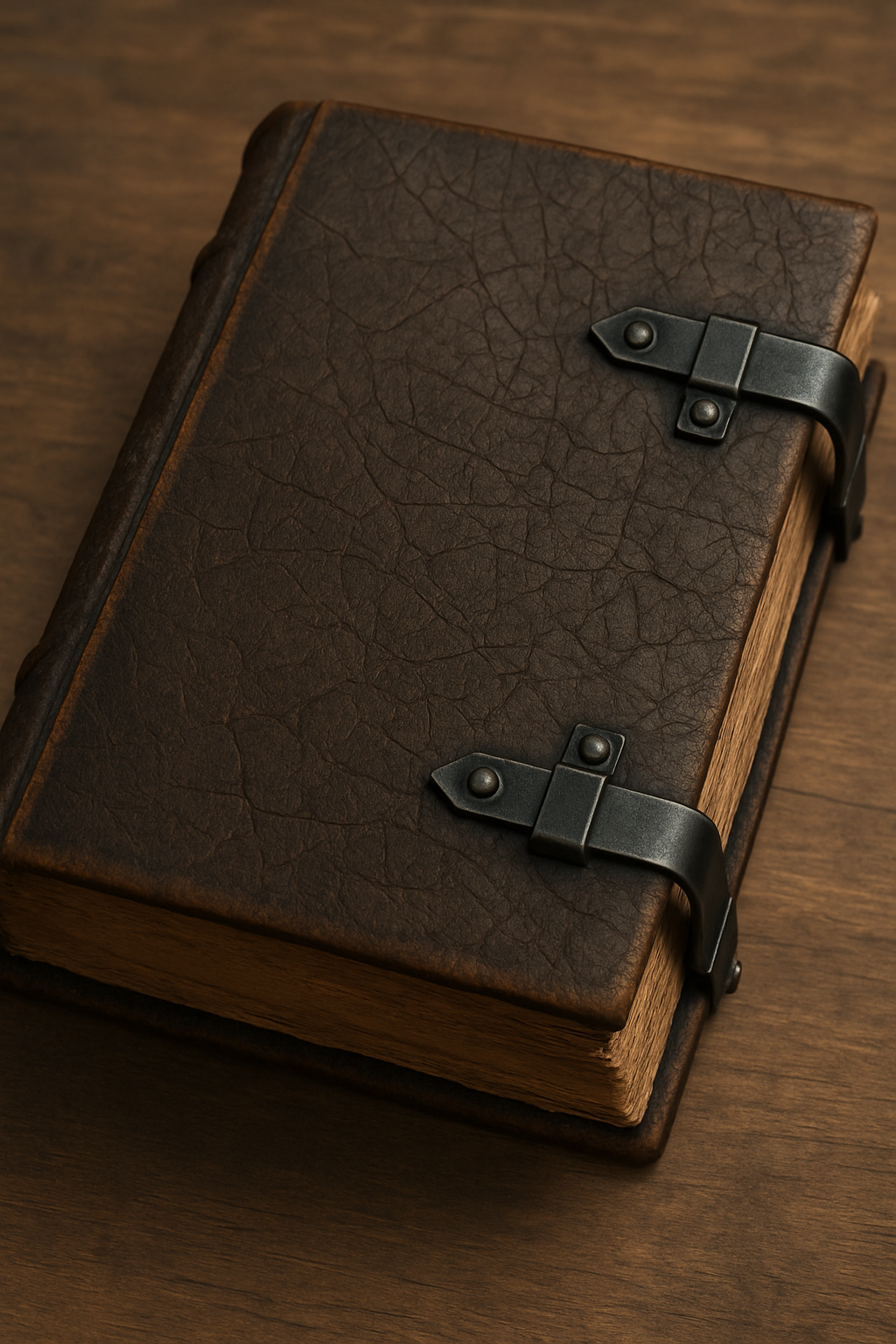
Found within a cracked leather-bound tome sealed in blacksteel clasps. Pages are brittle but enchanted for preservation. Scrawled in beautiful elven calligraphy. Margins are lined with corrections, diagrams, and occasional dark smudges.
Purpose
The journal entries attempt to decipher the various symbols in the book.
Descension Book Journal Entries
Entry One
I was not prepared for what I found in the lower vaults beneath the ruined spire of Eldoria. The book was bound in spells I’ve not seen in a millennia—wards bent inward, woven to obscure rather than protect. I would have overlooked it entirely, had the dust not recoiled at my presence. It’s elvish, yes, but archaic—script used in the pre-Schism era. The kind the gods buried with their mistakes. One spell is repeated throughout: Descension. The glyphwork is elegant, brutal, and so dense with metaphysical implications that it took me a full year just to isolate the primary intent. But now I am certain: this is a god-killing spell. I’ve studied ascendant magic for three centuries. Ascension, the mythic twelfth-level spell that allows a mortal to take the mantle of divinity, is familiar to me only through fragments and whispers. But this—this is its inversion. This is not transcendence. It is annihilation.Entry Three
The diagrams match those found in The Song of Stars-Torn, a text known to deal in apotheosis rituals. Yet the tonal resonance of Descension is rooted in negative harmonics—pulled from what the book calls “the dark weave.” I have heard of this “dark weave” only in forbidden texts and hushed tones among other archmagi. A perversion of the Weave found in the Negative Energy Plane. Wild. Unstable. Antithetical to creation. Unlike Ascension, which uses divine resonance and the breath of celestial light, Descension draws upon un-being. Entropy incarnate. Where Ascension weaves light into flesh, Descension unravels it, unmaking the divine thread. I’ve begun sketching comparative sigils. See folio 7—note the inverted concentric runes. The similarities are unmistakable, but their meaning is reversed. It’s like reading a prayer backward and hearing a scream.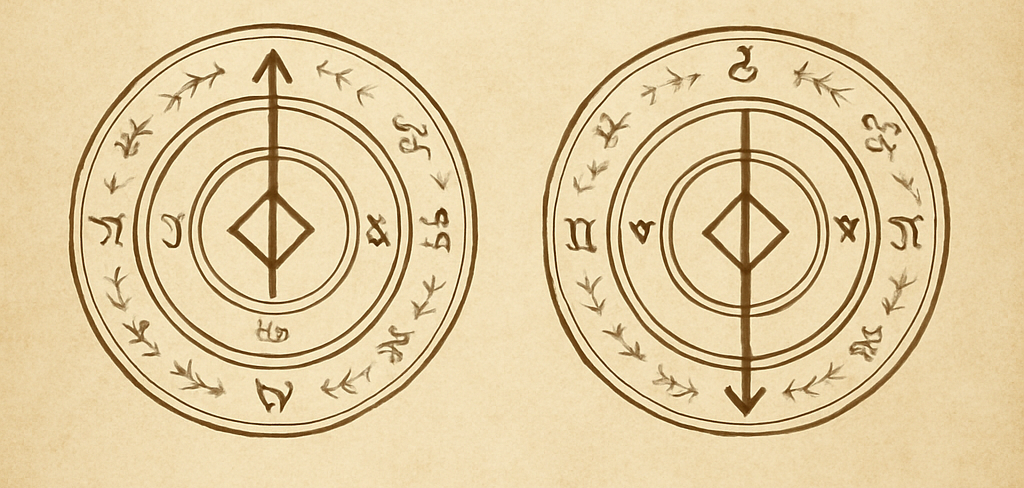
Entry Five
I made the mistake of speaking part of the incantation aloud. The candles died. My shadow detached. For a moment, I believe I glimpsed the spell’s intention—not metaphorically, but viscerally. I felt the absence of being. I am shaken. Yet I continue. Is this the arrogance of the scholar, or the pull of the dark weave itself?Entry Eight
A breakthrough. The core of the spell lies not in destructive force, but in denial. Descension does not kill in the way a blade kills—it denies existence. The god is not slain, but erased, their essence severed from time, worship, and memory. This is a spell that cuts through reality as a concept. It would require more than power. It would demand the invocation of oblivion—a source of energy that not only resists life, but rejects it. I now believe Descension can only be cast where the veil is thin, and only in the presence of the god it seeks to undo. Proximity is not enough. There must be connection. Perhaps... worship twisted to hatred? Devotion turned to void?Entry Eleven
There is a final rune I cannot translate. It resists all attempts at unraveling—shifting each time I fix it in my mind. It is alive, or close to it. I believe it is the anchor of the spell’s final effect: the act of severing. Without this rune, any casting would likely fail—or worse, misfire. If Ascension raises the soul by burning it clean, Descension drags it down by feeding it rot. Both cost the caster everything.Entry Thirteen
I dreamed of Elandor, my mentor. He died two centuries past. In the dream, his eyes were hollow, and he whispered:You reach for the death of gods and think the heavens will not reach back?I’ve stopped casting for now. But the glyph calls to me even in silence. The weave hums differently in its presence. It knows it can be understood. And perhaps it wants to be. I should burn this book. I won’t. Not yet. — Calethar Iriandel Archmage of the Sapphire Eclipse Warden of the Unwritten
Medium
Paper
Myth
Location
Authors
Signatories (Characters)

Comments