
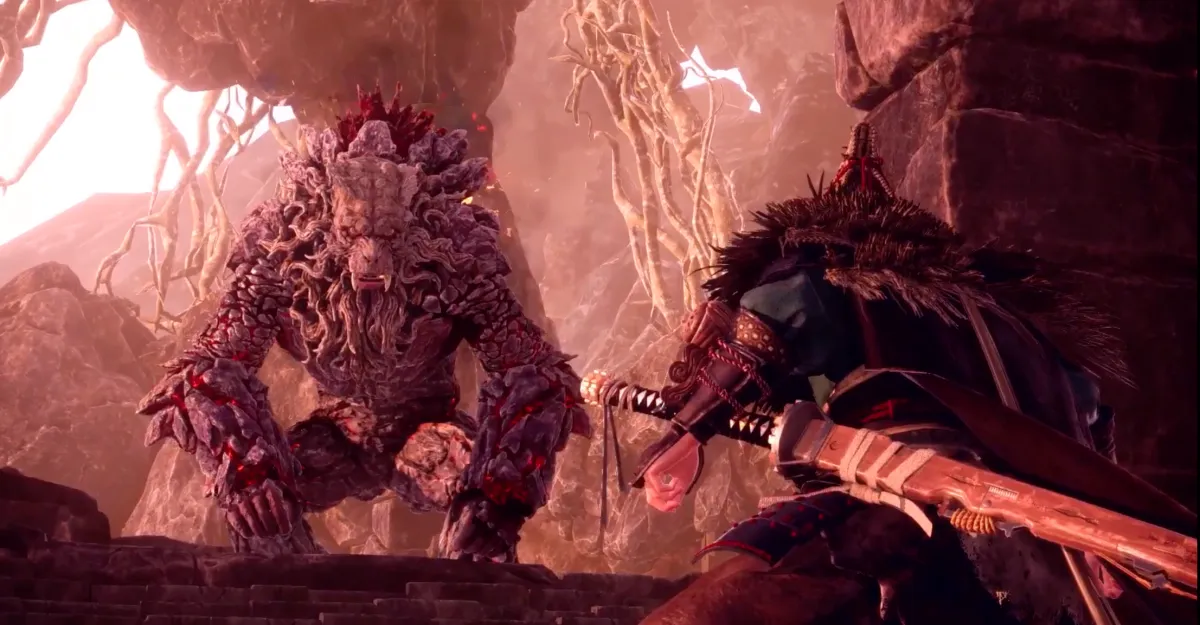
Danger Rank Scaling System: DRSS Overview
Danger Rank
Scaling System (DRSS)
The DRS or Danger Rank Scaling System: is a method used to categorize monsters based on their threat level. Typically just known as the Rank System, the DRSS is a general system of comprehensive rankings that categorize monsters/foes based around their level of difficulty and threat to adventurers and civilizations as a whole. A revolutionary system originally created by the founders of the Hunters Guild, the forefather of the system has long since quickly been adapted by the entire world due in part for it’s ingenuity; providing a standardized framework for assessing and classifying creatures and as such is often considered to be the template for many nations' own variant of the system.
Multiple forms of this ranking system exist throughout the world, but all still follow the same principles. The primary guide for this system is often judged by size, but other factors may also be taken into account on an administrator approved case-by-case basis. By assigning monsters to different classes based on their strength, abilities, and overall threat level, the system helps to provide adventurers a way to prepare for encounters and strategize their approach to defeating various creatures.
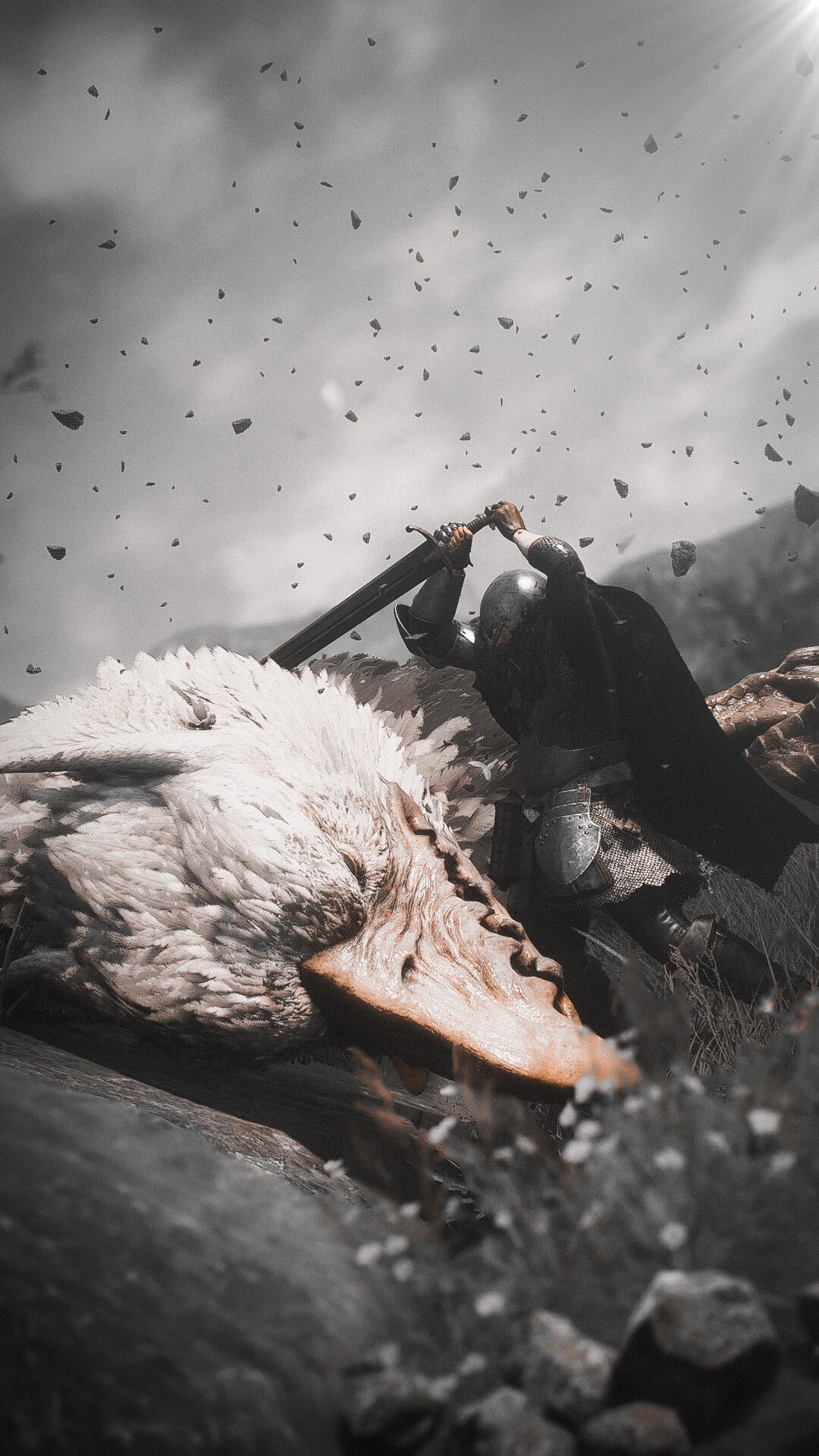 The Danger Classification System serves as a valuable tool for adventurers to navigate the dangers of the world, providing a structured framework for understanding and categorizing the diverse array of creatures they may encounter on their journeys. Because multiple systems exist, equivalence between two systems may not align with each other as closely as one may assume, so it's best to get familiar with ones that you are unfamiliar with.
A revolutionary system created by The Hunters Guild, average rankings are often given to an entire species, with further reclassification being given to specific individuals based on special factors. This form of scaling created by the guild, is the byproduct of an upgraded version of the traditional scaling system now shortened down in order to be more cohesive, while still following the tradition of splitting monsters by Type. It runs on a 6 tier rank system which classifies monsters and other hostiles by taking into account a variety of variables. For example, Humanoid or small monsters often run on a scale of DRS that calculates how much of a threat they are to public safety by combining their WSE: Wide Scale Environmental Range and PFHA: Potential For Heinous Activity.
For Example, Floaters will often scale a mid 2 Low 3 on the Humanoid variation of the DRS scale because of their potential to be a widespread issue due to their knack for inhabiting large bodies of water, meaning they have a wide range to cause havoc should their numbers get too high. If their numbers were to get too high and encroach more and more on human settlements, they would score a mid 3.
However, unlike floaters, on the same scaling chart, a undead will often score a High 3 to a low 4, due to how vastly widespread they can become in such a short period of time, as well as their highly volatile nature (worse than Floater) filling up most of that scoring.
for larger class monsters, ranking typically follows as such:
Rank 1: The smallest and least threatening rank, often only capable of posing a danger to its immediate area. The typical, expected range of measurements for a rank 1 are anywhere up to about the size of a white rhinoceros or Eighteen wheeler Flatbed Truck.
Rank 2: Rank 2 is the bottom threshold for a larger than life threat, able to pose a threat to a local area and beyond, and often typically have a much harder time hiding than a rank 1.
Rank 3: The average, most common Large Monster rank. Rarely exceeding 100 feet in size, these are at the threshold of what's considered biologically possible to sustain
Rank 4: This rank is where the danger to humankind really begins to be displayed. The size of these monsters rarely gets over 50 meters (150-ish feet) in height. A larger, organized military presence is typically called in for the appearance of a monster at this size.
Rank 5: The heavy hitting power players of the world, Rank 5 are dangers at a level all their own. Typically occupying the size range of 200 feet, rarely exceeding 100 meters or 300-ish feet, these are creatures that demand the attention of the surrounding region and the heaviest ordinance humanity can deliver to stop them. They are not by any means unstoppable, however.
Rank 6: The true juggernauts of the world, rank 6's are as powerful as they are rare. Towering beyond the size and dangers of previous ranks, these creatures have the potential to endanger far more than a single city, some even having the potential to alter our way of life as we know it. These creatures are rarely within the realm of human intervention, often requiring the actions of multiple smaller Mythics/ Items to deal with.
The Danger Classification System serves as a valuable tool for adventurers to navigate the dangers of the world, providing a structured framework for understanding and categorizing the diverse array of creatures they may encounter on their journeys. Because multiple systems exist, equivalence between two systems may not align with each other as closely as one may assume, so it's best to get familiar with ones that you are unfamiliar with.
A revolutionary system created by The Hunters Guild, average rankings are often given to an entire species, with further reclassification being given to specific individuals based on special factors. This form of scaling created by the guild, is the byproduct of an upgraded version of the traditional scaling system now shortened down in order to be more cohesive, while still following the tradition of splitting monsters by Type. It runs on a 6 tier rank system which classifies monsters and other hostiles by taking into account a variety of variables. For example, Humanoid or small monsters often run on a scale of DRS that calculates how much of a threat they are to public safety by combining their WSE: Wide Scale Environmental Range and PFHA: Potential For Heinous Activity.
For Example, Floaters will often scale a mid 2 Low 3 on the Humanoid variation of the DRS scale because of their potential to be a widespread issue due to their knack for inhabiting large bodies of water, meaning they have a wide range to cause havoc should their numbers get too high. If their numbers were to get too high and encroach more and more on human settlements, they would score a mid 3.
However, unlike floaters, on the same scaling chart, a undead will often score a High 3 to a low 4, due to how vastly widespread they can become in such a short period of time, as well as their highly volatile nature (worse than Floater) filling up most of that scoring.
for larger class monsters, ranking typically follows as such:
Rank 1: The smallest and least threatening rank, often only capable of posing a danger to its immediate area. The typical, expected range of measurements for a rank 1 are anywhere up to about the size of a white rhinoceros or Eighteen wheeler Flatbed Truck.
Rank 2: Rank 2 is the bottom threshold for a larger than life threat, able to pose a threat to a local area and beyond, and often typically have a much harder time hiding than a rank 1.
Rank 3: The average, most common Large Monster rank. Rarely exceeding 100 feet in size, these are at the threshold of what's considered biologically possible to sustain
Rank 4: This rank is where the danger to humankind really begins to be displayed. The size of these monsters rarely gets over 50 meters (150-ish feet) in height. A larger, organized military presence is typically called in for the appearance of a monster at this size.
Rank 5: The heavy hitting power players of the world, Rank 5 are dangers at a level all their own. Typically occupying the size range of 200 feet, rarely exceeding 100 meters or 300-ish feet, these are creatures that demand the attention of the surrounding region and the heaviest ordinance humanity can deliver to stop them. They are not by any means unstoppable, however.
Rank 6: The true juggernauts of the world, rank 6's are as powerful as they are rare. Towering beyond the size and dangers of previous ranks, these creatures have the potential to endanger far more than a single city, some even having the potential to alter our way of life as we know it. These creatures are rarely within the realm of human intervention, often requiring the actions of multiple smaller Mythics/ Items to deal with.
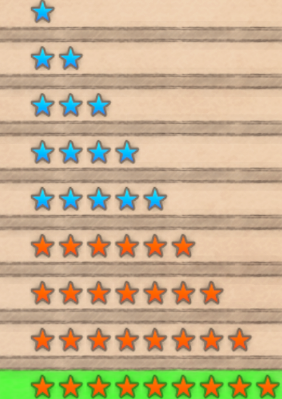 Spaulding's System on the other hand uses a star rating system from 1 to 9 to indicate monster difficulty.
1-4 Stars typically classify as Low Rank. These are the easiest creatures one may encounter during their beginnings and are generally considered the default.
4 Stars and above (usually around 5-6) classify as High Rank. These missions feature tougher versions of monsters and may also introduce adventures to new species entirely.
6-9 classify as Advanced Rank. Very few creatures ever make it to a 9 ranking, but those who do may often be feared as world-enders.
Spaulding's System on the other hand uses a star rating system from 1 to 9 to indicate monster difficulty.
1-4 Stars typically classify as Low Rank. These are the easiest creatures one may encounter during their beginnings and are generally considered the default.
4 Stars and above (usually around 5-6) classify as High Rank. These missions feature tougher versions of monsters and may also introduce adventures to new species entirely.
6-9 classify as Advanced Rank. Very few creatures ever make it to a 9 ranking, but those who do may often be feared as world-enders.
Rank Scaling
Guild System
Only one creature currently ranks at R- 6
Other forms of Scaling Systems may also include ones such as what is often popularized by the Fieldings System. The Fieldings System imparts an alphabetical ranking system from F-A, with the general concept being that F is the lowest and A is the highest rank For example, one system ranks F as a "nuisance", while A is a "continent-killer".


Comments