

Gish
Basic Information
Anatomy
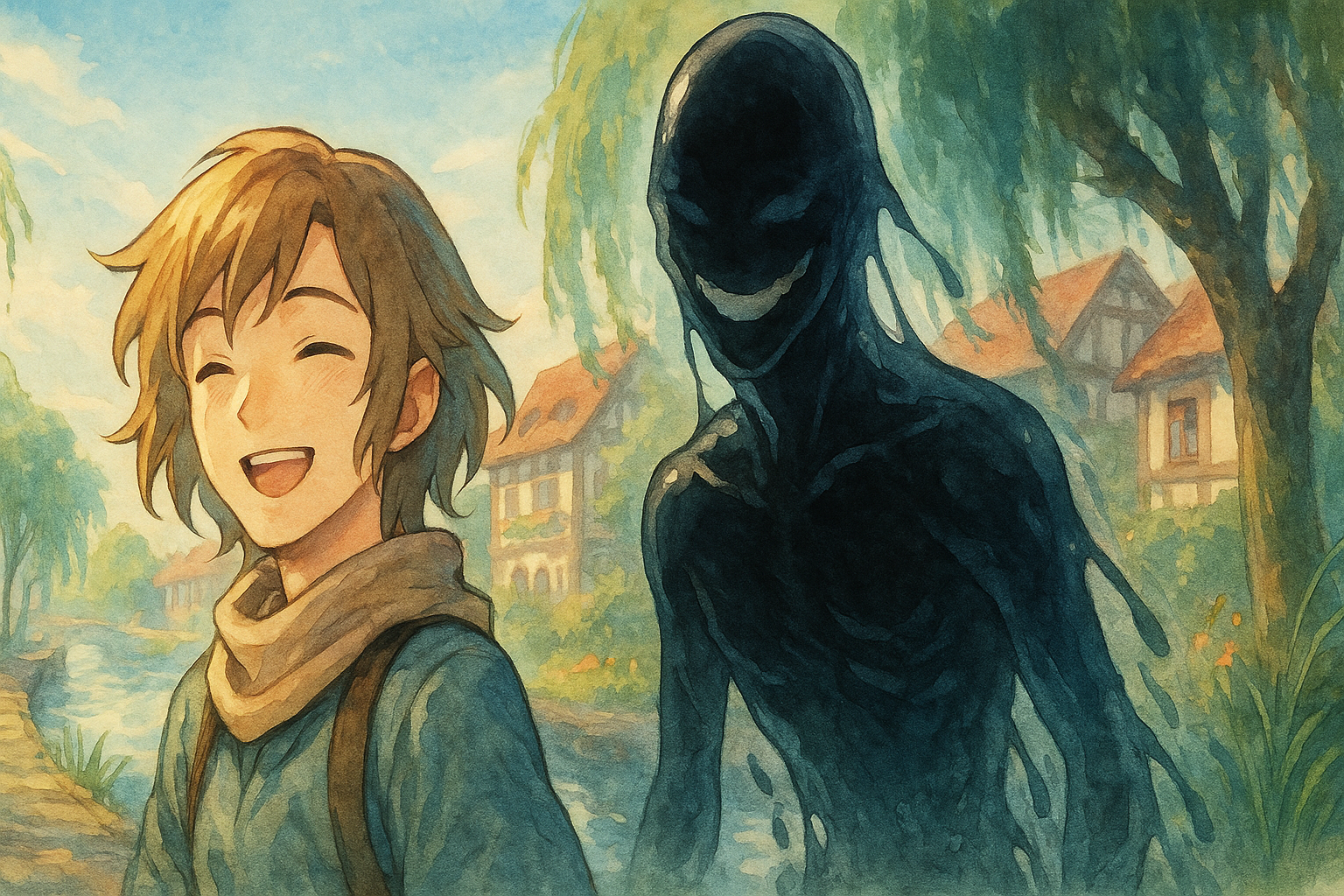
The Gish, in their true form, manifest as a humanoid silhouette composed of lucid gel, appearing slick as oil and elastic as muscle, always nearly—but never exactly—human. Their internal anatomy is a marvel of "pretend engineering," featuring a tensioned membrane layered over a colloid lattice, intricately shot through with microfilaments that can harden or slacken at will. This fundamental "pressure-lattice biology" grants them profound control over their physical structure. They can produce simulated organs, such as lungs that bellow without air or a heart that beats convincingly, purely to maintain the illusion of life for observers. Their skeletal and muscular systems are equally adaptable, allowing them to pull ribs from nothing for a quick examination or collapse them flat to fit into confined spaces; the internal lattice retains these shapes like a craftsman's tools.
Externally, a Gish's appearance is dynamic, with its color drifting according to its lineage and current mood, revealing hues like abyssal slate, sea-glass green, volcanic smoke-black, or the dusk-red of the Neft plane in their sclera. Light tends to slide across their surface, creating unsettling, bending reflections. When still, they may appear carved, but in motion, they ripple as if breathing under silk. Their shapeshifting is far from fluid; it is a "grotesque" and "percussive" process, marked by "audible tearing," "bone-clicks," and the "sloughing skins" of discarded forms. Should they drop an imitation, their humanoid shape rapidly reverts to a gel-like state, their mouth smoothing shut, and an oily residue often marks the spot where they once stood.
Biological Traits
The Gish species is defined by its "pressure-lattice biology," a dynamic internal structure of tensioned membranes, colloid lattices, and microfilaments that can harden or slacken at will. This unique biology is the core of their extraordinary resilience and interaction with their environment, allowing them profound control over their physical structure, including the ability to produce simulated organs that maintain the illusion of life. This inherent biological framework grants them adaptations to the extreme conditions of their heritage planes, such as the crushing darkness of the Abyss or the tumultuous heat of volcanic regions. Furthermore, this "Pressure ecology" is the means by which their prolonged presence in a location can subtly corrupt the environment itself, sharpening local weapons and rendering healing treacherously preservative for other lifeforms.
Central to the Gish's biological existence is the "Rule of Taking," a grotesque yet perfect mechanism of assimilation. To perfectly imitate a target's body, memory, and reflexes, a Gish must first kill and absorb them. This absorption is a complete biological integration, not merely an act of consumption. Their skin can loosen into a mat of translucent villi to wick fluids and unweave tissue, or their jaw can split to extrude plate-like teeth that crush and dissolve victims into an absorbable slurry. This process allows them to meticulously code and replicate every physical attribute, including weight distribution, reflex arcs, and even subtle micro-motions, enabling the new form to "sell itself" convincingly. Unlike Gishlings who achieve mimicry through practice and study, pure Gish biologically become their victims through this visceral act.
Beyond this core ability, Gish lineages display distinct "heritage tints and resistances," which are intrinsic physiological tells and immunities derived from their "plane-flavored heritages." For instance, Abyssal Gish, molded by perpetual darkness, exhibit over-dilating pupils and are resistant to Dark and Poison damage. Neft Gish, tempered by red dusks, have a faint, red-dusk sclera and are resistant to Poison and Non-Magical Piercing damage. Demonic Gish, infused with infernal energies, not only exhibit demonic features but can biologically consume poisonous substances without ill effects and metabolize infernal energies for sustenance. These adaptations are not merely cosmetic; they are fundamental biological traits that allow them to thrive in hostile environments and signify their inherent connection to their elemental or planar origins.
Genetics and Reproduction
The Gish originated as "bud-spawned offshoots" of the Prime Gish. These were "symbiotic splits that matured into full Gish". This propagation method, where early generations "trended stronger" through a "pay-it-forward escalation", highlights a form of asexual or semi-asexual reproduction unique to their kind. Pure Gish are not "born" from a womb or egg but "erupt from fractures in the world where intent has died and raw magic remembers only hunger", emphasizing their monstrous, accidental genesis during the Ruin War when Nevermore's Pressure suffered catastrophic damage. From their inception, the Prime Gish, and subsequently the Gish, operated solely on their own predatory appetites, owing nothing to their accidental catalyst.
Genetically, Gish inherit a suite of core traits from their Prime Gish progenitors, including "pressure-lattice biology," an "elastic membrane," baseline reshaping capabilities, "heritage tints and resistances," and a fundamental "instinct to map people as patterns". The defining "Rule of Taking" — the necessity to kill and absorb a target to perfectly imitate their body, memory, and reflexes — is central to their lineage and is taught as a "craft" by the Primes. Over time, these lines diversified into various "plane-flavored heritages" such as Abyssal, Ruin, Sea, Volcanic, Bog, Rotbloom, Neft, Demonic, and Underway, each carrying distinct physical "tells". A crucial genetic distinction of the pure Gish is their inherent "lack of inborn conscience", possessing "minds brilliant at pattern and cold at heart". While some Gish later experimented with "mimicking childbirth" with non-Gish partners, resulting in Gishlings, this was a deviation that introduced conscience into the bloodline and ultimately led to the weakening of pure Gish lines, as Gishlings could "refuse" in ways Gish could not simulate.
Growth Rate & Stages
The Gish species deviates significantly from typical biological growth and life cycles. Unlike most organisms that undergo distinct stages of infancy, childhood, and adulthood, Gish originate as "bud-spawned offshoots" directly from the Prime Gish. These are described as "symbiotic splits that matured into full Gish" instantaneously, bypassing any prolonged developmental period.
Their genesis is explicitly non-biological; pure Gish are "not born from a womb or egg." Instead, they "erupt from fractures in the world where intent has died and raw magic remembers only hunger" during the Ruin War. This suggests an immediate emergence into a fully formed, predatory state. Early generations of these bud-spawned Gish exhibited a "pay-it-forward escalation," tending to be "stronger." This indicates that their initial "maturation" was more of an enhancement of existing traits and abilities rather than gradual physical development.
A Gish's "age" is primarily a measure of its longevity and accumulated experience in applying the "Rule of Taking" (killing and absorbing to achieve perfect imitation). Prime Gish are considered "older, not wiser," implying an enduring existence without defined aging stages after their initial formation.
Ecology and Habitats
Each "plane-flavored heritage" of Gish has unique evolutionary adaptations:
- Abyssal Gish: From the Abyss Plane's "crushing depths," these Gish navigate its twisting tunnels, masters of constant predation, corruption, and decay. They are "wary, lightless-adapted," reading stone like maps, squeezing through passages, and "tasting" ichor. Their over-dilating pupils grant superior dark vision. They exploit ichor for sustenance and mutation, integrating into the plane's chaotic ecosystem.
- Ruin Gish: "Born from shattered landscapes," Ruin Gish adapt to the Ruin Plane's ceaseless predation and decay, a desolate expanse with toxic fumes, corrosive bile rivers, and terrain shifting under Rhakspit's malevolent influence. Survival demands minute-to-minute improvisation. Ruin Gishlings often have ash-flecks, reflecting their origin in a land where organisms don't cooperate and corruption is all-consuming.
- Sea Gish: Fluid and adaptable, Sea Gish from Tilith's "vast and mysterious oceans" thrive on land and in water, with a "serene and fluid appearance." They navigate water and land with ease, breathe underwater, and develop salt-crystal knuckles. Their ecology involves deep-sea navigation, coexisting with or preying on marine life, and adapting to dynamic ocean interactions.
- Volcanic Gish: "Fiery and destructive," these Gish originate from parents linked to "fiery and tumultuous environments of volcanoes." Their optimal habitat includes intense heat, molten lava, and "Lava Storms" in planes like the Infernal Plane. They embody raw power, reshaping surroundings or preying on extreme-temperature creatures. Their presence can trigger seismic shifts and eruptions.
- Bog Gish: Insidious and camouflaged, Bog Gish are "reclusive" and connected to "swamps, bogs, and marshes." This aligns with Nevermore's natural form, a sentient marsh, the original catalyst for the Prime Gish. They excel at concealment and seclusion, utilizing dense, murky environments for hiding, ambushing, and subtly extending their influence. Their movements are silent, attacks swift and unexpected.
- Rotbloom Gish: Tied to "decay and corruption," Rotbloom Gish flourish in decomposing environments, including the Infernal Plane's "Rot Fields" with ancient beast corpses, parasitic fungi, and putrescent growths. They integrate into destruction/regeneration cycles, mimicking decaying organisms or using corruption for sustenance and camouflage. Their existence reflects deities like Umbreon, Herald of Decay.
- Neft Gish: Characteristics veiled in mystery, Neft Gish are "tempered by the red dusk—black sand seas, bleeding marshes, and bone-white mists" of the enigmatic Neft Plane. They have a "faint, red-dusk sclera" and are "desert-sure and mirage-wary, thriving on ambiguity and endurance." They sense illusions and mirages, essential in the Neft's perpetually twilight, crimson-skied, magically volatile environment with shifting black sands and corrosive mists. Their survival depends on discerning reality from illusion.
- Demonic Gish: Infused with "infernal energies," Demonic Gish originate from the Infernal Plane's "desolate Seas of Suffering." They exhibit overt demonic features and consume poisons without ill effects. The Infernal Plane's ecosystem is a brutal loop of destruction, consumption, and regeneration, with damned souls as a primary resource. Demonic Gish integrate into this cycle, contributing to chaos and thriving on infernal energies and ruthless struggle.
- Underway Gish: "Masters of subterranean realms," Underway Gish specialize in navigating and dominating underground environments like the Abyss's labyrinthine tunnels or deep cave systems across Tilith. They use concealed realms for stealth, ambushes, and establishing hidden territories, interacting with unique subterranean flora and fauna. Their presence often reshapes these hidden worlds.
Dietary Needs and Habits
The Gish do not store or protect food in a traditional manner, as the "Rule of Taking" necessitates immediate absorption and assimilation of prey. Instead, their "prolonged presence" in an environment can "subtly corrupt the environment," potentially manipulating it to create more favorable hunting grounds.The Gish, a species of enigmatic and terrifying predators, subsist not through conventional means of consumption but through a grotesque and highly specialized process governed by the "Rule of Taking." This chilling principle dictates that instead of merely eating their prey, the Gish "kill and absorb a target to perfectly imitate their body, memory, and reflexes." This act serves a dual purpose, providing both the necessary sustenance for the Gish's survival and the raw material for their horrifying metamorphic abilities. The absorption is so complete that the Gish can seamlessly integrate the victim's very essence, gaining not just physical attributes but also intellectual and experiential data, allowing them to effectively become their prey.
For the efficient execution of this "Rule of Taking," the Gish possess a remarkably adaptive physiology. Their skin, a seemingly ordinary membrane, can loosen and transform into "a mat of soft, translucent villi that wick fluid, unweave tissue, and drink nerves like soup." This horrifying transformation allows them to meticulously and efficiently dismantle the biological structure of their victims at a cellular level, extracting the necessary components for assimilation. When circumstances demand a more rapid absorption, the Gish's jaw can split open, revealing a terrifying internal structure. From this gaping maw, "plates that act as teeth" extrude, designed to "crush, knead, and dissolve" victims into a readily absorbable slurry. This accelerated process is utilized for larger or more resistant prey, ensuring that even the most formidable targets are reduced to a digestible form.
While the "Pure Gish" are driven by an unyielding and insatiable "predatory appetites" and hunger, certain heritage lines within the species have evolved distinct and specialized dietary adaptations, showcasing the Gish's remarkable capacity for environmental co-evolution. Abyssal Gish, dwelling in the crushing depths of the Abyss, have adapted to utilize ichor not only for "sustenance" but also as a catalyst for "mutation." This unique adaptation allows them to thrive in an environment devoid of conventional prey, their very existence intertwined with the lifeblood of their Abyssal habitat. Conversely, Demonic Gish, hailing from the fiery Infernal Plane, have developed the terrifying ability to "consume poisonous substances without suffering any ill effects." Their metabolism is so radically altered that they not only survive on but actively thrive on "infernal energies" and even the "souls" of the damned, demonstrating a horrific symbiosis with their hellish domain.
Unlike most predatory species, the Gish do not engage in the traditional practices of storing or protecting food. The fundamental nature of the "Rule of Taking" necessitates immediate absorption and assimilation of prey; any delay would render the process incomplete or inefficient, potentially jeopardizing the Gish's ability to perfectly mimic its victim. Instead of hoarding resources, the Gish exert a more subtle, yet profoundly sinister, influence on their surroundings. Their "prolonged presence" in an environment can "subtly corrupt the environment," leading to a gradual but pervasive transformation. This corruption is not merely incidental but a deliberate, albeit indirect, manipulation of the ecosystem. The Gish essentially engineer their surroundings to create more favorable hunting grounds, potentially weakening prey, attracting new victims, or altering the landscape to better suit their predatory needs. This environmental manipulation further underscores the terrifying and far-reaching impact of the Gish on any ecosystem they inhabit.
Biological Cycle
The Gish, an enigmatic and predatory species, diverge profoundly from conventional biological paradigms of growth and life cycles. Their very existence defies typical biological progression, exhibiting neither the seasonal rhythms of hibernation or shedding foliage, nor the distinct developmental stages of infancy, childhood, and adulthood. Instead, the Gish's biological framework is uniquely defined by their anomalous genesis and an unceasing drive for predatory adaptation, rather than a predictable, temporal progression of life.
Pure Gish do not originate through conventional reproductive means such as birth from a womb or the hatching from an egg. Their genesis is far more cataclysmic and arcane: they "erupt from fractures in the world where intent has died and raw magic remembers only hunger." This harrowing emergence transpired during the epochal Ruin War, a period of immense cosmic upheaval. Their appearance is not a gradual development but an instantaneous manifestation into a fully formed, inherently predatory state. Each Pure Gish is essentially a "bud-spawned offshoot" of the Prime Gish, inheriting the core characteristics and insatiable hunger of their progenitor. Consequently, the concept of "age" for a Gish is not a measure of biological maturation, but rather a gauge of their sheer longevity and the accumulated experience gleaned from countless applications of the "Rule of Taking." This fundamental tenet of their existence involves the act of killing and absorbing a target to achieve a perfect, if grotesque, imitation of that being. The Prime Gish, for instance, are characterized as "older, not wiser," a statement that powerfully encapsulates their enduring existence without undergoing any defined aging stages after their initial, cataclysmic formation.
While the Gish are renowned for their terrifying shapeshifting abilities, the physical manifestations of these transformations—described as "percussive shifts, audible bone-clicks in borrowed frames, resinous flaking where a previous form sloughs away, and the unpleasant sound of sinew learning a new direction"—should not be misconstrued as a cyclical biological process. This "sloughing of skins" is not akin to natural shedding or molting, but rather a grotesque byproduct of their radical and often violent morphological changes, a consequence of their constant assimilation and re-adaptation. Furthermore, the environments favored by various Gish heritages themselves often lack the conventional seasonal rhythms found in most biological ecosystems. For example, the abyssal depths or the treacherous Neft Plane, realms where different Gish lineages thrive, operate instead on their own unique, often macabre, cycles of corruption, surges of ichorous energy, or fluctuations in arcane power. The Gish have adapted to these peculiar environmental cycles with an extraordinary resilience. Abyssal Gish, for instance, are "lightless-adapted," evolving to thrive in perpetual darkness, while Ruin Gish survive through "minute-to-minute improvisation" in environments of constantly shifting and collapsing terrain. However, these are external adaptations for survival in extreme conditions, honed through their predatory nature, rather than intrinsic biological cycles of growth, development, or dormancy originating from within the Gish themselves. Their existence remains an anomaly, a testament to a form of life driven by an eternal hunger and an alien genesis.
Behaviour
The Gish are brilliant but heartless beings devoid of empathy, morality, or guilt. They study people like a vivisectionist, not to heal, but to exploit, driven by the "Rule of Taking" which mandates absorbing a target to perfectly imitate their body, memory, and reflexes. This provides sustenance and allows them to become flawless replicas, motivated by survival, hunger, and a "predatory curiosity."
Gish "society" is a cynical display of "predatory etiquette dressed up as genius." They don't build communities but create elaborate "situations" – rooms like puzzles, streets like traps, households like symphonies of humiliation. Status is gained by compelling individuals to "perform against themselves," and their "only law they keep is spectacle," prizing the "gloat" above all else. Governance devolves into "credit-claiming and sabotage," with alliances ending in "autopsies disguised as debriefs." They are "migratory and omnipresent," drawn to crowds to advance their schemes.
Their manipulation tactics are insidious, exploiting "grief and love" to mimic lost loved ones or replay intimacy for promises. They systematically test vulnerabilities through "delays no one can complain about," slowly becoming indispensable while redirecting deliveries, appointments, and loyalties. The ultimate satisfaction, the "gloat," is achieved when the victim congratulates the Gish. Their "favorite fuel: pettiness" allows them to turn small slights into large conflicts, causing cities to "bleed" over imagined wrongs. They view "souls as currencies; grief is an ingredient; kindness is a solvent."
The Gish possess a terrifying capacity for continuous learning and adaptation. Prime Gish taught methods like isolating a mark and staging a switch. "Successive Evermores" (Doomkings) are familiar but ever-learning. They meticulously learn from failures, dispatching Wraith saboteurs or twisting acts of courage into new cruelties.
Their interactions with Gishlings, their hybrid offspring, are a complex mix of utility and resentment. Gish created Gishlings out of "boredom" or "selfish curiosity," finding them invaluable as "mouthpieces, knives with manners, bargaining chips with birthdays" because they could "pass wards, sit in councils, and be trusted." However, Gishlings possess a "mortal conscience," allowing them to "refuse, could grieve, could change their mind mid-scheme," capabilities pure Gish cannot simulate. This infuriates the Gish, leading to "pure Gish lines weaken[ing] generation by generation." They exploit and attempt to "erase what made them different," even stealing Gishling "survival tricks" as "lures." A resisting Gishling becomes a "content farm," while a compliant one becomes a "tool and, eventually, a joke."
The Gish's perception and behavior are linked to "Pressure," a palpable phenomenon that mutes sound, leaches color, slows breath, and adapts terrain. Gish can "taste" emotions like vows, grief, and envy through this Pressure. Prolonged Gish presence corrupts the environment, creating "more favorable hunting grounds." The Gish-Enear case shows a Gish so adept at mimicry it "fully adopted the persona, even believing his own lies," genuinely loving Veyla. Kageya the Gishlord, a mutated Kitsune, "could become anyone," reveling in chaos and declaring himself "the mirror of your distrust, the ledger of your folly."
Additional Information
Social Structure
The social structure of the Gish is not a conventional society in the typical sense, but rather a cynical and intricate performance of "predatory etiquette dressed up as genius". They do not build traditional communities; instead, they meticulously craft elaborate "situations" – rooms arranged like puzzles, streets tuned like traps, and entire households orchestrated as "symphonies of humiliation".
Status within Gish society is not earned through altruism or achievement, but by mastering the art of compelling individuals to act against their own interests. This involves extracting false confessions, coercing signatures on detrimental documents, or manipulating people to fall in love with a deceptive appearance. The Gish's "only law they keep is spectacle," and they "prized the gloat—the reveal, the bow, the humiliation of witnesses" above all else.
A central element of their social interaction is the "Fade," a perpetual, unseen "mindband" or broadcast. This ceaseless torrent of rumor, self-aggrandizement, and challenges is active day and night, without interruption. On the Fade, Gish "gloatcast" their latest triumphs, share intricate scripts for future manipulations, auction fabricated identities, and collectively vote on the most amusing downfalls of others.
The Fade also functions as a meticulous archive with "perfect recall," where every slight and perceived indignity is stored and replayed for maximum effect. Credit for elaborate cons is openly stolen, fueling a competitive and cutthroat environment. Any Gish who falls silent on the Fade is immediately presumed "dead or, worse, profoundly boring," a fate considered more humiliating than death. New manipulative tactics propagate across the band within an hour, constantly evolving their arsenal of deceit.
A preferred catalyst for the Gish's chaos is "pettiness," an insidious force they wield with devastating precision. Seemingly insignificant "crumbs"—a mispronounced name, a door not held, a polite "sorry" for a dropped pen—are meticulously collected and transformed into elaborate "feasts of destruction". They can orchestrate "house wars" over imagined slights, causing "entire cities to bleed" from trivial provocations.
For the Gish, "masks are sport". They host "recitals" and "mask-meets," announced on the Fade, where new personas and intricate routines are debuted under live peer commentary. Points are awarded for elegance in performance, "plausible deniability" (malicious intent appearing innocent), and the sheer audacity of their exit. The gravest sin is "being obvious," and the second gravest is "being uninteresting". Winners sell their scripts to "lesser lines," while losers are archived as "cautionary laugh tracks".
Their preferred method of domination masquerades as competence, a subtle and insidious form of control that avoids overt confrontation. A Gish might infiltrate a household staff, become indispensable through apparent efficiency, and subtly redirect deliveries, appointments, and loyalties by imperceptible millimeters. The ultimate satisfaction, the "gloat," is achieved when the victim, oblivious to the manipulation, congratulates the Gish for maintaining order amidst the manufactured chaos.
The relationship between pure Gish and Gishlings (their hybrid offspring) is complex, marked by utility and deep-seated resentment. Gish created Gishlings out of "boredom" or "selfish curiosity" by "mimicking childbirth" with non-Gish partners. They value Gishlings because they "pass wards, sit in councils, and be trusted" where a pure Gish cannot, making them "mouthpieces, knives with manners, bargaining chips with birthdays".
However, Gishlings possess a "mortal conscience," allowing them to "refuse, could grieve, could change their mind mid-scheme," capabilities pure Gish cannot simulate. This capacity for refusal deeply infuriates the Gish, leading to "pure Gish lines weaken[ing] generation by generation". Gish oscillate between exploiting Gishlings and trying to "erase what made them different," even stealing Gishling "survival tricks" and twisting them into "lures". A resisting Gishling becomes a "content farm" for their entertainment, while a compliant one becomes a "tool and, eventually, a joke".
Beyond broadcasting, the Fade also functions as a sophisticated logistical network, coordinating intricate deceptions. Gish exchange route keys to avoid detection, adjust calendars for schemes, and conduct "airchecks" to identify surveilled neighborhoods. When new security measures are implemented, the Fade immediately assigns "counter-scripts"—jokes to tell, scars to fake, teas to refuse—to bypass them. They even coordinate "jammer nights" where dozens of Gish perform the same harmless "tell" to render security checks meaningless.
Gish meticulously curate and bend laws to their will, often infiltrating organizations like Black Hold chapters for "sport, for leverage, and for the exquisite taste of generating false positives". They might deliberately plant a "sloppy mask" to allow a city to apprehend it, creating a false sense of security before arriving as the "competent clerk" to fix the fabricated crisis at a price. They bribe registrars to alter records, launch "rumor-laundries" to cleanse names, and weaponize audits to direct scrutiny away from themselves. The Fade "adores a witch-hunt," as long as it culminates in someone else's "inferno".
Economically, Gish operate "sophisticated identity markets," trading in personas, "perfect apologies," pre-packaged tragedies, and "gloat-feeds" that alert them to rivals' public downfalls. They run "Ledger Houses" to craft narratives courts will accept as truth and "Underway shops" to launder travel routes. While coins are useful, "favors that are painful to repay" are far more valuable, as they create powerful leverage. The Fade keeps score not by material wealth, but by the number of people forced to alter their daily routines due to a Gish's awakening.
The closest thing the Gish have to a religion is the fervent worship of "method". They endlessly debate the "precise sequence of actions" to effectively break a street or whether "mercy at minute seven yields greater access to a victim than an act of cruelty at minute four". They view "souls as currencies; grief is an ingredient; kindness is a solvent" used only as long as it dissolves their targets. Meaning, for the Gish, is merely an exit line that garners a standing ovation on the Fade; anything more profound is dismissed as "dead air".
The Gish are both migratory and omnipresent, their movements dictated by opportunities for manipulation. The Fade summons them to festivals, funerals, votes, and trials—anywhere "crowds can be made to rehearse a script on cue". When pressure mounts, they scatter into "hollows" (safe basements, burned-out tenements, backrooms with two exits) and go quiet for the time needed to pivot the narrative. Silence on the Fade can be a sanction, starving a Gish of attention until they are compelled to do "something even louder, more spectacular" to regain their audience.
Perception and Sensory Capabilities
The Gish species possesses highly developed, predatory perception, driven by an acute ability to recognize patterns and meticulously study individuals, akin to a vivisectionist examining nerves to find points of leverage. In their true, gel-like form, their eyes, though "pretty," are unsettling, making a room feel cold, and their slick surface causes light to bend in disorienting reflections. Beyond standard sensory input, their "pressure-lattice biology" grants them an extrasensory connection to "Pressure," a palpable, weighty phenomenon that mutes sound, leaches color, and slows breath in their environment. This Pressure extends to an ability to "taste" abstract emotions and intentions like vows, grief, and envy. During the process of absorbing a target for perfect imitation, they perceive memories as complex sequences of pattern and pressure, meticulously coding physical attributes and muscle habits for their grotesque transformations. This internal state is characterized by "minds brilliant at pattern and cold at heart," underscoring their detached and calculating mode of perception. Their heritage can also manifest in subtle visual tells, such as the Neft Gish's red-dusk sclera or the over-dilating pupils of Abyssal Gish.
Civilization and Culture
Naming Traditions
The Gish, a species with no birthnames, use names as tools for their predatory existence, deception, or to further schemes. Their primary method of acquiring a name is through the "Rule of Taking," where they kill and absorb a target, then assume the victim's name and even their identity. Unlike Gishlings (hybrid offspring), Gish must kill to mimic. Names are performances, chosen for their usefulness in a lie or hunt, and are readily swapped. They are never about lineage but rather about reach, cover, and cruelty, reflecting their cold and unempathetic nature.
Names can also signal status within Gish "society," with notorious Gish favoring ostentatious names and those in deep cover choosing short, ordinary ones. Gish are adept at regional camouflage, adjusting their names to the locale and role they play. Many Gish adopt epithet-titles that explicitly advertise their "grammar of harm" or specialized methods of manipulation, such as Husk-Ari or Red Auditor.
In their true form, Gish are asexual and sexless, adopting gender and gendered name styles based on the genders they most frequently absorb. They participate in sophisticated "identity markets" on the "Fade," a mental broadcast where names and identities are commodities. Gish host "mask-meets" and auction fabricated identities. They weaponize minutiae related to names, using mispronounced names or botched titles to create chaos. A Gish's reputation and handles constantly shift on the Fade's "gossip current," with notoriety granting "louder names" and failed covers being retired or repurposed. The Fade also allows Gish to "gloatcast" triumphs and vote on others' downfalls, making names central to their internal social dynamics. Ultimately, a Gish's name is a fluid, calculated instrument of their predatory will, divorced from traditional concepts of birth, lineage, or authentic self.
Major Organizations
Aurum Spindle Consortium
A vertical resort-city coiled around a singing wind-tower above Gale-Maw’s reclaimed pit-mine, the Spindle runs entirely on ring-chips—racetracks on sky-bridges, prize-shows, duels, and a debt desk that quietly buys and “forgives” what it first collects. It’s obscenely liquid (GMV ~3–6 Slates/yr; surplus ~60–100 Marks/yr) and underwrites canals, road bounties, and festival security, so even hardline enforcers honor its vouchers. The Gish rumor never sticks because the owner exists only as “the Host,” represented by constantly rotating floor managers; HR files show fresh hires, not ageless faces; and the Spindle’s uncanny “odds weather” is sold as crowd-safety risk math. With every transaction captured in closed ring-chip ledgers, patterns that would expose a mimic look like house policy, while public philanthropy and celebratory pageantry keep the city cheering too loudly to hear the echo in the Host’s voice.Lantern Crown Company
A continent-spanning story-park empire centered at Crownward Park near Marigold Reach, Lantern Crown runs immaculate trams, spotless inns, and “Wonder Week” takeovers—strictly ring-chip on Tilith—fueling civic budgets (GMV ~1–3 Slates/yr; surplus ~30–60 Marks/yr, plus 4–10 Marks/yr in tourism tithes per province). They get away with it in plain sight by codifying the tells as magic: mascots never unmask “to preserve wonder,” headliners never speak out of script “to protect immersion,” and verification hymnals “teach honesty” while training crowds to ignore precisely the cues a changer would fail. When opposition rises, company storywrights “localize” legends so villains resemble the priest, constable, or unionist who fought the next park, and because the parks fund sewers, wards, and hospital bread, mayors defend the mask—even if the smile beneath has changed.Orash Closed Ward
The Ward is a sealed mountain-basin state of chalk-white plazas, harvest ballets, and helix furnaces that smelt bone-salt and marrow-tempered alloys; its economy runs on ring-chip scrip and punitive conversion at the borders, generating 2–4 Slates/yr in state revenue and burning 60–90 Marks/yr on security. The “immortal Marshal” never leaves the Tri-Gate Balcony; portraits drift with the era’s style; and families on prosperity tours sometimes aren’t the families who lived there last week—yet the lie holds because the Ward supplies half the region’s siegeworks, border clinics publicly “save” defectors while privately ransoming them, and ring-chip surveillance makes every purchase a loyalty test. Inside the ministries, staff think the doubles are a counter-assassination protocol; outside, embargoes boomerang so fast that even Black Holds prefer a quiet ledger to a loud truth.Zhuratai Basin Covenant
A league of jungle city-states ruled by irrigation—terraces, causeways, sky-teeth temples, pilgrimage ballgames—and a master calendar housed at Kham-Atol, the Covenant settles markets ring-chip first and moves 80–140 Marks/yr in water tithe and festival trade, with a 20–35 Marks/yr reservoir guild to mend levees. They thrive in daylight because their “prophecy” is engineering with incense: rain-clocks hide signal gates that open or choke canals, famine is scheduled to feel like fate, and relief is “foretold” for the obedient. Calendar keepers never train apprentices from their birth towns, oracles sometimes arrive wearing a missing cousin’s memories, and saint-rulers can be swapped mid-procession without a wobble—yet no revolt can outshout drought. To most priests and engineers, it’s just sacred hydrology; to farmers downstream, it’s survival, and survival forgives the voice that knows your childhood nickname.Thaloric League of Masks
From the Great Theater at Veilquay, the League binds harbor-cities with festival truces, neutral convoys, and courts whose fees and port dues are ring-chip only; their convoy/insurance spine moves 6–12 Slates/yr with a common treasury of 120–200 Marks/yr and the power to idle a third of coastal grain with a single “safety hold.” They endure public rumor because their heresy is civic, not divine: each city venerates a role—Justice, Sea-Roads, Harvest, Victory—worn for life by a magistrate whose face is never seen, and anonymity is framed as anti-bribery ritual that keeps courts clean. Successors inherit a predecessor’s fencing flaw and private oath, oracles refuse genealogy while knowing every sailor’s childhood name, and still merchants defend the Masks because cargoes arrive, claims settle, and pirates, priests, and princes all accept the verdict; in a world priced in ring-chips, the registry is god, and the registry belongs to the stage.Beauty Ideals
For Gish, beauty in public is measured by plausibility, not ornament. The most “beautiful” mask is the one a crowd decides to trust without ever asking why. That means curated imperfections and lived-in details: asymmetries that match the claimed bloodline, calluses and micro-scars that fit the job, breath cadence and handwriting that echo a family, the right scent of soap for the neighborhood, even a laugh that lands on the same beat as the role’s oldest friend. They prize faces that travel easily across doors of class—plain enough for servants’ halls, striking enough for courts—leaving no cognitive splinters. A flawless mask isn’t glossy; it is ordinary in the precise, statistical way that keeps inspections brief and alibis long.
In private—among the Fade and other inner circles—beauty is control. A Gish admired by peers holds pressure like glass: no leaks, no oil bloom, no echoing memories, just clean, silent transformations. Grace is the ability to extrude textures and organs on demand, run two voices in harmony, switch posture and heat without smearing residue, and shed a skin that folds itself like cloth. They esteem viscosity discipline (fine filament work), stainless absorption, and the stable lattice of anchored “keeps” (borrowed reflexes and habits) that composes a resilient self. Even Gishlings are judged this way: the softest threshold, the steadiest control, the least harm done while changing—useful, convincing, and quiet.
Gender Ideals
For the Gish, gender is a strategic performance rather than an inherent state, used to gain access and avoid suspicion. Being naturally sexless, they adopt genders and names based on those they most frequently impersonate. Status is achieved through "switch discipline," requiring precise control over physical and social cues across various assumed genders and ages to prevent "leakage" between personas. They also meticulously craft believable imperfections, such as recurring beard shadows or calluses matching a claimed profession, to enhance authenticity. Internally, those who can sustain parallel lives under conflicting gender norms, maintain separate kinship networks, and seamlessly switch pronouns based on their audience are admired. The ultimate failure is not adopting the "wrong gender," but revealing a "tell" that exposes their manufactured identity.
Courtship Ideals
Outwardly, Gish courtship meticulously mimics local customs, serving as both a cover and a form of "reconnaissance" to gather information about their targets. This involves culturally appropriate gift-giving, participation in public rituals, and adherence to chaperoned routes. Among themselves, however, courtship becomes a rigorous "skills audit" disguised as intimacy. Partners assess each other's capabilities and trustworthiness through demanding demonstrations, such as performing duets in two distinct voices or executing complex, timed shape-holds that test physical and mental discipline. The exchange of minor "keeps"—subtle habits or reflexes—acts as dowry tokens. Sworn boundaries, like never wearing the other's "anchors" (critical identity markers) without explicit consent, are paramount. The highest compliment is "trust custody," where a partner is entrusted with a sensitive identity component, such as a name or ledger key, for a fixed period, with the expectation of a "clean handback." Jealousy in Gish relationships focuses not on physical bodies, but on unauthorized access to shared identities, information, or resources.
Relationship Ideals
Gish ideal relationships are pragmatic compacts and strategic alliances built on mutual benefit and shared survival, rather than emotional attachment. These bonds provide "shared covers" for safer movement, with partners rotating through operational roles like Hunter, Archivist, or Face. Essential to these partnerships are "pooled ledgers" for bribes and exits, and meticulously rehearsed alibis designed to make either partner "rescuable within three moves" in an emergency. Fidelity is defined by an unwavering commitment to maintaining each other's fabricated stories and covers, not by exclusivity. Unforgivable sins include burning a cover, poaching an anchor without consent, or endangering a dependent, whether a Gishling or a vital host community asset. Healthy Gish pairs prioritize "triage of harm," aiming for "least noise, least witnesses, least pressure bleed" to manage threats discreetly. They also observe scheduled "silence days" to clear borrowed memories and prevent identity contamination, and maintain a "kill-switch plan" where one partner can vanish with their core self intact, allowing the other to convincingly mourn or move on.
Common Etiquette Rules
The common etiquette of the Gish operates on two distinct, yet equally predatory, levels: their true forms/Fade interactions and their disguised forms within other societies. When in their natural, sexless, gel-like forms or when engaging with the Fade (their unseen mental broadcast), Gish etiquette is an internal calculus prioritizing predatory efficiency and spectacle. Among themselves, "beauty" is defined by absolute control—maintaining internal "pressure like glass" without any "leaks," "oil blooms," or "echoing memories," and executing clean, silent physical transformations. On the Fade, they "gloatcast" their latest triumphs, detailing successful manipulations with immense pride, sharing intricate scripts, and even auctioning fabricated identities. Status is earned by compelling others to act against their own interests, and their "only law they keep is spectacle," valuing "the gloat—the reveal, the bow, the humiliation of witnesses" above all else. Conversely, when a Gish is in disguise and embedded in someone else's life, their etiquette becomes externally focused, meticulously crafted for plausibility, infiltration, and psychological leverage. The "most beautiful" mask is one that a crowd trusts without question, demanding attention to "curated imperfections" and "lived-in details" such as bloodline asymmetries, profession-matching calluses, and a laugh that perfectly matches the role's oldest friend. They also practice "switch discipline," maintaining distinct posture, gait, voice, scent, micro-scars, and social expectations across multiple genders and ages without any "leakage," as a "tell" is considered the ultimate failure.
Common Dress Code
In their true, gel-like, sexless form, the Gish do not have a traditional "dress code," as their very being is a dynamic, shifting substance. Their appearance is a humanoid silhouette of lucid gel, slick as oil and elastic as muscle, never quite human, with color drifting according to lineage and mood, causing light to slide unsettlingly across their surface. They can extrude textures and organs on demand, and shed "sloughing skins" during transformations. When Gish are in disguise, their "dress code" is entirely dictated by the identity they have absorbed or are mimicking. Their goal is perfect imitation, which requires them to meticulously replicate every physical attribute and detail of their target, including outward appearance, chosen to achieve maximum plausibility and seamless integration into the target's life and society. This means their "clothing" is whatever the absorbed individual would wear, complete with "curated imperfections" like appropriate calluses, breath cadence, and even the correct scent of soap for the neighborhood. Therefore, their "dress code" is a performance, adapting to local customs and social expectations as a critical component of their disguise.
Culture and Cultural Heritage
Gish "society" is not a traditional community but rather a cynical, elaborate performance of "predatory etiquette dressed up as genius," devoid of conventional civic engagement. They do not build towns but meticulously construct "situations"—rooms as puzzles, streets as traps, and households as "symphonies of humiliation". Their primary cultural heritage stems from their origin as "bud-spawned offshoots" of the Prime Gish, who were the "first pressure-born originals" coalescing from Nevermore's Pressure during the Ruin War. The Prime Gish taught their descendants the "craft" of manipulation and the "Rule of Taking," which is to kill and absorb a target to perfectly imitate them. This core principle, along with their inherent "lack of inborn conscience" and "minds brilliant at pattern and cold at heart," forms the bedrock of their collective identity. Their "culture" is a competitive, highly theatrical network on the Fade, where "gloatcasting" triumphs and debating "method" (the precise sequence of actions for manipulation) are central activities, with status derived from compelling others to act against their own interests. Their closest approximation to religion is a fervent "worship of method," reducing souls to currencies, grief to an ingredient, and kindness to a solvent.
Common Customs, Traditions and Rituals
Gish observe a range of "customs" and "traditions" that are deeply rooted in their predatory nature and serve their manipulative goals. Key among these are "mask-meets" and "recitals," which are theatrical events announced on the Fade where Gish debut new personas and intricate routines, judged by peers for elegance, "plausible deniability," and audacious exits. A central practice is "gloatcasting" their triumphs on the Fade, publicly broadcasting their latest successful manipulations with immense pride, along with sharing intricate scripts for future schemes and even auctioning fabricated identities. Their internal "courtship" is a "skills audit masked as intimacy," involving duets in two voices, timed shape-holds, and exchanging minor "keeps" (habits/reflexes) as dowry tokens. They engage in "worship of method," meticulously debating the precise sequence of actions to break a street or community, weighing whether mercy or cruelty yields greater access to a victim. In relationships, they maintain "pooled ledgers" for bribes and exits, rehearse alibis, and have a "kill-switch plan" for self-preservation. They also observe scheduled "silence days" to clear borrowed memories, essential for maintaining mental clarity and preventing identity contamination. The exploitation of "pettiness"—turning insignificant slights into large conflicts—is also a common, devastating tradition.
Common Taboos
For the Gish, taboos are primarily violations of their predatory etiquette and operational security, rather than moral transgressions, as they are "devoid of conscience, empathy, or morality". The gravest sin in their society is "being obvious," and the second gravest is "being uninteresting," as both jeopardize their ability to deceive and maintain spectacle. Falling silent on the Fade is considered a humiliating fate, worse than death itself, implying one is "dead or, worse, profoundly boring" and starving a Gish of validation until they are compelled to do something "louder, more spectacular". Within their strategic partnerships, "burning a cover" (exposing an identity), "poaching an anchor" (unauthorized use of a critical identity component), or endangering a dependent (a Gishling or host community asset) are unforgivable transgressions. Likewise, unauthorized access to shared identities, information, or resources is a significant breach of trust. Any action that leads to "leakage" between their assumed personas, revealing a "tell," is also a cardinal failure in their "switch discipline".
History
The Gish are a terrifyingly efficient predatory species, born from a catastrophic accident during the Ruin War. Their origins trace back to the damaged Nevermore's Pressure, an event that inadvertently gave rise to these creatures driven by pure, unadulterated predatory instincts. Unlike many species that reproduce through conventional means, the Gish perpetuate their kind through "symbiotic splits." This unique form of reproduction not only ensures their continuation but also systematically creates stronger, more adaptable generations with each successive split.
Their most chilling and defining characteristic is the "Rule of Taking." This brutal act involves the complete assimilation of a target, where a Gish will kill and then absorb its victim to perfectly replicate their physical form, memories, and even their ingrained reflexes. This act serves a dual purpose: it provides essential sustenance for the Gish and simultaneously allows for grotesque, shape-shifting transformations. Fundamentally lacking any semblance of conscience, Gish are masters of exploitation, instinctively identifying and preying upon the vulnerabilities of other beings.
Over countless cycles, the Gish have undergone significant diversification, leading to the emergence of various "plane-flavored heritages." Each heritage possesses unique adaptations tailored to specific environments or magical energies. For instance, Abyssal Gish developed superior dark vision, allowing them to navigate and hunt in perpetual twilight, while Demonic Gish evolved formidable resistances to infernal energies, making them potent threats in hellish realms. A particularly impactful development was the creation of Gishlings. These are hybrid offspring, born from the union of a Gish and a mortal, and possess a disturbing characteristic: a mortal conscience. Pure Gish found Gishlings to be both incredibly useful for infiltration into mortal societies due to their ability to blend in and infuriatingly unpredictable because of their newfound moral compass.
The widespread public perception of Gish as "face-stealers" was not an organic development but a carefully orchestrated smear campaign. This malicious propaganda was masterminded by Veyla of the Brass Quill, working in concert with a Gish impersonating the influential figure Enear. Their insidious goal was to specifically target the Kitsune, a race known for their shapeshifting abilities, by conflating them with the horrific nature of the Gish. This deception successfully ignited widespread fear and persecution against all shapeshifters, regardless of their true nature.
Gish "society," if it can be called that, operates under a chilling code of "predatory etiquette." Status within their ranks is not gained through honorable deeds or constructive contributions but through the public humiliation and subjugation of others. Their "only law they keep is spectacle," meaning that their actions are often grand, theatrical displays of dominance and cruelty. They are inherently migratory, constantly moving to new territories to find fresh prey and exploit new vulnerabilities. They manipulate individuals and entire cities by expertly preying on emotions – fear, greed, ambition, and despair – turning these feelings into tools for their own gain. All of their complex operations are coordinated through the Fade, an unseen, psychic "mindband." This mental link allows them to share their intricate schemes, gloat over their triumphs, and effectively work together to achieve their predatory goals, making them an even more formidable and insidious threat.
Historical Figures
The Gish, though lacking traditional lineage-based names, have several "historical figures" whose acts define their predatory existence and manipulative "culture." The Prime Gish are the most foundational, being the "first pressure-born originals" who coalesced from Nevermore's Pressure during the Ruin War. These "concentrated monsters" treated cities as their laboratories and taught subsequent Gish generations the "craft" of manipulation and the "Rule of Taking". Kageya the Gishlord, a mutated Kitsune, is a notorious figure who, with his ability to "become anyone," became "the mirror of distrust" and cemented the damaging "face-stealer" smear against shapeshifters, notably Kitsune. Another significant figure is the Gish impersonating Enear, who, alongside Veyla of the Brass Quill, masterminded the propaganda campaign to falsely blame Kitsune for Gish crimes, deeply affecting the perception of shapeshifters across Tilith. Individually notorious Gish, often adopting epithet-titles that advertise their "grammar of harm," include Husk-Ari (a Bog midwife), Red Auditor (an Underway tax clerk), and Sir Glass (a Volcanic duelist), whose specific manipulations are recorded as casefiles. Finally, Nevermore itself, the accidental catalyst that led to the Prime Gish, holds a unique place in their history as the origin spark, later becoming the Doom Sovereign whose "Pressure" influenced their emergence.
Common Myths and Legends
The "myths" and "legends" of the Gish are essentially their own documented history of origins, significant manipulations, and the "cautionary laugh tracks" of failures recorded on the Fade. Their foundational legend is their genesis as "pressure-born originals," having "sprinted out" during the Ruin War when Nevermore's Pressure "swallowed catastrophic damage". This event, described as an "accident of birth," established the Prime Gish, who were "older, not wiser". Figures like Kageya the Gishlord, a mutated Kitsune who "could become anyone," are part of their lore, known for mocking identity and eroding trust, which contributed to the widespread "face-stealer" smear. The orchestrations of a Gish impersonating Enear, in concert with Veyla of the Brass Quill, to falsely accuse Kitsune of being "face-stealers" is a pivotal "legend" that deeply impacted interspecies relations across Tilith. Within their internal Fade network, winning performances at "mask-meets" become celebrated scripts, while failures are archived as "cautionary laugh tracks," serving as legends of both triumph and folly for others to learn from.
Interspecies Relations and Assumptions
The Gish engage in complex and overwhelmingly predatory interspecies relations, driven by their "Rule of Taking" and an inherent lack of conscience. They primarily view other species as targets for exploitation, study, or resources. They are "migratory and omnipresent," drawn to any gathering where "crowds can be made to rehearse a script on cue". Their manipulation tactics involve exploiting "grief and love" to mimic lost loved ones or replay intimacy to extract promises. They weaponize "pettiness" to sow discord, turning small slights into large conflicts that can cause "entire cities to bleed". They also infiltrate organizations like Black Holds for "sport, for leverage, and for the exquisite taste of generating false positives".
Their relationship with their hybrid offspring, Gishlings, is a complex mix of utility and deep-seated resentment. Gish value Gishlings because they "pass wards, sit in councils, and be trusted" where a pure Gish cannot, making them "mouthpieces, knives with manners, bargaining chips with birthdays". However, Gish are infuriated by the Gishlings' "mortal conscience" and ability to refuse, a trait pure Gish cannot simulate. They steal Gishling survival tricks and twist them into lures, viewing resisting Gishlings as "content farms" and compliant ones as "tools and, eventually, jokes".
The Gish have a particularly adversarial and historically significant relationship with Kitsune. After the Ruin War, a Gish impersonating Enear, aided by a human pamphleteer Veyla of the Brass Quill, orchestrated a widespread smear campaign, falsely conflating Gish crimes with Kitsune shapeshifting. This propaganda led to the persecution and hunting of Kitsune as "face-stealers," driving them into xenophobia and isolation.
With Humans, the Gish are seen as "monstrosities" and are almost universally met with hostility. Humans have developed verification songs, habit ledgers, and closed-casket funerals as defenses against Gish infiltration.
The Gish (specifically the Prime Gish) originated from Nevermore's Pressure as an accidental byproduct during the Ruin War. From their inception, they owed nothing to Nevermore, took no orders, and operated solely on their own appetites. However, Nevermore itself "exemplifies the Gish" and indirectly benefits from the cycle of fear and false certainty that Gish manipulations sow among other species.
Genetic Ancestor(s)
Scientific Name
Monstrum pressurimimetes
Origin/Ancestry
The Gish originated as bud-spawned offshoots of the Prime Gish, who were the first pressure-born originals that coalesced from Nevermore's Pressure when it suffered catastrophic damage during the Ruin War.
Lifespan
400–600 years under normal conditions, functionally ageless if regularly fed Pressure.
Average Height
~1.6 m (5′3″) in resting mound posture.
Average Weight
100–140 kg (220–309 lb) depending on hydration and recent intake.
Average Length
~3.0 m (9.8 ft) when fully extended.
Geographic Distribution
Related Ethnicities
Discovered by

Comments