

Bukt (Boo-kt)
Two Tongue Mushroom
Few plants are as welcome to the general Churrian as that of the Bukt. A relatively simple tasting mushroom when eaten raw, when roasted, a world of flavors begins to bubble forth that can surprise the casual diner.
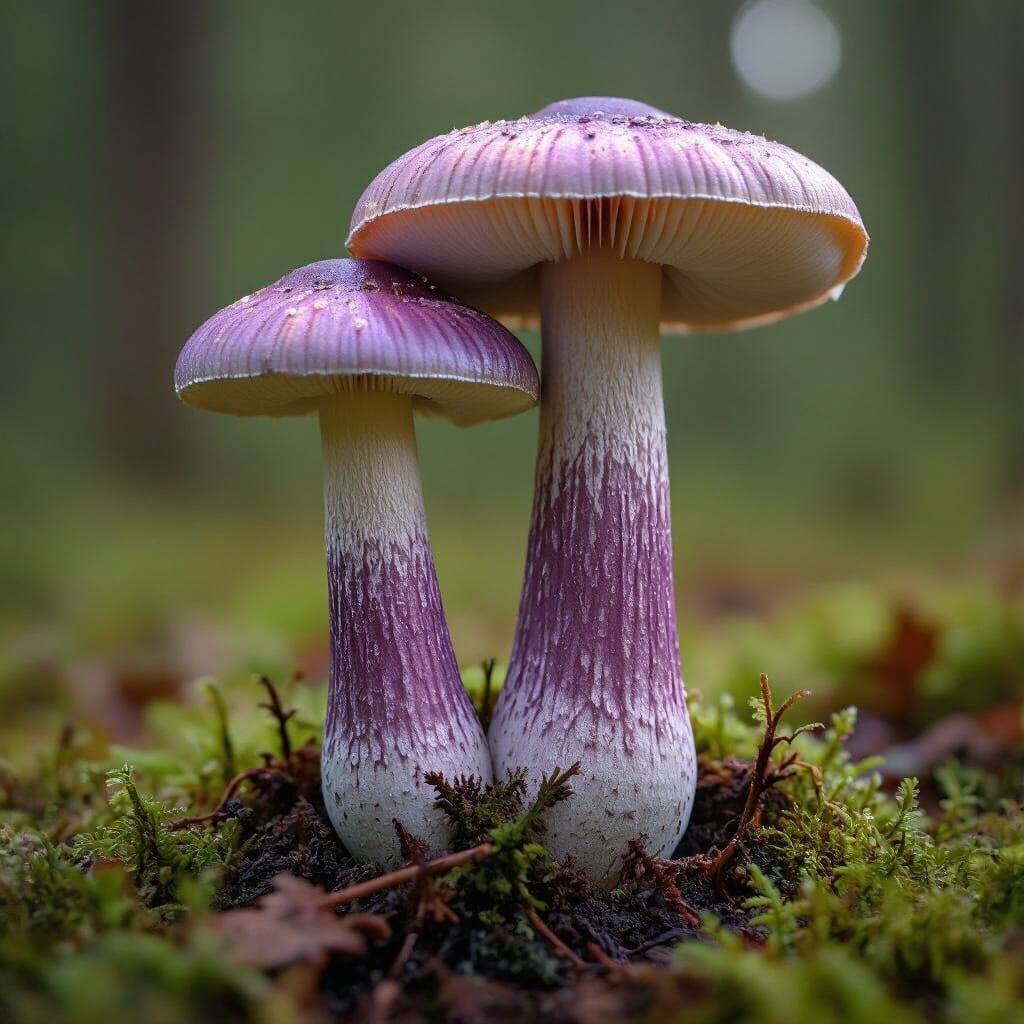
Consisting of two stalks, the roasting process intensifies the Bukt's natural earthiness and allows it to develop a crispy, meaty texture. However, it is each stalk's different flavors that are unlocked when properly cooked that give this mushroom its place at the table. With one stalk tasting of roasted vegetables and the other bearing a lighter, meat-like flavor, they are each accompanied by a rich, savory, and intensely umami flavor background that many Churrians find satisfying and a worthy accompaniment to many meals.
Basic Information
Anatomy
Growing in two large white stalks with hints of purple-blue coloration along their lengths and flared caps, the Bukt stands out amongst the grey rocks and rotting underfoliage of its preferred home with a somewhat colorful nod. Easy to pick, it's a common game for Churrian children to collect as many as they can find as they gather food for the family table.
Genetics and Reproduction
Relying primarily on its spores to be carried by the wind, the Bukt is a fast-growing fungus that is able to take root and thrive in forest-like conditions with ease. As such, it has become a favored side dish for many Churrians not only because of its distinctive nontoxic body, but also because its rapid growth allows for consistent harvesting over many different seasons.
Growth Rate & Stages
Taking around a few weeks to begin growing its fruiting body, the Bukt is a common sight throughout many Churrian gardens and subsequent kitchens because of its ease of development and complex flavors when properly prepared. If taken care of properly, a single Bukt organism can last a family for years, although careful gardeners have to keep an eye out for rampant growth. As such, it's often advised to pick the mushroom's fruiting body before it finishes developing its spores. A process that generally takes a few days after the body's growth.
Ecology and Habitats
Founds to grow best in wooded and temperate forests, the Bukt is a relatively hardy plant that is only stopped once temperatures in a region reach the point of first frosts. As such, during times of winter seasons, it's not uncommon for many Churrian families to keep stores of pickled or fermented Bukt ready for further consumption, though many would agree that fresh roasted Bukt is the best way to consume it.
Additional Information
Domestication
Due to the destruction of the Churrian's homeworld, Bukt can now be found most often in a domesticated space within many Churrian greenhouses and gardens. However, due to the rapid growth that this mushroom frequently demonstrates, and depending on the outside environment a settlement facility may be surrounded by, the public is often encouraged to enter into specialized and walkable 'grow houses' to pick the Bukt that they need for their tables.
Uses, Products & Exploitation
Primarily exploited for its flavorful addition to many Churrian meals, the Bukt does see limited use as a dried powder spice to be used as an addition to soups and salads.
Geographic Origin and Distribution
A common sight throughout the now destroyed world of Churr, the Bukt mushroom now finds most of its home within Churrian greenhouses and gardens as a carefully cultivated crop. As a result, wild varieties of Bukt are an incredibly rare occurrence, owing primarily to careless gardeners or animal intervention.
Lifespan
6 to 7 years.
Conservation Status
This species is relatively rare throughout Refuge as it is primarily found in Churrian gardens as opposed to being allowed to grow in the wild, though there are exceptions.
Average Height
4 to 6 inches.
Geographic Distribution

This was such a fun read—Bukt sounds both delicious and culturally meaningful, and I love how you captured its role in everyday Churrian life. The detail about children gathering them for family meals really brings the plant’s place in the community to life.