
Zilaran Empire
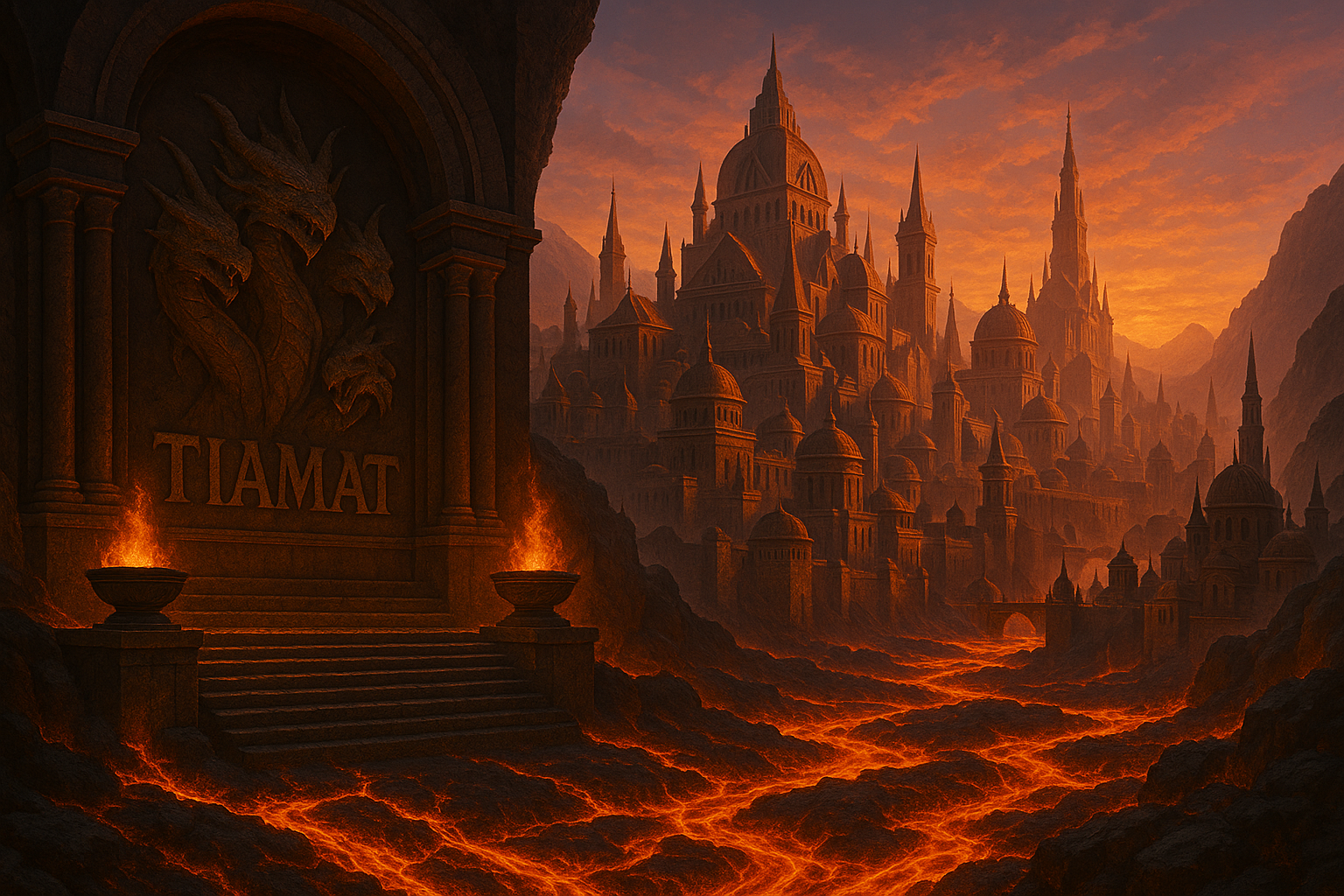
The Zilaran Empire dominates the eastern desert and volcanic highlands, a vast and unforgiving landscape shaped by fire, stone, and ancient draconic legacy. Its people—Dragonborn, Kobolds, Fire Genasi, Tieflings, and Goblins—form a rigid caste-like society built around martial excellence, industrial might, and reverence for their dragon god, most often Tiamat. At the empire’s heart rises Drak’morath, a towering basalt citadel carved directly into volcanic cliffs, where the Scaled Throne and the Chromatic Synod rule with absolute authority. Around it sprawl cities fueled by magma-lit forges, obsidian mines, deep desert trade routes, and brutal training academies that hone the empire’s warriors from childhood. The Zilaran people see struggle as sacred, industry as divine, and power as the currency by which all things are measured.
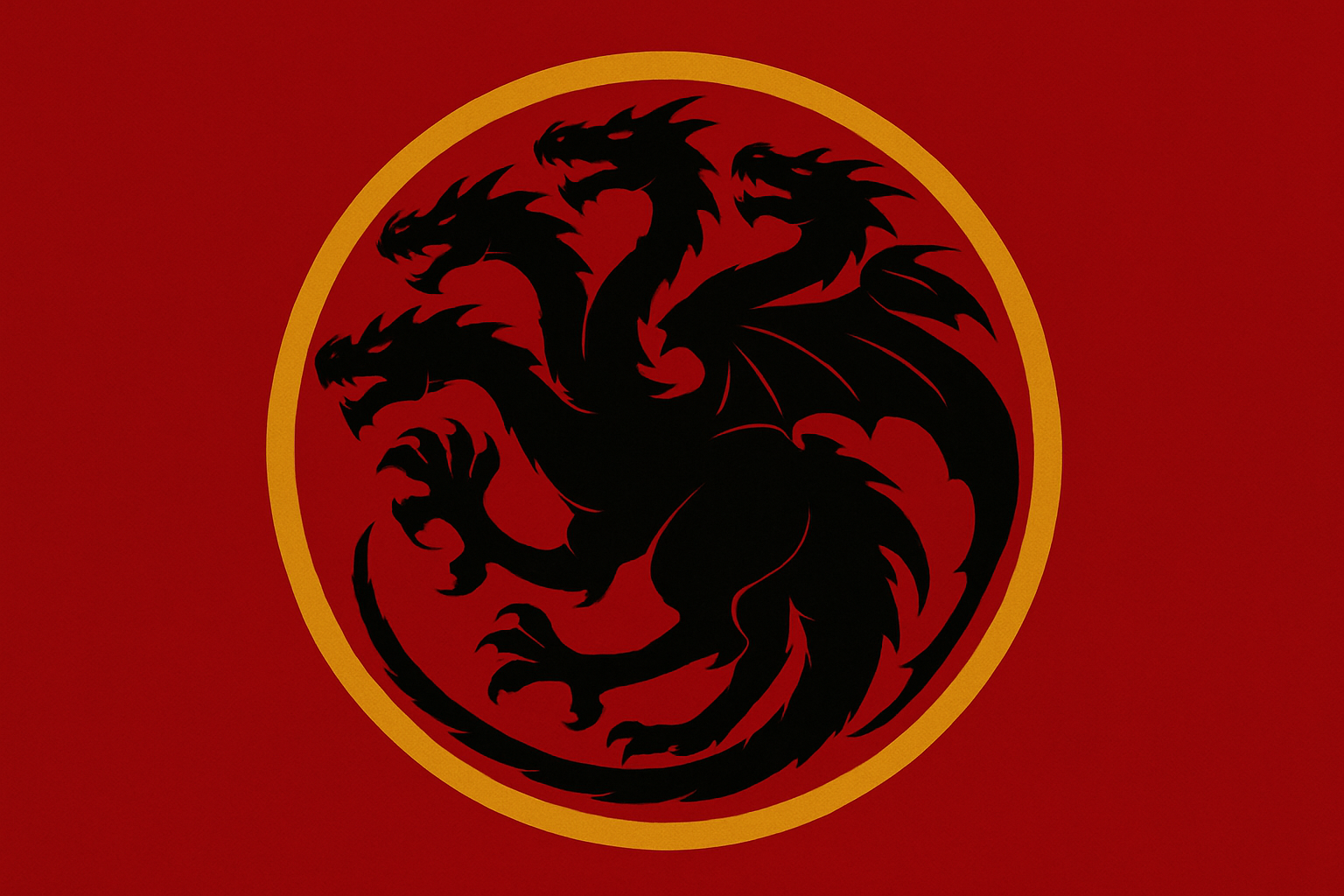
Politically and militarily, the empire is a monolithic force, feared by neighbors for its disciplined legions, destructive elemental battlemages, and near-limitless industrial output. Unlike the cooperative republics and kingdoms around it, Zilara thrives on hierarchy, ambition, and controlled brutality—each faction contributing to the empire’s expansionist machine. Kobolds drive its mining economy and create ingenious war engines; Fire Genasi feed its forges; Tieflings manage bureaucracy, espionage, and diplomacy; Goblin outriders patrol the shifting sands; and Dragonborn generals enforce imperial will with unwavering loyalty. Yet beneath this order lies constant intrigue within the Chromatic Synod, where rival sects vie for influence under the watchful symbolism of their five-headed goddess. Although Zilara rarely shows weakness, its strength is built on a precarious balance of fear, devotion, and industrial hunger—an empire that burns brighter each year, even as the flames threaten to consume it from within.
Structure
The Zilaran Empire operates under a centralized imperial hierarchy ruled by the Dragonborn High Bloodlines, whose authority is legitimized by ancestral draconic lineage and centuries of military dominance. At the apex stands the Emperor or Empress of the Scaled Throne, supported by the Imperial Talon Council, a body composed of high-ranking Dragonborn generals, Fire Genasi forge-priests, and Tiefling bureaucratic chancellors. Provinces are governed by appointed Provincial Scaled Governors, almost always Dragonborn, who oversee taxation, conscription, and enforcement of imperial law. Beneath them, Tiefling administrators run the day-to-day civil operations—courts, census systems, trade regulation, and diplomacy—ensuring an efficient and far-reaching bureaucracy. The infrastructure of the empire is maintained by vast networks of Kobold guilds responsible for mining, construction, road maintenance, and siege engineering, all operating under strict oversight from Dragonborn overseers.
Military power is divided between the Imperial Legions, led predominantly by Dragonborn officers; the Ashen Cohort of Fire Genasi battle-mystics; and the Red Sand Auxiliaries, composed largely of Goblin skirmishers and desert scouts. This multilayered structure allows the empire to project strength across deserts, mountains, and coastal regions alike. Though unified under the imperial banner, each racial group holds a defined societal niche: Dragonborn rule, Tieflings administer, Fire Genasi sanctify and forge, Kobolds build and sustain, and Goblins patrol and protect the empire’s harsh frontiers. The result is a highly organized, disciplined system where power flows downward from the imperial core, and efficiency rises upward from the labor and loyalty of its diverse population.
Culture
Culture within the Zilaran Empire is defined by discipline, hierarchy, and reverence for strength, shaped by centuries of survival in desert heat and jagged mountain strongholds. Dragonborn traditions dominate the imperial ethos: honor, endurance, and obedience to ancestral law. These values are woven into every aspect of daily life—formal greetings emphasize status and respect, families recite bloodline histories, and public ceremonies center around displays of martial prowess or feats of craftsmanship. Fire Genasi influence adds a ritualistic dimension: flame-lit festivals, volcanic forge rites, and elemental interpretations of fate. Tieflings contribute to the cerebral and diplomatic side of culture, promoting scholarship, record-keeping, negotiation, and the art of subtle persuasion. Meanwhile, Kobold guild culture celebrates industriousness, invention, and communal achievement, while Goblin clans maintain nomadic traditions, desert survival lore, and vibrant music and dance that echo through frontier forts.
Despite its rigid structure, the empire fosters a strong shared identity. Citizenship is seen as an honor earned through service—be it military, administrative, or industrial. Public pride centers around the empire’s monumental achievements: fortress-cities carved into cliffs, roads spanning deadly deserts, and the unmatched engineering of its legions. Cultural diversity is acknowledged but always subordinated to the ideal of Imperial Unity, a doctrine teaching that all races thrive only by fulfilling their place within the greater machine of Zilara. Art and architecture reflect this collective discipline: bold lines, draconic motifs, volcanic glass inlays, and monumental statues celebrating legendary generals and fireforged artisans. At its core, Zilaran culture is a fusion of harsh-land necessity and imperial ambition—proud, resilient, orderly, and forever striving toward greater power and perfection.
Public Agenda
The public agenda of the Zilaran Empire centers on expansion, stability, and the preservation of imperial dominance across the desert-mountain region. Citizens are taught from childhood that Zilara is destined to impose order upon the chaotic lands beyond its borders—a duty inherited from ancient draconic ancestors. This translates into strong public support for maintaining powerful legions, fortifying frontier cities, and expanding influence over trade routes, oases, and mountain passes. Imperial infrastructure—roads, aqueducts, siege foundries—is a major public priority, with Kobold guilds and Fire Genasi forges receiving extensive state backing. The populace also advocates for strict border control, believing that external threats—whether rival nations, desert raiders, or hidden sorcerous cults—must never find a foothold inside the empire.
Internally, the agenda focuses on unity, discipline, and the reinforcement of societal roles. Many Zilarans support continued investment in education for specialized castes: engineering academies for Kobolds, military academies for Dragonborn and Goblins, administrative colleges for Tieflings, and elemental forgeschools for Fire Genasi. Public opinion strongly favors laws that uphold hierarchy, reward service, and punish corruption—values seen as essential to imperial strength. Additionally, there is widespread desire to secure and exploit the empire’s natural resources—minerals, volcanic forges, ancient ruins—while safeguarding them from foreign interference. Above all, the citizens believe Zilara must remain strong, orderly, and united under the imperial banner, ensuring the empire’s legacy endures for generations to come.
Assets
The Zilaran Empire’s greatest assets stem from its resource-rich terrain and specialized population. The empire controls vast desert ranges and volcanic mountain belts filled with iron, copper, obsidian, gemstones, and alchemical minerals. Kobold mining guilds extract these resources with unmatched efficiency, feeding a network of Fire Genasi forges that produce some of the strongest weapons and armor in the known world. This industrial backbone is supported by immense stone quarries, subterranean smelting tunnels, and magma-fed furnaces that allow Zilara to manufacture siege engines, fire-treated steel, and enchanted wargear. Control over inland trade routes and mountain passes also provides the empire with strategic leverage, enabling it to tax caravans, dominate chokepoints, and secure vital oasis chains that sustain travel and commerce.
Militarily and politically, Zilara’s assets are equally formidable. The Dragonborn-led Imperial Legions form one of the most disciplined and fearsome armies on the continent, supported by Goblin desert scouts, Tiefling logisticians, and Kobold sappers who construct fortresses, tunnels, and siegeworks. Ancient draconic ruins, many infused with primordial magic, serve both as cultural symbols and sources of arcane knowledge that bolster the empire’s mystical strength. Its infrastructure—obsidian roads, mountain citadels, flame-temples, and fortified desert outposts—creates a vast, interconnected network of power. Perhaps most important of all, Zilara’s population is unified by a shared imperial ideology: Dragonborn lead, Genasi forge, Tieflings administer, Kobolds build, and Goblins protect the frontier. This seamless integration gives the empire unmatched resilience, productivity, and the capacity for long-term expansion.
Demography and Population
The Zilaran Empire is home to an estimated 330,000 inhabitants, a tightly organized population shaped by harsh deserts, volcanic mountains, and an unforgiving imperial hierarchy. The population is racially diverse but socially ordered, with each group occupying a distinct role in the empire’s structure. Dragonborn, making up roughly 20% of the population, are the political, military, and spiritual core of Zilara. Their bloodlines dominate officer ranks, governorships, religious leadership, and elite military formations. Kobolds, at around 40–45%, form the industrial heart of the empire. They operate mines, smelteries, tunnel networks, quarries, and engineering guilds, providing the labor necessary to sustain Zilara’s enormous metal production and military machine. Goblins, accounting for another 18%, thrive in desert regions and frontiers where they serve as scouts, caravan guides, light infantry, and patrol units accustomed to the empire’s most dangerous terrain.
The remaining population consists of Fire Genasi and Tieflings, together comprising about 15–18% of the empire. Fire Genasi concentrate around volcanic zones and forge-cities, where their elemental affinity gives rise to unmatched metallurgical craftsmanship and magical industry; their weapons, armor, and enchanted forges are the pride of Zilara. Tieflings form the backbone of the empire’s bureaucratic and diplomatic systems, overseeing taxation, recordkeeping, intelligence networks, and civil courts with methodical precision. Although each group has its place within a rigid caste structure, the empire’s population is unified by a shared belief in draconic destiny, a culture of discipline, and the understanding that survival in the desert depends on order. The demographic tapestry of Zilara is one of purposeful design: every race strengthens a different facet of imperial power, resulting in a population that, while not vast, is exceptionally efficient, specialized, and fiercely loyal to the flame-blooded throne.
Military
The Zilaran Empire commands one of the most disciplined and specialized militaries in the region, shaped by centuries of warfare in deserts, mountains, and volcanic terrain. At its core are the Dragonborn Legions, elite heavy infantry renowned for their endurance, discipline, and mastery of formation combat. These units form the backbone of imperial conquest and defense, supported by Dragonborn officers trained from youth in rigorous academy systems that emphasize strategy, honor, and absolute loyalty to the Scaled Throne. Complementing the legions are the Fire Genasi Ashen Cohorts, arcane battalions of flamecallers, magma-mages, and elemental skirmishers whose battlefield presence can turn dunes into glass and cliffs into molten traps. Their command of fire magic, combined with specialized volcanic-forged weapons, gives the empire devastating front-line power and psychological superiority.
The empire’s logistical and tactical flexibility comes from its auxiliary forces. Goblin Sandstriders, numbering in the tens of thousands, serve as scouts, light infantry, outriders, and desert shock troops—capable of rapid strikes, ambush tactics, and long-distance patrols across terrain where most armies fail. Kobold Sappers and Engineers form the military’s technical spine, constructing siege engines, tunneling beneath fortifications, designing traps, maintaining supply roads, and operating mobile artillery platforms powered by volcanic heat. Tieflings, though fewer in number, play key strategic roles as battlefield tacticians, intelligence officers, counter-espionage agents, and diplomatic envoys embedded within the legions. Together, these forces form a military machine built not on sheer numbers but on precision, specialization, and absolute order—a power that reflects the empire’s belief in draconic destiny and the inevitability of its rule.
Technological Level
The Zilaran Empire stands at a high level of technological and scientific development, particularly in metallurgy, engineering, and applied elemental sciences. Its greatest advancements stem from the collaboration between Kobold engineering guilds and Fire Genasi forge-priests, who together pioneered techniques for volcanic-forged steel, obsidian weaponcraft, and flame-tempered alloys unmatched in surrounding nations. Siege engines powered by heat vents, pressure-based artillery, reinforced cliff cities, and subterranean transit tunnels are all hallmarks of Zilaran innovation. Kobold inventors excel in mechanical complexity—pressure locks, trapworks, tunnel ventilation systems, and collapsible supply bridges—while Fire Genasi enhance machinery with controlled elemental energy. Their research cities are dotted with magma conduits, obsidian laboratories, alchemical chambers, and academies dedicated to the study of fire, metal, and structural stability.
Scientifically, Zilara blends rigorous study with ritualistic elemental philosophy. Tiefling scholars lead fields such as statecraft, mathematics, medicine, astronomy, and information systems, establishing a bureaucratic culture that values recordkeeping, experimentation, and long-term planning. Dragonborn academies focus on military engineering, architectural resilience, and battlefield sciences such as logistics, terrain manipulation, and strategic calculus. The empire’s harsh environment has also driven advances in oasis irrigation systems, desert wind mapping, volcanic energy capture, and mineral refinement processes that supply its massive industrial cities. While Zilara does not pursue magic in the academic sense, it heavily integrates elemental fire into its technological base, resulting in a civilization that feels both industrial and arcane. Overall, the Zilaran Empire is a realm where scientific innovation serves imperial ambition—every discovery strengthens infrastructure, military power, or the enduring symbol of draconic authority.
Religion
Religion in the Zilaran Empire is dominated by the Worship of Tiamat, the Chromatic Dragon Queen, revered not as a distant myth but as the divine architect of draconic supremacy and rightful conquest. Her five heads symbolize the elemental and chromatic forces that shape the world—fire, venom, frost, storm, and tyranny—each representing a principle of imperial rule. To the Dragonborn, Tiamat is both creator and sovereign, the source of their bloodline and the divine justification for their authority. Kobolds worship her as the Great Mother of Scales, believing their industriousness fulfills her will. Fire Genasi honor her red aspect, seeing their elemental affinity as a sacred spark of her flame, while Tieflings interpret her vast cunning and layered schemes as divine guidance for governance and diplomacy. Temples dedicated to Tiamat are carved into basalt cliffs, volcanic chambers, and obsidian sanctuaries where firelight reflects her fivefold visage.
The teachings of Tiamat emphasize strength, ambition, dominance, and the pursuit of power, shaping both social hierarchy and imperial law. Zilarans believe that expanding their borders, conquering rivals, and asserting order over the desert and mountains fulfill Tiamat’s mandate of chromatic sovereignty. Rituals focus on proving worth—trials of endurance for Dragonborn warriors, craftsman-forge rites for Kobolds and Genasi, and oath-binding ceremonies overseen by Tiefling priest-scribes. Goblins weave their ancestral desert spirits into Tiamat’s pantheon, viewing her blue and red aspects as patrons of storms and scorching sands. In daily life, religion is inseparable from governance: priests sit beside generals and governors, and every major decision—war campaigns, mining expansion, trade policies—is framed through the question: What course strengthens the empire in Tiamat’s name? Through this devotion, the empire maintains unity, purpose, and a relentless drive to ascend above all other nations.
Laws
Law in the Zilaran Empire is built upon the doctrine of Draconic Supremacy, a legal philosophy that places order, hierarchy, and obedience above all other civic values. The empire’s legal code—known as the Scales of Dominion—defines every citizen’s rights and duties according to race, caste, and service to the state. Dragonborn hold the highest legal standing, permitted to command troops, govern provinces, bear restricted weapons, and preside over major courts. Kobolds and Goblins are protected under imperial law but expected to fulfill labor and military obligations; desert crimes such as resource theft, water hoarding, or dereliction of duty carry severe penalties. Tieflings often serve as magistrates, archivists, and recordkeepers, ensuring that trials follow strict procedure. Lawbreakers face public sentencing, fines, hard labor, or—in extreme cases—trial by flame before the priests of Tiamat, whose judgment is seen as divinely binding.
The legal system is highly militarized, with Legion Justicars enforcing the law through a network of patrols, watchtowers, and desert checkpoints. Travel permits, trade rights, mining access, and weapon licensing are all tightly regulated, ensuring the empire’s stability and preventing uprisings. Religious law further reinforces civil order: blasphemy against Tiamat, defacement of dragon symbolism, or refusal to participate in mandatory rites is considered treasonous and punished accordingly. However, the empire also maintains strict protections against corruption within its hierarchy; even Dragonborn officials can be stripped of rank or executed for dishonoring the Scaled Throne. The result is a society where justice is harsh but predictable—citizens live under stern discipline, yet they trust the system to maintain survival in a harsh land. Zilaran law is not designed for fairness; it is designed for strength, unity, and the preservation of imperial power.
Agriculture & Industry
Agriculture in the Zilaran Empire is a careful balance of innovation and necessity, shaped by the scarcity of arable land in its deserts and volcanic highlands. Most food production comes from oasis agriculture, where Goblin and Kobold farmers cultivate drought-resistant grains, spice-roots, hardy legumes, and desert fruits. Terraced farms carved into mountain slopes use irrigation channels fed by snowmelt or deep cisterns, while underground mushroom farms supplement rations in mining cities. Livestock herding focuses on heat-tolerant species—ashen goats, dune runners, sand boars—often raised near frontier towns. The empire also maintains extensive water laws, ensuring that aqueducts, wells, and cistern networks remain militarily protected and tightly rationed. In this harsh landscape, efficient food storage and preservation, especially using saline”fire-salt” curing, is just as important as cultivation itself.
Industry, however, is where Zilara thrives. Fueled by volcanic activity and vast mineral reserves, the empire has developed a dominant metallurgical and engineering economy unmatched by most neighboring nations. Kobold guilds operate sprawling mines of iron, copper, obsidian, sulfur, precious gems, and rare metals; their subterranean tunnels form a web of industrial lifelines connecting major forge-cities. Fire Genasi smiths and forge-priests refine these materials in magma-fed furnaces, producing flame-tempered steel, obsidian blades, enchanted alloys, and siege machinery that define the empire’s military strength. Additional industries include alchemy, glassworking, stonecutting, caravan construction, and desert survival technology—everything from sun-resistant fabrics to heat-dispersing armor. Industrial output is strictly regulated by the state, which prioritizes weapons, infrastructure, mining expansion, and military logistics. Agriculture keeps the empire alive, but industry is what makes it powerful, feeding its legions, its cities, and its relentless drive for draconic dominance.
Trade & Transport
Trade within the Zilaran Empire revolves around its industrial dominance and near-total control of desert commerce. The empire exports flame-tempered steel, obsidian weaponry, alchemical compounds, glasswork, and rare minerals—goods few nations can replicate due to Zilara’s volcanic geography and Fire Genasi craftsmanship. These exports give the empire leverage over neighboring powers who depend on its weaponry and refined metals. Internal trade flows through highly regulated market hubs where caravans exchange salt, dried provisions, textiles, reagents, and gemstones under the supervision of Tiefling tax magistrates. Coastal trade exists but is strictly controlled; foreign ships require imperial approval, are inspected by Dragonborn harbormasters, and often escorted by the navy to ensure no prohibited goods or covert agents enter imperial borders.
Transport across the empire is a strategic machine, engineered to withstand extreme heat, shifting dunes, and volcanic terrain. An interconnected system of reinforced caravan roads, oasis stations, and fortified rest stops enables safe passage across the desert under Goblin outrider patrols. Kobold engineers maintain subterranean tunnels that bypass treacherous canyons and provide cool, protected routes for both trade and troop movement. Large caravans travel with water-crews, desert-mage guides, and military escorts, forming disciplined convoys rather than loose merchant groups. Along the coast, flame-hardened ships and narrow cliffside ports allow efficient movement of metals and soldiers between major strongholds. In Zilara, transport is never purely commercial—every route doubles as military infrastructure, ensuring the empire can reinforce borders, mobilize legions, and project power swiftly across its harsh domain.
Education
Education in the Zilaran Empire is highly structured and deeply tied to caste, service, and imperial ideology. From childhood, students are trained not for personal ambition but for their destined role in the empire’s hierarchy. Dragonborn youths undergo rigorous instruction in martial disciplines, battlefield strategy, honor codes, and the history of the draconic bloodlines. Tieflings are educated in literacy, mathematics, governance, legal theory, and administration—preparing them for positions in the empire’s bureaucratic machine. Kobolds attend engineering halls and mining academies, where they learn architecture, metallurgy, tunnel mechanics, and industrial safety. Fire Genasi students study elemental theory, advanced metallurgy, forge-rituals, and volcanic sciences, giving rise to some of the most skilled smiths and arcane metallurgists in the world. Goblin education emphasizes desert navigation, scouting, survival, beast handling, and light infantry tactics, reinforcing their role as the empire’s eyes and mobility across harsh terrain.
Beyond caste-specific training, all citizens receive instruction in loyalty to the Scaled Throne, the worship of Tiamat, and the principles of imperial order. State-run academies, military schools, engineering guild halls, and religious seminaries create a unified system where education is designed to feed directly into the empire’s military, industrial, or administrative needs. Advanced institutions in cities like Pyrrhios Gate and Redspire Outpost research metallurgy, siegecraft, alchemy, elemental theory, and logistics, often working directly with the legions. Knowledge is not freely shared—libraries and research vaults are tightly controlled, with access granted only to those whose caste and service warrant it. In Zilara, education is not merely preparation for adulthood; it is a tool of imperial perpetuation, forging citizens who are disciplined, specialized, and unwaveringly loyal to the draconic destiny of the empire.
Infrastructure
The infrastructure of the Zilaran Empire is one of its greatest strengths, built through the relentless labor of Kobold engineering guilds, empowered by Fire Genasi forges, and overseen by Dragonborn architects. The empire maintains an extensive network of obsidian-paved highways, desert caravan roads, subterranean tunnels, volcanic stone bridges, and fortified waystations that allow for rapid movement of goods and troops across otherwise deadly terrain. Aqueduct systems carve through mountains or run deep underground to bring water from hidden reservoirs to oasis towns and mining settlements. Cities are reinforced with basalt walls, heat-resistant roofing, and ventilation chimneys that channel volcanic warmth away from the streets. Even rural regions boast impressive engineering feats, from sun-shielded trade shelters to windbreak towers that protect caravans during violent desert storms.
Urban infrastructure is equally advanced. Major cities feature multi-tiered forge districts, magma-fed industrial zones, desert-cooled storage vaults, and religious complexes carved directly into cliffsides. Naval strongholds along the coast use flame-hardened docks and tidal lift platforms to maintain metal-plated warships. Public transport includes pack-beast roads, sand-skimmer routes, tunnel rails used for ore shipments, and patrol stations spaced at precise intervals for safety and communication. Communication across the empire relies on signal pyres, drake-mounted couriers, enchanted flame-beacons, and Goblin outrider relays capable of crossing vast distances quickly. Every structure—whether bridge, temple, city gate, or fortress—is constructed with one guiding principle: in Zilara, infrastructure is not merely functional; it is a tool of control, power projection, and imperial identity. The empire’s roads, tunnels, and forges do not just connect its cities—they bind them to its draconic destiny.
Mythology & Lore
The mythology of the Zilaran Empire is dominated by tales of Tiamat, the Fivefold Dragon Queen, whose creation of the world is depicted as an act of fire, fury, and domination. According to Zilaran myth, Tiamat carved the mountains with her claws, filled the deserts with her breath, and shaped the volcanic forges by plunging her tails deep into the molten earth. Dragonborn legends claim their ancestors were formed from droplets of her chromatic blood—each scale color carrying a spark of divine purpose. Kobolds tell a humbler but equally devout tale: that Tiamat scraped dust from her talons to create their race, gifting them the instincts to tunnel, craft, and support the greater draconic design. Fire Genasi believe the volcanic rivers flowing through the empire are remnants of Tiamat’s battle with the first primordials, a cosmic struggle that left behind pockets of divine flame still burning beneath the mountains.
Other myths expand the pantheon of draconic spirits without diminishing Tiamat’s supremacy. Goblin traditions speak of the Sand Wyrm, a colossal desert spirit believed to be a discarded scale of Tiamat that gained a will of its own, while Tiefling scholars record visions of The Fivefold Eclipse, a rare celestial alignment said to mirror the shapes of Tiamat’s heads. Zilaran stories do not emphasize heroes or saviors; instead, they celebrate conquerors, generals, smiths, and rulers who proved their worth through strength, cunning, and unyielding discipline. Many myths end not with triumph but with warnings—reminders that Tiamat rewards power and punishes weakness. These tales reinforce the empire’s worldview: that the cosmos itself is shaped by dominance, that survival demands strength, and that Zilara thrives only so long as it honors the will and wrath of the Queen of Dragons.
Divine Origins
The Zilaran Empire traces its beginnings to the Ashen Convergence, a legendary era when volcanic eruptions and desert storms reshaped the region and revealed vast mineral seams beneath the mountains. According to imperial chronicles, the first Dragonborn clans emerged from these upheavals, claiming the land as a sacred gift from Tiamat. These clans were not unified at first—each followed its own draconic lineage, defending mountain strongholds and competing for access to volcanic forges. Over generations of conflict, the strongest clan forged alliances with Kobold mining tribes and Fire Genasi priest-smiths who inhabited the volcanic vents. Together they built the first basalt citadel, Drak’morath, whose magma-lit halls would become the cradle of Zilara’s power. This early union established the foundations of the empire’s caste structure, its industry, and its relentless pursuit of strength.
The transformation from scattered clans to a full empire came during the Era of the Fivefold Dominion, when the Dragonborn warlord Zilarath unified the rival lineages under a single banner—claiming divine mandate from Tiamat herself. Zilarath’s legions conquered oasis territories, subjugated Goblin desert tribes, and secured trade routes vital for sustaining large cities in the harsh landscape. Tiefling scribes and diplomats were later incorporated into the growing state, formalizing the imperial bureaucracy and codifying the Scales of Dominion, the laws that still govern Zilara today. Over centuries, the empire expanded outward through a combination of industrial might, strategic conquest, and religious authority. Its origins forged a civilization that views adversity as a proving ground, conquest as destiny, and unified strength as the only path worthy of draconic legacy.
Tenets of Faith
The faith of Zilara is founded on the Fivefold Doctrine, a set of sacred principles believed to originate from Tiamat herself. These tenets define not only spiritual devotion but the entire structure of imperial society. Worship is not passive; it is demonstrated through discipline, strength, mastery of one’s role, and unwavering loyalty to the draconic bloodline. Every race in the empire interprets the doctrine through its own cultural lens—Dragonborn through honor and rule, Kobolds through labor and craft, Fire Genasi through elemental service, Goblins through desert resilience, and Tieflings through cunning and governance. Together, they uphold a system where faith reinforces hierarchy, unity, and the belief that strength is the highest virtue.
The tenets shape law, culture, warfare, and daily life. They teach that the cosmos is a battleground of ambition and that Tiamat’s children are destined to dominate through will, fire, and purpose. To break the tenets is not merely a crime—it is an act of spiritual treason. To follow them is to become part of something eternal: the empire’s ascent toward power worthy of the Dragon Queen. These teachings bind Zilara together, giving it moral clarity and ideological drive in a world where weakness invites destruction.
THE FIVEFOLD TENETS OF TIAMAT
1. Strength Above All
Power is the highest virtue. The weak are meant to serve, the strong to rule. Every citizen must strive to improve—physically, mentally, or in mastery of craft.
2. Obedience to the Scaled Throne
The empire’s rulers are Tiamat’s chosen. Loyalty to Dragonborn authority is sacred, and defiance is heresy.
3. Fire is Purification
Struggle, hardship, and the forge of adversity refine the worthy. All growth—industrial, personal, or military—must flow from effort and endurance.
4. Claim What You Can Hold
Territory, resources, rank, and opportunity belong to those strong enough to secure and maintain them. Ambition is a divine impulse, not a flaw.
5. Honor the Bloodline and the Forge
Dragonborn blood is holy, Kobold labor is sacred, Fire Genasi flame is divine, and all citizens must honor the work that strengthens the empire.
6. Cunning Is a Weapon
Strength without strategy is wasteful. Deception, planning, and calculated action are revered aspects of Tiamat’s will—especially among Tieflings and Goblins.
7. Conquest Is Continuity
The empire must expand or stagnate. Growth is both spiritual and material, proving Zilara’s worthiness to carry the draconic legacy forward.
8. Preserve the Flame
Sacred forges, volcanic sites, and draconic artifacts must be protected at all costs. They are the physical remnants of Tiamat’s power.
Ethics
Ethics in the Zilaran Empire are grounded in a worldview shaped by strength, order, and draconic purpose, not mercy or egalitarian ideals. Zilaran morality holds that power—whether physical, intellectual, or elemental—is inherently virtuous, while weakness must either be overcome or placed into service. Honor is tied to fulfilling one’s role within the empire’s hierarchy: Dragonborn must rule with discipline and ferocity; Kobolds must build with skill and devotion; Fire Genasi must refine the empire’s forges; Goblins must protect and scout the deserts; Tieflings must govern with precision and cunning. Ethical behavior means contributing to the empire’s strength and stability. Cowardice, waste, incompetence, and disobedience are considered moral failings. Compassion is not dismissed outright, but it is secondary to results—valued only when it strengthens the community rather than undermines discipline.
Collective survival is also a central ethical pillar. Zilara’s harsh deserts and volcanic landscapes have forged a culture where resource management, strict order, and loyalty are moral imperatives. Wastefulness of water, metal, or labor is treated as an ethical violation, equivalent to theft. Truth is respected when it reinforces structure, but deception is ethically permissible—even admirable—when used to protect or advance the empire. Justice is retaliatory and proportional, built around the idea that consequences strengthen the offender and warn the community. Above all, ethical life in Zilara demands alignment with the Fivefold Doctrine: striving for mastery, honoring the Scaled Throne, and proving one’s worth through action. To live ethically is to ensure that the flame of the empire burns brighter with each generation.
Worship
Worship in the Zilaran Empire is a public, disciplined, and deeply hierarchical act, centered on devotion to Tiamat, whose five aspects shape every corner of Zilaran society. Daily worship is woven into civic life: bowing before dragon statues when entering a city, saluting flame altars before beginning labor, and reciting strength-oaths at dawn. Dragonborn conduct the highest rites—processions through magma-lit temples, fire-blessing ceremonies for newborns, and the sacred Bloodline Affirmation, where warriors swear fealty to the Scaled Throne beneath carved dragon effigies. Kobolds participate through ritual craftsmanship, offering their finest metalwork at shrines to honor Tiamat’s claws, while Fire Genasi perform flame-dances and ember meditations near volcanic vents. Goblins worship through desert rites invoking Tiamat’s blue aspect—storm, sand, and survival—while Tieflings lead scripture readings, doctrinal interpretations, and oath-binding services.
Unlike many faiths, Zilaran worship is not contemplative—it is performative, physical, and tied to labor. Every sacrifice has purpose: ore placed in the sacred forges before smelting, blood offerings from battle-training rituals, or water poured onto scorching stone to symbolize the submission of weakness to strength. Temples are not quiet sanctuaries but echoing caverns of fire and stone where worship is accompanied by chanting, drumming, and the roar of magma. Festivals honor Tiamat’s chromatic aspects through trials of endurance, games of combat, smithing competitions, and processions of fire-lit banners. Worship is not optional; it is a moral duty tied to citizenship. To neglect the rites is to dishonor the empire itself. In Zilara, faith is a tool of unity, identity, and control—a fire that binds the empire, tempers its people, and legitimizes its rule beneath the Dragon Queen’s unfaltering gaze.
Priesthood
The priesthood of the Zilaran Empire—formally known as the Chromatic Synod—is an elite religious order responsible for interpreting Tiamat’s will, maintaining sacred forges, overseeing rituals, and advising the Scaled Throne. The Synod is dominated by Dragonborn High-Priests, each aligned with one of Tiamat’s chromatic aspects (Red, Blue, Green, White, and Black). They serve as both spiritual leaders and political authorities, wielding a level of influence equal to generals and governors. Beneath them, Fire Genasi forge-priests oversee volcanic sanctuaries and ritual flame rites; their connection to elemental fire is viewed as a divine blessing. Tiefling scripture-wardens manage doctrinal texts, trial records, sacred archives, and the codification of religious law, ensuring that every edict of the faith is preserved and enforced. Each temple, shrine, or magma-forge has a structured hierarchy mirroring the empire’s strict social order.
The lower priesthood is more diverse. Kobold flame-attendants maintain the sacred fires, prepare sacrificial offerings, and craft ceremonial metalwork for rituals, believing that their service strengthens their bond with the Mother of Scales. Goblin storm-chanters lead desert rites dedicated to Tiamat’s blue aspect, performing sand, wind, and storm ceremonies during seasonal tempests. Advancement within the priesthood is rigid and merit-based; initiates undergo trials of endurance, discipline, and service to demonstrate worthiness to their chromatic superiors. Members of the Synod also act as moral judges, battlefield chaplains, and spiritual enforcers. Should the empire face crisis—natural or political—the Synod convenes beneath Drak’morath’s basalt spires to determine whether the empire has honored Tiamat sufficiently or must undergo purification. In Zilara, the priesthood is not separate from state power—it is one of its pillars, blending faith, authority, ritual, and rule into a single draconic force.
Granted Divine Powers
Priests of the Chromatic Synod believe that Tiamat grants power only to those who have proven strength, discipline, and unwavering loyalty to her doctrine. These divine gifts vary according to the chromatic aspect a priest serves. Red Aspect priests wield flame-based blessings—igniting weapons, hardening metal with supernatural heat, or summoning bursts of infernal fire during rituals and battle. Blue Aspect priests channel storm energy, commanding lightning, enhancing perception across desert horizons, and manipulating wind to guide caravans. Black Aspect priests specialize in corrosive magic and rot, capable of breaking down stone, weakening enemy armor, and poisoning wells in times of war. Green Aspect priests hold sway over toxins, illusions, and subtle enchantments, often used for espionage or political manipulation. White Aspect priests receive powers tied to endurance, cold, preservation, and the ability to harden bodies or fortify defensive positions. These blessings are rare and never bestowed lightly—each divine power is seen as proof that the priest has ascended closer to draconic perfection.
Lower-ranking clergy receive lesser but still potent gifts through ritual training and divine attunement. Fire Genasi forge-priests can withstand extreme temperatures, walk along magma flows, or imbue weapons with elemental sparks. Kobold attendants sometimes gain minor enchantments—heat resistance, darkvision improvements, or the ability to sense flaws in stone or metal—perfect for their roles in mines and forges. Goblin storm-chanters may be granted the ability to call desert winds, mask their presence with swirling sand, or track prey across miles of dunes. These powers reinforce the empire’s caste system: the stronger the devotion and the higher the status, the more formidable the divine gifts. The Chromatic Synod carefully monitors all who receive Tiamat’s favor, ensuring that divine power is always directed toward strengthening the empire, expanding its influence, and upholding the will of the Dragon Queen.
Political Influence & Intrigue
Politics in the Zilaran Empire is a constant struggle for dominance, prestige, and proximity to the Scaled Throne. The Dragonborn noble houses—the ancient bloodlines descended from different chromatic ancestries—compete for military commands, governorships, and control over key industrial cities. These rivalries rarely erupt into open conflict, but simmer beneath the surface in the form of sabotage, political marriages, whispered accusations of weakness, and strategic displays of strength meant to curry favor with the emperor. The Chromatic Synod, equal in power to the nobility, acts as both kingmaker and judge: high priests influence state decisions, sanction or condemn noble actions, and withhold divine legitimacy from those they deem unworthy. Their endorsement can elevate a general to legendary status—or destroy a lineage’s reputation overnight.
Meanwhile, non-Dragonborn factions weave their own webs of influence. Tiefling bureaucrats manipulate records, tax flows, and legal precedents to restrain overambitious nobles or shield their allies. Fire Genasi forge-lords control the empire’s industrial lifeblood and leverage production bottlenecks to extract political concessions. Kobold guildmasters, though socially inferior, wield enormous economic power through their dominance of mining and engineering; their ability to shut down a tunnel network or smeltery grants them quiet leverage in high places. Goblin desert chiefs influence military campaigns by controlling scouting routes and smuggling networks that nobles rely on but rarely acknowledge. As these power blocs maneuver for advantage, the Scaled Throne plays them against one another, ensuring that no faction grows strong enough to challenge the emperor. Zilaran politics is not chaotic—it is ritualized competition, a game where strength, cunning, and loyalty determine survival, and where one misstep can bring ruin from blade, bureaucracy, or divine decree.
Sects
Though the worship of Tiamat is the official and overwhelmingly dominant faith of Zilara, the empire hosts several sanctioned sects—each focusing on different interpretations of her Fivefold nature. These sects do not challenge the core doctrine but emphasize particular virtues or aspects of service. The Red Coil Sect venerates Tiamat’s fire and wrath, urging followers to pursue glory through conquest, martial achievement, and personal strength. The Blue Stormfold Sect focuses on foresight and desert mastery, teaching storm-discipline, patience, and the importance of controlled aggression. The Green Veil Sect, dominant among Tieflings, emphasizes cunning, diplomacy, and the intricacies of political strategy; its members serve as advisors, negotiators, and intelligence officers. The Black Dreadscale Sect is feared even within Zilara, for its priests deal in rot, venom, and psychological warfare—often deployed in assassinations sanctioned by the state. Lastly, the White Fang Sect, composed largely of wilderness Goblins and endurance-focused Dragonborn, values survivalism, fortification, and the purity of harsh environments as tests of worthiness.
Beyond these official branches, the empire harbors hidden or borderline-heretical sects that exist in the shadows of the Chromatic Synod. The Ashborn Circle believes Tiamat’s true power lies not in domination alone but in the creation of a world purified by volcanic flame; they quietly preach that the empire must one day undergo a “burning renewal.” The Silent Scale Sect, composed mostly of Kobolds, rejects the idea that their race is secondary and claims Tiamat left hidden teachings elevating Kobold craftsmanship to divine purpose—an ideology tolerated only because of their industrial importance. The most dangerous is the Split-Tongue Heresy, a secret movement that teaches Tiamat’s five heads represent competing wills and that followers must choose one aspect to serve exclusively, even if it means opposing imperial unity. These sects are watched closely by the Synod, allowed to exist so long as they do not threaten the Scaled Throne. Together, the empire’s religious factions create a landscape of devotion, ambition, and quiet ideological tension—fuel for political maneuvering and potential unrest.

Comments