
Tuhal ("TOO-HALL")
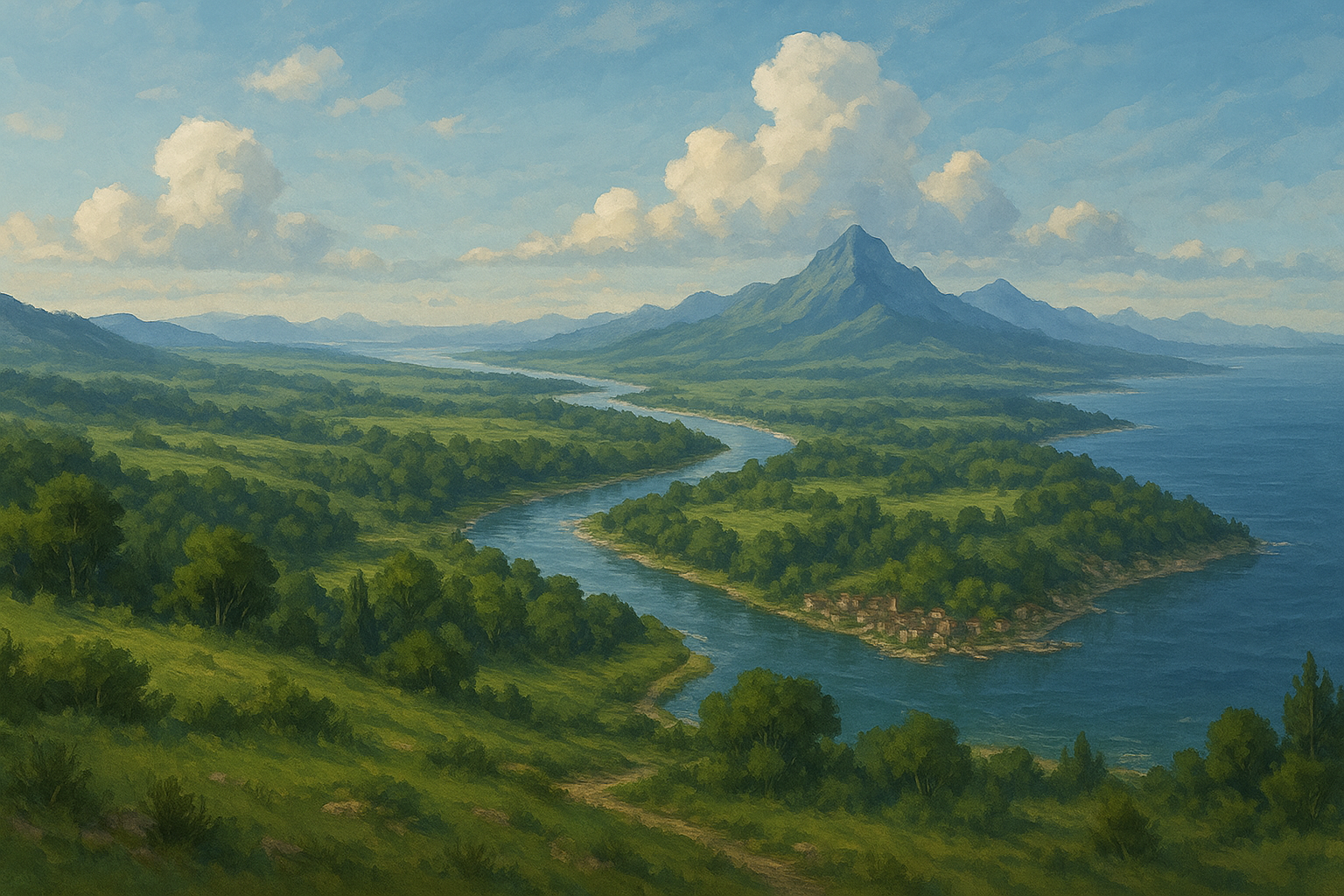
Tuhal is a maritime powerhouse situated along the great river that feeds into the inland sea shared with Dal-did and Asadhel—making it the gatekeeper of regional trade and naval passage. Led politically and militarily by Orcs, who command the kingdom’s formidable fleets and dominate its coastal strongholds, Tuhal has grown into a multicultural empire built on cooperation and mastery of the water. Its capital, Kengige, is a thriving metropolis where Orcs, Humans, Elves, Lizardfolk, Sea Elves, and other peoples intermingle, contributing to a dynamic society shaped by shipwright guilds, trade networks, swampcraft, and religious syncretism. The kingdom’s identity is inseparable from the tides; its greatest wealth, strength, and diplomacy revolve around controlling river traffic, maintaining safe seas, and projecting naval dominance across the region.
Inland, woodland elves and Lizardfolk cultivate the kingdom’s marshlands and maintain harmony with the wetlands through traditions tied to Eldath and Silvanus, while in coastal regions, Orcish and human sailors honor Valkur and Umberlee for protection and favor at sea. Tuhal’s religion, governance, and culture all embrace adaptability, unity, and respect for the forces of water that shape their world. Though peaceful in appearance, the kingdom wields immense influence through its ability to permit—or deny—passage to neighboring nations, acting as a subtle kingmaker in regional politics. Defined by its diversity, strategic geography, and unparalleled naval might, Tuhal stands as one of the most consequential and resilient realms in western Redredan.
Structure
Tuhal is governed through a maritime dominion structure in which Orcs hold the highest political authority due to their control of the kingdom’s navy, coastal defenses, and river fleets. The ruling body, known as the High Tides Council, is composed primarily of powerful Orc naval commanders, shipwright lords, and coastal clan chiefs who oversee national policy, defense, and trade. While the council leads collectively, the position of High Admiral—chosen from among the Orc elite—serves as the kingdom’s executive figure, directing foreign policy, naval strategy, and the protection of trade routes. This system ensures that strength at sea translates directly to governmental power.
Supporting the Orc-led council is a secondary chamber, the Riverstone Assembly, made up of woodland elf marsh-governors, human trade representatives, and appointed envoys from minority groups such as Lizardfolk and Goliaths. The Assembly manages inland affairs—swamp governance, agricultural oversight, infrastructure, and interregional mediation—ensuring that Tuhal’s diverse territories remain unified and functional. Although the High Tides Council holds ultimate authority, the Riverstone Assembly provides essential administrative balance, giving Tuhal a hybrid government rooted in naval dominance, multi-racial cooperation, and pragmatic division of power.
Culture
Tuhal’s culture is defined by maritime strength, racial cooperation, and deep respect for adaptability, shaped by a kingdom that spans coasts, rivers, swamps, and fertile lowlands. Orcs—renowned for their seamanship—set the cultural tone with values of bold exploration, tide-watching superstition, shipbuilding artistry, and a fierce sense of communal loyalty. Festivals revolve around naval victories, seasonal fishing cycles, and river blessings, often accompanied by drumming, chanting, and competitive displays of strength or sailing skill. Life in Tuhal moves with the tides, and even inland communities view the sea as a symbol of fortune, risk, and unity.
Woodland elves contribute spiritual nuance and environmental knowledge, especially in swamp regions where herbal tradition, wetland rituals, and water-communion customs deepen the kingdom’s appreciation of nature. Humans bring cosmopolitan energy—markets, craftsmanship, cultural mixing—especially in Kengige, which stands as one of the most diverse cities in the region. Lizardfolk influence cuisine, fishing techniques, and swamp agriculture, while Sea Elves and Goliaths lend prestige through naval navigation and military roles. Together, these groups form a vibrant, adaptive culture centered on resilience, respect for the waters that sustain them, and pride in being the crossroads of people, trade, and opportunity.
Public Agenda
Tuhal’s public agenda centers on securing maritime dominance, strengthening multicultural unity, and expanding economic influence across western Redredan. The High Tides Council invests heavily in shipbuilding, fortified ports, and naval patrol routes, aiming to make Tuhal the primary gateway for trade moving between inland kingdoms and the open sea. Anti-piracy campaigns, coastal infrastructure improvements, and diplomatic port agreements with neighboring realms are constant priorities. Tuhal publicly champions itself as the region’s most reliable maritime protector—ensuring safe transport, stable commerce, and swift naval response to threats.
Domestically, the Riverstone Assembly promotes policies that reinforce racial cooperation and inland development, improving swamp agriculture, river transport, and the integration of minority populations into civic life. Cultural festivals, trade fairs, and multi-racial councils are used to maintain stability and pride in shared identity. Tuhal’s agenda is clear: unify its people, dominate the seas, control key trade routes, and position itself as the economic and diplomatic bridge between diverse kingdoms and cultures.
Assets
Tuhal’s greatest asset is its command of the central river-sea system, a vast waterway that serves as the primary trade artery for multiple kingdoms. The river flows directly through Tuhal and empties into a large inland sea shared with Dal-did and the Kingdom of Asadhel—and critically, this sea contains Asadhel’s only port. By controlling the river mouth and maintaining the most powerful navy on its waters, Tuhal effectively regulates all maritime traffic entering or leaving both Dal-did and Asadhel’s territories. This gives Tuhal enormous economic leverage, diplomatic influence, and strategic advantage, allowing it to set tariffs, negotiate favorable treaties, and enforce security standards for every vessel that passes through its domain.
Beyond its geographic chokehold, Tuhal possesses a wealth of additional strengths. Its Orc-led naval infrastructure produces unmatched ships and seasoned sailors, while its swamp-city elven communities contribute advanced herbal medicine, wetland agriculture, and environmental engineering. The capital, Kengige, stands as a multicultural powerhouse where humans, elves, orcs, lizardfolk, and sea elves converge to trade, craft, innovate, and govern. Fisheries, marsh farms, shipwright guilds, and waterborne industries further reinforce Tuhal’s prosperity. Combined, these assets position Tuhal as the maritime engine and diplomatic gatekeeper of the region—an indispensable kingdom whose control of water determines the flow of wealth, goods, and influence across western Redredan.
Demography and Population
Tuhal’s population is a vibrant mix shaped by its expansive capital, naval dominance, and swamp-bordering inland territories. Orcs form the largest demographic group, making up roughly 45% of the population, concentrated in coastal cities like Diled and the port towns of Olukkhaz and Guruhal. Their influence over shipbuilding, navigation, and maritime defense cements their role as the kingdom’s political and military backbone. Woodland elves represent about 25%, primarily inhabiting swamp regions such as Hluinenathdre, where they serve as environmental stewards, herbalists, marsh governors, and spiritual intermediaries between land and water.
Humans account for approximately 15%, with the majority residing in the cosmopolitan capital of Kengige, working as traders, artisans, guild workers, scholars, and administrators. Lizardfolk, adapted to wetlands and river systems, make up around 8% and contribute heavily to fishing, swamp agriculture, and water-bound commerce. Smaller groups include Sea Elves (4%), who work as navigators and tide-callers within the navy, Goliaths (2%) serving in military and labor-intense sectors, and Halflings (1%), who primarily cluster in farming hamlets or craft districts. This richly layered demography makes Tuhal one of the most diverse and dynamic kingdoms in the region—its strength drawn from cooperation across many peoples and terrains.
Military
Tuhal’s military is built around its formidable navy, the backbone of the kingdom’s power and the pride of its Orc leadership. The Tidal Vanguard, a fleet of warships crewed primarily by Orcs and Sea Elves, dominates the river-sea system and controls all maritime passage in and out of the inland sea shared with Dal-did and Asadhel. These vessels range from swift cutters for patrol duties to heavily armored triremes designed for boarding actions and coastal siege. Naval crews train relentlessly in tide maneuvering, storm fighting, and river choke-point tactics, giving Tuhal unmatched supremacy over waterborne warfare. The High Admiral commands this fleet and holds significant political influence, as the kingdom’s security and economic power depend on keeping trade routes safe and subordinate kingdoms in check.
On land, Tuhal fields the Riverguard, a mixed-race force specializing in amphibious tactics, marsh combat, and riverbank defense. Orc infantry form the disciplined core, supported by woodland elf marsh-scouts who excel in navigating swamps and wetlands, and Lizardfolk skirmishers adapted to stealth and shallow-water engagements. In the capital and major urban centers, human-led militia maintain order and logistics, while Goliaths often serve as shock troops or heavy labor for fortifications. Although Tuhal’s land forces are not as numerous or regimented as those of Dal-did, their coordination with the navy and mastery of riverine terrain make them highly effective. Together, the Tidal Vanguard and Riverguard ensure that Tuhal remains the dominant maritime and riverine military power of western Redredan.
Technological Level
Tuhal’s technological and scientific level is defined by its maritime innovation, adaptive engineering, and multicultural knowledge base, making it one of the most versatile kingdoms in the region. Orc shipwrights have developed advanced hull designs, reinforced keels, and efficient sail-rudder systems suited for both river maneuvering and open-sea navigation. Their naval architecture is highly respected, blending brute durability with elegant hydrodynamics learned through generations of storm-season sailing. Sea Elves contribute celestial navigation, tide-mapping, and weather-reading techniques, giving Tuhal unmatched precision in maritime forecasting and long-distance travel.
Inland, woodland elves drive innovation in swamp agriculture, herbal medicine, wetland irrigation, and environmental control, while Lizardfolk contribute practical knowledge of fish behavior, swamp ecology, and river flow dynamics. Humans in Kengige bolster scientific progress through metallurgy, carpentry, trade engineering, and recordkeeping, creating an intellectual melting pot. Although Tuhal is less focused on formal academia than Dal-did, its strength lies in applied, functional technology—from amphibious skiffs to rope bridges, tidal mills, and water filtration systems. Overall, Tuhal’s scientific identity is one of pragmatic invention, shaped by necessity, diverse expertise, and a kingdom deeply tied to water in all its forms.
Religion
Tuhal’s religion is a fluid, cooperative blend of deities, shaped by its maritime power, swamp regions, and multicultural population. Umberlee, feared and respected by Orc sailors and Sea Elves, dominates coastal worship as the unpredictable queen of storms, while Valkur serves as the patron of naval courage and skill, balancing her wrath with fair winds and confidence. Inland, woodland elves and Lizardfolk honor Eldath, goddess of tranquil waters, and Silvanus, guardian of wetlands, forests, and natural cycles. Humans in the capital often revere Lathander, god of renewal and community, whose teachings align with Kengige’s vibrant trade culture, while many swamp dwellers look to Ilmater, drawing strength from his ideals of endurance and resilience.
Rather than a single unified clergy, Tuhal organizes its diverse faiths through the Confluence Circle, a council of priests, druids, tide-callers, and shamans representing all major races and deities. This council oversees festivals, settles theological disputes, blesses naval voyages, and addresses any omen tied to the river-sea system that sustains the kingdom. The result is a religious landscape defined not by rigid doctrine, but by practical cooperation and reverence for water, reflecting Tuhal’s belief that strength comes from unity across cultures and harmony with the forces that govern sea, swamp, and tide.
Laws
Tuhal’s laws emphasize maritime rights, multicultural cooperation, and stewardship of waterways, reflecting a kingdom whose identity and survival depend on river and sea. The High Tides Council enforces strict regulations on naval travel, trade routes, fishing seasons, and shipwright practices, ensuring that Tuhal maintains absolute control over the major river that feeds into the inland sea shared with Dal-did and Asadhel. Any attempt to interfere with river traffic, evade port taxes, or disrespect naval authority is treated as a serious crime. Inland laws, guided by the Riverstone Assembly, focus on fair resource use, flood management, wetland preservation, and equitable treatment among the kingdom’s diverse races.
Because Tuhal is deeply multicultural, its legal system includes protected customs clauses, allowing Orcs, Elves, Humans, Lizardfolk, and other groups to retain certain cultural practices as long as they do not endanger public order or the waterways. Violent crimes, piracy, and ritual pollution of rivers or swamps invoke the harshest penalties, while disputes between races are mediated through mixed tribunals supervised by the Confluence Circle. Tuhal’s laws ultimately aim to maintain stability, protect trade, and preserve the delicate balance between land and water—ensuring that every citizen, regardless of heritage, contributes to the kingdom’s collective strength.
Agriculture & Industry
Tuhal’s agriculture is shaped by its limited arable land and heavy reliance on coastal and swamp ecosystems. While woodland elves and Lizardfolk cultivate wetlands using rice paddies, reed farms, floating gardens, and fish-based irrigation systems, these methods provide only a portion of the kingdom’s needs. Much of Tuhal’s terrain is devoted to marshes, ports, waterways, and shipyards, leaving little room for large-scale farming. As a result, Tuhal imports a significant share of its staple foods—grains, livestock, preserved goods—from Dal-did, Hagroth, and smaller river kingdoms. Domestic production focuses instead on fish, shellfish, eels, medicinal plants, swamp herbs, and aquatic vegetables, all of which thrive in the nation’s unique wetlands.
Where Tuhal truly excels is in industry, especially those tied to its waterways. Orc shipwright guilds produce some of the finest vessels in western Redredan, from river skimmers to deep-sea warships, while its ports bustle with trade, fishing fleets, and maritime workshops. Swamp cities contribute to specialized crafts such as herbal medicine, alchemical reagents, waterproof textiles, and amphibious tools used for navigating flooded terrain. Metalwork, carpentry, rope-making, sail-weaving, and navigation instruments flourish in the capital and coastal towns. Combined, these industries make Tuhal a powerhouse in trade, naval production, and maritime services, relying on its mastery of the sea rather than its soil to sustain economic strength.
Trade & Transport
Trade and transport are the lifeblood of Tuhal, shaped by its unrivaled control of the major river leading into the inland sea shared with Dal-did and Asadhel. Nearly all imported food, foreign goods, and luxury items pass through Tuhalian waters, giving the kingdom immense leverage over regional commerce. Its ports—especially Diled and Kengige—function as bustling trade junctions where Orc sailors, human merchants, elven herbalists, and lizardfolk fishermen exchange everything from ship timber to arcane reagents. Tuhal exports naval craftsmanship, fish, swamp medicines, dyes, and maritime tools, while importing grains, livestock, metals, wine, and manufactured goods from its neighbors. Tariffs and river tolls form a major portion of state revenue, and the High Tides Council carefully regulates every vessel that enters or leaves the inland sea.
Transport within Tuhal blends water-based mobility with strategic land routes. River barges, shallow-draft skiffs, and tide-driven ferries are the primary means of moving people and goods, offering swift access from coastal ports to inland swamp cities. Roads are maintained mainly near the capital and major settlements, while elevated boardwalks and causeways connect marsh communities vulnerable to flooding. Orc-led naval patrols ensure safe passage along the major river, and Sea Elf navigators guide ships through tidal shifts and storm seasons. This integrated network of water and land transit makes Tuhal the gateway kingdom of western Redredan, with every major trade route—east, west, or inland—flowing through its carefully controlled waterways.
Education
Education in Tuhal is practical, multicultural, and heavily shaped by the kingdom’s maritime identity. Orc academies in Diled and the capital train sailors, navigators, shipwrights, and naval officers in seamanship, engineering, and tidal strategy, emphasizing hands-on mastery over theory. Woodland elf communities focus on swampcraft, herbal medicine, wetland agriculture, and environmental stewardship, while Lizardfolk teach river survival, fishing arts, and ecological knowledge passed down orally. Humans in Kengige operate trade schools, literacy halls, cartography workshops, and apprentice guilds that connect diverse disciplines. Although Tuhal lacks the rigid scholarly institutions of Dal-did, its strength lies in adaptive, applied education—skills learned directly from nature, water, and craft—producing a populace trained for survival, trade, and the demands of a maritime empire.
Infrastructure
ChatGPT said:
Tuhal’s infrastructure is built around water first, land second, reflecting its status as a maritime kingdom shaped by rivers, swamps, and coastlines. Major settlements are linked by an extensive network of canals, river routes, ferry lines, and elevated boardwalks, allowing transport even during flood seasons. Orc-engineered ports feature drydocks, fortified seawalls, lighthouse towers, and tide-gated harbors designed to withstand storms and control naval flow. Inland, swamp cities rely on stilted structures, wooden causeways, and water-filtering systems maintained by woodland elves and Lizardfolk. Though traditional roads exist near Kengige and other major hubs, most travel—commercial or military—uses watercraft. This integrated system makes Tuhal’s infrastructure both resilient and efficient, perfectly adapted to a kingdom where prosperity and power depend on the mastery of river and sea.
Mythology & Lore
ChatGPT said:
Tuhal’s mythology weaves together stories from its many races, forming a unified narrative shaped by rivers, storms, and the restless sea. Orc traditions speak of Umberlee’s Fury, a time when the Sea Queen tested early sailors by swallowing entire fleets, sparing only those who proved courage and respect. These tales teach that the sea is a living judge—merciful to the bold, lethal to the arrogant—and remain central to naval lore. Sea Elves add stories of Valkur’s Ascent, describing how the god of sailors once defied Umberlee’s storms to guide lost travelers home, establishing the eternal balance between wrath and protection that defines Tuhal’s seafaring culture.
In the swamps, woodland elves and Lizardfolk share myths of Eldath’s Whispering Pools, sacred places where the goddess of still waters once calmed raging floods and healed wounded spirits. These tales emphasize peace, patience, and the quiet resilience needed to survive marshlands. Human storytellers in Kengige incorporate broader legends of Lathander’s Dawn Voyage, describing the god bringing renewal and opportunity as he sails across the sky each morning, inspiring merchants and explorers. Together, these overlapping myths create a shared cultural belief: that all water—calm, wild, or flowing—holds divine purpose. To live in Tuhal is to honor the tides, respect the storms, and seek harmony with the vast forces that shape their world.
Tenets of Faith
1. Respect the Waters in All Their Forms
The sea may rage, the river may wander, and the swamp may swallow—but all water carries divine purpose. Whether ruled by Umberlee’s wrath, Eldath’s peace, or Silvanus’s wildness, water is life’s judge and sustainer.
2. Courage Is the Price of Safe Passage
Valkur teaches that only the brave earn the sea’s favor. Sail with resolve, work with purpose, and face storms—literal or personal—without hesitation.
3. Harmony Sustains the Land and People
From Eldath’s still pools to Silvanus’s untamed flows, nature thrives when mortals act with balance. Waste nothing, protect wetlands, and honor the rhythms of swamp and tide.
4. Endure Hardship with Quiet Strength
Ilmater’s example reminds Tuhalians that survival often requires patience, resilience, and compassion. Support those who endure floods, storms, illness, or scarcity.
5. Every Dawn Brings Renewal
Lathander’s light promises new beginnings. Communities should strive for cooperation, opportunity, and the courage to rebuild after disaster.
6. All Peoples Hold a Place in the Confluence
Just as many gods govern the waters, many races—Orcs, Elves, Humans, Lizardfolk, Sea Elves—shape Tuhal. Their teachings coexist, and unity strengthens the kingdom.
7. Offerings Honor the Divine, but Actions Honor Them More
A coin tossed to Umberlee, a flower left at an Eldath pool, or a lantern lit for Valkur are signs of gratitude—but daily deeds of courage, balance, and compassion carry greater weight.
Ethics
ethics
ChatGPT said:
Tuhal’s ethics emphasize balance, courage, and communal responsibility, shaped by a people who live at the mercy of water and weather. Acts are judged not by strict codes but by whether they uphold harmony among the kingdom’s diverse races and respect the natural forces that sustain them. Cowardice, wastefulness, and exploitation of the waterways are seen as moral failings, while resilience, cooperation, and stewardship are celebrated. Tuhalians believe that strength must protect the vulnerable, that renewal is always possible after hardship, and that unity—like converging rivers—creates a force greater than any single current. In essence, their morality flows from the land and sea: adaptable, interwoven, and guided by the shared duty to endure and thrive together.
Worship
Worship in Tuhal is informal, diverse, and deeply tied to daily life, reflecting the kingdom’s multicultural population and reliance on waterways. Orc sailors offer coins or carved tokens to Umberlee before voyages, while captains lead chants to Valkur as ships leave harbor. Swamp-dwellers honor Eldath with floating flower offerings placed in still pools, and woodland elves conduct quiet rituals at dawn or dusk to thank Silvanus for fertile marsh soil and safe harvests. Humans in Kengige hold community gatherings during sunrise to invoke Lathander’s blessings for trade, health, and new beginnings, while Lizardfolk engage in rhythmic water-drum ceremonies to seek Ilmater’s endurance during flood seasons.
Priesthood
Formal temples are rare, replaced by water shrines along rivers, docks, swamp springs, and coastal cliffs. Worship leaders—tide-priests, druids, shamans, clerics, or simple community elders—hold shared authority, encouraging cooperation rather than doctrinal hierarchy. Festive rituals mark significant moments: tide changes, storm seasons, the annual river thaw, and victorious naval returns. Through all of it, Tuhalians believe the gods are not distant figures but ever-present forces in the ebb and flow of waves, storms, and still waters—guiding, challenging, and sustaining those who respect their domains.
Political Influence & Intrigue
Political intrigue in Tuhal is shaped by its multiracial power structure, its control of the region’s most important waterways, and the constant tensions between coastal and inland interests. The High Tides Council, dominated by powerful Orc naval commanders, often wrestles with internal rivalries—each fleet captain seeking greater status, influence over trade policies, or control of key ports. Ambitious admirals quietly compete for the role of High Admiral, leveraging alliances with Sea Elves for navigation expertise or human merchants for economic backing. Meanwhile, woodland elf marsh-governors in the Riverstone Assembly resist efforts to expand shipyards or dredge wetlands, fearing damage to sacred swamps and ecological balance. These political clashes rarely erupt publicly but simmer beneath the surface, influencing laws, infrastructure projects, and military priorities.
Externally, Tuhal uses its command of the major river to project subtle but powerful influence across western Redredan. By controlling access to the inland sea—especially Asadhel’s only port—Tuhal can pressure neighboring kingdoms without ever drawing a blade. Diplomatic favors, tariff adjustments, and “accidental delays” in river traffic are common tools of soft coercion. Dal-did resents Tuhal’s leverage but depends on it; Hagroth values the kingdom’s trade routes but distrusts its growing naval presence. Even Asadhel must maintain careful relations to ensure its lifeline to the sea remains open. In this environment, Tuhal thrives as a quiet kingmaker, shaping regional politics through strategic concessions, selective generosity, and the ever-present threat of closing the waterways that all others rely upon.
Sects
1. The Stormcallers of Umberlee
Primary deity: Umberlee
Followers: Orc sailors, Sea Elves, storm-priests
Role: Masters of tempest rituals, storm warnings, and naval blessings
The Stormcallers embrace the sea’s fury, teaching that survival comes from respecting and appeasing Umberlee. They perform violent wave offerings, purge rituals, and oath ceremonies before major voyages. Their power in coastal cities gives them substantial sway over naval politics.
2. The Brotherhood of the Steady Wind
Primary deity: Valkur
Followers: Orc captains, human sailors, navigators
Role: Keepers of seamanship traditions and naval courage
This sect champions bravery, discipline, and clever navigation. They oppose the Stormcallers’ fatalistic view, believing courage—not fear—earns divine favor. The Brotherhood often competes with Stormcallers for influence over naval command.
3. The Quiet Pool Keepers
Primary deity: Eldath
Followers: Woodland elves, Lizardfolk, healers
Role: Guardians of healing, peace, swamps, and sacred waters
This peaceful sect tends to stillwater shrines and marsh sanctuaries. They oppose excessive dredging or shipyard expansion and often clash with Orc industrialists. Their influence in swamp cities is profound.
4. The Circle of Verdant Flow
Primary deity: Silvanus
Followers: Druids, marsh farmers, herbalists
Role: Protectors of natural cycles and wetland fertility
The Circle enforces seasonal restrictions on hunting, fishing, and plant harvesting. They advocate ecological balance and frequently challenge policies that threaten swamps or river health. They also hold considerable agricultural authority.
5. The Dawnward Fellowship
Primary deity: Lathander
Followers: Humans in Kengige, mixed-race reformists
Role: Promoters of renewal, civic unity, and opportunity
This optimistic sect runs community shelters, trade schools, and sunrise festivals. They support social mobility and interracial harmony, making them beloved among commoners but occasionally suspicious to traditionalists.
6. The Tide-Endurers
Primary deity: Ilmater
Followers: Lizardfolk, marsh laborers, riverfolk
Role: Providers of relief, resilience, and flood aid
The Tide-Endurers serve as the kingdom’s unofficial disaster-response force. They rescue flood victims, tend to injuries, and help rebuild after storms. Their compassion grants them moral authority across racial lines.
7. The Confluence Circle (Meta-Sect)
Deities: All of the above
Followers: High-ranking clergy, diplomats, mediators
Role: Governing council of interfaith cooperation
Though not a sect in the traditional sense, the Confluence Circle unites representatives from every major faith to maintain harmony. They oversee kingdom-wide festivals, mediate disputes between sects, and advise political leaders.

Comments