
Kingdom of Rilt'kej ("Rilt-kej")
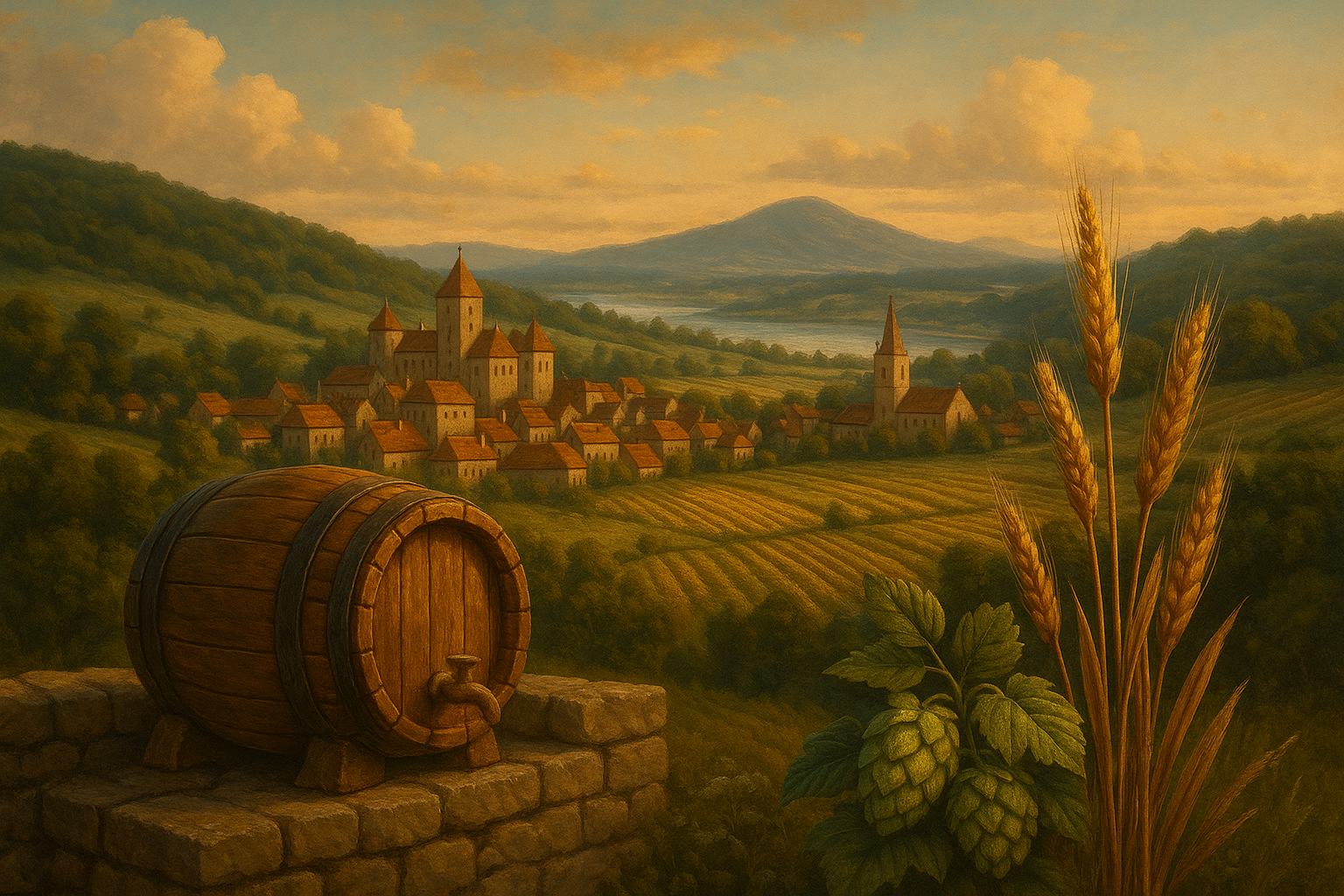
The Kingdom of Rilt’kej is a thriving, cooperative realm built upon the fertile plains and rich waters that sustain its world-famous brewing industry. Its capital, Riltkar, stands at the heart of a vast network of grain fields, orchards, and brewholds tended by humans, halflings, elves, dwarves, and goliaths—each race contributing a unique craft essential to the kingdom’s prosperity. Rilt’kej’s society revolves around the rhythm of agriculture and fermentation, guided by the Harvest Court, a gentle pantheon whose influence permeates festivals, rituals, and everyday labor. United by the Royal Ale Creed and governed through a balanced partnership between the Crown and the Council of Stewards, the kingdom maintains political stability and cultural harmony through shared purpose and mutual respect.
Despite its peaceful nature, Rilt’kej holds significant influence in regional politics due to its prized exports and mastery of agricultural science. Its lake ports, caravan routes, and river barges connect it to neighboring nations, making Rilt’kej a central trading hub whose ales are sought across the continent. Specialized Warden Orders safeguard trade routes, water sources, and sacred brewholds, ensuring that the kingdom’s lifeblood flows uninterrupted. With sects that shape spiritual life, guilds that maintain craft traditions, and infrastructure designed for efficient movement of goods, Rilt’kej flourishes as a prosperous, culturally vibrant kingdom defined by cooperation, craftsmanship, and the belief that community—like brewing—thrives when every ingredient works in harmony.
Structure
The Kingdom of Rilt’kej is governed through a balanced partnership between the Crown and the Council of Stewards, a multi-racial administrative body that reflects the kingdom’s ale-driven economy. The monarch serves as guardian of the Royal Ale Creed, overseeing diplomacy, stabilizing grain reserves, and protecting sacred brewing traditions such as the Royal Yeast Vault. Day-to-day governance, however, is carried out by the Council, whose members represent the key pillars of Rilt’kej society: Human Grain Stewards who manage farmland and crop cycles, Halfling Brewmaster delegates who regulate ale purity and production, Hill Dwarf Caskwrights responsible for engineering and storage, Elven Grove Wardens who oversee orchards and herb gardens, the Goliath Northern Warden who handles frontier security, and the Lake & River Trade Steward who governs ports, waterways, and distribution routes. Together, they form a practical, cooperative ruling structure that ensures economic stability and cultural continuity.
Supporting this political framework are the High Brewer Conclave and the various Warden Orders, which collectively preserve the kingdom’s identity and protect its lifeblood: ale. The Conclave certifies brewmasters, safeguards ancient strains, and enforces brewing laws, wielding cultural authority equal to the Crown itself. Meanwhile, the Wardens function as Rilt’kej’s specialized defensive and logistical corps, from Goliath-led Borderwardens guarding the Thrykkon frontier to Riverwardens escorting barge shipments and Stonewardens protecting the fermentation caverns. This layered structure—administrative, cultural, and protective—creates a kingdom where governance revolves around harmony, shared stewardship, and the careful safeguarding of the resources that make Rilt’kej the brewing heart of the region.
Culture
The culture of the Kingdom of Rilt’kej is shaped entirely by its identity as the brewing heart of the region. Life revolves around grain cycles, orchard seasons, and the rhythms of fermentation, forming a society that values craftsmanship, community, and celebration. Humans provide the backbone of agricultural labor and trade, halflings preserve ancient brewing traditions, elves guide orchard magic and botanical refinement, and dwarves bring engineering mastery to caskwork and fermentation vaults. Across villages and cities, brewing is not merely an industry but a shared art—recipes are guarded as family heritage, festivals mark the completion of each brewing stage, and inns act as both social hubs and civic gathering spaces. Hospitality is considered a cultural virtue; offering a traveler a mug of one’s home-brew is a sign of respect, trust, and welcome.
Rilt’kej’s collaboration-based culture is reinforced by its racial harmony and the cooperative nature of ale-making itself. Each people contributes a unique tradition, shaping a society built on interdependence: halfling “Ale Families,” elven herb-growers, dwarven caskwrights, and human grain clans all rely on one another’s expertise. Music and storytelling flourish in taverns and open-air brew halls, where tales of past harvests and legendary brews are passed down. Even the kingdom’s approach to conflict is influenced by its culture—Rilt’kej favors diplomacy, trade, and relationship-building over aggression. Their greatest pride lies in the belief that a good ale can bridge cultures, ease tensions, and celebrate unity, making Rilt’kej a realm where joy is brewed, shared, and woven into the heart of everyday life.
Public Agenda
The public agenda of Rilt’kej centers on preserving the stability of its ale-based economy and ensuring that every community, from grain villages to major lake ports, benefits from shared prosperity. The kingdom prioritizes maintaining fertile farmlands, protecting water sources like Lake Kelreth and Lake Mirenfall, and safeguarding the rare yeasts and orchards that define Rilt’kej’s brewing heritage. Public policy promotes crop rotation, sustainable harvesting, and the construction of new mills, caskworks, and fermentation cellars to support long-term growth. Trade agreements with neighboring nations are continually reassessed to secure reliable export routes, expand market demand, and maintain Rilt’kej’s reputation as the continent’s premier supplier of ale and cider. The Crown and Council of Stewards emphasize transparency, quality control, and cooperative governance to ensure that brewing clans, merchant guilds, and farmers all retain a stake in the kingdom’s success.
Another major priority is the protection of infrastructure and trade networks crucial to Rilt’kej’s prosperity. The agenda includes strengthening border defenses along the Thrykkon frontier, improving lake and river patrols to secure shipment lines, and expanding caravan routes to reach distant markets. The government also invests heavily in cultural initiatives, funding seasonal festivals, preserving brewing traditions, and supporting the High Brewer Conclave’s educational efforts to train new generations of brewmasters. Ensuring social harmony among the kingdom’s races—humans, halflings, dwarves, elves, and goliaths—is a continual focus, recognizing that Rilt’kej’s success is rooted in collaborative craft. Ultimately, the public agenda strives to balance agricultural abundance, cultural pride, sustainable brewing practices, and strong diplomatic relationships to guarantee the kingdom’s prosperity for generations to come.
Assets
The assets of the Kingdom of Rilt’kej revolve around its unparalleled brewing ecosystem, fertile geography, and strategically valuable waterways. Its most prized assets are the vast Grainbelt Fields, which stretch across central Rilt’kej and produce world-class barley, wheat, and hops. These fields are supported by sophisticated irrigation networks, centuries-old crop rotation techniques, and halfling-managed seed vaults that preserve heritage strains. The kingdom also boasts the Orchard Groves of Eldrime, where elves cultivate magical fruits and herbs used in premium ales and ciders. Beneath the foothills, dwarven-engineered Fermentation Caverns offer naturally cool, stable environments to age long-batch brews—some casks maturing for decades. Rilt’kej’s pristine waters, especially from Lake Kelreth, Lake Mirenfall, and the Kelth River, are considered vital national resources, protected fiercely for their role in creating unique “purity brews” impossible to replicate elsewhere.
In addition to natural and agricultural wealth, Rilt’kej possesses a robust network of commercial and logistical assets. Kelreth’s Landing, its major lake port, acts as a continental trade hub, exporting ale and grain to Pepji and beyond via deepwater ferries. A lattice of riverside towns and barge docks forms the Riverline Transport Corridor, enabling efficient distribution throughout the kingdom. The Caskwright Guild, famed for its masterful dwarven craftsmanship, produces barrels, stone vats, and fermentation equipment that are sought after internationally. The kingdom also holds several intangible assets of immense cultural and economic value: the Royal Yeast Vault, guarded strains used for national signature brews; the High Brewer Conclave, which standardizes quality and innovation; and a strong network of caravan roads that connect far-flung settlements. Together, these assets make Rilt’kej not only the brewing heart of the realm but also a critical supplier, trade partner, and cultural nexus within the broader region.
Demography and Population
The Kingdom of Rilt’kej is home to a thriving population shaped by its fertile landscape and ale-centered economy. With 180,000 residents living in its cities alone, Rilt’kej is far more urbanized than many neighboring realms, its bustling settlements supported by trade routes, grain belts, and lake ports that keep the brewing industry in constant motion. Humans form the majority of the populace, especially in agricultural hubs and trade-heavy lake cities, while halflings maintain a strong presence in brewing districts and orchard regions. Hill dwarves concentrate in engineering towns and foothill cities where fermentation caverns and caskworks dominate the skyline, and wood/meadow elves inhabit grove-lined districts and lakeside communities where herbs, fruits, and botanical infusions are cultivated. Goliaths remain a small but respected minority, most found in northern cities where they serve as caravan guards, laborers, and members of the Borderwarden ranks.
Outside the major population centers, an additional rural population fills the farmlands, orchards, and river valleys that fuel the kingdom’s brewing industry, but the beating heart of Rilt’kej is unmistakably its dense, industrious urban landscape. Across the kingdom, demographic harmony is reinforced by the cooperative nature of ale production—humans managing grain, halflings refining recipes, dwarves engineering casks, elves cultivating specialty ingredients, and goliaths safeguarding trade routes. This interwoven social fabric creates a unified cultural identity centered on craftsmanship, celebration, and the pride of producing the finest ales in the region. Despite differences in tradition and heritage, the peoples of Rilt’kej see themselves as partners in a shared craft, contributing to a vibrant, diverse kingdom defined by collaboration and the prosperity of its brewing arts.
Military
The military of Rilt’kej is structured less like a conventional standing army and more like a network of specialized defensive orders designed to protect the grain fields, trade routes, brewing infrastructure, and lake ports that sustain the kingdom’s economy. Known collectively as the Warden Orders, these forces combine human leadership, goliath strength, dwarven engineering, and elven precision to maintain security across a vast and strategically important landscape. The largest branch is the Grainwardens, who patrol farmland, safeguard harvest convoys, and protect rural communities from raiders seeking to disrupt the kingdom’s ale supply. Along the northern frontier, the Borderwardens—a force heavily composed of goliaths—maintain fortified outposts and escort caravans traveling toward the Thrykkon Dominion. The Riverwardens and Lakewardens safeguard the Kelth River system and Lake Kelreth, ensuring the safe movement of ale-laden barges and ferries, while the Stonewardens, primarily dwarves, defend the fermentation caverns, brewholds, and engineering sites carved into the foothills.
Although not designed for conquest, Rilt’kej’s military excels in logistics, mobility, and protection, traits essential to maintaining its ale-driven trade empire. The High Marshal of Rilt’kej, appointed jointly by the Crown and the Council of Stewards, oversees coordination among the Warden Orders, ensuring rapid response to threats and uninterrupted economic flow. Specialized units like elven Grove Sentinels defend orchard regions and herb gardens, while halfling Caskrunners act as agile scouts and messengers familiar with every trade road in the kingdom. The result is a defense system built on cooperation and pragmatism: each race contributes its natural strengths, and each Warden Order protects a different part of the brewing ecosystem. Rilt’kej’s military may not project power across continents, but within its borders, it forms a resilient shield—one designed to guard the lifeblood of the kingdom and ensure that its people, cities, and world-renowned ales thrive without interruption.
Technological Level
The technological and scientific level of Rilt’kej is defined by practical innovation driven by its brewing economy, resulting in a society highly advanced in agriculture, engineering, and applied sciences. Hill dwarf caskwrights and human millwrights have perfected waterwheel-driven mills, complex irrigation systems, and temperature-regulated fermentation chambers carved deep into the foothills. These engineering feats—paired with elven botanical knowledge—allow the kingdom to produce ale with extraordinary consistency and quality. Halfling brewmasters contribute to the scientific culture through meticulous record-keeping, experimentation with yeasts, and the development of refined brewing techniques that closely resemble proto-chemistry. While Rilt’kej does not pursue abstract sciences for their own sake, its innovations in grain processing, water purification, and fermentation control place it far ahead of its neighbors in these specialized fields.
Beyond brewing, Rilt’kej applies practical technology to infrastructure and trade. Its river and lake ports feature efficient loading mechanisms, buoyed cargo racks, and standardized cask-locking systems that reduce spillage and increase export volume. Dwarven-engineered roadways and stone bridges support heavy caravan traffic, while elven horticultural methods advance orchard growth, hybrid fruits, and herb cultivation used in specialty brews. Scientific knowledge spreads through guilds rather than universities, creating a hands-on culture where experimentation is valued but always tied to economic utility. Although the kingdom lacks the arcane or experimental inventiveness of more scholarly nations, Rilt’kej’s mastery of brewing science, agricultural optimization, and mechanical engineering forms a robust, reliable technological base that sustains its prosperity and reinforces its identity as the brewing capital of the region.
Religion
The religion of Rilt’kej is a gentle, agrarian faith centered on the cycles of growth, harvest, and fermentation—seen not merely as natural processes but as sacred acts guided by benevolent spirits. The people worship a small pantheon known collectively as the Harvest Court, deities and guardians tied directly to the ingredients, water, seasons, and craftsmanship that make brewing possible. The most revered figure is Alestria, the Brewmother, goddess of grain, yeast, and community. She is believed to have gifted early halfling clans the first brewing strains and taught humans how to cultivate the fertile plains. Kelrhan, the River-Father, rules freshwater and is honored along the Kelth River and both major lakes, especially Lake Mirenfall, whose purity is considered a divine blessing. Thovrak Stonehand, a dwarven-aligned deity of craft and fermentation chambers, oversees the transformation of raw materials into ale, while Mirenya of the Orchards, beloved by elves, governs fruit, herbs, and botanical harmony.
Religion in Rilt’kej is woven into daily life rather than centralized in grand temples. Shrines sit beside farms, breweries, orchards, and bridges, and offerings typically involve grains, hops, herbs, or small cups of freshly brewed ale. Festivals follow the brewing calendar: the First Mash, the Blessing of the Yeast, and the Cask-Sealing Rite all blend worship with joyous celebration. Priests—called Steepkeepers—act more like community caretakers than authoritarian clergy, guiding seasonal rituals, blessing brewing batches, and preserving sacred recipes older than the kingdom itself. Different races honor different members of the Harvest Court, yet their practices overlap seamlessly, reinforcing unity through shared reverence for nature’s gifts and the craft that turns them into Rilt’kej’s most cherished offering. The faith is calm, communal, and deeply tied to the land—reflecting the cooperative heart of the kingdom itself.
Laws
The laws of Rilt’kej are shaped by the kingdom’s agricultural foundations, cooperative society, and the central role of brewing in both culture and economy. At their core lies the Royal Ale Creed, a codified set of regulations that governs everything related to grain usage, water rights, brewing quality, and trade. Violations of this creed—such as diluting ale for profit, tampering with yeast strains, or contaminating protected water sources—are treated as serious offenses, often resulting in heavy fines, loss of guild privileges, or exile from brewing communities. Land and crop laws are equally strict: fields must follow mandated crop rotation schedules to protect soil fertility, and orchard groves are protected by seasonal stewardship rules to ensure uninterrupted botanical supply. Water laws are particularly important for Lake Kelreth, Lake Mirenfall, and the Kelth River, where pollution, overuse, or unauthorized diversion is prosecuted under resource-protection statutes.
Beyond agricultural and brewing regulation, Rilt’kej enforces communal and trade-focused laws designed to maintain peace, fairness, and consistent commerce. The kingdom has strong anti-theft and anti-fraud statutes—especially concerning cargo, casks, and merchant contracts—to protect long-distance trade and the reputation of Rilt’kej’s exports. The Wardens act as both military protectors and lawful enforcers, with Riverwardens, Grainwardens, and Stonewardens empowered to resolve disputes and uphold regional ordinances. Social laws emphasize harmony among the kingdom’s diverse peoples: racial discrimination, sabotage of clan traditions, or interference with guild operations can result in public reprimand or loss of community standing. While Rilt’kej’s legal system is firm, it is also culturally compassionate—punishments favor restitution, community service, or reparative labor over imprisonment. In this way, Rilt’kej’s laws reflect the values of the kingdom itself: protect the land, preserve the craft, honor cooperation, and ensure that prosperity is shared by all.
Agriculture & Industry
The agriculture of Rilt’kej is the lifeblood of the kingdom, built on fertile plains, well-managed crop cycles, and centuries of collaborative expertise among humans, halflings, elves, and dwarves. The kingdom’s Grainbelt produces vast quantities of barley, wheat, rye, and specialized hop strains, all cultivated under strict rotation laws to preserve soil quality. Orchards near Eldrime Grove flourish with apples, pears, plums, and enchanted elven hybrid fruits used in premium ciders and infusion ales. Smaller farming communities grow herbs, flowers, and botanical additives essential for flavoring specialty brews. Irrigation channels, millponds, and waterwheel systems—maintained by dwarven engineers—ensure consistent yields even during drier years. The balanced interplay of human-scale farming, halfling seed stewardship, and elven orchard magic makes Rilt’kej one of the most agriculturally stable realms in the region.
Rilt’kej’s industry is dominated by its world-renowned brewing sector, supported by an extensive network of brewholds, fermentation caverns, caskworks, and transport facilities. Halfling Ale Families manage the brewing stages, dwarf-led Caskwright Guilds produce barrels and stone vats, and human merchants run distribution routes across the kingdom and beyond. Mining is modest but focused on stone, clay, and metals needed for brewing equipment and storage chambers. Woodcutting operations in the northern foothills supply timber for casks, caravan repairs, and riverside docks. Secondary industries—such as cooperage, glassblowing for bottles, rope-making for cargo securing, and parchment production for trade ledgers—have grown in response to the brewing economy’s demands. Almost every settlement contributes in some way to ale production, making agriculture and industry inseparable pillars that sustain Rilt’kej’s prosperity and cultural identity.
Trade & Transport
Trade and transport in Rilt’kej are engineered around the rapid, reliable movement of ale, grain, and orchard goods across both domestic and international routes. Lake Kelreth serves as a major trade artery, with the port city of Kelreth’s Landing exporting vast quantities of ale and grain to Pepji via deepwater ferries and cargo barges. Inland waterways—most notably the Kelth River—form a dense transport network connecting Rilt’kej’s heartland to its lake ports, allowing casks to be moved efficiently from brewholds to market centers. Specialized rivercraft with shock-absorbing cask racks prevent damage during transport, while Lakewardens and Riverwardens patrol routes to deter smugglers and ensure safe passage. Overland, the kingdom’s trade relies on caravans that traverse well-maintained stone roads built by dwarven engineers. These caravan routes link urban hubs and rural brewholds, continuing south toward Pepji, east to Velkara, and north toward Thrykkon-controlled passes.
International trade is both the kingdom’s strength and its diplomatic leverage. Rilt’kej ale is prized across the region, and long-standing agreements guarantee access to brewing ingredients not grown locally—spices from tabaxi caravans, rare fruits from southern lands, and metal goods exchanged with dwarven enclaves outside the kingdom. The Council of Stewards closely regulates trade to protect quality and reputation, issuing licenses for export and setting standards for cask construction, cargo sealing, and yeast preservation. Merchant guilds operate large-scale distribution networks, with human caravanners handling long-distance transport and halfling traders managing delicate specialty shipments. Through its sophisticated transport systems and respected trade practices, Rilt’kej maintains a stable economic footprint and solid diplomatic position, ensuring that its renowned ales reach markets far beyond its borders.
Education
Education in Rilt’kej is practical, community-rooted, and deeply tied to the kingdom’s agricultural and brewing heritage. Rather than a centralized academic system, knowledge is passed through guild schools, family apprenticeships, and regional steward halls, each specializing in a different aspect of the kingdom’s economy. Human-run Steward Halls teach literacy, mathematics, contract law, and crop management, ensuring that farmers and merchants understand trade systems and land stewardship. Halfling Ale Families operate brewing apprenticeships where students learn yeast cultivation, fermentation timing, recipe preservation, and the chemistry-like principles behind flavor balancing. Elven Grove Houses teach botanical studies, orchard care, herbal infusion methods, and the magical horticulture needed for specialty brews. Dwarven Caskwright Academies focus on engineering, carpentry, stonework, and the mechanics of large-scale fermentation systems—skills essential for maintaining Rilt’kej’s industrial infrastructure.
Higher learning takes the form of Guild Advancement Paths, a tiered system where students prove mastery through practical examinations rather than abstract study. Aspiring brewmasters must complete lengthy apprenticeships, assist in producing festival batches, and demonstrate innovation while respecting tradition. Warden Orders also maintain training academies that teach geography, logistics, wilderness survival, and protective tactics—producing caravan guards, river pilots, and frontier scouts. While magic is not a widespread academic pursuit, elves offer limited instruction in natural magic as it applies to crops, orchards, and ecological harmony. Education in Rilt’kej is therefore a collective investment: every child learns the skills needed to support the kingdom’s interdependent economy, ensuring that each generation contributes to the land, the craft, and the thriving brewing culture that defines Rilt’kej’s identity.
Infrastructure
The infrastructure of Rilt’kej is designed to support its brewing-centered economy and the movement of goods across its plains, rivers, and lake ports. Stone roads—built and maintained by hill dwarf caskwright engineers—connect every major city, brewhold, and grainbelt village, ensuring caravans can travel quickly and safely. These roads are reinforced with drainage channels and marker stones that resist shifting soil during harvest seasons. The kingdom’s advanced water systems include irrigation canals that feed barley and hop fields, millponds powering grain mills, and carefully protected aqueducts leading to brewholds that require exceptionally pure water. Underground fermentation chambers carved into hillside bedrock create naturally cool environments, while timber and stone warehouses in port towns store casks for export. River docks along the Kelth are fitted with specialized loading cranes and buoyed racks to handle large volumes of ale barrels without damage.
Transport and communication infrastructure focus heavily on efficiency and reliability. Lake Kelreth hosts major ferry lines and trade barges that move goods between Rilt’kej and Pepji, supported by lighthouse beacons and Lakewarden patrol stations. Rivers serve as commercial highways, with well-maintained towpaths and barge slipways at each riverside town. Messenger posts—often staffed by halfling Caskrunners—provide rapid communication between settlements, while caravans rely on fortified rest stops spaced along major routes. Villages and towns are equipped with communal brew halls, granaries, herb sheds, and cask-forging shops, all of which feed into the kingdom’s tightly interwoven production cycle. Altogether, Rilt’kej’s infrastructure reflects a society engineered for coordination, stability, and constant economic flow—ensuring that every harvested grain and brewed cask reaches its destination with precision and pride.
Mythology & Lore
The mythology of Rilt’kej is a tapestry of agrarian legends, brewing-origin stories, and sacred tales tied to the land’s natural rhythms. At its heart is the story of the Harvest Court, the divine family believed to have shaped Rilt’kej’s fertile plains, pure waters, and sacred grains. The most cherished myth tells how Alestria the Brewmother descended during the kingdom’s earliest days, teaching halfling clans to coax sweetness from grain and guiding humans to cultivate the first barley fields. Her gift of the First Yeast, said to hold a spark of her divine breath, became the foundation of all brewing craft. Kelrhan the River-Father is said to have carved the Kelth River with a sweep of his hand, filling it with waters pure enough to honor his sister Alestria’s creations. Meanwhile, dwarven stories speak of Thovrak Stonehand, who hollowed the first fermentation chambers within the earth to show mortals how transformation through patience can create greatness. Elven legends tell of Mirenya of the Orchards, who planted the first enchanted grove after crying over barren soil—her tears becoming Lake Mirenfall.
Myths also explain the natural features and brewing traditions that shape the kingdom today. Lake Kelreth is believed to have formed when Kelrhan struck the ground during a battle with a storm spirit, creating a vast basin that filled with rain and river water. The yeast strains preserved in the Royal Vault are thought to descend directly from Alestria’s First Yeast, and legends warn of divine displeasure should they ever be misused or adulterated. Stories told during festivals recount how the Harvest Court disguised themselves as travelers to test mortals’ hospitality, rewarding those who offered ale freely and punishing those who withheld it. Even Rilt’kej’s racial harmony is mythologically reinforced: goliaths claim Thovrak shaped their ancestors from stone to guard the land, elves say Mirenya wove their spirits into the orchards to heal the soil, and halflings believe Alestria blessed them with laughter so brewing would always be a joy, not a burden. In every tale, the message is the same—the land prospers when its people honor the cycle of growth, craft, and celebration.
Divine Origins
The origins of the Kingdom of Rilt’kej trace back to a loose network of farming villages, halfling brew-clans, and elven orchard stewards who settled along the Kelth River and the fertile plains surrounding what is now Riltkar. In the earliest days, these communities lived independently, bound only by trade and the shared reverence for the land’s bountiful harvests. According to tradition, the turning point came during the Era of Empty Casks, when a series of blights and droughts threatened to collapse the region’s fragile agricultural systems. It was during this crisis that the legendary brew-clan elder Harael Mistcup united the scattered peoples under a cooperative pact based on equitable grain distribution, mutual protection, and shared brewing knowledge. Her pact—later mythologized as being inspired directly by the Harvest Court—laid the groundwork for a collective identity rooted in collaboration and craft.
Over generations, this confederation evolved into a structured kingdom as human settlement expanded, dwarven caskwrights arrived in the foothills, and elven orchard magic began transforming the plains into some of the most fertile lands in the region. The monarchy formed when local leaders elected a single figure, King Rilten of the Kelth, to act as mediator during disputes and formalize relationships with neighboring realms. His line would later give the kingdom its name: Rilt’kej, meaning “Rilten’s Bound Fields” in old halfling dialect. As the brewing industry grew in sophistication—bolstered by dwarven engineering and halfling innovation—the kingdom’s identity crystallized around its role as the continent’s premier ale producer. The founding institutions, including the Council of Stewards and the Royal Ale Creed, emerged to protect these traditions and ensure that cooperation remained at the heart of the realm. By blending the strengths of its diverse peoples and maintaining reverence for its agricultural roots, Rilt’kej grew from scattered farms into a thriving, unified kingdom defined by craft, community, and the prosperity of its lands.
Tenets of Faith
The tenets of faith in Rilt’kej reflect a gentle, agrarian spirituality rooted in gratitude, cooperation, and reverence for the natural cycles that sustain the kingdom. Followers of the Harvest Court believe that brewing, farming, and orchard-tending are sacred acts—expressions of harmony between mortals and the divine. Central to their faith is the belief that every grain, drop of water, and batch of ale carries a spark of divine presence, and must therefore be treated with respect and care. Worship focuses less on rigid doctrine and more on lived practice, community celebration, and stewardship of the land.
The Core Tenets of the Harvest Court
1. Honor the Cycle of Growth.
Plant with intention, harvest with gratitude, and never take more from the land than it can renew.
2. Share the Cup Freely.
Hospitality is sacred. A cup of ale offered in goodwill strengthens bonds and honors Alestria’s gift.
3. Protect the Waters.
Rivers, lakes, and springs are the lifeblood of the world; polluting them is a spiritual offense.
4. Preserve the Craft.
Brewing is a divine inheritance. Strive for excellence, maintain purity, and respect ancestral techniques.
5. Celebrate the Seasons.
Each festival marks a divine moment—planting, blooming, harvesting, fermenting—all are reflections of the Harvest Court.
6. Work in Harmony.
All peoples contribute different strengths. Unity in craft and purpose honors the gods more than individual pride.
7. Transform Through Patience.
Just as grain becomes ale, mortals grow through practice, humility, and steady improvement.
8. Respect the Sacred Groves and Caverns.
Where Mirenya’s orchards flourish and Thovrak’s stone chambers lie, divine touch is strongest; treat these places as holy.
9. Let No One Go Hungry or Thirsty.
Community care is a moral duty—those who hoard in times of need bring divine disfavor.
10. Joy is a Blessing.
Laughter, music, and shared celebration are not luxuries but forms of worship; joy keeps the heart aligned with the Harvest Court.
Ethics
The ethics of Rilt’kej are grounded in cooperation, stewardship, and communal responsibility, reflecting the belief that prosperity is only possible when every part of the land and every member of society works in harmony. At the center of their moral philosophy is the idea that one’s actions should contribute to the well-being of the community and the health of the land. Waste, greed, and exploitation are considered serious ethical failings, not merely practical concerns—anything that disrupts the balance of growth, harvest, and craft is viewed as both socially harmful and spiritually misaligned. Fairness in trade, honesty in craft, and respect for the contributions of all races are ethical imperatives, woven deeply into everyday life. A person’s reputation in Rilt’kej is tied not to wealth, but to their reliability, generosity, and respect for tradition.
On a personal level, Rilt’kejan ethics emphasize humility, moderation, and gratitude. Individuals are expected to work diligently without seeking undue credit, to share their labor and their harvests freely, and to honor the teachings of their families, clans, and guilds. Taking care of guests, assisting travelers, and supporting neighbors in times of scarcity are considered fundamental virtues. Ethical disputes are typically resolved through mediation rather than punishment, guided by the principle that restoration and education are more valuable than retribution. Above all, Rilt’kej’s ethics demand that people care for the land as they would care for each other—recognizing that the prosperity of the kingdom depends on sustaining the delicate cycles of nature, community, and craft that define its identity.
Worship
Worship in Rilt’kej is intimate, communal, and woven directly into the daily rhythms of farming, brewing, and gathering. Unlike nations with grand temples or formalized rituals, Rilt’kejan worship happens in brew halls, orchards, grain fields, lakeshores, and family hearths, where offerings are simple yet heartfelt—fresh grain, a cup of ale, a sprig of herbs, or a portion of the season’s first harvest. Most prayers are spoken quietly before tasks begin: farmers offer thanks to Alestria for healthy soil, brewers whisper invocations to Thovrak Stonehand before sealing a cask, and riverfolk leave small tokens at water shrines to honor Kelrhan the River-Father. Festivals are the most vibrant form of worship, filled with music, dancing, open feasts, and communal brewing. These celebrations are seen as joyful acts of devotion, for the Harvest Court values gratitude and fellowship as highly as ritual precision.
Shrines are scattered throughout the kingdom—small stone altars in fields, carved wooden icons in brewholds, everblooming groves sacred to Mirenya, and riverside markers where candles float across the water. Steepkeepers, the kingdom’s humble priests, lead blessings during planting and harvest seasons, oversee rites like the Blessing of the Yeast and the Cask-Sealing Ceremony, and ensure sacred sites remain cared for. Worship is rarely about seeking miracles; instead, it focuses on maintaining balance, showing appreciation, and reinforcing unity between the people and the land. Each race participates in its own traditional ways—halflings through feasting and song, dwarves through craft rituals, elves through grove-tending, humans through community gatherings, and goliaths through protective offerings. Regardless of method, worship in Rilt’kej always returns to the same idea: work with gratitude, celebrate with generosity, and honor the cycles that sustain life.
Priesthood
The priesthood of Rilt’kej, known collectively as the Steepkeepers, is a humble, service-oriented clergy whose purpose is to guide communities through the sacred cycles of planting, harvesting, brewing, and celebration. Unlike hierarchical or doctrine-heavy faiths, the Steepkeepers function as caretakers, teachers, and ritual leaders, chosen not for lineage or magical power but for wisdom, patience, and a deep understanding of the land. Most Steepkeepers begin as apprentices within farming clans, brew families, or orchard circles, learning the spiritual significance behind everyday labor. They travel between villages and towns, blessing fields, sanctifying water sources, overseeing seasonal festivals, and maintaining shrines dedicated to the Harvest Court. Their attire is simple—earth-colored robes tied with braided cords of grain or hops—and they are known more for their steady presence than ceremony or grandeur.
Within the priesthood exist several gentle “paths,” each aligned with one of the Harvest Court’s domains. Grainward Steepkeepers serve Alestria, safeguarding seed stores and teaching sustainable farming practices. Riverhands honor Kelrhan by tending water shrines, mediating disputes over irrigation rights, and ensuring sacred lakes and rivers remain clean. Stonewardens, often dwarves, serve Thovrak Stonehand through the blessing of fermentation chambers and caskworks. Grovewatchers, typically elves, maintain orchards and herb sanctuaries sacred to Mirenya. While each path has its own duties, all Steepkeepers work cooperatively and answer to the Circle of Seasons, a small council representing each divine aspect. Their authority is moral rather than political; they advise the Crown and the Council of Stewards only when matters threaten the land’s balance or the kingdom’s spiritual harmony. Above all, the priesthood’s purpose is to preserve the unity between people, craft, and nature—ensuring that every harvest and every brew honors the blessings of the Harvest Court.
Granted Divine Powers
he granted divine powers of Rilt’kej are modest, practical, and deeply tied to the everyday needs of a kingdom sustained by agriculture and brewing. The Harvest Court does not bestow flashy miracles or destructive magic; instead, their blessings manifest as subtle enhancements to craft, growth, protection, and harmony. Steepkeepers and the exceptionally devout may receive small boons such as the ability to sense the health of soil, detect impurities in water or grain, encourage plants to recover after storms, or stabilize fermentation processes that would otherwise spoil. These powers are often described as “gentle nudges” rather than overt spells—Alestria guiding a brewer’s hand, Kelrhan calming a turbulent river, Thovrak reinforcing a cracked stone vat, or Mirenya coaxing blossoms from a frost-bitten orchard. Such blessings are rare, always purposeful, and granted only when nature’s balance or a community’s livelihood is at stake.
In more spiritually charged moments—seasonal festivals, sacred rites, or crises that threaten the kingdom’s harmony—divine powers may manifest more clearly. Steepkeepers have been known to bless entire fields so they ripen evenly, call forth clean water from dry streambeds, or preserve a vital batch of ale needed for communal rites. Goliath Steepkeepers aligned with Thovrak sometimes gain brief surges of strength to move boulders or reinforce structures, while Grovewatchers may accelerate healing in plants or imbue fruits with heightened vitality. These gifts are never tools of war or personal gain; they serve community prosperity, environmental protection, and the sacred craft of brewing. The people of Rilt’kej believe the Harvest Court rewards harmony and humility—divine power is not something to wield, but something entrusted to those who uphold the cycles that sustain the kingdom.
Political Influence & Intrigue
Political intrigue in Rilt’kej is subtle, quiet, and deeply woven into the kingdom’s interdependence between brewing clans, agricultural stewards, and trade authorities. Unlike realms ruled by conquest or arcane power, Rilt’kej’s influence revolves around control of resources, mastery of brewing secrets, and the ability to sway trade routes. The most powerful factions—the Halfling Ale Families, the Hill Dwarf Caskwright Guild, the Elven Grove Circles, and the Human Grain Stewards—each hold leverage over a piece of the brewing cycle. Though outwardly cooperative, these groups frequently maneuver behind the scenes to secure better harvest rights, exclusive trade agreements, or influence within the Council of Stewards. Political disputes rarely erupt into open conflict; instead, they take the form of whispered negotiations, strategic festival sponsorships, quiet manipulation of supply chains, or efforts to win public favor through superior brews. Even the priesthood occasionally becomes entangled when blessings, festival rites, or sacred yeast approvals shift the balance between rival factions.
Externally, Rilt’kej’s growing economic importance draws attention from neighboring nations. The Thrykkon Dominion views Rilt’kej’s ale supply as essential to maintaining frontier morale, giving their diplomats strong incentives to keep relations favorable—yet also to subtly influence border trade conditions. The Zilaran Empire attempts to secure exclusive contracts for elite brews, using wealth and political pressure to sway merchant guilds, while Pepji leverages its shared lake border to negotiate beneficial ferry rights and customs regulations. Within this web of influence, the Crown must navigate carefully, balancing foreign demands against domestic cooperation. Hidden rivalries simmer beneath the surface: certain noble lines seek to restore older power structures; wealthy merchant houses attempt to bypass halfling brew clans; and some Grain Steward families believe they should hold greater authority due to their role in feeding the kingdom. Though Rilt’kej maintains a reputation for harmony, its prosperity ensures that politics here is a game of quiet leverage, strategic alliances, and influence wielded through trade rather than steel.
Sects
The religious landscape of Rilt’kej includes several gentle but influential sects, each offering a different interpretation of the Harvest Court and shaping regional customs, trade practices, and political attitudes. The Circle of the First Yeast, led mainly by halfling brew-clans, safeguards ancestral brewing traditions and holds great sway over what is considered “true” Rilt’kejan ale. The Riverhands of Kelrhan protect the purity of rivers and lakes, often mediating disputes over water rights, while the Stoneward Brotherhood, dominated by dwarves, oversees the sanctity of fermentation chambers and caskworks. Elven adherents of the Orchard Veil maintain sacred groves and influence crop cycles, and the League of Open Cups embodies hospitality and communal aid, providing food, drink, and service to travelers and the needy during hard seasons. Each sect holds a specific domain and contributes to the kingdom’s cultural cohesion while subtly shaping public sentiment and guild politics.
The more contemplative Keepers of the Quiet Sun guide individuals toward patience and inner balance, viewing brewing and agriculture as metaphors for personal growth. Meanwhile, the Wardens of the Cask Eternal carry a semi-martial authority, defending sacred sites such as the Royal Yeast Vault and ancient brewholds. Though these sects rarely clash openly, their differing priorities create soft lines of tension—tradition versus innovation, conservation versus expansion, generosity versus governance. These factions weave through civic life, advising leaders, influencing guilds, and guiding the spiritual tone of festivals and communal rites. Through quiet persuasion rather than power struggles, the sects ensure that faith in Rilt’kej remains living, collaborative, and deeply tied to the kingdom’s agricultural heart.

Comments