
Kingdom of Osearineno ("OZ-EAR-RE-NINO")
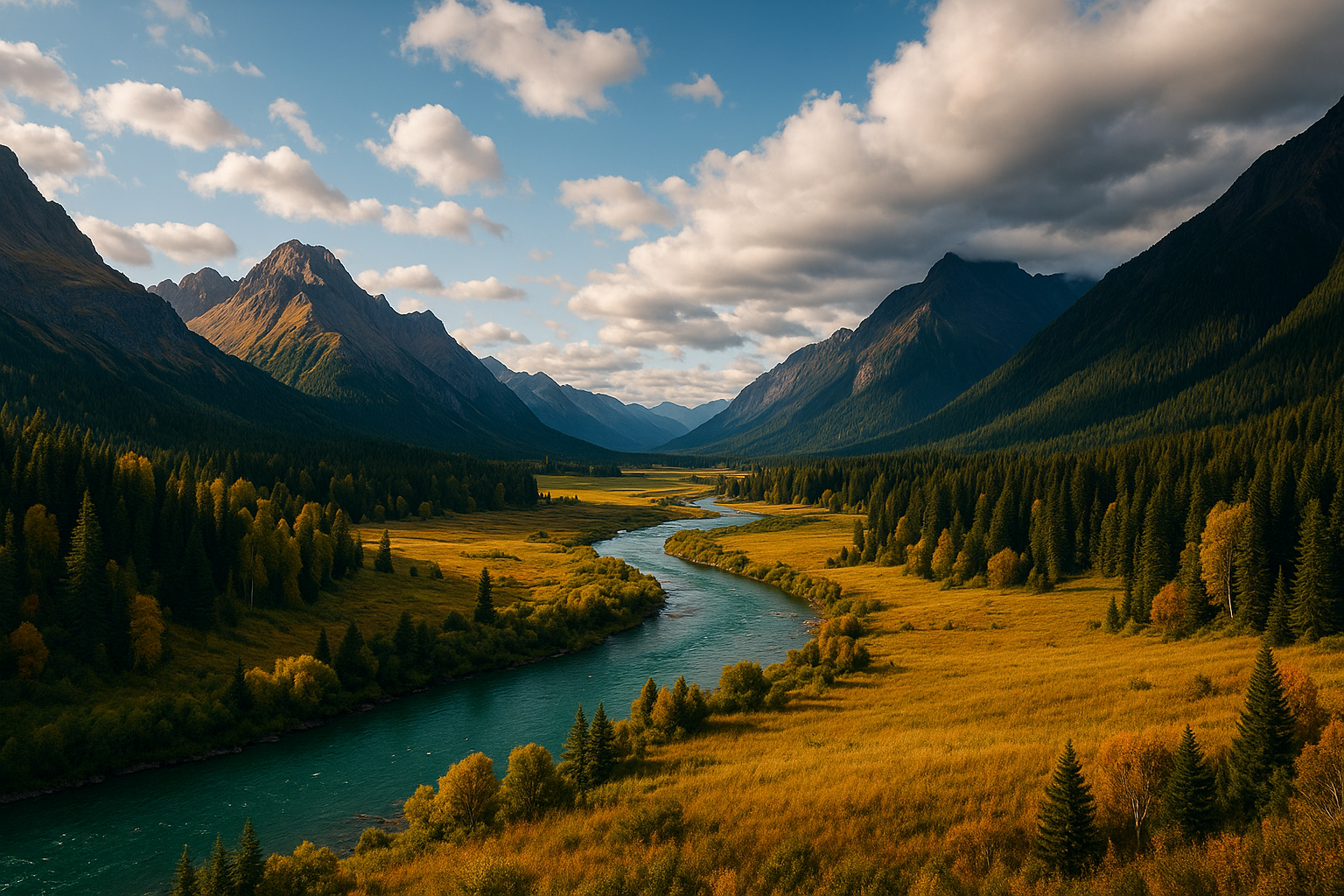
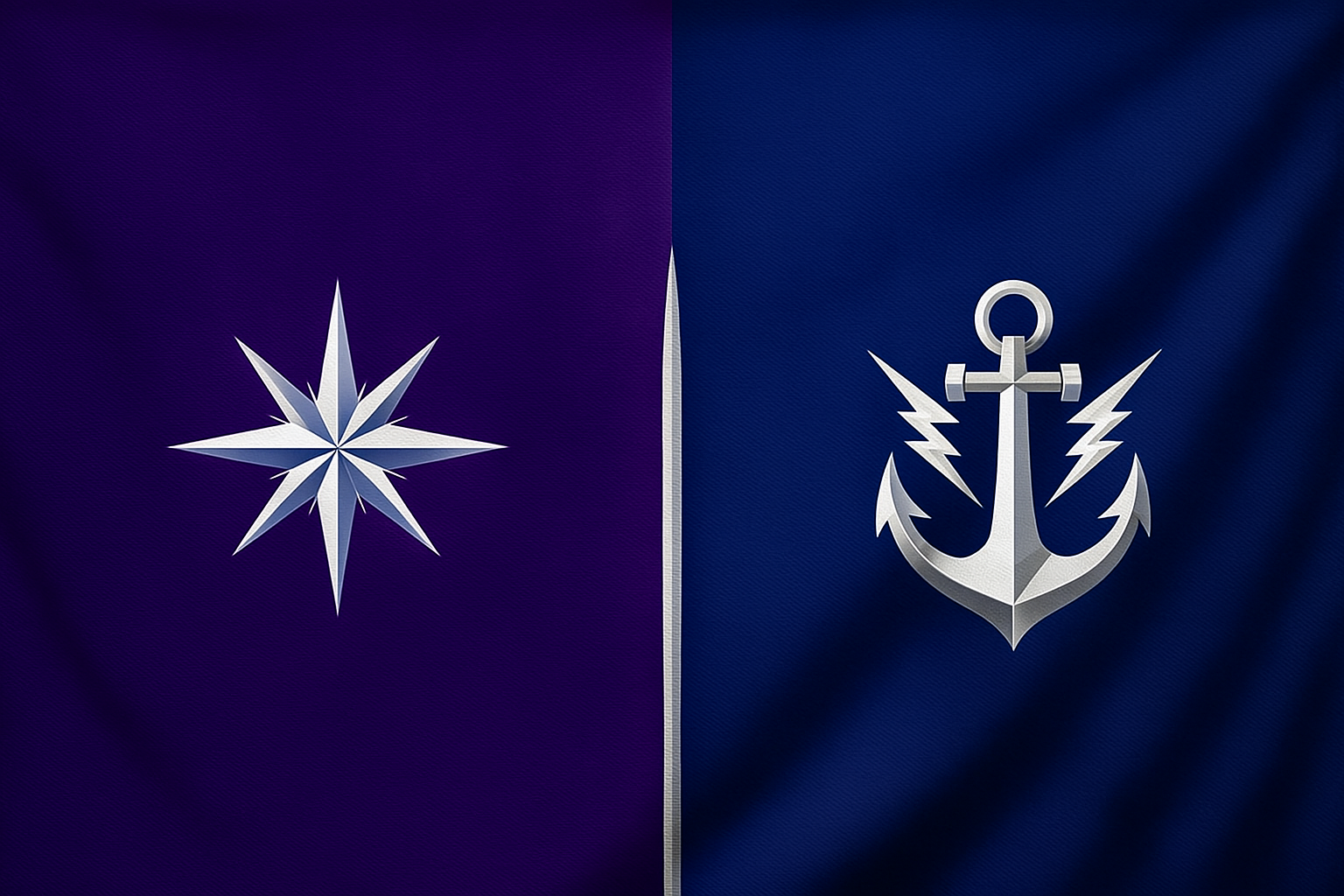
The Kingdom of Osearineno is a powerful and culturally complex Twin Kingdom formed by the unlikely union of the High Elven north and the Orcish south. The highlands are ruled from the radiant capital of Lefranfese, where ancient traditions, arcane scholarship, and celestial artistry define society. To the south, bustling ports like Umush and Gluth anchor a thriving maritime domain driven by commerce, shipbuilding, and the relentless energy of Orcish industry. These two realms, once fierce rivals, are bound by the Pact of Two Banners—an agreement that forged not only political unity but also a shared cultural identity built on balance, cooperation, and mutual dependence. Together, they control both the inland trade routes of the mountains and the critical sea lanes of the southern coast, making Osearineno one of the most strategically important nations in Redredan.
Despite their unity, the kingdom’s dual nature fuels constant political maneuvering between the Ascendant Court of the High Elves and the Maritime Council of the Orcs. Their differences, however, are also the source of Osearineno’s greatest strength: arcane sophistication blended with industrial might; celestial grace paired with storm-forged resilience. Its cities reflect this blend—Shemna and Nase’aqua flourish as centers of trade and knowledge, while the southern ports pulse with economic activity and naval power. Through this dynamic interplay of cultures, beliefs, and ambitions, Osearineno stands as a nation shaped by tension yet sustained by harmony—a kingdom where land and sea, magic and muscle, starfire and stormfire coexist to create a society unlike any other in the region.
Structure
The Kingdom of Osearineno operates under a unique dual-governance model known as the Pact of Two Banners, which unites two culturally distinct realms into a single political entity. The northern highlands are ruled by the Ascendant Court of Lefranfese, a High Elven royal council led by the Highcrest Monarch, whose authority covers diplomacy, magical oversight, education, and the kingdom’s highland provinces. This court governs through layered bureaucratic houses responsible for arcane regulation, trade administration, and inter-kingdom relations. High Elf governance is meticulous, ceremonial, and deeply tied to ancient traditions—valuing stability, magical scholarship, and long-term strategic planning.
The southern domain is governed by the Orcish Maritime Council, headquartered in the great port-city of Umush. This council, led by the Grand Tide-Warden, oversees naval command, port management, taxation of maritime trade, and the defense of coastal territories. Orc governance is pragmatic, commercial, and heavily oriented toward industry and trade. Both ruling bodies share power within the Twin Crown Assembly, a central chamber where High Elven magistrates and Orcish trade-lords must come to agreement on national laws, military deployment, and economic policy. No major edict can pass without approval from both sides, creating a delicate but powerful balance between northern arcane aristocracy and southern maritime might.
Culture
The culture of Osearineno is defined by the interplay between its two dominant peoples: the refined, tradition-bound High Elves of the northern highlands and the dynamic, trade-driven Orcs of the southern ports. In the north, life centers on artistry, magical scholarship, formal etiquette, and reverence for ancient elven customs. Architecture is elegant and elevated, festivals revolve around celestial events, and music tends toward ethereal choirs and harp-led orchestras. Northerners prize patience, precision, and the preservation of knowledge, shaping a cultural identity rooted in continuity and long-view governance.
In contrast, the southern Orcish culture is vibrant, loud, and communal, shaped by the constant movement of ships, goods, and foreign visitors. Their festivals feature drumming, sea shanties, athletics, and large feasts. Merchants, shipwrights, and dockworkers mingle freely, and the atmosphere is one of ambition and practical hustle rather than ceremony. Yet, despite the differences, the twin kingdoms share a mutual pride in prosperity and in maintaining the delicate balance struck by the Pact of Two Banners. Through centuries of cooperation, their cultures have blended in the central regions, producing mixed festivals, shared architectural styles, and a complex, interwoven identity where ancient elven dignity and Orcish vitality coexist.
Public Agenda
Osearineno’s public agenda focuses on maintaining unity between the twin realms, sustaining its position as a major commercial crossroads, and strengthening its influence over regional trade. The High Elven Ascendant Court prioritizes diplomatic stability, magical regulation, and the protection of the kingdom’s highland resources. They publicly advocate for educational advancement, preservation of arcane knowledge, and maintaining the kingdom’s reputation as a cultured and enlightened power. Ensuring peaceful coexistence with the Orcish south is seen as essential for the kingdom’s long-term prosperity.
The Orcish Maritime Council emphasizes expanding naval capability, securing trade routes, and growing Osearineno’s economic power. Publicly, they promote job creation, port expansion, and forging partnerships with foreign merchants to keep southern cities thriving. Together, the Twin Crown Assembly presents a unified agenda of prosperity through cooperation—balancing magical scholarship with mercantile ambition. They aim to position Osearineno as the premier trade nexus of the western continent, a kingdom where ancient wisdom and modern commercial strength reinforce one another.
Assets
Osearineno’s greatest asset is its dual cultural specialization, which combines High Elven arcane mastery with Orcish maritime industry, creating a kingdom uniquely positioned for both magical innovation and commercial dominance. The northern highlands hold vast deposits of rare minerals ideal for enchanting, along with serene landscapes that house prestigious academies, archives, and spellcraft workshops. These institutions produce skilled mages, scholars, and diplomats who elevate the kingdom’s standing across Redredan. The region’s highland trade routes also serve as safe, elevated corridors for caravans moving between neighboring nations.
In the south, Osearineno commands a powerful chain of ports, including Umush, Gluth, and Esiqua, which form the backbone of its economic engine. These ports connect inland kingdoms to the wider seas, making Osearineno a vital hub in regional trade networks. Orcish shipyards produce durable warships and merchant vessels, while bustling markets attract goods from distant regions. The kingdom also benefits from fertile fishing grounds, robust hunting territories, and vast forests that supply timber for shipbuilding. Together, these assets give Osearineno unmatched commercial leverage, strong defensive capabilities, and a rich cultural identity rooted in both the arcane heights of the north and the industrious momentum of the south.
Demography and Population
Osearineno’s population is nearly evenly divided between its two dominant groups, with High Elves comprising roughly 52% of the kingdom and occupying most of the northern highlands, academic centers, and political institutions. They are concentrated in cities like Shemna, Lefranfese, and Nase’aqua, where they form the upper aristocracy, the magical elite, and the bureaucratic core. High Elf society tends toward structured communities with long-lived familial lineages, producing a stable and deeply entrenched upper class.
Orcs make up around 40% of the population and dominate the southern coastal regions, especially major port cities like Umush and Gluth. They form the backbone of the kingdom’s commercial and naval sectors, thriving as merchants, shipwrights, dockworkers, and coastal soldiers. Orc communities are vibrant, communal, and culturally diverse due to heavy interaction with foreign traders, resulting in a more fluid social structure than the elven north. The remaining 8% includes Humans, Goliaths, Half-Elves, and a scattering of Lizardfolk and Tieflings, who typically reside in mixed-population trade zones or border communities. This demographic blend results in a kingdom where two major cultural spheres coexist, intersect, and occasionally compete—yet ultimately rely on each other to sustain Osearineno’s influence and prosperity.
Military
Osearineno’s military is a dual-forged force, each half shaped by the strengths of its dominant culture yet unified under the Pact of Two Banners. The High Elven armies of the north, known as the Radiant Legions, specialize in precision warfare, arcane combat, and long-range tactics. Their ranks include elite spellknights, bow companies trained in highland skirmishing, and battlemages capable of channeling powerful enchantments or battlefield illusions. High Elf officers prioritize discipline, formation control, and magical superiority, ensuring that any land-based conflict in the highlands is fought on their terms. The Legions are commanded by the Luminary Marshal, who answers directly to the Ascendant Court.
In the south, the Orcish military is anchored by the Ironwake Fleet—a formidable naval force composed of war galleys, ramming ships, coastal artillery barges, and amphibious strike units. Orc warriors excel in close-quarter combat, boarding maneuvers, siege operations, and the defense of the kingdom’s vast coastal ports. They manage their own ground troops, the Tidebreaker Regiments, who protect southern trade routes and maintain order in the bustling port cities. The Orcish military is led by the Grand Tide-Warden, who oversees all coastal defense, naval deployments, and maritime law enforcement.
In times of war, both forces merge into the Twin Crown Host, a combined command requiring strategic cooperation between the Luminary Marshal and the Grand Tide-Warden. Although cultural and tactical differences sometimes cause friction, their complementary strengths—arcane mastery in the north and naval power in the south—make Osearineno one of the most resilient and versatile military powers in the region.
Technological Level
Osearineno’s technological and scientific development is defined by the complementary strengths of its two realms: arcane innovation in the High Elf north and advanced maritime engineering in the Orcish south. The north houses prestigious academies, rune-forges, astronomical observatories, and laboratories dedicated to magical theory, alchemy, and long-term ecological study. High Elven scholars excel in enchantment, mathematics, medicine, energy manipulation, and the development of refined instruments—such as crystal readers, leyline compasses, and resonance-based communication devices. Their breakthroughs often become the backbone of the kingdom’s infrastructure and defense.
In contrast, the southern Orcish cities drive practical, applied sciences focused on shipbuilding, metallurgy, and industrial mechanics. Their ports feature advanced drydocks, reinforced hull designs, efficient sail systems, and early steam-assisted forges powered by arcane heat vents imported from the north. Orcish engineers experiment constantly, blending brute-force innovation with Elven precision to create hybrid technologies such as magic-infused ship keels, coastal beacon crystals, and high-capacity trade cranes. This synergy allows Osearineno to field both world-class naval vessels and magically advanced land-based infrastructure, making the kingdom a benchmark for technological excellence in Redredan.
Religion
Osearineno’s religion reflects its dual nature, with High Elves in the north and Orcs in the south venerating different gods but bound under a shared interfaith pact that stabilizes the kingdom. The north practices a refined, mystical faith centered on Corellon, god of High Elves, magic, art, and leadership. Corellon’s worship shapes northern culture: temples double as academies, spellcraft is viewed as sacred expression, and religious festivals celebrate creativity, celestial events, and the pursuit of perfection. Alongside Corellon, High Elves also commonly honor Sehanine Moonbow, goddess of the moon, dreams, and prophecy—especially in highland observatories and among diviners.
In the south, Orcs maintain powerful, traditional devotion to Gruumsh, but within Osearineno he is worshiped in a tempered, culturally adapted form. The One-Eyed Tide, as he is called here, is revered as a god of strength, storms, endurance, and fierce independence—values suited to seafaring life. Orcish ports also honor Valkur, the sailor’s god of daring and fair winds, whose worship blends seamlessly into maritime culture. In coastal villages and mixed communities, Melora, goddess of wilderness and the sea, is also revered, bridging the faiths of both races.
To maintain unity, both realms participate in the Concord of Stars and Storms, a joint religious accord ensuring freedom of worship and a shared calendar of festivals. Though their pantheons differ, High Elves and Orcs agree on one principle: divine power flows through the kingdom in many forms—through magic, through the sea, and through the strength of its people.
Laws
Osearineno’s laws are built on the Pact of Two Banners, creating a legal system that must satisfy both High Elven and Orcish traditions while maintaining national unity. The kingdom’s legislation operates through dual authority: the Ascendant Court governs arcane regulation, civil administration, land rights, and highland justice, while the Orcish Maritime Council oversees port law, trade conduct, naval regulations, and southern criminal enforcement. National laws—taxation, military deployment, foreign treaties, and resource management—require approval from both bodies in the Twin Crown Assembly, ensuring neither culture can dominate the other.
High Elf law emphasizes order, scholarship, ritual propriety, and preservation of magical safety, imposing strict penalties for misuse of arcane power or damage to historical sites. Orcish law focuses on practicality, fairness in trade, and consequences for actions that disrupt commerce or threaten port stability; offenses such as smuggling, sabotage, and interference with naval activity are punished severely. Across the kingdom, equal protection statutes prevent discrimination between northern and southern citizens, though cultural biases still subtly influence local enforcement. Together, these laws maintain a delicate balance—one that allows Osearineno to function as a unified kingdom while respecting the sovereignty of its two distinct peoples.
Agriculture & Industry
Agriculture in Osearineno is shaped by the stark difference between its fertile northern highlands and its industrialized southern coast. The High Elf north produces the kingdom’s highest-quality crops: grains, orchard fruits, rare herbs, and magically cultivated plants used in potions, inks, dyes, and spell research. Highland terraces and enchanted irrigation systems allow for efficient, sustainable farming, while forested regions provide lumber, animal products, and foraged ingredients. The north is also a center of luxury agricultural goods, including fine wines, moonlotus petals, silverleaf tea, and high-grade alchemical reagents—exports prized by scholars, nobles, and foreign merchants.
The southern Orcish domain, with its bustling ports and shipyards, contributes less to raw agriculture but dominates industry, production, and maritime commerce. Orcish coastal communities excel in fishing, whaling, salt harvesting, and processing goods imported from inland kingdoms. Massive shipyards produce military vessels, cargo ships, and fishing fleets, while metalworking districts craft anchors, chains, tools, and weaponry. Many industries rely on hybrid technology—Orcish craftsmanship enhanced by High Elven enchantments—resulting in magically reinforced hulls, weather-resistant sails, and efficient drydocks. Together, the agricultural bounty of the north and the industrial might of the south make Osearineno both economically balanced and uniquely self-sustaining.
Trade & Transport
Trade and transport form the backbone of Osearineno’s identity, shaped by its position as a bridge between the inland kingdoms and the open seas. The High Elf north drives overland and arcane trade, exporting enchanted goods, refined agricultural products, luxury items, and scholarly materials to neighboring nations. Caravans travel through well-maintained highland roads and magically reinforced passes, while teleportation relays—small but growing—facilitate high-value exchanges between major cities like Shemna and Lefranfese. Northern trade houses emphasize precision, high standards, and elite markets, ensuring Osearineno’s reputation as a producer of exceptional, rare, and magically enhanced goods.
In the south, Orcish ports dominate maritime trade, making Osearineno a major commercial hub. Umush, Gluth, and Esiqua handle massive quantities of imports and exports, connecting inland states to the ocean. Shipyards, drydocks, and bustling marketplaces allow the south to move people and goods quickly, cheaply, and at scale. Vast wharves host merchants from distant lands, while Orc-run merchant fleets carry everything from grain and ore to luxury northern products. Transport within the southern domain relies heavily on coastal shipping lanes and river barges, while mixed-race trade districts act as cultural and economic melting pots. Together, the north’s sophisticated overland networks and the south’s maritime infrastructure make Osearineno the trade crossroads of Redredan, with every major route—land or sea—passing through its twin realms.
Education
Education in Osearineno reflects the kingdom’s dual nature, with two distinct but complementary systems that form one of the most advanced scholarly networks in Redredan. In the High Elf north, education is a formal, structured, and deeply prestigious institution. Children begin training in literacy, history, and the arts at an early age, eventually progressing into specialized academies focused on arcane theory, astronomy, diplomacy, natural sciences, and magical ethics. The great academies of Shemna and Lefranfese attract scholars from across the continent, and many of the kingdom’s officials, healers, archivists, and artificers emerge from these northern halls. Knowledge is treated as a sacred pursuit, and mastery of a subject is expected to take decades—or centuries.
In contrast, education in the Orcish south is practical, hands-on, and commercially driven. Young Orcs often apprentice in shipyards, merchant guilds, fishing fleets, or metalworking houses, learning through experience rather than formality. Navigation, shipbuilding, accounting, and maritime law form the backbone of southern instruction. Many Orcish youths also study hybrid fields that blend high elven theory with practical craftsmanship, such as rune-anchoring for ship keels, arcane weather-reading, or enchanted toolmaking. While less ceremonial than the northern academies, southern trade schools and guild halls produce skilled artisans, sailors, engineers, and merchants who keep the kingdom’s economic engine running. Together, the two systems—one intellectual and arcane, the other industrial and applied—shape Osearineno into a realm where knowledge, in all its forms, is both valued and weaponized.
Infrastructure
Osearineno’s infrastructure mirrors its twin cultural foundations, blending elegant High Elven engineering in the north with robust Orcish industrial construction in the south. Northern cities feature elevated stone causeways, arched bridges, aqueduct-fed irrigation networks, and magically stabilized roads that wind through highland terrain. Enchanted lanterns light major streets, leyline relays help power arcane workshops, and observatory towers double as communication hubs for long-distance signaling. The capital, Lefranfese, is interconnected by finely crafted plazas, gardens, administrative promenades, and quiet academic districts—all designed with longevity, beauty, and magical efficiency in mind.
In the south, infrastructure emphasizes utility, durability, and maritime dominance. Massive shipyards, drydocks, and fortified harbors anchor cities like Umush, while wide piers, cargo ramps, and cranes enable rapid loading and trade turnover. Coastal roads are sturdier and broader than their northern counterparts, built to handle merchant wagon convoys and heavy naval equipment. Water channels, ferry networks, and river barges move goods inland, ensuring seamless transport between the twin realms. Although stylistically different, both regions’ infrastructures interlock with remarkable precision, forming a kingdom where arcane refinement and industrial strength function as two halves of a highly efficient whole.
Mythology & Lore
Osearineno’s mythology is a braided tradition, woven from the celestial stories of the High Elves and the storm-forged legends of the Orcs. In the north, myth centers on Corellon’s Shaping of the Highlands, a tale describing how the god carved the mountain ridges with strokes of divine artistry, each ridge a frozen remnant of a celestial battle. High Elves believe Corellon infused the land with threads of raw magic, giving rise to the leylines that still pulse beneath their cities. Sehanine Moonbow features prominently as well—guiding early explorers through dreams, inspiring artists, and granting visions to prophets in the quiet hours before dawn. Many northern myths describe a cosmic dance between stars and moonlight, with Corellon and Sehanine shaping destiny not through force, but with delicate precision and eternal grace.
In contrast, Orcish myths speak of the One-Eyed Tide, Gruumsh’s incarnation as a storm-walking wanderer who forged the southern coast through fury and endurance. According to legend, he split the land with a single strike of his spear, creating the crescent bays that now support great ports. Valkur appears as Gruumsh’s rival-ally—challenging him to contests of daring across sea and sky, teaching mortals the courage to master storms rather than fear them. Melora’s presence threads through both cultures as the quiet mother of wilderness and sea, said to have cooled Gruumsh’s rage and calmed the tides after his great battle. Over centuries, these myths merged into a shared origin story: the land shaped by starfire, the sea by stormfire, and the kingdom born from their uneasy harmony.
Divine Origins
The origins of Osearineno’s belief system stem from the ancient meeting—and eventual merging—of two incompatible spiritual worlds. The High Elves of the northern highlands long worshiped Corellon and Sehanine in quiet isolation, building their culture around arcane artistry and celestial guidance. Meanwhile, the southern coasts were shaped by Orcish devotion to Gruumsh in his storm-bound aspect and Valkur’s fearless mastery of the sea. When the two peoples clashed for generations over land, ports, and trade, their gods were invoked in acts of war as much as worship. Everything changed when a devastating storm—seen by Orcs as Gruumsh’s fury and by Elves as Sehanine’s warning—obliterated both armies on the central frontier. Interpreting this as a divine demand for peace, leaders from both sides forged the Pact of Two Banners. As political unity took shape, so did spiritual convergence, blending myths of land and storm into a shared belief that Osearineno exists because the gods themselves willed the two realms to stand as one.
Tenets of Faith
1. The Land and Sea Must Stand as One
Corellon shaped the highlands; Gruumsh carved the coasts. The kingdom exists only because these forces coexist. Any action that endangers this balance—culturally, politically, or spiritually—is a violation of divine order.
2. Strength Is Honorable, but Wisdom Must Guide It
Orcs honor courage, endurance, and decisive action; High Elves honor foresight, clarity, and discipline. True righteousness comes from uniting both virtues.
3. Creation Is Sacred—Whether of Craft, Magic, or Labor
Art, arcane work, shipbuilding, trade, farming, and forging are all considered divine expressions. To create is to honor Corellon, to endure struggle is to honor Gruumsh, and to master the sea is to honor Valkur.
4. Harmony Must Be Chosen, Not Assumed
Sehanine teaches that unity requires intention. The Pact of Two Banners is not a relic—it is a spiritual duty. Disputes must be resolved with deliberation, not dominance.
5. The Natural World Is Proof of Divine Presence
The highlands’ leylines, the coastal storms, the forests, winds, and tides are sacred expressions of Melora. To harm the land or sea without cause—or to exploit them selfishly—is an affront to the gods.
6. Destiny Is Shared Across Peoples
No race or region holds a monopoly on divine favor. The gods uplift those who contribute to the kingdom’s shared future, not those who cling to old rivalries.
7. Honor the Storm, the Star, and the Path Between
Each citizen walks between opposing forces—land and sea, magic and might, stillness and fury. Faith requires respecting each side, and growing from their tension rather than denying it.
Ethics
Osearineno’s ethics emphasize balance, cooperation, and mutual responsibility, shaped by a kingdom born from two once-opposed cultures. High Elven ideals of discipline, restraint, and long-view judgment combine with Orcish values of courage, honesty, and communal strength, forming a moral code that prizes harmony without denying conflict. Citizens are expected to act in ways that support the Pact of Two Banners—seeking resolution through dialogue before force, but never shying from decisive action when the kingdom’s unity or stability is threatened. Respect for craft, whether arcane or physical, is seen as an ethical duty, as is honoring the land and sea that sustain both realms. Above all, Osearineno teaches that morality is not static but a living balance—maintained through shared effort, cultural understanding, and the constant choice to uphold unity over division.
Worship
Worship in Osearineno reflects its dual heritage, blending the quiet reverence of the High Elves with the energetic, communal rites of the Orcish south. In the north, ceremonies dedicated to Corellon and Sehanine are graceful, contemplative affairs held in airy temples, moonlit observatories, or open highland terraces. Elven worship focuses on meditation, artistic expression, and the disciplined use of magic—songs, calligraphy, runes, and delicate offerings of crafted beauty serve as acts of devotion. Festivals follow celestial cycles, with stargazing rituals and dream-guidance ceremonies uniting communities in calm, reflective devotion.
In the south, worship is far more vigorous and communal. Orcs honor Gruumsh in his tempered “One-Eyed Tide” aspect and Valkur through storm-drum rituals, sea-blessings, feasts, and athletic contests held near harbors or on the decks of great ships. Offerings of strength—such as rowing competitions, shipwright craftsmanship, or acts of bravery—are considered prayers in themselves. Melora is honored by both cultures, often through joint festivals celebrating the natural world, fishing seasons, or safe voyages. Across Osearineno, mixed communities participate in hybrid ceremonies where elven song meets Orcish drum, symbolizing that worship, like the kingdom itself, thrives through shared purpose rather than uniformity.
Priesthood
Osearineno’s priesthood mirrors its dual identity, operating as a two-branched spiritual hierarchy that ultimately unites under a shared council. In the High Elven north, the priesthood is known as the Celestial Ordinate, a refined and scholarly order devoted to Corellon and Sehanine. Its priests are trained in arcane ethics, astronomy, dream-interpretation, and artistic expression. They serve as teachers, historians, and spiritual advisors, maintaining immaculate temples that double as academies. The most revered among them are the Starweavers, diviners who interpret omens through moon phases, constellations, and leyline resonance. Their structure is formal and hierarchical, with ranks earned through centuries of study, mastery of magical disciplines, and contributions to the kingdom’s intellectual heritage.
In contrast, the Orcish south follows the Stormcall Tribunate, a more fluid and communal priesthood devoted to Gruumsh’s One-Eyed Tide aspect, Valkur, and Melora. Stormcallers serve as shamans, sea-priests, navigators, and keepers of coastal tradition. Rather than ranking through ceremony, they rise through deeds—bravery during storms, successful blessings of fleets, healing of sailors, or leadership in crisis. Their rituals involve drums, sea-chants, bonfires, and martial displays, and many serve dual roles as ship captains or community leaders. At the kingdom’s center, representatives of both priesthoods meet in the Concord Synod, a joint council that oversees shared festivals, resolves theological disputes, and maintains the spiritual unity of the Twin Kingdom. Through this structure, the priesthood embodies the same delicate balance of tradition and strength that defines Osearineno itself.
Granted Divine Powers
In Osearineno, divine powers manifest differently between the two cultural priesthoods, reflecting their gods’ contrasting domains. High Elven clergy of the Celestial Ordinate channel magic that is refined, precise, and heavily tied to arcane artistry. Corellon grants abilities that enhance creativity, protection, and magical finesse—allowing priests to create radiant wards, mend damaged artworks or magical constructs, inspire brilliance in scholars, or manipulate light and illusion with extraordinary clarity. Sehanine’s blessings manifest as dream-sight, prophetic visions, veils of moonlit invisibility, and the ability to soothe minds or guide lost travelers through enchanted means. These powers are subtle yet profound, emphasizing harmony, foresight, and the shaping of destiny through knowledge.
Orcish Stormcallers wield divine gifts that feel raw, elemental, and deeply connected to wind, tide, and storm. Gruumsh’s One-Eyed Tide aspect grants bursts of supernatural strength, resistance to fear, and the ability to call upon fleeting moments of violent weather—crashing waves, sudden winds, or blinding sea spray. Valkur’s blessing appears as heightened reflexes, protection from storms, miracle survivals at sea, and the uncanny ability to steer vessels through treacherous waters. Melora grants communion with beasts, mastery over tides and currents, and restorative powers drawn from the natural world. Southron divine magic is often loud, physical, and immediately impactful, used to protect fleets, control seas, heal crew, or unleash the fury of a storm when needed.
Together, these divine gifts form a spiritual spectrum: the north commands the subtle mastery of star and spell, while the south wields the raw might of sea and storm—a perfect reflection of the kingdom’s twin soul.
Political Influence & Intrigue
Political intrigue in Osearineno is a constant undercurrent, driven by the delicate balance of power between the High Elven Ascendant Court and the Orcish Maritime Council. Although the Pact of Two Banners maintains peace, each faction continually maneuvers to secure advantage within the Twin Crown Assembly. High Elven nobles, long-lived and schooled in subtle diplomacy, prefer influence through scholarship, arcane superiority, and quiet manipulation. They cultivate networks of scholars, ambassadors, and magical artisans whose loyalties shape policy from behind the scenes. Many in the Ascendant Court quietly fear the rising economic dominance of the south and work to secure laws that reinforce northern intellectual hegemony. Their favored tools are treaties, trade regulations, and charm—rarely brute force, but always with long-term strategy.
In the south, the Maritime Council’s power comes from wealth, ships, and popular support. Orcish trade-lords, shipwright dynasties, and storm-blessed captains use their command of commerce to pressure northern lawmakers—sometimes openly, sometimes through conveniently delayed shipments or redirected trade flows. Rivalry among Orcish leaders is fierce, with factions competing for control of key ports, naval contracts, and foreign alliances. Mixed-race cities like Nase’aqua become hotspots of political espionage, where elven agents and orcish guildmasters vie for influence over trade routes and public sentiment. Meanwhile, foreign nations quietly court whichever side best serves their interests, hoping to exploit the kingdom’s internal tensions. Despite these fractures, the Twin Kingdom persists because both sides recognize the truth: Osearineno is stronger united than divided—but only so long as neither realm allows the other to dominate.
Sects
1. The Prism Chorus
Deities: Corellon, Sehanine
Region: Northern highlands and Lefranfese
Identity: Scholars, artisans, arcane theorists
The Prism Chorus believes creativity and magic are the highest forms of worship. They produce the kingdom’s greatest artists, spellwrights, and historians. Politically subtle but influential, they guide Elven nobility in matters of cultural preservation and magical law.
2. The Veilwatchers
Deity: Sehanine Moonbow
Region: Northern observatories and highland villages
Identity: Mystics, dream-guides, astrologers
This sect interprets omens through moon phases and dreams. Veilwatchers often uncover political secrets or foresee conflicts, making them respected—and feared—by nobles. Some accuse them of manipulating events by “predicting” outcomes they quietly influence.
3. The One-Eyed Tide Brotherhood
Deity: Gruumsh (in his storm-walker aspect)
Region: Southern coasts and Orcish port cities
Identity: Warriors, storm-priests, coastal guardians
This sect views struggle, survival, and the sea’s fury as sacred trials. They serve as naval chaplains, storm interpreters, and coastal first responders during natural disasters. They are fiercely proud and occasionally territorial, clashing with northern scholars over influence.
4. The Tidebound Creed
Deity: Melora
Region: Both north and south, especially rural regions
Identity: Nature-priests, fishermen, foragers, farmers
The most unifying sect in Osearineno, the Tidebound Creed teaches reverence for nature and the belief that land and sea exist in perpetual dialogue. They mediate disputes between rural High Elves and Orcish fishermen and are instrumental in agricultural harmony.
5. The Stormwake Navigators
Deity: Valkur
Region: Southern naval cities (especially Umush)
Identity: Sailors, captains, navigators
This sect trains elite navigators who claim Valkur whispers direction through wind and wave. They advise the Maritime Council, bless fleets, and maintain storm-watch posts along the coast. Their mastery of sea lore gives them unusual political leverage.
6. The Starforged Synod
Deities: Corellon & Melora (dual worship)
Region: Mixed-race trade cities like Nase’aqua
Identity: Diplomats, peacekeepers, merchants
This rare sect believes the kingdom can achieve divine unity only through cooperation across races. They officiate treaties, mediate guild conflicts, and run interfaith temples. Though popular among commoners, extremists from both cultures distrust them for being “too neutral.”
7. The Concord Synod (State Meta-Sect)
Deities: All recognized gods
Region: National
Identity: High priests of both realms
This is not a sect but the interfaith council that controls religious policy across Osearineno. Made of leading priests from each faction, they set festival calendars, negotiate disputes between faiths, and hold authority over divine law. Their political influence is enormous.

Comments