
Kingdom of Masesh
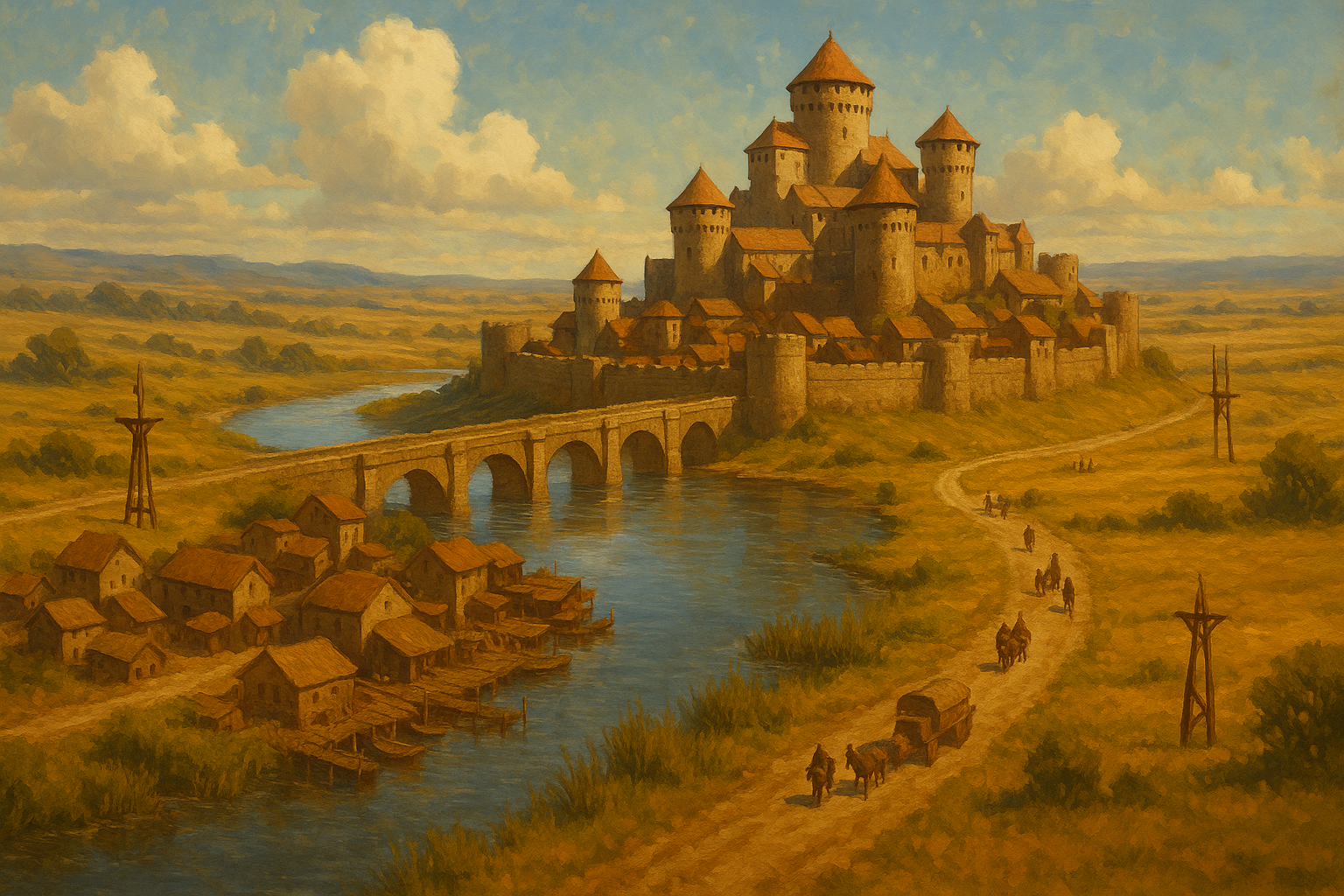
Masheš is a windswept plains nation forged through cooperation rather than conquest, shaped by its open horizons, vital river arteries, and diverse population of Humans, Dwarves, Goliaths, and Halflings. Its people follow the Way of the Open Sky, a land-rooted faith that honors the Sky Father, Hearth Mother, and Stead Guardian—deities whose influence is seen not in temples, but in the rhythms of work, community, and survival. Dwarven engineers built the first irrigation halls; Goliath clans learned to read storms and winds; Halflings cultivated the hardy crops that feed the steadholds; and Human caravaneers opened the trade routes that bind the region together. Today, Masheš thrives as a crossroads of commerce and culture, its strength found in shared labor, practical innovation, and the belief that no one endures the plains alone.
Though united by the Steadbound Accord, Masheš remains a land of subtle political maneuvering. The High Stead Council balances the interests of forge guilds, caravan leagues, agricultural circles, and clan warriors, each guided by its own traditions and sects within the Open Sky faith. Its infrastructure—levees, caravan roads, river docks, wind towers, and fortified steadholds—reflects the nation’s enduring struggle with nature and distance. Masheš exports grain, wool, livestock, pottery, and well-crafted tools, while maintaining critical trade with neighboring realms. Beneath its cooperative façade lies a dynamic world of shifting alliances, quiet rivalries, and spiritual diversity, yet the people remain bound by a shared ethos of resilience, honesty, and unity. In Masheš, survival is a collective art—shaped by wind, soil, and the unbroken resolve of its people.
Structure
The governance of Masheš is centered around the High Stead Council, a ruling body formed from the leaders of the four dominant societal pillars: the Dwarven Hearthlords, Goliath Stonecallers, Human Reeves, and Halfling Wardens. At its head sits the Steadholder Sovereign, a position traditionally held by a Dwarf from Harkûm Steadhall but elected through a merit-based vote of all council representatives. The Sovereign oversees national defense, foreign diplomacy, and the regulation of trade flowing through the inland sea and major rivers. The Hearthlords manage infrastructure, smithing guilds, agricultural preservation, and long-term planning; their deep dwellings beneath the hills store archives, grain reserves, and strategic resources. Stonecallers—leaders of the Goliath clans—advise on military strategy, environmental conditions, and seasonal migration patterns of herds, ensuring the nation moves in harmony with the land. Together, these groups maintain a stable balance where no single race dominates, reflecting the plains’ interwoven cultures.
Beneath the High Stead Council, Masheš operates through Steadholds, regional administrative districts centered around major towns or river crossings. Each Steadhold elects a Steadwarden, responsible for taxation, land rights, local defense, and managing disputes among clans or guilds. Steadwardens usually come from the race that makes up the region’s majority—Goliaths lead the open steppe districts, Dwarves manage the earthen forge-steads, Humans govern the agricultural river valleys, and Halflings maintain laws in mixed pastoral regions. Beneath them are the Circles of Hands, local assemblies where citizens of all races debate communal issues and enforce village-level ordinances. Decisions often require consensus, and the process reflects Masheš’s cultural belief that survival on the plains is collective. While the Steadholder Sovereign binds the realms together, true power in Masheš flows from cooperation, shared stewardship of the land, and ancient agreements woven between clans, caravans, and riverfolk.
Culture
The culture of Masheš is shaped by its open landscapes, fierce winds, long winters, and vast river plains, creating a people who value resilience, cooperation, and practicality over pomp or rigid hierarchy. Dwarves contribute a tradition of communal craftsmanship—earth lodges reinforced with timber, masterful metal tools, and shared forge-halls where knowledge is passed through families and guilds alike. Goliaths infuse Masheš with a spirited, competitive ethos: athletic trials, storytelling feasts, and honor duels are common, and clan traditions emphasize personal excellence balanced by service to the Steadhold. Humans, adaptive and industrious, dominate the caravan culture—driving trade across the plains, maintaining horse herds, and connecting distant settlements. Halflings add warmth, music, and agricultural wisdom, filling the country with seasonal festivals, riverside gatherings, and communal hearth traditions that soften the harshness of the land.
Daily life revolves around shared labor and shared survival, echoing the belief that no one withstands the plains alone. Villages come alive at dawn with the sounds of waterwheels, forge hammers, grazing animals, and the low chants of Goliath training rituals rolling across the wind. Outsiders often note the distinctive Masheš greeting culture: a warrior’s clasp, a Halfling bow, or a Human caravan blessing depending on region. Storytelling is revered, with Dwarves keeping stone-etched histories while Goliaths preserve oral sagas performed around great bonfires. Hospitality is sacred—travelers caught in a blizzard or night storm are expected to be taken in without question. Mashešans cherish honesty, endurance, and cooperation, viewing grandiosity as foolish in a land where only the humble forces of nature rule. Their cultural identity is a fusion of strength and softness: the steadfastness of the plains, the adaptability of its people, and a collective pride in thriving where the land demands unity and grit.
Public Agenda
The central goal of Masheš’s public agenda is to maintain stability across its vast plains and ensure reliable control over the river systems that sustain its agriculture, trade, and movement. The High Stead Council places heavy emphasis on developing stronger inland trade routes, reinforcing levees and flood defenses, and improving caravan safety across long stretches of open country prone to storms, raiders, and migrating beasts. The Steadholder Sovereign has also pushed for increased food security, encouraging shared grain reserves between Steadholds and expanding hardy crop cultivation to protect against long winters. Maintaining internal unity between Dwarven forge settlements, Goliath steppe clans, Human river-valleys, and Halfling pastoral villages is a major priority. Masheš believes its strength lies in interwoven communities, and policies frequently aim to strengthen cultural exchange, shared rituals, and rotational labor between settlements.
Externally, Masheš focuses on preserving sovereignty and neutrality while managing complex relationships with neighboring nations. The government seeks stable trade agreements with Cales and Kharukt, relying on exports of wool, metal tools, river grain, and well-bred livestock. At the same time, they are cautious of foreign influence—particularly from expansionist powers like the Zilaran Empire—leading Masheš to invest in stronger border watch posts, rider patrols, and fortified river crossings. Their long-term agenda involves solidifying Masheš as the primary overland trade bridge between inland regions and the southern coastal nations. Diplomatically, Masheš rarely provokes conflict but responds decisively when threatened; the plains teach both humility and swift action. Ultimately, the public agenda strives for a balanced future: secure borders, sustainable land use, inter-clan cooperation, and prosperous trade—all built on the belief that a unified Masheš can withstand any wind that crosses its wide horizons.
Assets
Masheš’s greatest asset is its vast expanse of fertile plains and riverlands, which serve as the agricultural core of the region. The country produces hardy grains, root vegetables, cold-resistant fruits, and expansive herds of wool-bearing livestock. Human farmers and Halfling pastoralists supply grain, cheeses, smoked meats, and durable fabrics to neighboring nations, while Dwarven-built irrigation wheels and flood-control systems stabilize harvests during harsh seasons. Beneath the rolling hills lie rich pockets of iron, copper, and clay, enabling thriving forge industries without requiring mountainous terrain. Dwarves use these materials to craft reliable tools, farming implements, weaponry, and reinforced wagons—highly sought after across the continent. One of the kingdom’s most prized exports is its steppe-bred horses and Goliath-tier draft animals, known for their endurance and ability to traverse long distances with heavy loads.
Equally valuable is Masheš’s position as a transport and trade nexus. Its large inland ports act as staging grounds for goods traveling between northern heartlands and southern coastal realms, while river cities like Rivermaw Crossing manage barge networks that carry grain, ore, textiles, and livestock across the nation. The open plains allow for fast caravan travel, creating a robust overland trade economy supported by inns, steward halls, and fortified field stations. Culturally, Masheš benefits from the combined strengths of its people: Dwarven craftsmanship and long-term planning, Goliath athleticism and frontier resilience, Human adaptability and trade networks, and Halfling agricultural mastery. Together, these assets make Masheš a self-sustaining, economically flexible, and strategically indispensable nation, well-positioned to weather natural challenges and maintain independence amid powerful neighbors.
Demography and Population
Masheš’s population of roughly 115,000 inhabitants is spread across wide plains, river valleys, and hill settlements, reflecting a society built on shared survival and interwoven cultural traditions. Dwarves make up about 45% of the population, living primarily in deep-set earthen halls, reinforced longhouses, and craft-heavy steadholds that anchor the nation’s infrastructure and metalwork. Goliaths represent around 25%, forming the backbone of the steppe clans who wander, herd, compete, and serve as guardians of the open country. Their presence gives Masheš a strong warrior and frontier ethos. Humans account for 20%, concentrated in the trade towns, river crossings, and caravan hubs where diplomacy and commerce bridge the various cultures. The remaining 10% are Halflings, thriving in fertile bends and valleys, contributing agricultural mastery, food preservation techniques, and the gentle but steadfast community spirit that keeps smaller settlements thriving.
Population density varies significantly across the country. The most heavily populated regions are the fertile river corridors and the central steadholds, where Humans and Dwarves live in close cooperation. The broad grasslands hold fewer permanent settlements but support large Goliath clans and roaming Halfling herder families. Cultural integration is common, with mixed-race households, trade marriages, and clan alliances forming the lifeblood of Mashešian society. While the races differ in tradition, temperament, and role, Masheš is unified by a strong sense of mutual reliance: Dwarves maintain the infrastructure, Goliaths defend the horizons, Humans sustain the trade routes, and Halflings feed the nation. This balanced demographic structure creates a country that is hardy, diverse, and deeply cohesive—perfectly adapted to the demands of its windswept plains and open skies.
Military
The military of Masheš is built around the principle of flexible defense across open terrain, blending Dwarven engineering, Goliath strength, Human mobility, and Halfling logistical expertise. At its core are the Steadhold Guard Regiments, professional mixed-race units stationed in major towns and river crossings. Dwarves provide heavy infantry—ironclad spears, shield walls, and disciplined formations capable of holding choke points or fortifying earthen ramparts in hours. Goliaths field elite companies known as Windstride Warbands, towering warriors trained in shock assaults, skirmishes, and high-speed maneuvers across the plains. Humans form the backbone of the Riverrider Cavalry, fast-moving horse and wagon-mounted archers skilled at scouting, flanking, and relaying battlefield information. Halflings, though not numerous in combat roles, excel in supply, communication, and precision archery, renowned for defending steadholds with uncanny accuracy during sieges.
What sets Masheš apart is its mastery of earthworks, mobility, and seasonal warfare. Dwarven engineers build temporary ramparts, trench lines, and palisades with remarkable speed, turning wide-open plains into defensible positions. Goliath clans serve as both soldiers and frontier guardians, maintaining roaming patrols that deter raiders and monitor herd migrations that could affect military movement. Humans command the caravan-based logistics system, allowing armies to travel swiftly and remain supplied over long distances. During wartime, Masheš raises a unified force known as the Plains Host, a coalition army where each race contributes its specialty: Goliath vanguards, Dwarven shield lines, Human scouts, and Halfling outriders. The military philosophy is not one of conquest but resilient defense and rapid response, shaped by generations of surviving harsh winters, wide horizons, and powerful neighboring nations. Masheš endures because it is prepared—not by overwhelming strength, but through cooperation and unmatched adaptability on the open plains.
Technological Level
Masheš maintains a practical, innovation-driven technological level shaped by its open terrain, harsh seasons, and diverse population. Dwarves lead the nation’s engineering and craftsmanship, producing high-grade metal tools, durable farm implements, reinforced wagons, and finely balanced weaponry that rival any forged in mountainous regions. Their earth-lodge workshops and clay-kiln forges allow large settlements to mass-produce essentials like nails, hinges, plow blades, and iron fittings for rivercraft. Goliaths contribute advancements in structural design—massive timber braces, wind-resistant shelters, and lightweight portable frames used by nomadic clans. Human inventors specialize in transport technology, developing improved saddles, harnesses, river-barge rudders, and multi-axle trade wagons used to traverse long plains routes. Halflings bring agricultural science, experimenting with hardy grain hybrids, soil-rotation patterns, smoke-curing techniques, and frost-resistant root vegetables that help the nation endure long winters.
Scientifically, Masheš excels in earth sciences, animal husbandry, hydrology, and meteorology, disciplines essential for survival in a land defined by unpredictable winds and seasonal floods. Dwarven scholars maintain earth-records: soil density charts, clay vein maps, and long-term river behavior logs carved into stone tablets. Humans track weather cycles, storm fronts, and migratory herds, developing early-warning systems using wind towers and elevated observation posts. Goliaths have a sophisticated understanding of biomechanics and endurance—knowledge applied to training techniques, caravan movement, and building methods that minimize fatigue across long distances. Halflings advance medicinal practices through herbal studies and fermentation science, creating salves, tinctures, and winter tonics widely traded throughout Masheš. While the country does not pursue arcane or high magical research, its technological culture thrives on utility, resilience, and adaptation, producing innovations born not from luxury but from the demands of a land where nature commands respect and ingenuity ensures survival.
Religion
Religion in Masheš centers on a practical, land-rooted spiritual tradition known as the Way of the Open Sky, a belief system shaped by endless horizons, steady winds, and the rhythms of plains life. Instead of a pantheon of distant gods, Mashešans venerate three great natural forces: The Sky Father, embodiment of the open heavens, weather, and destiny; The Hearth Mother, spirit of soil, grain, water, and community; and The Stead Guardian, a protective force tied to courage, craft, and resilience. These spirits are not worshipped with grand temples but through earthen shrines, wind-carved stones, bonfire gatherings, and seasonal rites. Dwarves honor the Hearth Mother through forging ceremonies and planting blessings, while Goliath clans call upon the Sky Father before long journeys or trials of strength. Humans maintain riverbank altars and caravan shrines, offering tokens to ensure safe passage across the plains. Halflings lead the communal celebrations—harvest feasts, lantern walks, and singing circles—believing joy itself is an offering to the spirits.
Rituals in Masheš are intimately tied to survival. The coming of winter is marked by the Closing of the Winds, a ceremony where communities extinguish all fires and relight them from a single hearth, symbolizing unity against the cold months. The Riverbirth Rite celebrates newborn children by washing their foreheads in river water, calling on the Hearth Mother to grant endurance and steady growth. Before battle, Goliath and Dwarf warriors perform the Stead Guardian’s Oath, grounding their hands in earth to gain strength and clarity. While each race expresses the faith differently, the Way of the Open Sky emphasizes balance, humility, and mutual reliance—tenets that mirror the harsh plains where nature’s power is always felt. There is no religious hierarchy; instead, local shamans, hearth-keepers, sky-readers, and lore-speakers guide their communities, ensuring traditions remain strong and the spirits remain honored. Religion in Masheš is not a matter of doctrine—it is a lived, shared experience of land, wind, and kinship.
Laws
The laws of Masheš are founded on a guiding principle known as the Steadbound Code, a simple yet powerful doctrine that prioritizes communal survival, honest labor, and the stewardship of land and water. Under this code, crimes that threaten the stability of a settlement—such as hoarding resources, sabotaging irrigation channels, violating grazing rights, or falsifying trade weights—are considered among the most serious offenses. Instead of imprisonment, punishment usually takes the form of reparative labor, public restitution, or mandatory service supporting caravan routes, fortification repairs, or crop cycles. Honesty in trade is sacred; cheating caravans or tampering with river measurements is punished harshly, as such acts endanger the entire region’s economic lifeline. Likewise, violence is judged by context: duels of honor between Goliath clans are permitted under strict oversight, but unprovoked aggression or endangerment of noncombatants carries severe social penalties and enforced compensation.
Governance is handled locally through Steadwardens and the Circles of Hands, which act as communal courts. Each Circle consists of respected elders from all races—Dwarven Hearthmasters, Goliath Speakers, Human Reeves, and Halfling Hearthkeepers—ensuring fairness across cultural lines. Laws emphasize collective responsibility: if a villager breaks a rule but their clan or household fails to intervene, the entire group may face penalties, reinforcing the idea that survival on the plains is a shared burden. Environmental laws are also integral; overgrazing, polluting rivers, or damaging fertile plains are treated as spiritual violations against the Hearth Mother, resulting in ritual atonement and labor-based restitution. Foreigners are expected to adhere to Masheš’s customs while traveling—failure to respect trade routes, communal wells, or steadhold orders can lead to fines, escort from the region, or temporary exile. Mashešian law is neither strict nor lenient—it is practical, built to preserve harmony, protect the land, and ensure no community faces the harsh plains alone.
Agriculture & Industry
Agriculture in Masheš thrives through resilience, innovation, and cooperation, shaped by a climate of short summers, long winters, and windswept plains. Halflings lead the agricultural sciences, cultivating hardy grains such as frost-barley, redwheat, and windmaize—crops bred to withstand cold nights and unpredictable storms. Human farmers operate large communal fields near riverbanks, using Dwarf-built irrigation wheels, stone-lined canals, and flood-deflection berms to maximize yields. Livestock herding is dominated by Goliath and Human clans who raise woolbeasts, longhorn cattle, and powerful steppe draft animals prized throughout the region. Orchards of winter apples, root vegetable terraces, and smokehouses ensure villages remain fed during the cold months. Every harvest is communal, with resources pooled into Stead Granaries overseen by Dwarven Hearthmasters, ensuring that no settlement starves even in the harshest season. Agriculture in Masheš is not just an economy—it is the backbone of survival and a shared cultural responsibility.
Industry is equally essential and deeply tied to the land. Dwarves anchor the industrial sector with forge-halls, clay kilns, carpentry guilds, and earthen workshops capable of producing metal tools, farm equipment, weaponry, and durable wagon components. Their craft is complemented by Human innovation in transport-building—long-haul caravans, river barges, reinforced wheel systems, and wind-sheltered storage yards. Goliaths contribute labor-intensive industries such as timber cutting, large-scale construction, hide tanning, and stone-digging for earthworks. Halflings specialize in artisanal crafts: pottery, wool dyeing, weaving, preserved foods, and fermentation—goods highly valued in foreign markets. The nation’s greatest industrial asset is its ability to combine racial strengths: Dwarven craftsmanship, Human logistical design, Goliath endurance, and Halfling finesse. Together, they make Masheš a powerhouse of practical production—exporting wool, tools, livestock, grain, pottery, and steppe-forged weaponry across neighboring regions. In a land shaped by necessity, industry is built not on luxury or excess, but on durability, cooperation, and ingenuity.
Trade & Transport
Trade in Masheš revolves around its role as the central overland and riverway bridge between inland nations and the southern coastal realms. Grain, wool, root vegetables, livestock, pottery, forge tools, preserved foods, and steppe-bred mounts flow outward from Masheš, while imported goods—salt, exotic spices, lumber, fine textiles, and magical curiosities—enter through its four major ports. Human Reeves manage most trade negotiations, acting as mediators between Dwarven guilds, Goliath clan commerce, and Halfling craftsfolk. Rivermaw Crossing, Hammerfall Ford, and Stonewake Port serve as economic arteries, channeling goods north–south through barge lines and east–west through caravan convoys. Every Steadhold maintains trade oaths, agreements ensuring fair prices, accurate weights, and shared protection of traveling merchants. This trust-based system allows Masheš to maintain open trade even with politically tense neighbors, making it one of the most reliable commercial hubs in the region.
Transport is dominated by three interlocking systems: river barges, overland caravans, and coastal shipping. Wide, shallow-bottomed boats glide along the Masheš River and its tributaries, transporting bulk cargo far more efficiently than wagons. Over land, Humans and Goliaths operate massive caravan trains—some stretching dozens of wagons long—pulled by hardy steppe beasts bred for endurance over speed. These caravans rely on fortified waystations, wind shelters, and Dwarven-built stone markers that guide travelers across open plains, even in low visibility. Along the inland sea, Masheš maintains a fleet of calm-water vessels used for trade, fishing, and transport between ports. Halflings excel as navigators and river pilots, while Dwarves handle repairs and construction of wagons, wheels, and hulls. The synergy of all four races creates a transport network known for reliability, adaptability, and safety, capable of moving people and goods swiftly across vast distances. Masheš’s prosperity rests not on conquest, but on its mastery of movement—connecting worlds through roads, rivers, and wind-swept horizons.
Education
Education in Masheš is built around apprenticeship, clan teaching, and communal knowledge, emphasizing practical skills essential for survival on the plains. There are no grand academies or elite institutions; instead, learning begins in the Hearth Circles, small community gatherings where Halfling hearthkeepers and Human reeves teach children reading, storytelling, arithmetic, land ethics, and the Way of the Open Sky. As youths grow, they enter trade apprenticeships based on racial strengths and personal interest: Dwarves learn smithing, carpentry, and stonecraft in multi-generational forge halls; Goliaths train in wilderness survival, scouting, animal handling, and physical arts; Humans study trade law, river navigation, logistics, and diplomacy; Halflings master agriculture, herbalism, cooking, and craftsmanship. Education is considered a communal duty—elders teach, youths assist, and knowledge flows between generations like river currents.
Advanced learning takes place in Stead Colleges, practical institutions located in larger towns where mixed-race groups train in engineering, hydrology, agriculture, and trade administration. These colleges are more like cooperative guild-houses than academic towers—students learn by doing, building levees, designing wagons, maintaining irrigation canals, running markets, and practicing militia drills. Goliath Speakers teach physical conditioning and outdoor survival, while Dwarven Hearthmasters lead studies of structural integrity, weather-resistant design, and metalwork. Halfling botanists and Human record-keepers work together to maintain seed archives, crop journals, and historical maps of seasonal patterns. Education in Masheš is not about scholarly prestige—it is about preparing every citizen to support their Steadhold, protect their people, and steward the land. In a country where nature is the greatest teacher, knowledge is valued not for theory, but for its ability to keep the fires burning and the plains alive.
Infrastructure
Infrastructure in Masheš is a testament to practical engineering and collective labor, shaped by a land of wide horizons, fierce winds, and vital waterways. The backbone of the nation is its river management system—a network of Dwarven-built levees, stone-lined canals, irrigation wheels, and reinforced embankments that protect farmland from seasonal flooding. Major settlements sit atop natural rises or carefully raised earth platforms to avoid spring runoff. Roads in Masheš are not paved in stone but constructed as hard-packed caravan routes, maintained through communal labor and marked by tall wooden wind posts carved with clan insignias. These routes connect every Steadhold, making it possible for caravans to travel safely even in low visibility. Bridges vary from simple timber spans built by Human traders to heavy reinforced structures crafted by Dwarven engineers at critical crossings like Hammerfall Ford.
Port infrastructure along the inland sea and major rivers is equally refined, relying on shallow-draft docks, breakwater earth mounds, and warehouse clusters built to withstand storm surges. Driftwind Harbor uses massive woven windbreak walls designed by Goliath builders to protect ships during high winds, while Reedwater Landing sits atop floating reed platforms maintained by Halfling communities. Defensive infrastructure is subtle but effective: earthen ramparts, ditch systems, wooden palisades, and quickly assembled fieldworks allow rapid fortification in times of threat. Each Steadhold maintains shared granaries, communal smokehouses, water caches, forge halls, and long-term storage pits insulated for winter survival. Communication across the plains relies on signal towers—tall wooden structures outfitted with bells, mirrors, and nighttime fire baskets—allowing messages to travel more quickly than riders alone. All of Masheš’s infrastructure reflects one truth: in a land ruled by wind and distance, survival depends on endurance, engineering, and unity.
Mythology & Lore
The mythology of Masheš is woven from the natural forces that shape its land—wind, earth, river, and sky. Central to these stories is the ancient belief that the world was once a silent, windless plain, until the Sky Father exhaled the First Breath, setting the winds in motion and awakening all living things. According to legend, the Hearth Mother shaped the first people from clay, river silt, and woven grasses: Dwarves molded from firm soil to build and endure; Goliaths carved from stone-hard earth to roam and protect; Humans shaped from layered riverbed sands to adapt and explore; Halflings formed from soft meadow loam to nurture and bring warmth to the world. The Stead Guardian emerged last, forged from the meeting of wind and soil—an invisible sentinel tasked with uniting the people of the plains and teaching them the value of shared struggle. These myths emphasize that the races were not created separately, but formed as interdependent facets of a single land, meant to survive only through cooperation.
Stories told around hearthfires recount legendary figures who embodied these divine forces. One such tale describes Mashuron the Wanderer, a Human caravan leader guided by the Sky Father’s omens who mapped the first safe trade routes across the plains. Another speaks of Glaruk Stonehand, a Dwarf who forged the Eternal Hearth—the symbolic flame that unites all Steadholds each winter. Goliath lore reveres Raah-Cliffwalker, who wrestled the north wind itself, winning a pact that calmed the worst storms during planting season. Halfling tales celebrate Brenia Willowbake, who taught the land its first harvest songs, ensuring crops grew even in lean years. These myths are not merely stories—they are cultural anchors, reminding Mashešans that their land is alive, powerful, and deserving of respect. Mythology teaches that every gust of wind carries memory, every river bend holds a lesson, and every field echoes with the voices of those who came before. In Masheš, myth is not escapism—it is guidance for surviving and thriving on the endless plains.
Divine Origins
The origins of Masheš trace back to a time known as the Great Crossing, when scattered clans and settlements wandered the vast, untamed plains seeking safety from warring powers in neighboring regions. Early Dwarven earth-settlers established the first permanent steadholds along the central river, carving out earthen halls and irrigation channels that transformed wild grasslands into reliable farmland. At the same time, Goliath steppe clans roamed the high ridges and open horizons, offering protection to caravans and isolated homesteads while forging a warrior tradition rooted in respect for the Sky Father’s winds. Human traders from distant coasts began settling along river routes, creating bustling crossroads where goods, stories, and customs blended. Halfling families migrated into fertile riverbends, cultivating crops and establishing the communal hearth-culture that still defines many villages. Over generations, these four groups—once separate and nomadic—found themselves increasingly interdependent, relying on one another’s strengths to survive harsh winters, unpredictable storms, and scarce resources.
Masheš officially emerged as a unified nation when the Steadbound Accord was signed atop the Hill of Many Winds. Representatives from Dwarven forge-clans, Goliath Speaker circles, Human caravan councils, and Halfling hearthleagues came together after a devastating series of droughts and raids threatened their survival. Recognizing that division would doom them, they formed a shared governance system and pledged mutual defense, communal grain stewardship, and open trade across all plains territory. The Accord established the first High Stead Council and named Harkûm Steadhall the symbolic heart of the new nation. From that moment, Masheš grew not through conquest but through unity—settlement by settlement, clan by clan—built upon the belief that a people bound by land, labor, and community could endure any hardship. These origins are remembered each year during the Joining of the Fires, when flames from every steadhold are brought together to signify the ongoing pact that created Masheš and keeps it strong to this day.
Tenets of Faith
The faith of Masheš is guided by three foundational tenets, each tied to a sacred force of the plains—the Sky Father, the Hearth Mother, and the Stead Guardian. The first is Walk with the Wind, a teaching of the Sky Father that urges Mashešans to remain adaptable, honest, and open to change, just as the winds shift across the plains. This tenet encourages humility and perspective, reminding all people that their lives are but small markings beneath the vast sky. The second tenet, Honor the Hearth, stems from the Hearth Mother and emphasizes nourishment, community, stewardship of the land, and shared survival. To honor the hearth is to ensure no neighbor goes hungry, no field goes neglected, and no river is polluted—acts of negligence are considered spiritual as well as practical failings. The third tenet, Stand in the Stead, embodies the resilience of the Stead Guardian: defend your community, uphold your oaths, and meet hardship with steadfastness. It is the warrior’s doctrine expressed through integrity rather than aggression.
Together, these tenets form the moral and spiritual core of Mashešian society, influencing everything from law to trade to daily interactions. Children are raised to recite the Windsong, a simple verse that captures the three tenets: “Step lightly with the wind, keep warm the hearth, and guard the ground beneath your feet.” Festivals and rituals reflect these principles—sky rites that release colored smoke into the winds, harvest feasts that honor communal labor, and bonfire vigils where stories of courage and perseverance are shared. Clerics, shamans, and hearthkeepers guide their communities not through strict dogma, but through interpreting these tenets in times of conflict, scarcity, or change. Whether in a forge hall, a caravan, a steppe encampment, or a riverside village, the tenets remind every citizen that life on the plains is a balance of adaptability, unity, and resolve—the true faith of Masheš.
Ethics
Ethics in Masheš center on collective responsibility, honest labor, and respect for the land, principles forged through generations of surviving harsh winters and open horizons. At the heart of Mashešian ethics is the belief that no one endures the plains alone—individuals are accountable not only for their actions, but for the wellbeing of their steadhold and neighbors. Deceit, hoarding, wastefulness, and negligence are viewed as moral failures because they endanger the entire community. Conversely, generosity, shared labor, and transparency in trade are seen as virtuous acts that strengthen the Hearth Mother’s blessing. Mashešans value humility: boasting is frowned upon unless it serves to teach a lesson or celebrate communal success. The land itself is considered a silent participant in all moral choices; polluting waters, overgrazing fields, or damaging wind-posts is treated as an ethical breach akin to wrongdoing against a person.
Another pillar of Mashešian ethics is steadfastness, rooted in the Stead Guardian’s teachings. Keeping one’s word, honoring bargains, and standing with one’s steadhold in times of need are considered sacred duties. Each person is expected to “Face the Horizon” when confronted with hardship—meeting challenges with honesty, grit, and the willingness to adapt rather than fleeing or hiding from responsibility. This principle also informs conflict resolution: Mashešans believe in direct dialogue and structured mediation before resorting to force, yet when violence becomes necessary, it must be defensive, measured, and never driven by cruelty. Goliath clans add a competitive but respectful spirit, teaching that strength exists to protect, not dominate. Halfling traditions emphasize kindness, remembering that warmth and compassion sustain communities through long winters. Across the plains, the ethical code of Masheš creates a people who value cooperation over conquest, resilience over pride, and unity over individual glory—a moral framework shaped as much by the wind itself as by any law or deity.
Worship
Worship in Masheš is a communal, land-rooted practice expressed through daily actions more than formal ceremonies. There are no grand temples or towering sanctuaries—faith is honored in hearth circles, open fields, riverbanks, and wind-swept ridges. The Sky Father is worshipped through sky rites, where colored smoke or woven streamers are released into the wind to carry prayers for clarity, guidance, and favorable weather. The Hearth Mother is honored with offerings of grain, bread, preserved foods, or freshly drawn water placed at small earthen shrines built near wells, fields, or communal ovens. The Stead Guardian receives reverence through oath rituals, where individuals press a hand to solid ground, pledge honesty or courage, and take a moment of silence to reaffirm their connection to the plains. Worship is woven seamlessly into the rhythms of life—lighting the morning hearth, walking the fields at dawn, sharing meals, passing on stories, or aiding a neighbor in need are all considered sacred acts.
Each race expresses worship in its own way, yet all practices harmonize into a unified tradition. Dwarves keep hearth altars inside longhouses, where embers are never allowed to die, symbolizing unbroken community. Goliaths worship outdoors, tracing wind patterns with lifted hands and performing strength trials as offerings to the Sky Father. Humans tend river shrines, placing smooth stones or handmade tokens at water crossings for safe travels and favorable trade. Halflings celebrate the Hearth Mother through song, feast days, and the planting of “kindness gardens,” small patches of herbs or flowers dedicated to communal wellbeing. Festivals punctuate the year: the Windcall Festival at the first thaw, the Hearthweave Feast during harvest, and the Joining of Fires at winter’s onset, where flames from every household are brought together to rekindle unity. Worship in Masheš is defined not by doctrine, but by gratitude, shared effort, and harmony with the land, reflecting a people who see divinity in the wind above, the soil beneath, and the bonds between one another.
Priesthood
The priesthood of Masheš is not a centralized clergy but a network of three guiding orders, each devoted to one of the sacred forces: the Sky-Readers, the Hearth-Keepers, and the Stead-Wardens. These roles are not inherited or politically appointed; individuals are chosen through community consensus when they exhibit wisdom, generosity, resilience, or an uncanny sensitivity to natural omens. Sky-Readers—often Goliaths or Humans—interpret wind patterns, storm fronts, and celestial signs. They lead sky rites, advise caravans, and bless journeys across the plains. Hearth-Keepers—typically Halflings or Dwarves—tend communal fires, oversee seasonal rituals, mediate disputes, and maintain seed archives, herbal lore, and child-naming ceremonies. Stead-Wardens embody the protective spirit of the land; they are spiritual anchors who witness oaths, guide warriors before battle, and counsel leaders in moments of crisis. Each order has its own traditions, yet they often work together, embodying the cooperative ethics at the core of Mashešian belief.
Priests live among the people rather than apart from them. Sky-Readers travel with caravans or roam the high ridges to study winds firsthand. Hearth-Keepers maintain shrines inside longhouses or riverside circles, hosting gatherings, feast days, and winter vigils. Stead-Wardens reside near town centers or crossroads, their homes doubling as sanctuaries for counsel, mourning, and rites of passage. None wield political authority, but their words hold immense social weight; ignoring a priest’s warning is considered dangerous both spiritually and practically. The priesthood maintains no temples—only Windstones, Hearth Circles, and Stead Cairns scattered across the plains, each cared for collectively. Their leadership style is humble and deeply intertwined with daily life: teaching children, advising elders, helping with harvests, and guiding communities through storms, famine, or conflict. In Masheš, the priesthood is not set above the people—it walks beside them, mirroring the land’s quiet strength and the belief that faith is lived, not proclaimed.
Political Influence & Intrigue
Despite its emphasis on unity and shared survival, Masheš is far from free of intrigue. Power flows through the High Stead Council, where the four racial blocs—Dwarven Hearthlords, Goliath Stonecallers, Human Reeves, and Halfling Wardens—each vie to shape national policy according to their priorities. Dwarves often push for infrastructure investments, resource management rights, and expanded smithing guild influence, quietly strengthening their economic leverage. Goliath Stonecallers advocate for military readiness, border watch expansion, and greater autonomy for steppe clans, sometimes clashing with Human Reeves who prefer trade-focused diplomacy. Halfling Wardens, though the smallest political bloc, wield surprising influence through their control of agriculture, communal granaries, and seasonal rites—subtly guiding decisions by swaying public sentiment and invoking the Hearth Mother’s traditions. While deliberations are cordial in public, private negotiations, shifting alliances, and quiet rivalries simmer beneath the surface.
Externally, Masheš must navigate a delicate balance among more assertive neighbors. Trade-heavy relations with Cales tempt some Human Reeves to push for deeper economic integration, while Dwarven Hearthlords fear cultural dilution and loss of craft autonomy. Kharukt’s tropical markets appeal to merchants, but tensions flare when river toll disputes or caravan rights strain diplomacy. The Zilaran Empire—distant but ambitious—casts a long political shadow, prompting Goliath leaders to push for stronger defenses, even when it strains grain reserves or trade budgets. Foreign envoys often try to court individual Steadholds, hoping to influence local decisions that ripple upward into national policy. Meanwhile, grassroots intrigue operates on a different scale: rival forge guilds compete for ore rights, clan leaders vie for caravan routes, and some Steadwardens secretly negotiate with neighboring nations to gain advantages for their regions. Though Masheš publicly champions cooperation, its political world is a subtle battlefield of influence, leverage, and quiet maneuvering, where power is less often seized than carefully bartered across the windswept plains.
Sects
Several sects exist within the Way of the Open Sky, each emphasizing a different spiritual lens while remaining unified under the broader faith. The Windbound Circle, most common among Goliaths and Human caravaneers, follows the Sky Father’s teachings of freedom, resilience, and fate. Members travel often, interpret omens from storms and wind patterns, and believe that movement itself is a prayer. The Hearthweave Fellowship, rooted in Halfling and Dwarven traditions, focuses on nurturing community, preserving food stores, tending shrines, and mediating disputes. They hold that the Hearth Mother cares less for offerings and more for how people treat one another. A third sect, the Steadfast Path, is composed largely of warriors, wardens, and oathkeepers who center their practice on the Stead Guardian. They preach that courage, honesty, and endurance are sacred virtues—and that protecting the vulnerable is a holy duty. These sects may differ in practice, but cooperation between them is expected; competition is spiritual, never hostile.
More specialized sects also thrive, each shaping Masheš’s spiritual landscape in unique ways. The Skycallers are contemplative mystics who study celestial events, believing the Sky Father communicates through stars and night winds; their predictions guide caravan departure seasons. The Emberborn Keepers maintain the tradition of carrying the communal flame between Steadholds during midwinter rites, symbolizing unity across the plains. Meanwhile, the Oathbinders act as impartial witnesses for treaties, clan agreements, and trade pacts—breaking an oath before them is considered a grave spiritual offense. At the fringes of society, the Reedwatchers uphold ancient rites tied to wetlands and river corridors, claiming to hear the Hearth Mother’s voice in flowing water; though viewed as eccentric, they are respected for their flood predictions. These sects do not form rival religions—they are branches of the same living faith, each expressing a different facet of the land’s spirit and ensuring that the Way of the Open Sky remains adaptable, communal, and deeply woven into every corner of Masheš.

Comments