
CornerTown

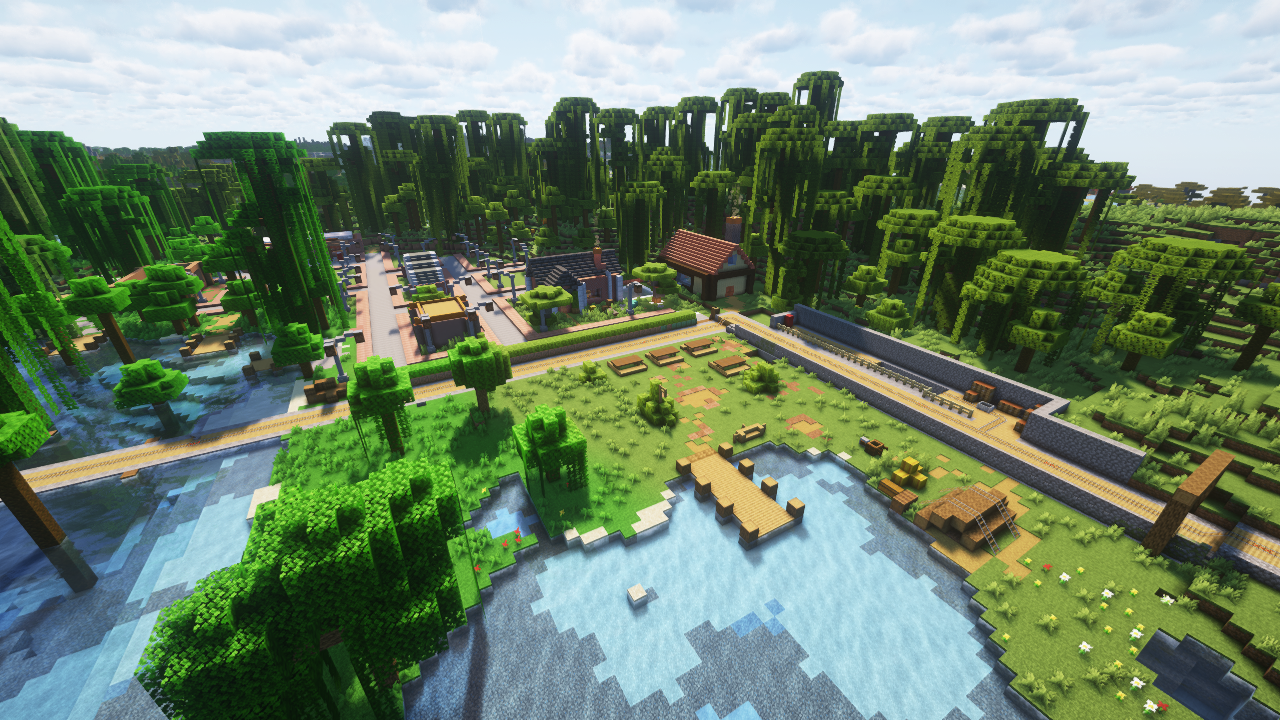
Corner Town, commonly called “The Corner”, is a 200-year-old rail-side settlement built at a natural crossroads along the Shade Rail. Tucked just behind a small public park and framed by an old, ominous watchtower on the horizon, the town has grown from a makeshift waystation into a thriving cultural hub. Today, Corner Town is known for its mixed architecture, cosmopolitan markets, and a long tradition of welcoming travelers, traders, and wanderers from every corner of Avalon.
Geography & Layout
Corner Town sits at a bend of the Shade Rail, where the tracks swing past a sheltered park and a gentle slope of land that made early construction easy. The original camp clustered almost directly beside the rail line; over two centuries, the settlement expanded into a compact town wrapped around:
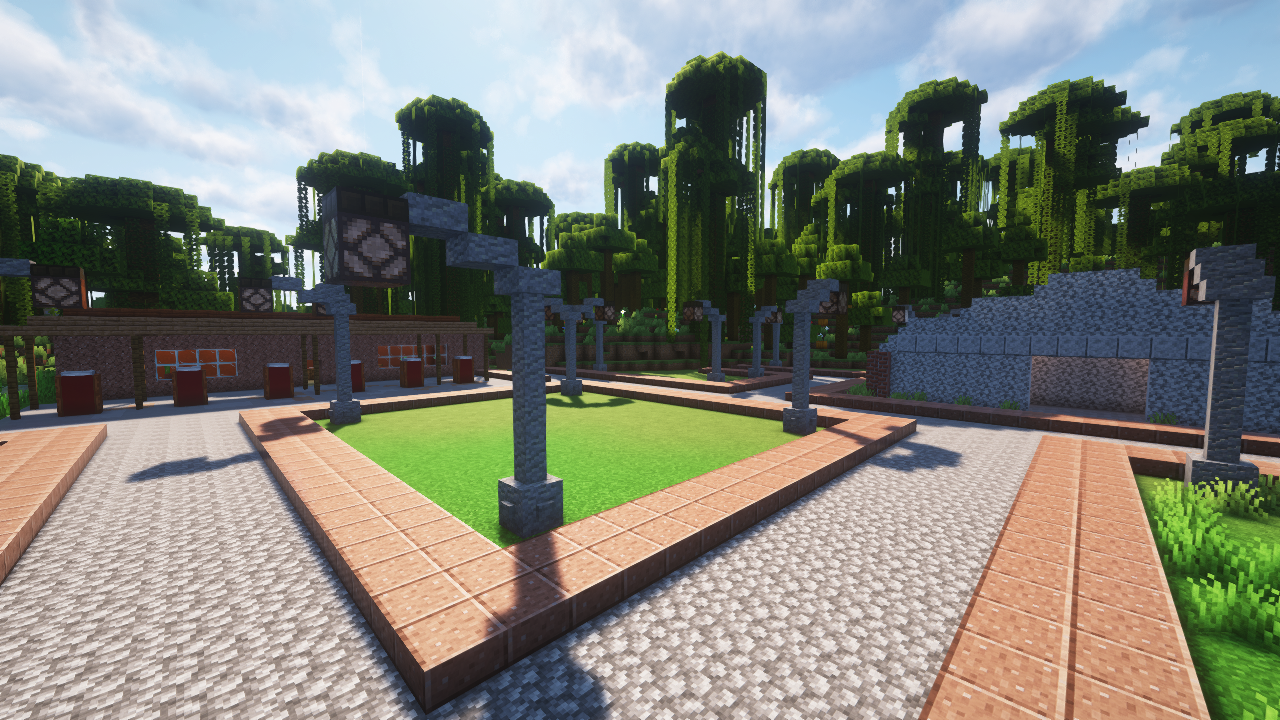
- Arkwright Square – the central plaza and commercial heart.
- A ribbon of railfront streets, home to inns, taverns, merchant houses, and small warehouses.
- The Parkside Green, a stretch of open space and trees that buffers the town from the tracks and connects visually to the distant silhouette of Shade Tower.
This layout preserves Corner Town’s identity as both a rest stop and a destination in its own right—a place where trains slow, travelers disembark, and stories change hands before continuing deeper into Avalon.
Founding & Early Settlement (1825–1853)
Corner Town traces its formal founding to March 23, 1825, when Helena Arkwright and a small band of settlers claimed the site of a rough waystation known simply as “The Corner.” Before that, the location had been an informal stopping point where caravans, rail crews, and wanderers shared campfires and traded supplies.
Helena, an idealistic but shrewd leader, saw that this constant flow of strangers could become the foundation of something more permanent. She:
- Drafted progressive trade rules that favored fair dealing over monopoly.
- Encouraged open stalls and shared markets, allowing small traders to operate alongside larger merchants.
- Negotiated with passing rail officials and caravans to make Corner Town an unofficial, then recognized, stopping point.
From the beginning, Helena insisted that anyone—locals or travelers—could find food, rest, and reasonable trade terms. This ethic drew:
- Artisans, who came to sell to the steady stream of outsiders.
- Merchants, seeking a neutral ground for deals.
- Cultural emissaries and wanderers, who brought songs, recipes, tales, and customs from far-off towns.
Within a generation, “The Corner” had transformed from a campfire rest stop into a small but bustling crossroads town.
The Market Clash & The Council of Corners (1853)
Corner Town’s first major crisis arrived in 1853 with a bitter dispute later called “The Market Clash.” As the Shade Rail grew more important, rival merchant factions fought for control of key stalls, storage houses, and rail contracts. Arguments turned into boycotts, sabotage, and street confrontations that threatened to tear the young town apart.
The conflict was ultimately defused by Elise Arkwright, Helena’s granddaughter, who inherited her grandmother’s diplomatic instincts. Rather than back a single faction, Elise:
- Gathered merchants, local citizens, and representatives of itinerant traders into emergency talks.
- Proposed a new governing body—the Council of Corners—structured so that no single group could dominate.
The Council of Corners was born from these negotiations, composed of:
- Resident merchants, representing the economic backbone.
- Ordinary townsfolk, speaking for permanent citizens.
- Registered itinerant representatives, giving a voice to those who only passed through but kept the town alive.
The council’s charter emerged from the ashes of the Market Clash and set a lasting precedent: Corner Town would prosper through balance and collaboration, not conquest. Much of the town’s later stability, and its reputation for fairness, can be traced back to Elise’s work.
The Great Fire of Corner & Rebuilding (1880)
In 1880, disaster struck when an unattended candle in the Wayfarer Inn ignited what became known as “The Great Fire of Corner.” Fanned by dry winds and packed wooden buildings, the blaze:
- Consumed roughly half of the town.
- Destroyed homes, shops, and sections of the early market.
- Left charred foundations where a lively railfront district had stood.
In true Corner fashion, the response was swift and communal:
- Builders adopted stone and brick masonry for most new structures, especially near the railfront.
- The townsfolk established the Corner Watch, a volunteer organization responsible for:
- Nightly patrols.
- Fire prevention and bucket brigades.
- Early emergency response across the town.
The Great Fire became a defining trauma and a shared badge of survival. Each year, the town holds a quiet remembrance ceremony in Arkwright Square: lanterns are placed along the old fire line, bells toll in silence, and names of families who rebuilt are read aloud. The event reinforces Corner Town’s identity as a community that endures and rebuilds together.
Culture, Festivals & Everyday Life
Corner Town’s culture is built on the steady rhythm of arrivals and departures. People come and go, but the town’s identity is anchored in its traditions:
Festival of Crossroads
Launched in 1925 to mark Corner Town’s centennial, the Festival of Crossroads has grown into one of its most important celebrations. Held every year around March 23, the festival features:
- Storytelling contests, where locals and travelers retell the town’s founding, the Market Clash, and the Great Fire, often with dramatic flair.
- Historical reenactments, including Helena’s early market days and Elise’s negotiation of the Council of Corners.
- Food stalls and shared feasts, with dishes inspired by recipes brought in from all over Avalon.
- Music and dance spilling out from Arkwright Square into the surrounding streets.
Over time, the festival began attracting visitors from neighboring towns and stations along the Shade Rail, turning Corner Town into a regional cultural destination.
The Unity Parade
Another major event is the annual Unity Parade, a living tapestry of Corner Town’s diverse heritage. Residents march under hand-painted banners representing:
- Family lineages that trace back to Helena’s settlers.
- Newcomers and immigrant families from distant towns.
- Guilds, artisan collectives, and small trading houses.
Alongside the parade, the town hosts exhibitions of local crafts, cuisine, and archival displays. The Unity Parade symbolizes Corner Town’s core promise: no matter where you came from, you can find a place at “The Corner.”
The Wanderer’s Rest & Social Life
At the heart of Corner Town’s day-to-day life is its most famous tavern, “The Wanderer’s Rest.” Located just off Arkwright Square, it serves as:
- A meeting point for rail crews, merchants, and adventurers arriving from across Avalon.
- A stage for traveling musicians, storytellers, and performers, many of whom introduce new songs and tales that become part of the town’s lore.
- An informal clearinghouse of rumors and opportunities, where jobs, trade deals, and quests often begin.
Walls inside the Wanderer’s Rest are plastered with old rail tickets, faded maps, and foreign coins—small offerings left behind by former guests. For many travelers, setting foot in Corner Town means nursing a drink at the Wanderer’s Rest and listening to stories of places they haven’t seen yet.
Government, Civic Life & Institutions
Corner Town remains governed by the Council of Corners, whose structure still reflects its founding principles:
- Seats are reserved for merchants, citizens, and registered itinerants, ensuring multiple perspectives at every session.
- Major decisions—such as trade regulations, festival ordinances, and public works—are usually made by consensus or broad majority, not by narrow vote.
Supporting the council are key civic institutions:
- The Corner Watch, which evolved from a fire brigade into a community safety and emergency response corps.
- A small records hall, preserving council minutes, founding charters, and reports on major incidents—from the Great Fire to the Jonah Reed case.
- Informal neighborhood circles, where issues are discussed locally before being brought to the council, preserving Corner Town’s grassroots feel despite its growth.
The Disappearance of Councilor Jonah Reed (2003–Present)
In 2003, Corner Town was shaken by the mysterious disappearance of Councilor Jonah Reed, a charismatic reformer known for his insistence on transparency and accountability. Reed advocated for:
- Public access to council financial records.
- Stricter oversight of trade contracts along the Shade Rail.
- Clearer protections for seasonal workers and travelers.
His sudden vanishing—leaving behind only an unfinished report and an empty office—sparked:
- Widespread speculation about corruption, cover-ups, and hidden interests.
- A series of internal investigations and audits, none of which provided conclusive answers.
In the aftermath, the Council of Corners passed sweeping reforms:
- Open-record statutes, allowing citizens to review council decisions and expenditures.
- Public session requirements, mandating that most council debates be held in open chambers.
- Expanded civic participation channels, including town forums where residents can petition the council directly.
Despite these changes, Jonah Reed’s fate remains unsolved, lingering like a ghost over local politics. His name is often invoked when new reforms are proposed, a reminder that Corner Town’s friendly surface hides deeper currents.
Shade Tower & Local Folklore
Just outside of Corner Town, looming beyond the park and rail, stands the decaying silhouette of Shade Tower. Once a proud stone structure overlooking the rail corridor, it is now one of Avalon’s more unsettling landmarks.
Local records hint that the tower’s last known occupant was a reclusive alchemist, rumored to have dabbled in forbidden practices. According to legend:
- On the night of a violent storm, strange lights were seen in the tower’s windows.
- Thunder rolled without rain over Corner Town.
- When the storm passed, the alchemist was simply gone, leaving his chambers abandoned.
Since then, Shade Tower has been the subject of countless stories:
- Spectral silhouettes moving past cracked windows when no one should be inside.
- Cold drafts and disembodied whispers reported by those who venture near.
- An oppressive sensation of being watched, even in daylight.
Though a few thrill-seekers and scholars still explore the tower, most locals avoid it—especially after dark. Children dare each other to touch the tower’s door at night, and many swear that the air around it feels wrong, as if the stones themselves are listening.
Corner Town Today (Bicentennial – 2025)
On March 23, 2025, Corner Town celebrates its bicentennial, marking 200 years since Helena Arkwright transformed a simple rest stop into a permanent settlement. The town today is:
- A vibrant commercial center anchored by Arkwright Square, with shops, carts, and stalls selling goods from all across Avalon.
- A cultural crossroads, where old traditions, new ideas, and countless accents blend together in taverns, markets, and festivals.
- A living archive of its own history, from the scars of the Great Fire to the reforms born from Jonah Reed’s disappearance.
Its buildings tell the story in stone and wood: sturdy post-fire masonry sits beside newer structures carved with motifs and patterns from faraway towns, each façade a reminder of someone who arrived, stayed a while, and left a mark.
Despite whispers of ghosts in Shade Tower and unresolved mysteries in the council’s past, Corner Town remains true to its original promise: a place where paths meet, stories intersect, and everyone—traveler or local—can find their footing at “The Corner.”

Comments