
AT355: Proteus & Psamathe
Containment Protocol
Primary Anomaly AT355 is held in a standard containment chamber in the Low-Security Wing of Harbor 74 in a tropical aquarium containing several species of plants and animals native to the Mediterranean Sea. All members of Harbor 74's staff are allowed to enter AT355's chamber and utilize the several benches placed within the chamber to view the anomaly and its associated aquarium during their break. On a monthly basis, AT355 must be removed from the aquarium and cleaned along with the interior of the aquarium itself. Daily feeding is required for the animals contained alongside AT355, and new animals must be added to the chamber should a significant number should expire due to natural of manmade causes. Any member of staff discovered to mistreat either AT355 or the animals held in its aquarium will be permanently barred access to AT355's containment chamber and will be required to take a three-month course on animal welfare.
Several display cases within AT355's containment chamber must be supplied with various objects related to seals and other associated pinnipeds1. These objects do not require a specific purpose or material nor do they need to be organized into specific groups. The only requirement appears to be the direct depiction of any species of seal as items only tangentially related to seals do not appease the item. At least ten of these items must be present within Primary Anomaly AT355's containment chamber at all times. If any of these items appear to be damaged, they must be either replaced or repaired as soon as possible.
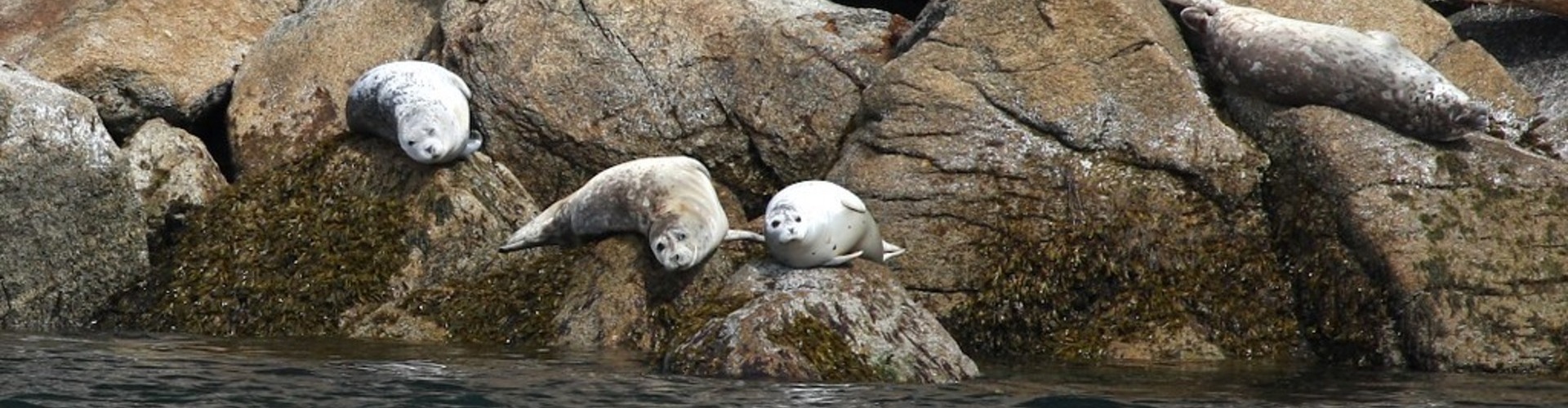
A team of veterinary staff is assigned to maintain the health of the pod of Mediterranean monk seals located at the beach west of the site.
Description
Primary Anomaly AT355 is a bronze statue depicting the Greek sea-god Proteus2 embracing the sea-nymph Psamathe3, who holds what appears to be a Mediterranean monk seal within her own arms. The statue stands at around nine feet tall and is believed to have been constructed during the late Hellenistic Period in Northern Greece, likely around 250 BCE. A unique feature of the statue is the several spots where it had been repaired such as Psamathe's face and a cross carved into Proteus' chest. A minor anomalous property the object exhibits is the thin layer of water which builds up along its surface, eventually accumulating into a large puddle surrounding its base. This water doesn't appear to damage the statue nor does it appear to come from a specific outlet on the statue itself. Once this puddle has formed, a soft fine sand is excreted at the statue's base until sand fully blocks the puddle from the statue.
This effect is fully neutralized when completely submerged in salt water, prompting the implementation of an aquarium within AT355's containment chamber.
AT355's primary anomalous property, however, is its affinity for seals and paraphernalia associated with various pinniped species. These items do not require specific materials and can include figurines, photographs, toys, and other miscellaneous items which include the required imagery. These items must be placed within twenty feet of the item to nullify the anomalous properties that activate when this requirement has not been satisfied.
If these items are not placed within the range of Primary Anomaly AT355, several minor anomalous events will occur. First, the statue will begin to produce a coarse dry sand from the mouths of the figures of Proteus and Psamathe for several minutes, allowing the sand to form a disorganized mass around its base. If AT355 has yet to be satisfied, the eyes of both Proteus and Psamathe will open, prompting more sand to exit the eye sockets of both figures.
If allowed to continue for over five hours, AT355 will emit a faint glowing from the seal held by Psamathe and a deep hum can be heard from its core. During this time any person within 300 ft of the object report experiencing dreams where a pod of seals beckons them to the sea. Subjects affected by AT355's anomalous properties have also reported feeling a need to locate the nearest pinniped or pinniped-adjacent object and bring it to AT355. It is currently still under investigation how AT355 provides information regarding the location of itself or the objects it seeks. These psychological properties of AT355 have no significant impact on those affected though attempts to access either the required items or AT355 itself can lead to serious legal consequences.
Once the required items have been presented to AT355, all anomalous effects will cease.
When satisfied, Primary Anomaly AT355 produces a secondary anomalous effect when directly observed. If the item is observed for at least a minute, the viewer will begin to experience mild sensory hallucinations similar to the sound of ocean waves and crying of gulls, the scent of salt, and the feeling of a light breeze in one's face. If the item remains within direct sight of the subject for at least thirty minutes, the subject will also begin to experience an advanced visual hallucination where they are on a beach surrounded by various species of seals. AT355 can be seen nearby partially submerged in the ocean, though it lacks the damage or subsequent repairs made to it in this state. Subjects experiencing this hallucination can end the hallucination by sleeping for any amount of time. It has been reported feeling well rested after sleeping while experiencing the full hallucination produced by Primary Anomaly AT355.
Addenda
History
Primary Anomaly AT355 first caught the attention of the ORCA in September of 1974 when security at the British Museum suspected a vandal attempted to damage the newest exhibit discovered off the coast of Albania in the Adriatic Sea. The museum held an auction within the week considering both the damage done to the floors by the salt water and coarse sand produced by AT355 and a brief incident where a three people attempted to break into the building late at night under the effect of the object. Though several members of the Society of the Gilded Bowerbird had attempted to purchase the statue, a team of field agents were able to purchase the item and transport it to Harbor 74.
Once the item was contained and placed within a standard containment chamber, AT355 began to gradually produce the coarse sand now understood to be its primary anomalous property. For several weeks, an hourly cleaning regiment was employed to reduce the amount of sand and water surrounding the anomaly. The incident would reach its climax in late October of the same year when a young man broke into Harbor 74 holding several ceramic figures of seals he admitted to stealing from a novelties store nearby. The individual was given amnestic treatment and released. Following the incident, it was discovered that several other individuals experienced dreams regarding AT355 and felt compelled to find the item as well.
This would prompt researchers to collect several seal-related items and present them to the item. Once it was discovered this neutralized much of AT355's anomalous properties, display cases were implemented to place said items.
As of 2025, the last significant event regarding AT355 was the gathering of several Mediterranean monk seals and harbor seals on the beach west of Harbor 74. The pod has been in the area since 2004 and it is believed they were led to the area by AT355 though this has yet to be proven or refuted.
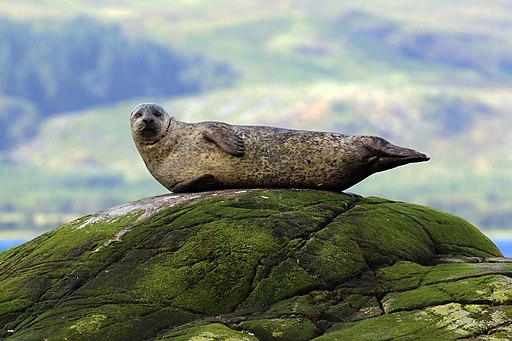
A common seal performing the "banana" posture members of its species are known to exhibit.
Anomaly ID: AT355
Anomaly Class: Tidal
ODD Score: 2.5
- Oddity: 4
- Difficulty: 3
- Danger: 0.5

Comments