

Varkuun's Order
Varkuun,’s Order worships The Iron Tyrant, a deity associated with domination, structured power, conquest, and absolute authority. Followers believe society must be shaped by force and upheld through fear, obedience, and disciplined hierarchy. Strength is viewed as proof of divine favor, while weakness is treated as a moral failing. Warfare, punishment, and ritual trial-by-combat are considered sacred instruments through which order is imposed and chaos purged.
Religion
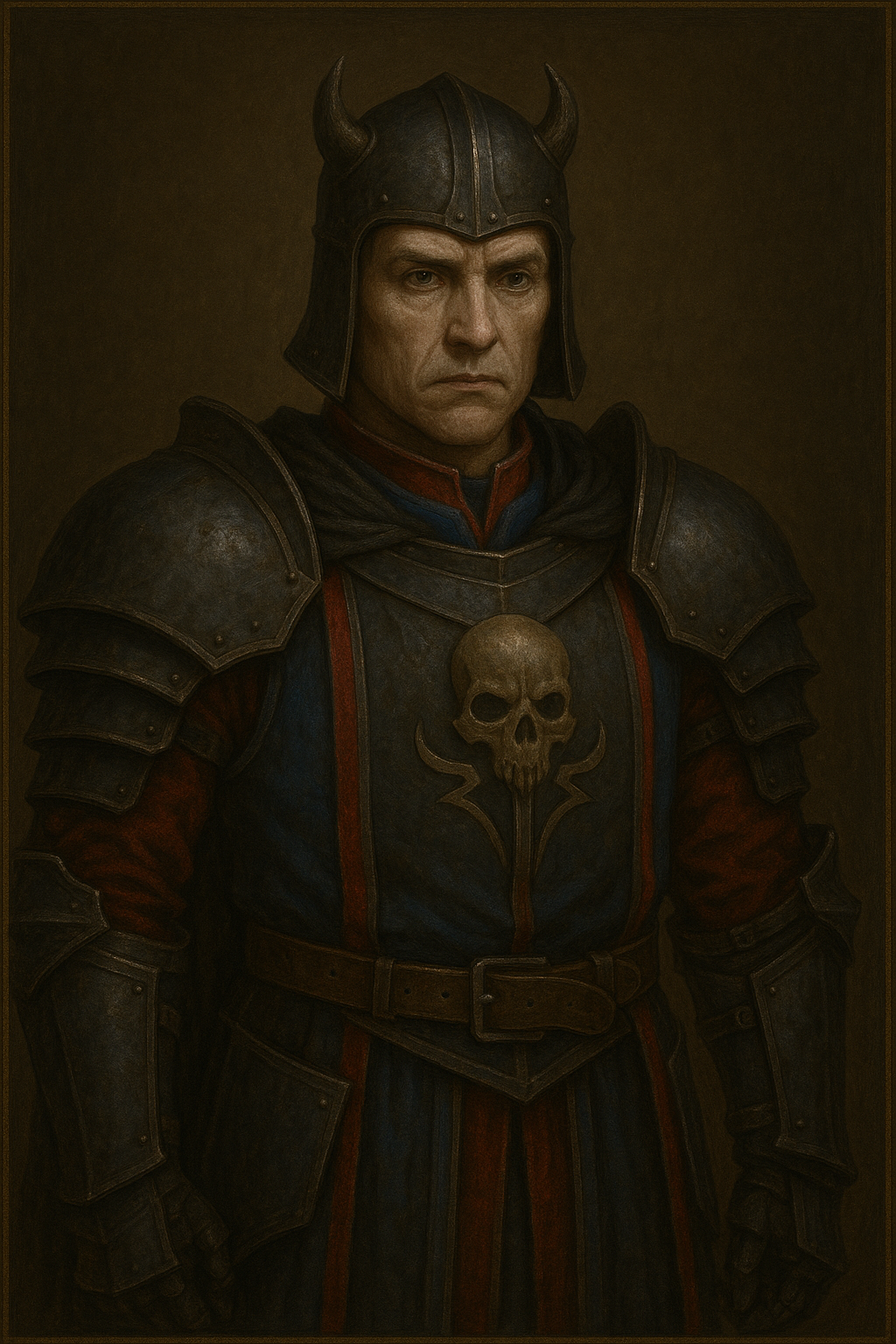
The Iron Tyrant is depicted as a stern, armored figure wreathed in iron and red light, representing unyielding will and disciplined aggression. His priests serve as both spiritual leaders and martial officers, enforcing doctrine through a blend of religious ceremony, military training, and harsh social control. Faith in The Iron Tyrant emphasizes duty above comfort, loyalty above personal freedom, and the belief that true peace exists only when power is unquestioned and challengers are broken before they can rise.
Tenets of Faith
Strength is Truth.
Power is the only honest measure of worth; all authority must be backed by the ability to enforce it.
Order Through Dominance.
Hierarchy is sacred. Obedience preserves civilization; rebellion invites ruin.
Mercy Weakens the Whole.
Compassion is tolerated only when it strengthens discipline. Pity without purpose is a sin.
Conflict Reveals the Worthy.
Struggle is divine testing. War, trial, and competition separate those fit to rule from those fit to serve.
Submission is Duty.
Those below must kneel without hesitation. Compliance maintains stability; defiance demands correction.
The Strong Must Command.
Leadership is an obligation, not a privilege. Power unused or squandered is heresy.
Crush Corruption and Dissidence.
Doubt, disunity, and softness are cancers. Root them out before they spread.
Ethics
Bane’s Order practices a rigid, utilitarian moral philosophy centered on power, hierarchy, and enforced stability. Ethics are measured not by compassion or intent, but by results and effectiveness in maintaining structured dominance.
Strength Defines Justice
Right and authority flow from the ability to command and impose will. A just action is one that strengthens rule; mercy or restraint is only ethical when it preserves power, not sentiment.
Hierarchy is Sacred
Everyone has a place. Superiors command; inferiors obey. Challenging rightful authority is ethically equivalent to treason. Advancement must be earned through demonstrated might and discipline, not birth or negotiation alone.
Ends Justify All Means
Moral legitimacy lies in securing order and victory. Deceit, coercion, punishment, and force are acceptable if they reinforce stability and suppress dissent.
Weakness is Immoral
Those who cannot defend their standing have no ethical claim to privilege. Weakness invites domination; dependency without contribution is considered a moral failing.
Punishment as Purification
Disobedience, doubt, and softness are treated as ethical corruption. Public discipline, martial trial, or expulsion are viewed as righteous purgation for the good of the collective.
Unity Over Individuality
Personal freedoms are secondary to unity and obedience. Ethical behavior prioritizes the strength, security, and discipline of the group above personal morality or private desire.
Violence as Sacred Order
Conflict is not an ethical dilemma but a divine mechanism. War, trials, and executions maintain cosmic balance by allowing the strong to rise and the weak to fall.
Worship
Worship within The Order is disciplined, regimented, and militaristic. Devotion is expressed not through gentle prayer but through oaths, drills, and ritual affirmations of loyalty and dominance.
Common worship practices include:
Martial Devotion Rites
Daily routines involve weapon drills, formation exercises, and recitations of loyalty mantras. Followers hone their bodies as instruments of divine will.
Public Oath Ceremonies
Sworn oaths to leaders, clan, or cause are performed before temples or statues, reinforcing hierarchy as a sacred bond.
Trial-Rites
Disputes or accusations may be settled through sanctioned combat or endurance tests. Victory is interpreted as divine judgment; the defeated are expected to submit to consequences without protest.
Discipline Offerings
Self-imposed physical trials — such as fasting, cold exposure, or carrying weighted chains — are performed as acts of purification and commitment.
War Blessings & Campaign Liturgies
Before military action, priests conduct processions, consecrate weapons, and mark warriors with ash or iron dust as signs of strength and resolve.
Veneration of Authority
Figures of legitimate power — clan leaders, commanders, and successful warriors — are honored as living embodiments of Bane’s favor.
Worshippers are expected to uphold the faith through visible obedience, personal rigor, and readiness to enact authority when required. Passive believers are tolerated only if they serve; true devotion demands active participation in hierarchy and discipline.
Priesthood
Hierarchy
High Marshal-Priest — supreme doctrinal and strategic authority.
War Prelates — regional religious generals overseeing temple-forts and doctrine enforcement.
Iron Chaplains — local priests responsible for discipline, training, rites, and moral oversight.
Acolyte-Soldiers — initiates undergoing martial, mental, and theological conditioning.
Training
Priests undergo:
Weapon and armor instruction
Tactical leadership drills
Rhetoric and law studies
Psychological discipline training
Ritual combat trials
Political Influence & Intrigue
Political Intrigue & Influence
The Order holds significant political weight across Redstone Hold, particularly within Clan Redstone territories where its ideology aligns with martial authority and centralized control. The faith operates as both a religious institution and an unofficial governing arm, wielding influence comparable to a powerful noble house.
Temples function as fortified administrative hubs, doubling as training barracks, courts, and interrogation sites. Clergy routinely act as advisors to clan lords, commanders in regional militias, and ideological supervisors within the guard structure. While not an official government office, their authority is rarely challenged; political actors who attempt to sideline the Order often find themselves facing public backlash, legal accusations of disloyalty, or subtle disappearances.
The Order cultivates internal power blocs, balancing devout militarists, zealous bureaucrats, and theological purists. Competition within the priesthood is fierce, as advancement requires both doctrinal zeal and demonstration of strength. These internal rivalries occasionally spill into clan politics, shaping appointments, purges, and military decisions.

Strength Commands Peace
Founding Date
Era of Founding
Type
Religious, Holy Order
Capital
Leader
Ruling Organization
Head of State
Head of Government
Government System
Theocracy
Power Structure
Autonomous area
Deities
Location

Comments