

Elf
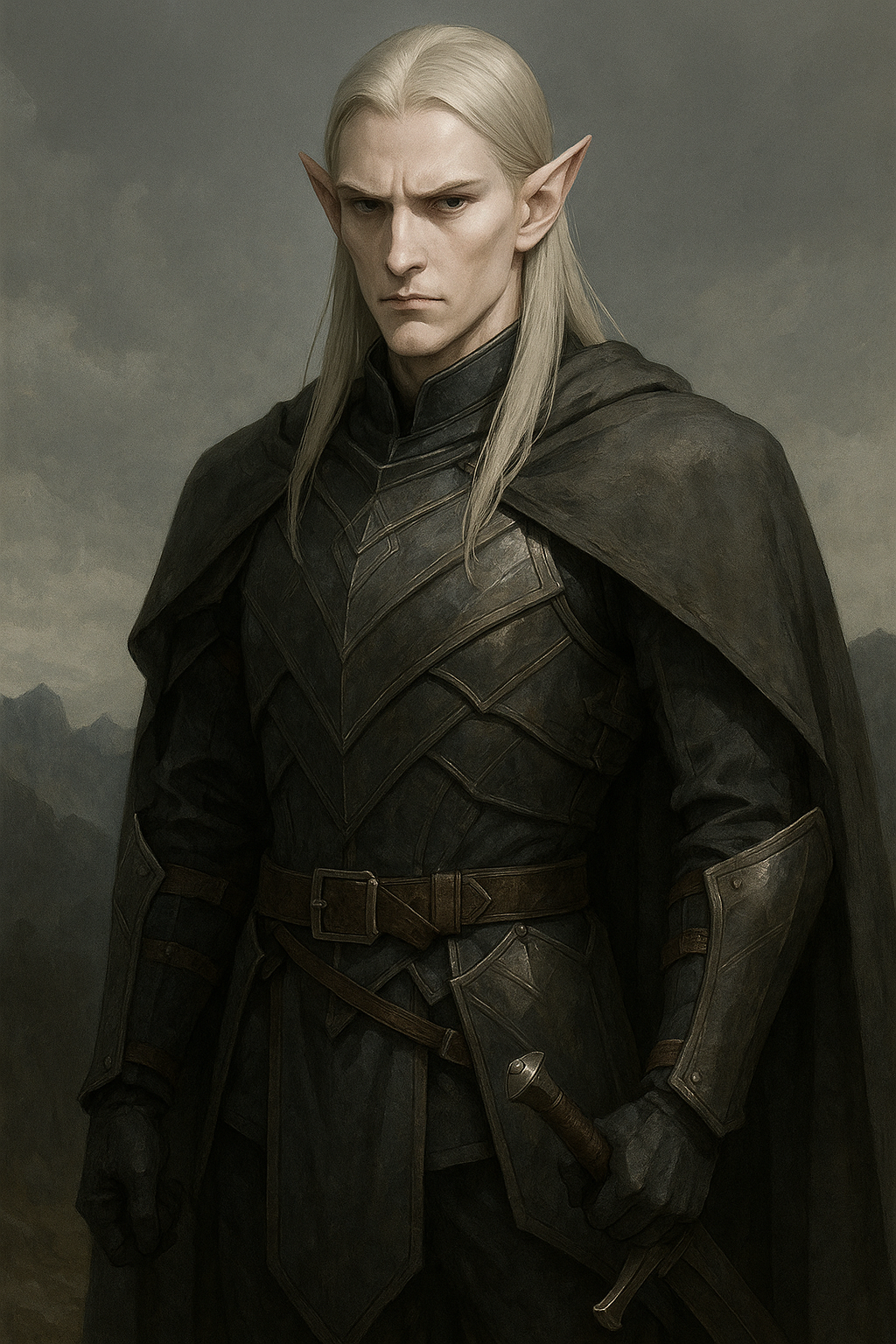
Elves are a uncommon race however are known for their tall, slender humanoid bodies and militaristic society.
Basic Information
Anatomy
Elves are tall, slender humanoids with elongated ears, sharp angular facial structure, and lean musculature optimized for precision and endurance. Their bone and muscle composition favors agility over brute strength, producing fluid movement and controlled physicality. Their posture tends toward upright poise, and their skeletal frame supports balance and efficient weight distribution. Skin tones match Alderian range, but with slightly more angular bone structure and finer muscle definition.
Biological Traits
+2 Perception (hearing), advantage vs fear, slightly slower maturation, agility/precision focus.
average food intake is 2000 kcal daily
Genetics and Reproduction
Elves are a non-hybrid, naturally originating species, distinct from both Alderians and beastfolk. They reproduce sexually and produce fertile offspring exclusively with other elves. While rare instances of cross-species pairing exist historically, such unions do not produce viable offspring, reinforcing genetic separation. Elven lineage is stable, consistent, and culturally guarded, with little tolerance for genetic dilution.
Growth Rate & Stages
Elves develop slower than humans. Childhood lasts roughly twelve years, followed by a prolonged youth phase emphasizing discipline, training, and tradition. Full physical and social maturity occurs around thirty years of age. Elves experience gradual aging and maintain physical vitality well into older age, with late-life decline occurring slowly and predictably.
Ecology and Habitats
Elves traditionally inhabit fortified citadels or mountain strongholds, maintaining settlements that blend architecture with natural terrain. Their cities are strategically located and heavily defended, with access to forest resources and vantage points. Elven societies favor sustainable use of territory, rarely over-expanding, and maintain long-term territorial ties. While capable of surface travel and trade, elves rarely settle outside their citadel networks unless exiled.
Dietary Needs and Habits
Elves are omnivores with a diet emphasizing lean meats, woodland game, vegetables, nuts, berries, and long-stored grains. Their culinary culture prioritizes clean, efficient meals and preservation techniques suitable for military and frontier living. Alcohol consumption exists but is culturally restrained; indulgence is viewed as lack of discipline. Meals are structured around function, ritual, and communal unity rather than excess.
Behaviour
Elves exhibit a psychology built on control, hierarchy, and detachment. Their behaviour reflects a deep-seated belief that discipline is the highest form of morality and that emotion is a flaw to be mastered rather than expressed. From early childhood, elves are trained to suppress impulsive behaviour, cultivating precision in thought, movement, and language. To act without deliberation is considered barbaric; to feel too strongly is to risk corruption by chaos.
Socially, elves are formal, distant, and intensely self-aware. Every gesture and word is measured for its social weight. Hierarchies govern every interaction, and deference to authority is ingrained as instinct. Even friendship follows ritual, expressed through quiet trust rather than open warmth. To outsiders, this restraint can seem arrogance or coldness, but within elven society, composure is the purest expression of strength.
Additional Information
Perception and Sensory Capabilities
Elves possess acute hearing and heightened environmental awareness, a trait refined by generations of martial discipline. Their eyesight excels at tracking motion and detail in natural environments, though it does not extend to true night vision. They maintain controlled breathing patterns and steady heart rates, allowing sustained focus during hunting, scouting, or combat. Their perceptive abilities are subtle and trained rather than supernatural.
Civilization and Culture
Beauty Ideals
Elven beauty ideals embody symmetry, restraint, and discipline. Hair and attire are maintained with ritual care. Simplicity is prized over excess; a well-kept braid or clean line of armour carries greater esteem than jewels or cosmetics.
Gender Ideals
Elven gender ideals are built around function, discipline, and perfection of role rather than biological difference. Male and female elves are held to identical standards of composure, precision, and service to hierarchy. Physical strength and beauty are secondary to control and poise; what matters most is the ability to embody the cultural ideal of order.
Courtship Ideals
Elven courtship is a formal process rooted in discipline and demonstration of worth, often culminating in ritualised duels known as Challenges of Harmony. These duels are not acts of aggression but of controlled expression, intended to prove mastery over body, mind, and emotion. Two prospective partners, or a suitor and a challenger, engage in a measured contest of skill.
Public duels serve as both performance and courtship. They allow a community to witness a suitor’s discipline while reaffirming societal ideals of order. Open displays of passion or recklessness during such contests are considered disgraceful; a calm, elegant draw is seen as the highest outcome.
In essence, elven love is proven through discipline rather than desire. Courtship duels are not tests of dominance but rituals of symmetry
Common Etiquette Rules
Elven etiquette is formal, codified, and rooted in the principles of restraint and hierarchy. Every action is performed with precision, reflecting the belief that composure is the highest expression of civility. Speech is measured and deliberate, with tone and cadence considered as meaningful as content. Interrupting another speaker, raising one’s voice, or displaying visible frustration are regarded as serious breaches of decorum.
Physical gestures are minimal and exact. A shallow bow or hand over the chest marks respect, while eye contact is a calculated act.
Deference to rank defines all interaction. Elders and superiors are addressed by title first, name second, and orders are obeyed without hesitation or visible reaction. Cleanliness and symmetry in dress and posture are also social expectations, as they signify inner order.

Comments