
The Kallari-Jarar or changlings
The oracle born
The Kallari-Jarar (made from norse words meaning those who summon at the threshold) as the proper species name. The path of propecy is Skynleið meaning, the path of perception, and Hersirleið- the way of the war leader. Endrskaptir- is the reborn, it means to be shaped again. At the moment of birth, they are swapped with mortal children whose souls show a strong innate potential for honour and battle. The mortal child is taken elsewhere by Loki’s design, while the changeling takes their place. The mortal child is raised as one of theEndrskaptir- Those who are born again, or reshaped, and their soul is bound to Loki as one of his own.They grow up nearly indistinguishable from the child they replaced:
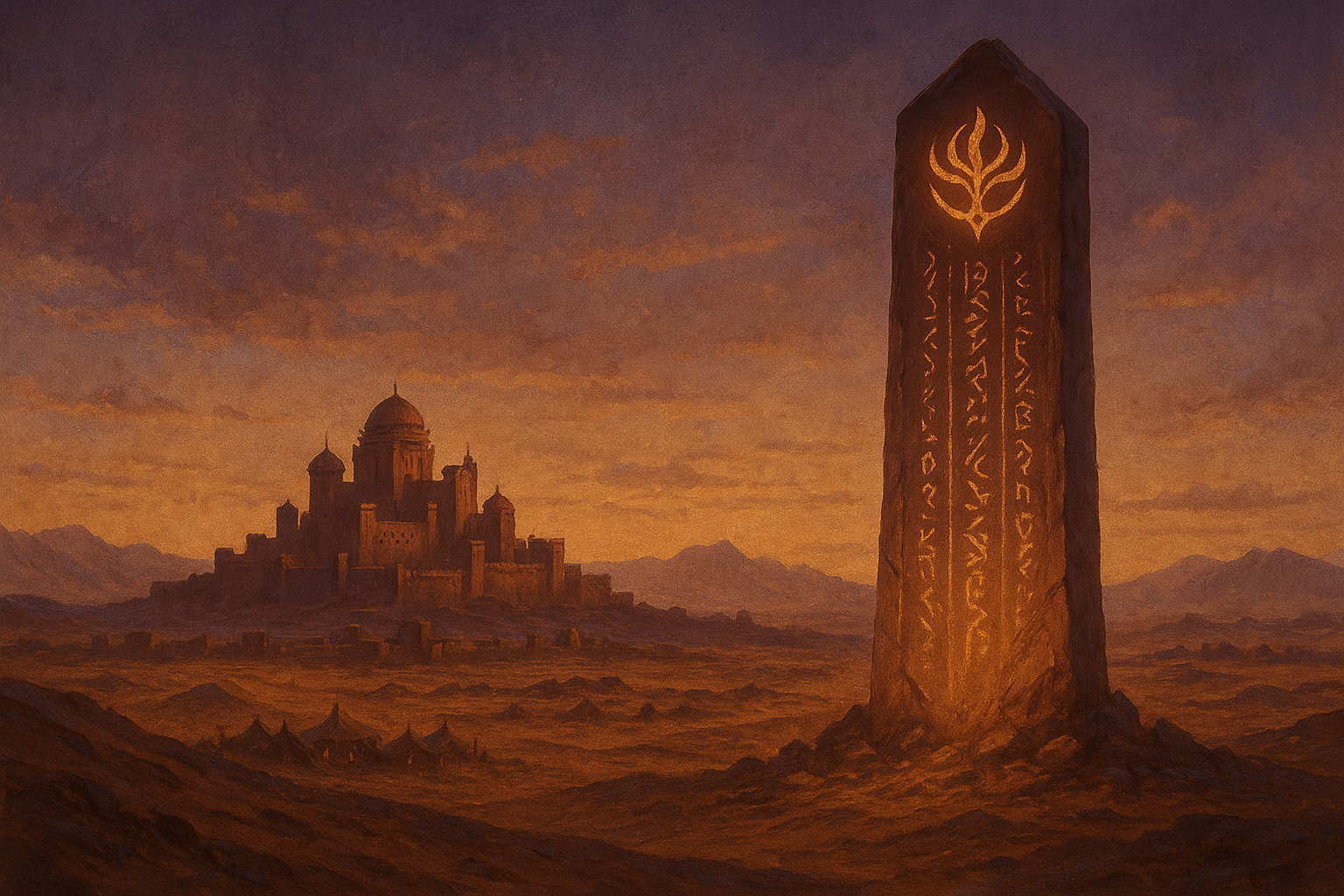
They take on the appearance, biology, and culture of that world They live a largely normal life They possess only minimal awareness of their true nature They always carry a small, nearly undetectable aura of anti-corruption. This aura does not judge or expose, but subtly undermines corruption, false authority, and insincere power. Those who are corrupt often find their plans failing, their rituals faltering, or their authority weakening in the changeling’s presence. This state continues until the changeling encounters a mortal whom a prophet has foreseen as likely of Loki's standard of honour and battle.At that moment:
They change for the first time, revealing their true form. This will be diffrent to the form that they have taken. From this point on, they gain the ability to change form at will The mortal is marked with Loki’s symbol on the back of thier dominant hand. A bond forms between the changeling and the chosen mortal. The changeling gains an irresistible urge and instinctive knowledge of how to take the chosen to Valhalla, Loki’s world. This is not a decision, but a compulsion inherent to their nature. Once the chosen is delivered to Valhalla: The child becomes- Kallari-Farinn , meaning one who has passed the threshold is returned to the world they came from They retain their full powers and gain any powers they did not have before. They are free to live the remainder of their mortal existence as they choose They are no longer bound to recruitment or further oracle eventsValhalla and the Two Paths
In Valhalla, the chosen mortal is assessed at the training academy and placed onto one of two paths: Hersirleið — Path of the Warrior— those who will serve through action, battle, command, and endurance Skynleið — Path of Prophecy— those who will serve through divination, perception of fate, and understanding inevitability. Both paths ultimately lead to becoming Watchers, guardians of the universe.The Second Life of the Changelings
When a changeling eventually dies in their mortal existence: Their soul is taken to Valhalla They are reborn and become Endrskaptir, reborn or reshaped, native to the world of Valhalla. They are trained at the academy in their second life They follow one of the same two paths: Warrior or Prophet All changeling children are born from either: a Chosen, or a reborn changeling parent This cycle ensures continuity without excess interference in mortal worlds.Basic Information
Anatomy
Kallari-Jarar don’t really have one fixed body. Most of the time, they look exactly like the people they live among. Same number of limbs, same build, same organs, nothing outwardly strange. If you didn’t know what you were looking at, you wouldn’t notice anything at all.
The difference isn’t obvious unless you already understand what they are. Their bodies aren’t locked into one shape the way mortal bodies are. When they change, it doesn’t hurt, nothing breaks, and nothing is lost — things simply move into place. Bones, muscles, and features adjust as needed, as if the body always knew how it was meant to look next.
Their true form isn’t dramatic or monstrous. It’s still humanoid, just… less specific. Less tied to a single purpose. They aren’t built for brute strength or long-term physical endurance so much as balance and adaptability. There’s usually something slightly unsettling about it, not because it’s wrong, but because it feels unfinished — like a body designed to cross thresholds rather than stay in one state for very long.
Biological Traits
Before the Change, Kallari-Jarar are biologically indistinguishable from the species they are living as. Height, weight, lifespan, physical ability, and health all fall within normal ranges for that population. There are no consistent physical markers that identify them as different.
The Change marks a complete break from this. When it occurs, the Kallari-Jarar sheds the biological blueprint they were born into entirely and transforms into their true form. This form reflects their actual heritage, including physical traits and emotional tendencies passed down from their parents. From this point onward, the body they grew up in is no longer their “real” body.
After the Change, the original mortal form can still be assumed, but it is no longer a true transformation. Returning to it is comparable to altering surface features — like changing hair colour or presentation — rather than inhabiting a fully biological identity. The true form remains the baseline to which the body naturally returns.
In their true state, Kallari-Jarar bodies are consistent in structure but varied in expression. Height, build, and physical presence differ between individuals, shaped by lineage and role rather than the species they once appeared to be. Sex and gender presentation are flexible, self-determined, and not tied to function or path.
Once Endrskaptir, biological limits such as aging and former species constraints lose relevance entirely. Physical traits continue to exist, but they are shaped by purpose and training rather than inheritance or time.
Genetics and Reproduction
Kallari-Jarar don’t pass on what they are through normal genetics. While they are born and grow up in ordinary bodies, being a Kallari-Jarar isn’t something that can be inherited by accident.
Before the Change, their bodies are completely defined by the mortal form they are living as. Any children born during this time inherit only those mortal traits and are entirely normal. There is nothing hidden, dormant, or waiting to activate later.
Once the Calling has been fulfilled, things are different. A Kallari-Farinn or an Endrskaptir can give rise to another Kallari-Jarar, but not through blood alone. Instead, the child is placed at birth, born into a normal biological form alongside a deeper pattern that will only become accessible later in life.
Because of this, Kallari-Jarar lineage isn’t genetic in the usual sense. It’s conditional. Nothing is passed on until something has changed.
Growth Rate & Stages
Kallari-Jarar grow at the same rate as the species they are living as. Childhood, adolescence, and adulthood all follow normal biological timelines, and there is nothing unusual about their physical development. As children, they appear entirely ordinary.
The one exception is that, regardless of species or age, they always carry the subtle anti-corruption field shared by all Kali-aligned beings. This effect is present from birth, though it is usually so faint that it goes unnoticed unless someone nearby is actively acting with corrupt intent.
The first major change in a Kallari-Jarar’s life is not physical growth, but the Calling. This can occur at any point after early adolescence, though many live well into adulthood without ever experiencing it. Until this moment, they remain in their initial state and cannot access their true form.
When the Calling is fulfilled, the Change occurs. This is the first time the Kallari-Jarar accesses their true form, after which they are able to shift form at will. They continue to age normally, but are no longer fully constrained by the limits of their original body.
Those who complete the Calling but remain in their first life are known as Kallari-Farinn and live out the rest of that life as mortals. Upon death, they are taken to Valhalla and become Endrskaptir, marking their final transformation. From this point on, development is defined by training and role rather than age.
Behaviour
Kallari-Jarar do not have a single shared personality or temperament. In most cases, they behave much like the people and cultures they are raised among, adopting local norms, values, and social habits naturally. There is nothing inherent that makes them more aggressive, more passive, or more virtuous than anyone else.
That said, many Kallari-Jarar grow up feeling slightly out of step with the world around them, even before they understand why. This often shows as heightened self-awareness, discomfort with hypocrisy or abuse of authority, and a tendency to notice when things do not quite line up. They are not necessarily confrontational, but prolonged exposure to corruption can be emotionally exhausting or unsettling.
Among their own kind, Kallari-Jarar tend to recognise one another easily, even without overt signs. This recognition does not always lead to closeness, but it often comes with a sense of shared understanding. They are generally respectful of one another’s autonomy, particularly around the Calling, which is considered deeply personal and not something to be pressured or compared.
Toward those who hold power over others, Kallari-Jarar are often cautious. This is partly learned behaviour, as individuals in positions of corrupt authority tend to react poorly to their presence. While Kallari-Jarar are not predators and do not seek conflict, they are frequently treated as a threat simply by existing, which can lead to social isolation or distrust.
They do not view themselves as hunters, judges, or enforcers. Most see their role, if they think of it at all, as incidental rather than chosen. As a result, Kallari-Jarar are more likely to avoid attention than seek it, and many prefer quieter lives unless circumstance or the Calling forces them otherwise.
Additional Information
Perception and Sensory Capabilities
Kallari-Jarar don’t experience the world through heightened senses in the usual way. Their sight, hearing, and physical perception are determined by the form they are currently inhabiting and are otherwise unremarkable. They are not constantly seeing magic, sensing lies, or detecting danger.
What makes them different is not what they perceive, but what happens around them. Kallari-Jarar carry a subtle, nearly undetectable magical field that interacts poorly with corruption. This field is passive and always present, though usually unnoticed.
When someone acting with corrupt intent attempts to abuse power, deceive, or exploit others in the presence of a Kallari-Jarar, things have a tendency to go wrong. Plans fail at the wrong moment, words come out incorrectly, rituals misfire, authority is undermined, or luck simply turns. The effect is not immediate, obvious, or consistent enough to be proven, but it is persistent.
Importantly, this does not affect ordinary mistakes or morally neutral actions. The field only interferes when corruption is actively expressed. Because of this, Kallari-Jarar are often blamed for bad outcomes without clear evidence, particularly by those whose power relies on manipulation or dishonesty.
Kallari-Jarar themselves are not always consciously aware when this field is influencing events. They may only notice the pattern in hindsight, if at all. The effect cannot be controlled, suppressed, or directed, and is best described as a quiet pressure that makes corruption unstable rather than impossible.
Civilization and Culture
Naming Traditions
Kallari-Jarar naming follows a layered structure tied to life stages rather than ancestry. Before the Change, individuals use only the name given to them by the family and culture they are raised in. This name is considered fully valid and is never discarded.
At the moment of the Change, a second name is revealed. This name is of Valhalla origin and was given by their biological parents before placement. It is remembered rather than learned, and marks the individual’s true heritage. This name is composed of two parts: a personal name and an identifier, used to recognise origin rather than lineage. After the Change, this name is placed before the mortal name. While often explained as having distinct parts, Valhalla names are not hyphenated in practice and are treated as single compound names.
Upon rebirth as Endrskaptir, a third name is taken and placed at the front of the existing names. This reborn name reflects the individual’s second life and role within Valhalla.
Kallari-Jarar do not use surnames. Identity is cumulative rather than inherited, and names serve as a record of transformation rather than family ownership.
Common Customs, Traditions and Rituals
allari-Jarar do not share a single culture, but certain customs appear repeatedly, particularly among those connected to Valhalla. Many of these mirror older Nordic traditions, though they are often quieter and less ceremonial than outsiders expect.
One common practice is the importance placed on keeping one’s word. Promises are not made lightly, and casual oaths are generally avoided. Saying “I will” is treated as a commitment rather than an intention, and breaking such a promise carries personal weight even when there are no outward consequences.
Kallari-Jarar also tend to value restraint in speech. Silence is not considered uncomfortable or rude, and speaking only when something meaningful needs to be said is often preferred. Listening is treated as an active skill rather than a passive one.
Hospitality, when it is offered, is sincere. Sharing food, warmth, or shelter is seen as an act of trust rather than obligation. However, hospitality is not automatic, and boundaries are respected; refusing an invitation is not taken as an insult.
Among their own kind, there is a strong tradition of non-interference around the Calling and the Change. Asking direct questions about whether someone has Changed, or when they might, is considered inappropriate. Instead, individuals are allowed to speak about it in their own time, or not at all.
In Valhalla, remembrance plays an important role. Names, stories, and actions are recorded carefully, but without embellishment. Deeds are valued for what they reveal about character rather than for spectacle. Glory is not something to be claimed, only noted.
Across all stages of life, Kallari-Jarar tend to favour steadiness over urgency. Acting too quickly, boasting openly, or asserting authority without need is generally viewed with suspicion. Honour is understood less as heroism, and more as consistency over time.
History
The Kallari-Jarar do not have a single shared history in the way most species do. They have never existed as a unified civilisation, nor have they founded nations or held territory of their own. For most of their existence, they have lived scattered across other worlds, often unaware of what they were. Many live and die without ever fulfilling the Calling, leaving behind lives that appear entirely ordinary.
What history does exist is largely held within Valhalla. While Valhalla is commonly understood as a training ground for warriors and Watchers, it is also, quietly and deliberately, one of the greatest centres of knowledge in the universe. This is not widely known, and is actively understated. If certain cultures — particularly the high elves — were aware of the true extent of it, the political consequences would be significant.
Those who walk the Path of Perception record what they see. Prophecies, outcomes, patterns, failures, and limits are all documented, though rarely shared in full. In addition to this, every individual brought to Valhalla carries with them knowledge of their home world: language, customs, history, beliefs, and unspoken cultural assumptions. This knowledge is not lost. Over time, it is absorbed, cross-referenced, and preserved, forming a body of understanding far broader than any single civilisation could achieve.
As a result, Valhalla’s historical record is not chronological in the usual sense. It is layered, comparative, and selective. Events are remembered not because they were dramatic, but because they revealed something important about how power, honour, and consequence interact across worlds.
Outside Valhalla, accounts of the Kallari-Jarar remain fragmented and often hostile. They appear in myths under many names, usually associated with misfortune, failed schemes, or the sudden collapse of corrupt authority. Rarely are these stories connected, and almost never is Valhalla identified as their common thread.
Historical Figures
Freya is the foremost Kallari-Farinn of the Path of Perception, and the authority by which prophecy is trained, constrained, and understood within Valhalla.
Common Myths and Legends
The term changling is a very rude and disrespectful term.
Scientific Name
Kallarius jarar
Origin/Ancestry
Jarar or Farinn or Endrskaptir
Conservation Status
Not Applicable — population regulated by cosmic placement rather than reproduction.

Comments