
Caelarin
You haven't heard of the Caelarin? Well, I can’t say I’m surprised. The Elarin aren’t exactly eager for knowledge of their former kin to spread too far. To them, the Caelarin are like that uncle at every birthday party. Everyone knows he exists, but no one wants to talk about him.
And who could blame them? A people whose brazen defiance drew the wrath of the gods so completely that they were wiped from the face of Mirintha ... that’s hardly something one wants to be associated with. If you’re now wondering what exactly the Caelarin did to anger the gods so deeply that it led to the destruction of an entire people, then simply read on to discover what our research has uncovered. Please keep in mind, that most of what we found about them is safely stored in the Great Library of Sifa and preserved by the Grey Men. Most of those records, we asume about 90% of them, deal with the Caelarin's history, not their everyday life.
History
As with all the Elarin, the Caelarin were wrought by Daba at the dawn of the First Age. While the Serelarin were given in devotion to the goddess Cahaya - Goddess of Light, and the Tharnelarin to the god Pimedus - God of Darkness, Daba kept the Caelarin as her own. It is said she bestowed upon them a greater affinity for magic than their kin, and a deeper yearning for the spiritual mysteries.
Over the centuries, this yearning grew into an obsession, one that would in the end bring about the downfall of the Caelarin. The aim of their arcanocratic rule was to discover a path by which they might draw nearer to the gods. They sought a way into Vaelora, that sphere beyond Mirintha wherein our gods reside. They pursued this goal by every means imaginable. Yet to our regret, all records of their efforts were destroyed, so nobody could attempt to repeat their mistakes.
What can be said with certainty is that the Caelarin came closer to fulfilling their designs than most would care to believe. So near, in fact, that the gods themselves deemed it necessary to put an end to their endeavor. According to a handful of fragmentary sources, the Caelarin suffered more than one setback in their schemes, yet they would not be dissuaded. One account even claims that Daba herself warned them of the gods’ displeasure in this matter. The arcanocracy, however, was not deterred and pressed on regardless.
In the end, the ambitions of the Caelarin led to two things. First, their whole population was removed from the surface of Mirintha after the Great Mage War by the gods. Their cities have been destroyed, leaving scarcely a physical trace of their once-great nation behind, and only a few written records have been preserved so their fate could serve as a lesson for those who came after. Second, the Void between Mirintha and Vaelora was brought into being, that it might hinder any who would seek to follow the same path. According to one of the documents, Bilgi - God of wisdom personally informed the Grey Men about it.
Wow, this is so sad. I kind of get why they tried so hard, but also you should acknowledge your boundaries. I also kind of understand the god's position in this.
We don't talk about the Caelarin!
Geographic Distribution
As all the elves, the Caelarin settled on Elysaria. They built huge cities on the plateaus east of the Skyforge Mountains. Those once populated areas are now known to us as the Floating Islands. It is impossible to say whether the remains of the former cities can be found on these islands, as no one has ever dared to attempt to reach them. From the smaller settlements, that have not been elevated, nothing remained.
Biology and Physiology
Biologically and physiologically the Caelarin weren't that different from their still existing kin. The biggest difference was their affinity for magic, which according to records was significantly higher. Caelarin with a low affinity for magic by their own standards would still have been classified as having an average affinity among other ethnic groups. This affinity was most likely hereditary, which meant that marriages were chosen very selectively and the whole thing bordered on a kind of breeding program. And it most certainly was the reason why their society was based on an arcanocracy instead of any other form of government.
Appereance
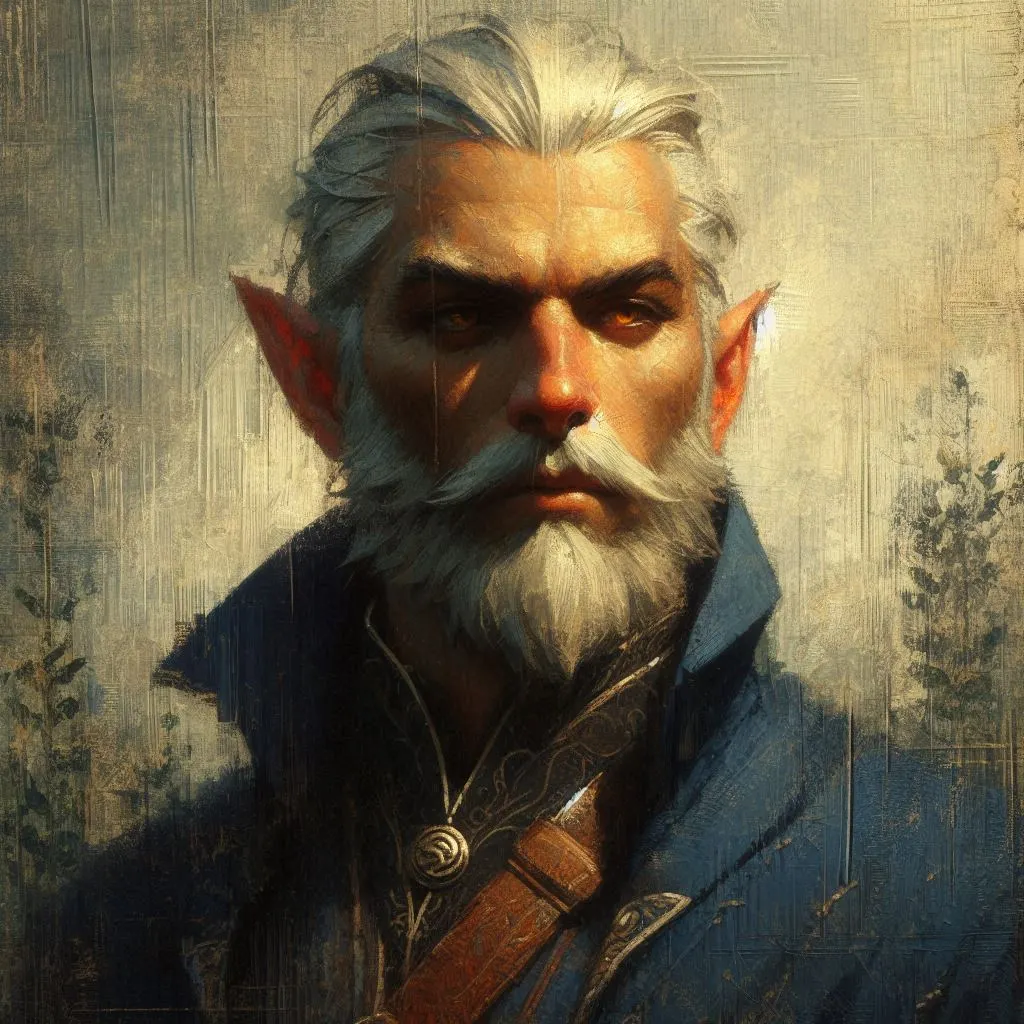
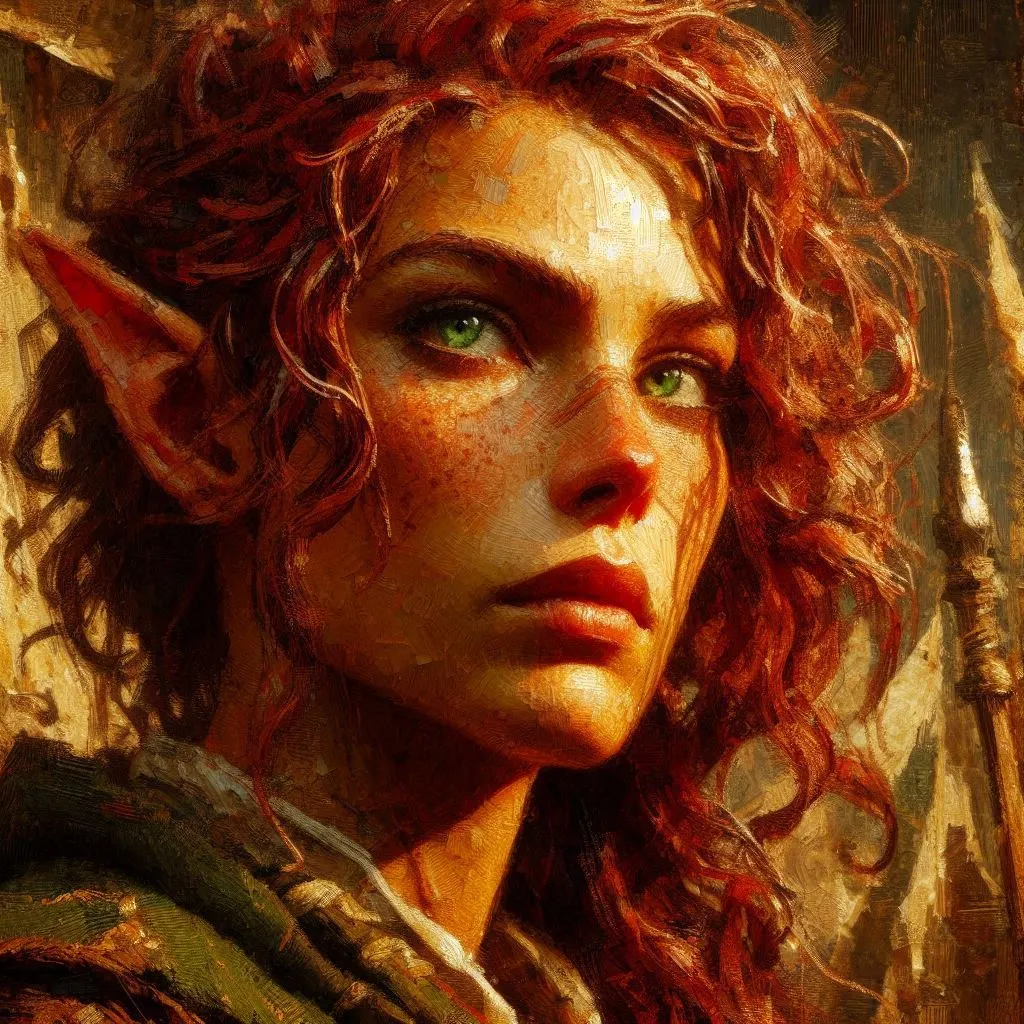
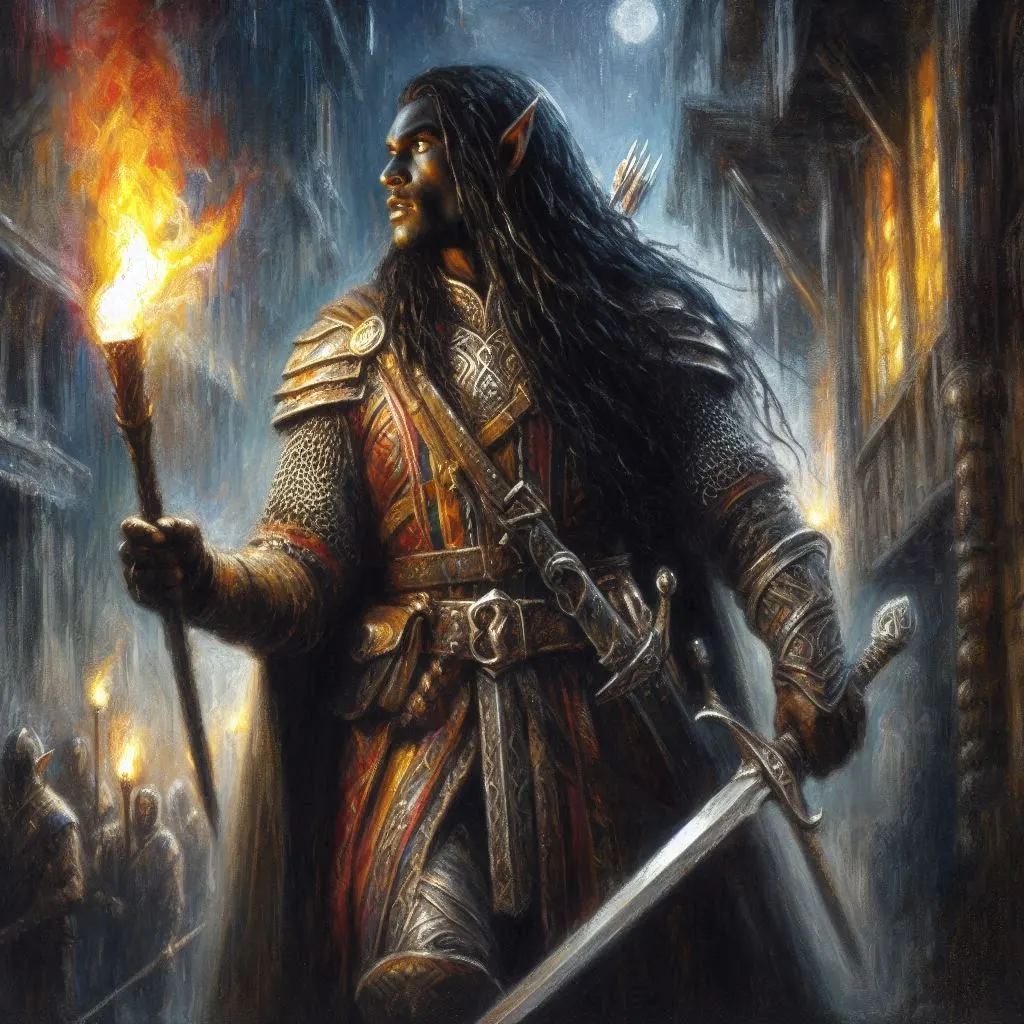
It is rather difficult to say for sure, how exactly the Caelarin looked like. According to the few remaining sources we were able to find they were by far the most versatile Elarian ethnicity. The stature of most Caelarin was most likely slender and tall, towering several centimeters above the other Elarin.
Their skin color ranged from light flesh tone to dark brown. Their hair colors probably ranged from blonde to black, and in old age also included gray and white. This diversity was also evident in their eye colors. Blue, green, and brown were equally represented. What you didn't not find among them are the bright eye colors of the Tharnelarin or the pale ones of the Serelarin.
Overall, the Caelarin sound like oversized humans to us. So, while they might be rather versatile regarding visuals, they did not have those fascinating aspects their kin have.
Snapshot
Origin: Arcanocracy of Ventharis
Language: Caelith, Elaric
Life span: 400 years
Height: 180 - 210 cm
Weight: 55 - 100 kg
Skin:
Eyes:
Hair:
From all the Elarin ethnicities, they sound like the most boring common one. Oversized humans indeed ...
Culture
The culture of the Caelarin was deeply rooted in magic. This was most evident in the fact that the government of their realm was an arcanocracy, led by a council of Archmages. As you might already have guessed, there is not much we know about this council. Here is the little we do know:
- It was formed from seven powerful magicians.
- The appointment was based on a person's magical affinity.
- The affinity of potential candidates was tested every ten years in a magical tournament.
- Former members of the council bore the title of Venerable Archmage for life.
Beliefs
Some historians today believe that the Caelarin people felt they were destined for something greater. According to some documents, belief in the gods was deeply rooted in the everyday life of the people. Temples dedicated to each individual god could be found even in small villages. Worship played a central role in life, and it was a matter of course to devote the necessary time to it. Even though not all the gods we know today existed at that time, this must still have taken up a large part of the day. This makes the Caelarin's achievements even more astonishing.
It was this obsession with the gods that ultimately led to the Caelarin's downfall. In their quest to be as close to them as possible, they ignored all warnings. Their attempts to physically reach Vaelora and live among the gods earned them the gods' displeasure and ultimately led to their destruction. The fate of the Caelarin should serve as a lesson to us that Vaelora belongs to the gods and that we should be content with the world they have given us.
Dress code
In the few surviving depictions, the Caelarin are most often shown wearing flowing garments of light fabric, which drifted softly with the wind and were dyed in paler shades of blue. The Archmages of the arcanocracy are depicted instead in robes of pure white, embroidered with silver tracery. It was said to be common practice to weave enchantments into these robes, so that they would stir and move even in perfect stillness. This privilege, however, was reserved for the ruling elite and the priesthood. Beyond these fragments, little more can be said today of the fashions once favored by the Caelarin.
That way of clothing sounds pretty. But maybe not too practical?
Architecture
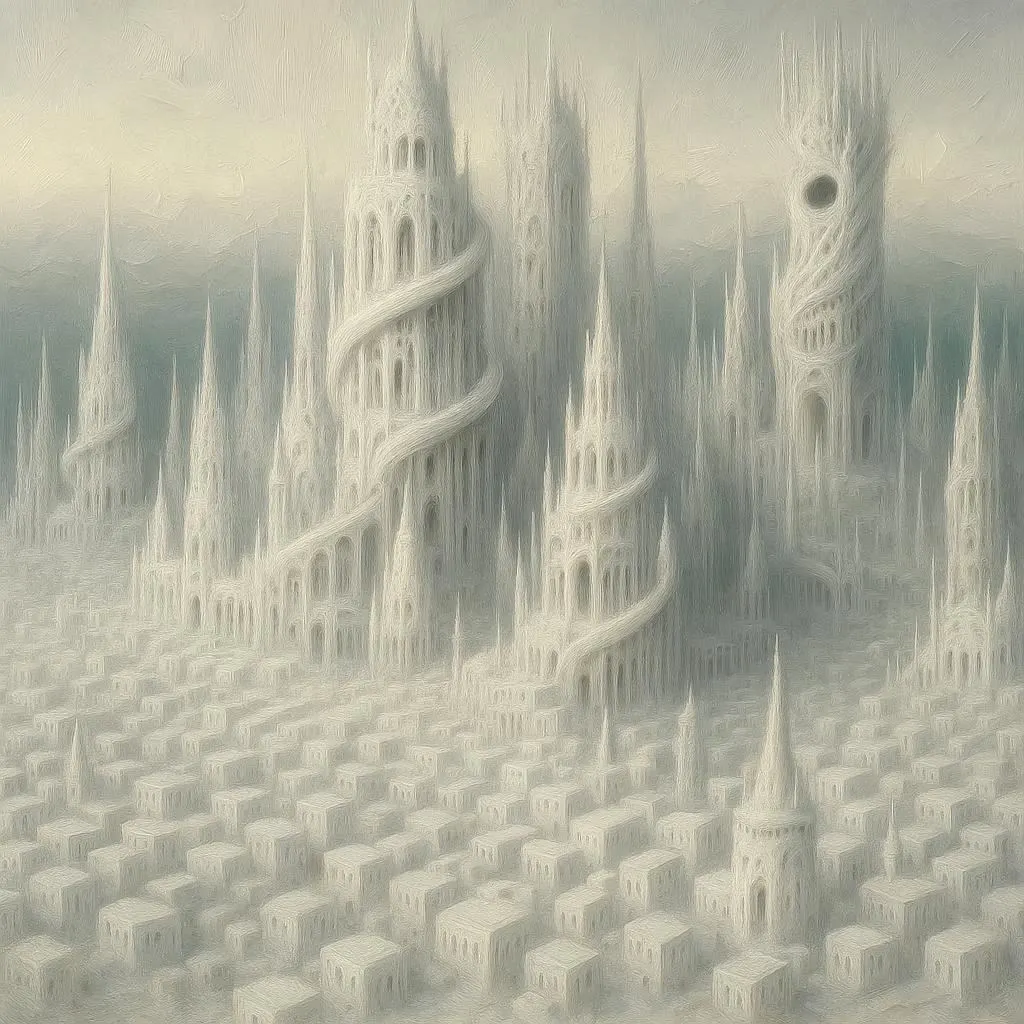
To our surprise we have been able to find one single depiction of a Caelarin city. If what is shown on this image was the rule or an exception is unclear, but nonetheless we'd like to share with you what it suggests about the Caelarin's architecture. As you can see in the image, which by the way we copied from the original, the city is painted white or made of some white material. The high winding towers might suggest their aspiration to reach for the skies, or they might just be circumstance and mean nothing at all.
Interspecies relations
In the first centuries, the Caelarin are said to have lived in harmony with their kin. Only when their ambitious designs to journey into Vaelora were set in motion did matters begin to decline. Both the Serelarin and the Tharnelarin took grave offense at this undertaking. From either side there were, according to modern historians, efforts to bring an end to the Caelarin’s endeavor. Yet as they would not suffer themselves to be restrained, the mounting tensions gave rise to the Great Mage War. The outcome of that war is known to all: through the aid of the gods, the united hosts of the Serelarin and Tharnelarin at last defeated the Caelarin host. Of their kin’s ultimate annihilation, however, neither nation had any part. Or so the historians tell us.

Love the voice in the first half (alien sticker in spirit).