
Zarakhai, the Ember Steppes
Zarakhai, the Ember Steppes
Article PUBLISHED PUBLIC
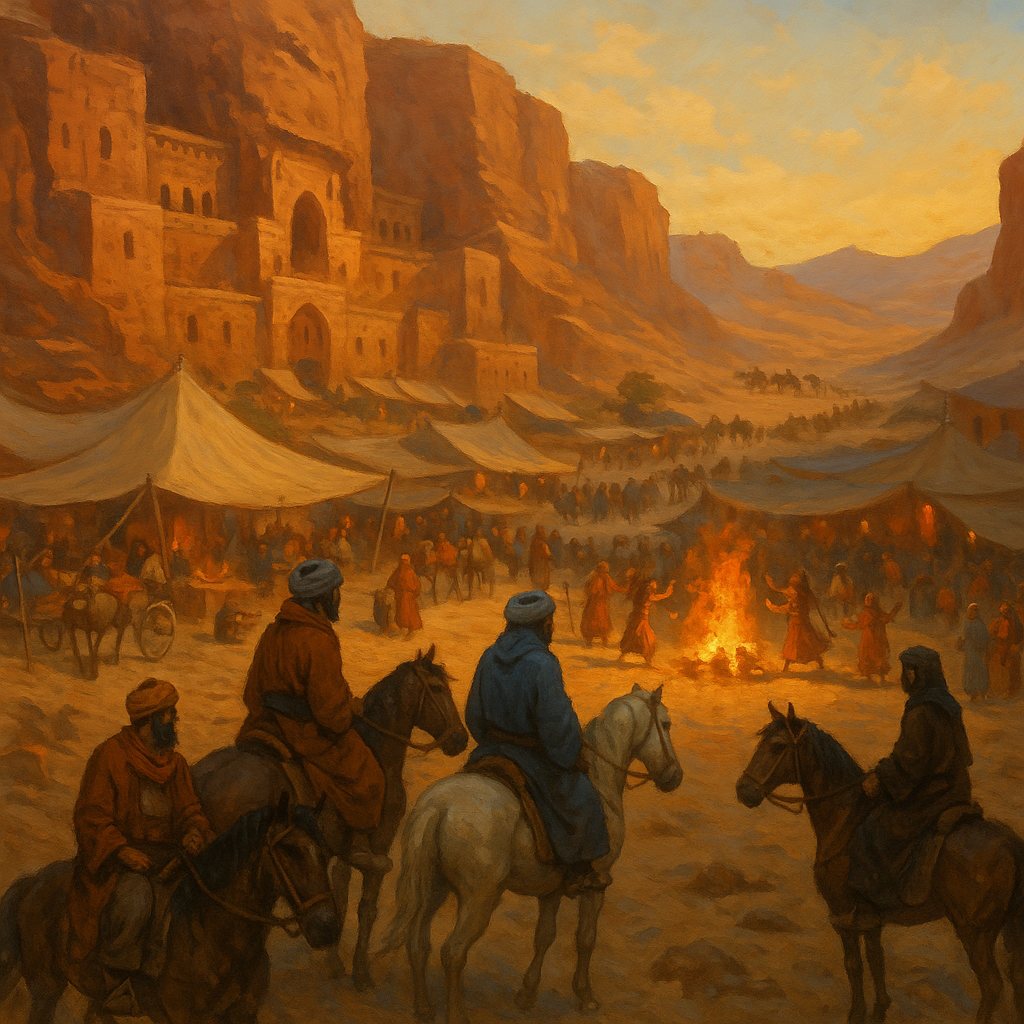
To the far south lies Zarakhai, the Ember Steppes — a realm of desert winds, endless grasslands, and sun-scorched mesas. Its people are nomads, riders, and survivors, thriving where water is scarce and storms shape the land. The city itself is carved into a red-stone canyon where an oasis flows, its walls glowing like bronze under the setting sun.
Rulers & Inhabitants Nomadic Clans: Horse-riding tribes roam the steppes, living in yurts and driving herds of goats, cattle, and horses.
The Stone-Khans: A council of tribal leaders who rule from Zarakhai’s canyon halls, chosen for wisdom, endurance, and the strength to unite the clans.
Mortals & Wanderers: Humans, half-orcs, dwarves, and tieflings dwell here, with outcasts and exiles often finding a second home in Zarakhai’s tents.
Desert Spirits: Wind-wraiths and fire djinn haunt the dunes — sometimes bargained with, sometimes fought.
Culture Horsemanship: Riders of the steppe are legendary, skilled in archery and fast-moving raids.
Hospitality: Harsh lands breed fierce generosity — a guest is always fed, often with roasted meats, spiced milk stews, and fermented mare’s milk (kumiss).
Survival as Virtue: To endure the steppe’s hunger and storms is a badge of honor. Weakness is pitied, endurance revered.
Trade & Economy Zarakhai is not a land of abundance but of rarity and resilience. Their goods travel in small but precious caravans, mirroring the spice trade of distant worlds:
Exports:
Horses of the Ember Steppes – swift, tireless, bred to cross desert miles.
Hides & Leathers – durable and coveted for armor and travel gear.
Salt & Desert Glass – pulled from dried seas and dunes seared by lightning.
Spices & Dyes – fire-flower saffron, crimson sand pigments, bitter desert teas.
Steppe Spirits – kumiss, fermented mare’s milk, strong desert whiskeys.
Imports:
Grain & Wine from Kaelthorne.
Iron, Steel, and Finished Goods from Setovia and the north.
Trade with Setovia: Unlike Kaelthorne’s barrels of wine flowing north in abundance, Zarakhai’s trade is rare and precious — caravans like veins of gold, bringing spices, dyes, and horses along routes that feel more like lifelines than highways. The Setovians covet Zarakhai’s rarities, but the supply is so limited that each shipment becomes a prized luxury.
The Great Festival of Wind and Flame Every summer, the tribes gather in Zarakhai for contests of speed, strength, and spirit:
Horse races across the steppe, archery duels, and wrestling matches.
Fire-dancers weave flame across the desert night.
Merchants open their caravans, turning the canyon city into a grand bazaar of the south, where foreign emissaries barter for rare spices and horses.
Even Setovia’s agents come to the festival, their caravans marked by shadowed banners, seeking Zarakhai’s luxuries for their courts. But unlike Kaelthorne, Zarakhai does not flood Setovia with goods — instead, their scarcity heightens their value, and so the Ember Steppes remain both coveted and untouchable.
Rulers & Inhabitants Nomadic Clans: Horse-riding tribes roam the steppes, living in yurts and driving herds of goats, cattle, and horses.
The Stone-Khans: A council of tribal leaders who rule from Zarakhai’s canyon halls, chosen for wisdom, endurance, and the strength to unite the clans.
Mortals & Wanderers: Humans, half-orcs, dwarves, and tieflings dwell here, with outcasts and exiles often finding a second home in Zarakhai’s tents.
Desert Spirits: Wind-wraiths and fire djinn haunt the dunes — sometimes bargained with, sometimes fought.
Culture Horsemanship: Riders of the steppe are legendary, skilled in archery and fast-moving raids.
Hospitality: Harsh lands breed fierce generosity — a guest is always fed, often with roasted meats, spiced milk stews, and fermented mare’s milk (kumiss).
Survival as Virtue: To endure the steppe’s hunger and storms is a badge of honor. Weakness is pitied, endurance revered.
Trade & Economy Zarakhai is not a land of abundance but of rarity and resilience. Their goods travel in small but precious caravans, mirroring the spice trade of distant worlds:
Exports:
Horses of the Ember Steppes – swift, tireless, bred to cross desert miles.
Hides & Leathers – durable and coveted for armor and travel gear.
Salt & Desert Glass – pulled from dried seas and dunes seared by lightning.
Spices & Dyes – fire-flower saffron, crimson sand pigments, bitter desert teas.
Steppe Spirits – kumiss, fermented mare’s milk, strong desert whiskeys.
Imports:
Grain & Wine from Kaelthorne.
Iron, Steel, and Finished Goods from Setovia and the north.
Trade with Setovia: Unlike Kaelthorne’s barrels of wine flowing north in abundance, Zarakhai’s trade is rare and precious — caravans like veins of gold, bringing spices, dyes, and horses along routes that feel more like lifelines than highways. The Setovians covet Zarakhai’s rarities, but the supply is so limited that each shipment becomes a prized luxury.
The Great Festival of Wind and Flame Every summer, the tribes gather in Zarakhai for contests of speed, strength, and spirit:
Horse races across the steppe, archery duels, and wrestling matches.
Fire-dancers weave flame across the desert night.
Merchants open their caravans, turning the canyon city into a grand bazaar of the south, where foreign emissaries barter for rare spices and horses.
Even Setovia’s agents come to the festival, their caravans marked by shadowed banners, seeking Zarakhai’s luxuries for their courts. But unlike Kaelthorne, Zarakhai does not flood Setovia with goods — instead, their scarcity heightens their value, and so the Ember Steppes remain both coveted and untouchable.

Comments