
The Crimson Gospel
Introduction
"Before the world took shape, there was a single longing. From that longing came light; from light, shadow; and between them, the space where love could grow.”
The Crimson Gospel is the foundational scripture of Ephelion, God of Love and Art, and the theological cornerstone of the Church of the Crescent Lord. Preserved within the Grand Cathedral of Aeloria, the Gospel has shaped (primarily) elven society for centuries, guiding not only worship, but the understanding of creation, devotion, and responsibility.
The Gospel teaches that existence began as a single act of affection, and that all creation which followed carried its echo. Love, in this tradition, is not mere sentiment but force: the first motion of the world, and the most demanding.
Divided into four Testaments, the Crimson Gospel explores distinct expressions of love’s influence: creation, expression, devotion, and restraint. Though unified in authorship and purpose, the Testaments differ in both tone and intended use. Together, they form a canon intended not to inflame passion, but to give it shape. Ephelion's faith does not deny desire; it disciplines it. It does not exalt beauty for its own sake; it binds it to care.

The Four Books of the Gospel
The Testaments are not arranged by chronology, but by conceptual necessity. Readers traditionally encounter them in sequence, yet the Gospel itself imposes no such requirement. It is widely held that each Testament yields its meaning most clearly when approached at the proper moment, rather than through rigid order.
While each Testament may be read independently, the Gospel is considered incomplete without all four. As held within the tradition of the Crescent Lord: to dwell only in creation without restraint is to invite ruin; to attend solely to caution without joy is to deny love its purpose.
Book I
The first Testament of the Crimson Gospel is a gathering of allegories and living poems that speak of love as the primordial force of existence. It teaches that creation did not arise from command or conflict, but from longing; a quiet desire for form, for companionship, for meaning. Within its verses, the world is revealed as an ongoing act of affection. Mountains are shaped by elemental harmony rather than violence; souls are formed not as instruments, but as answers to yearning. Love, in this Testament, is not passion alone, but care given shape and purpose
This book is the most widely read and quoted of the four. Mortals turn to it in moments of joy and grief alike, seeking comfort rather than certainty. Its passages are spoken at weddings, reconciliations, and funerary rites, where they are believed to steady the heart, offering presence where no answers can be found.
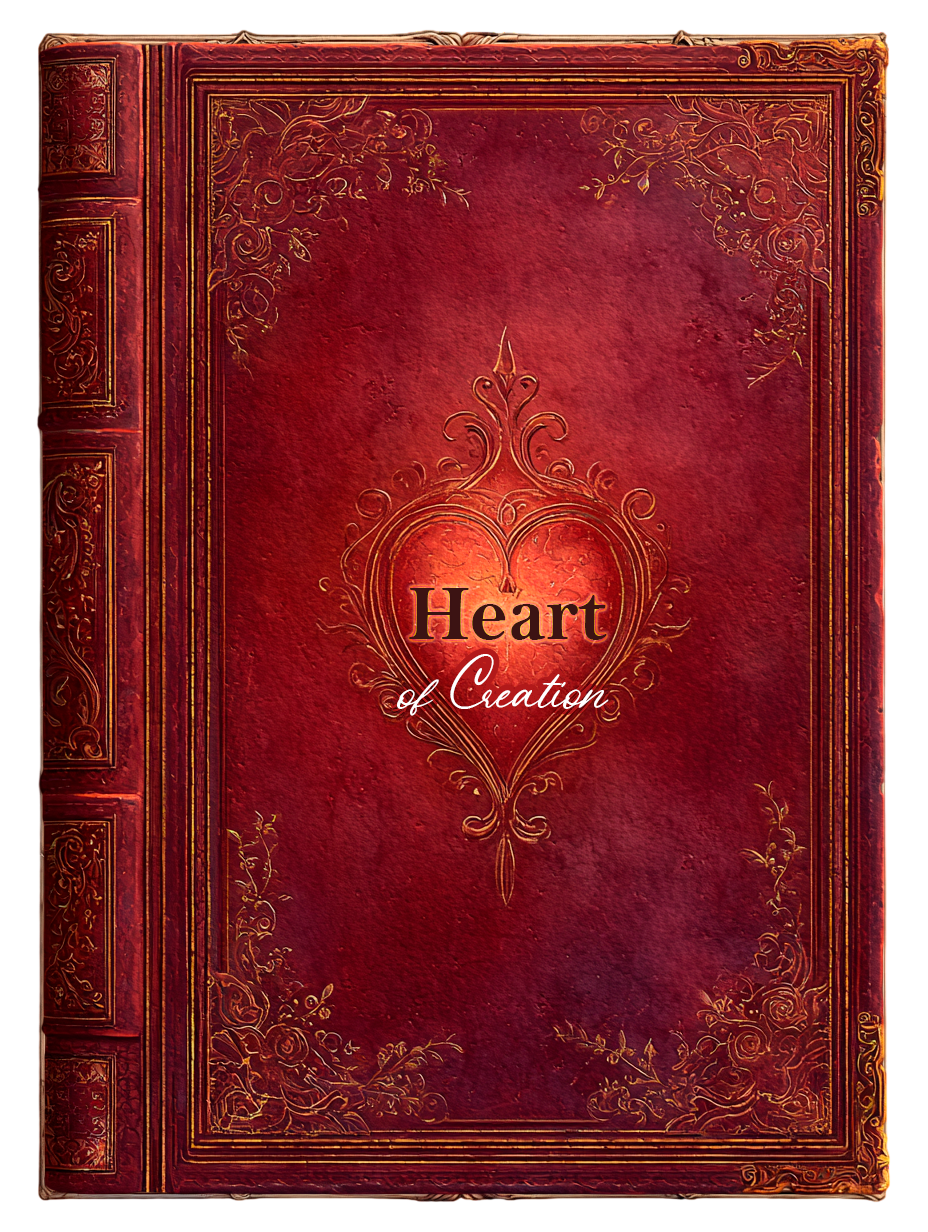
Love is not proven by intensity, but by presence.
What remains when delight fades, when desire falters, when beauty grows familiar; this is love’s true measure.
The world survives because something stayed.
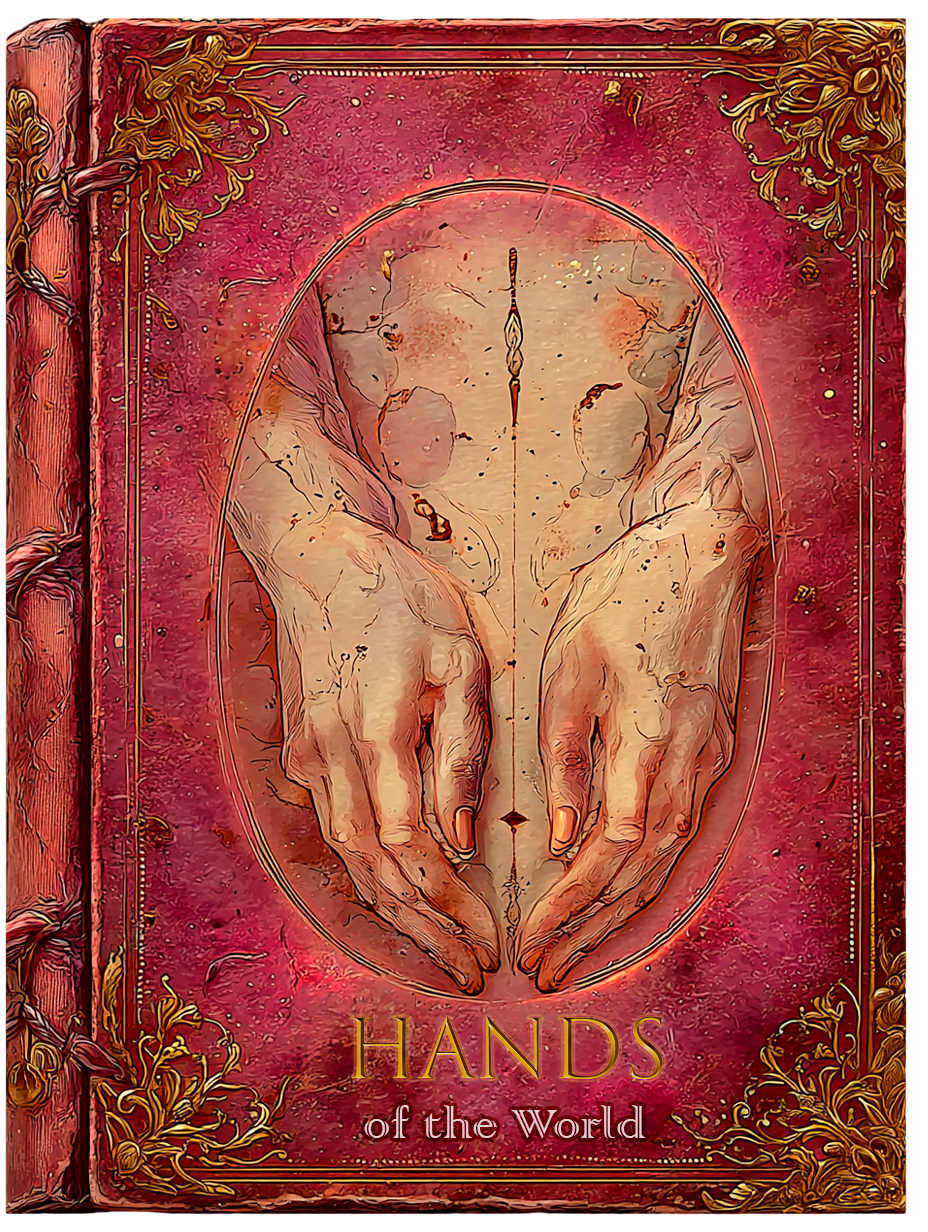
Do not ask whether your work is worthy of the divine. Ask only if it is honest.
To make a thing is to say: "You are worth the time I will never reclaim."
Whether shaping stone or song, the hand reveals what the heart has chosen to care for, longer than convenience allows.
Book II
The second Testament is a philosophical work concerned with creation as practice. Where the first book speaks of why the world exists, The Hands of the World turns to how it is continually reshaped. It teaches that art is sacred not because it imitates the divine, but because it participates in it. Through painting, music, sculpture, and story, mortals echo the act of creation itself, leaving their mark upon the world not through dominion, but through expression.
Tradition holds that this Testament was composed by the Muses - beings described as Ephelion's hopes given form - though the Gospel itself makes no claim of authorship. Its aphorisms are studied in ateliers, academies, and guild halls, where they are argued over as often as they are revered. Again and again, the same question returns: what is the responsibility of a creator toward the thing they bring into being? Among Ephelion's faithful, this book is treated as both invitation and caution. Creation without intention is noise; beauty without care is hollow.Book III
The third Testament consists of hymns, meditations, and structured prayers through which devotion is given form. Songs of Binding is deliberate in rhythm and repetition; iIts language is measured, its patterns precise.This Testament teaches that discipline is itself an act of love. Passion is not denied, but shaped; emotion is not silenced, but ordered through ritual and cadence. In this balance between fervor and restraint, devotion becomes sustainable rather than consuming.
Clerics and monastic orders employ these songs in daily prayer, believing that communion with Ephelion endures only when devotion is practiced with both intensity and care. The Gospel teaches that the power of these hymns lies not solely in their words, but in their enactment.
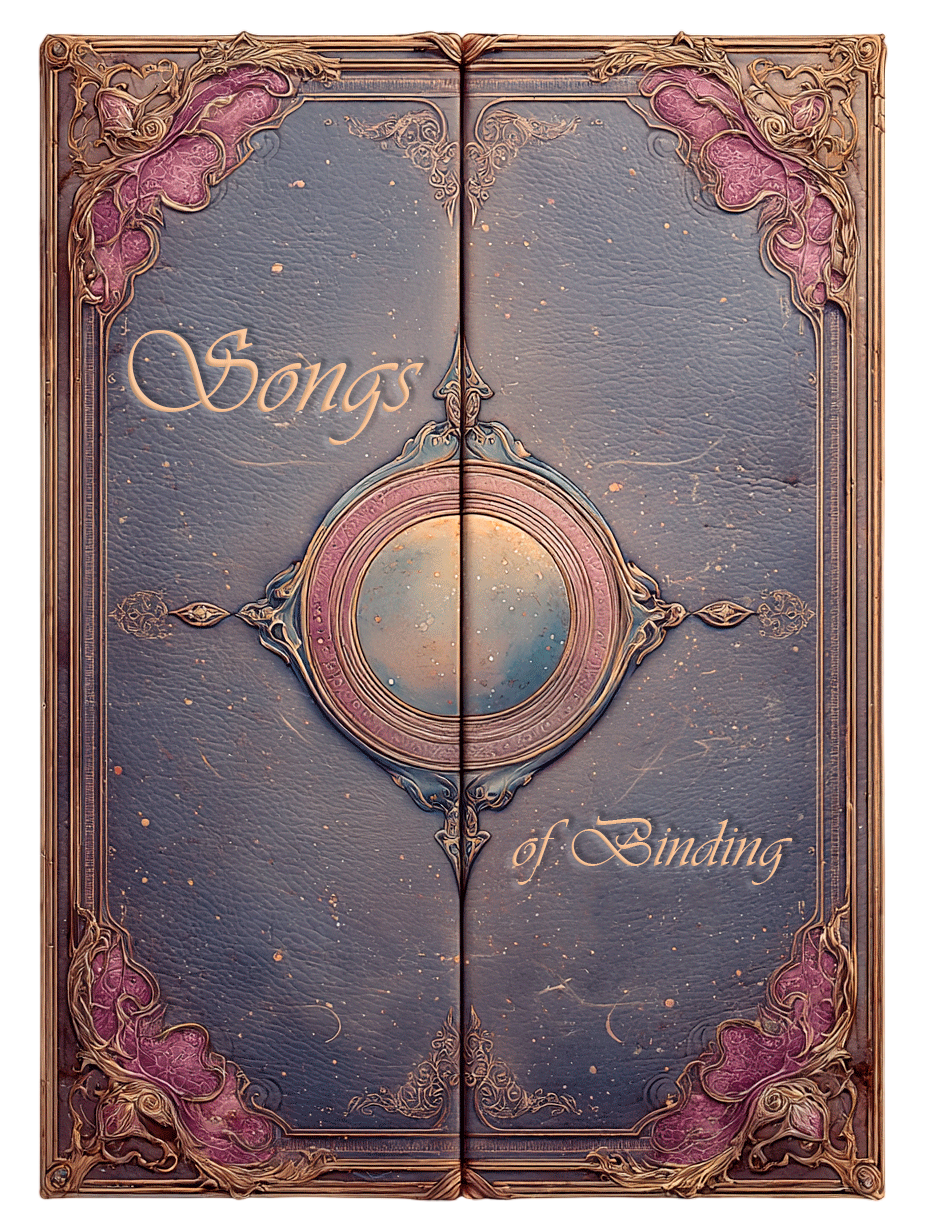
The first prayer teaches desire, and the hundredth teaches humility, for devotion deepens only through return.
Let the body learn the prayer before the mouth attempts it. Be where your voice is, rather than sending it ahead of you.
Love that is unshaped scatters, but love that is tended remains.
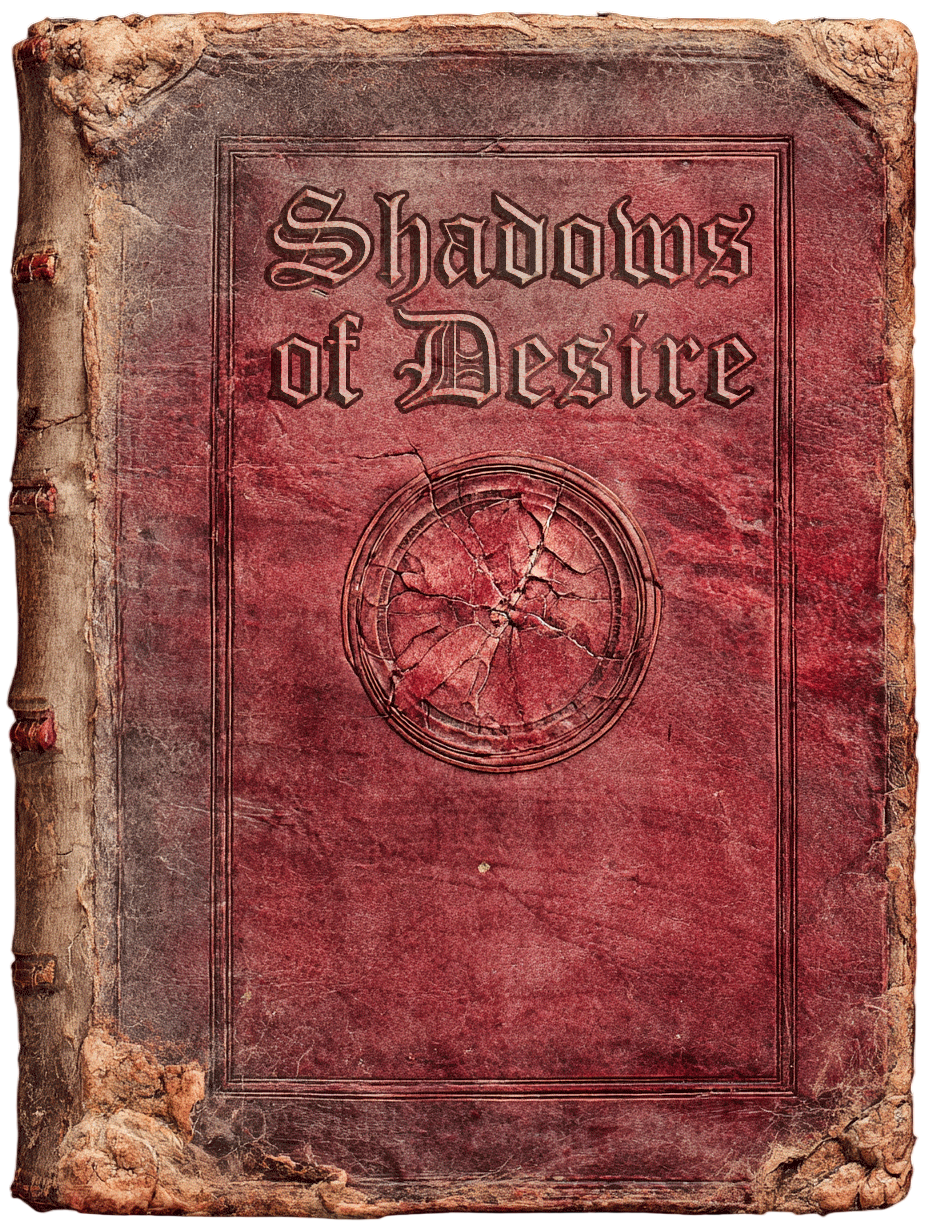
They loved too fiercely, and mistook the blaze for devotion.
What they held, they would not release. What they shaped, they would not stop shaping.
By the time they understood the difference between love and possession, the ashes were already falling.
Book IV
The final Testament is a work of reflection and warning, written in a quieter voice than those that precede it. The Shadow of Desire concerns the failure of love when left unexamined: obsession mistaken for devotion, possession for care, destruction for passion. Through parables and recorded accounts, it recounts artists who loved their work until nothing else survived, rulers whose devotion ignited ruin, and lovers whose need consumed both themselves and those they cherished. These stories are not offered as moral judgments, but as consequences.
Priests teach that Ephelion composed this Testament in sorrow. It stands not as a rejection of love, but as its necessary counterweight: an insistence that love, when untempered, can wound as deeply as it can sustain. Among the faithful, this book is read not to instill fear, but to cultivate wisdom.
Variations & Authorized Copies
Though the Crimson Gospel is held as a single canon, it has never existed as a single, immutable object beyond the originals preserved in Aeloria. Across centuries, countless copies have been set down, each shaped by purpose, audience, and the temperament of the hand that rendered it. Most commonly reproduced is The Heart of Creation, often copied as a standalone volume or woven into ceremonial collections. Such copies are frequently illuminated, personalized, or interleaved with blank pages, becoming at once scripture and record.
The Hands of the World circulates widely among artists, where marginal commentary is common and, in some traditions, actively encouraged. In contrast, Songs of Binding is most often encountered in voice rather than in ink. Its hymns are sung openly in temples and public rites, their rhythms shaping communal devotion, yet the written Testament is sought primarily by clerics and officiants. Such copies are used in the performance of sacred mysteries and in private prayer, where precision of form matters as much as fervor. For this reason, written editions are produced with great care and accuracy.
The Unbound Page
Apart from the four Testaments, tradition speaks of a single page that belongs to no book. Known as the Unbound Page, it exists only in its original form and has never been copied. It is kept under constant guard within the Grand Cathedral of Aeloria, revealed rarely, and read almost never. No sanctioned transcription exists, and no consensus agrees upon its contents.
Legend holds that it was set down after the completion of the Gospel, not as instruction, but as a final reflection, never meant to be repeated. Within the Church of the Crescent Lord, the Unbound Page is regarded as the most precious relic of the faith. To stand before it is said to be an honor granted only at moments of irreversible consequence. Whether this belief is literal truth or devotional reverence remains, as intended, unanswered.
The Shadow of Desire is the least frequently reproduced of the four Testaments. Complete copies are uncommon and usually acquired by commission, as the book is most often read in study rather than ceremony, and returned to only at moments of reflection. Among the faithful, this Testament is approached with deliberation, its parables taken as accounts to be weighed rather than verses to be recited. All authorized copies bear a mark of provenance linking them to the Grand Cathedral of Aeloria. Unmarked texts are treated not as heretical, but as uncertain; sometimes even unreliable.
"Your hands carry the memory of wonders long forgotten. Shape the world gently, and the world will remember you."
Related Articles
All written content is original, drawn from myth, memory, and madness.
All images are generated via Midjourney using custom prompts by the author, unless otherwise stated.




I love this. The Unbound Page especially is interesting, but all of the books have some great lines as examples. This seems as though it would be a nice religion to follow.
Explore Etrea | WorldEmber 2025
Thank you! I am glad you liked it <3 I think I would follow that religion as well