Night of Souls
Introduction
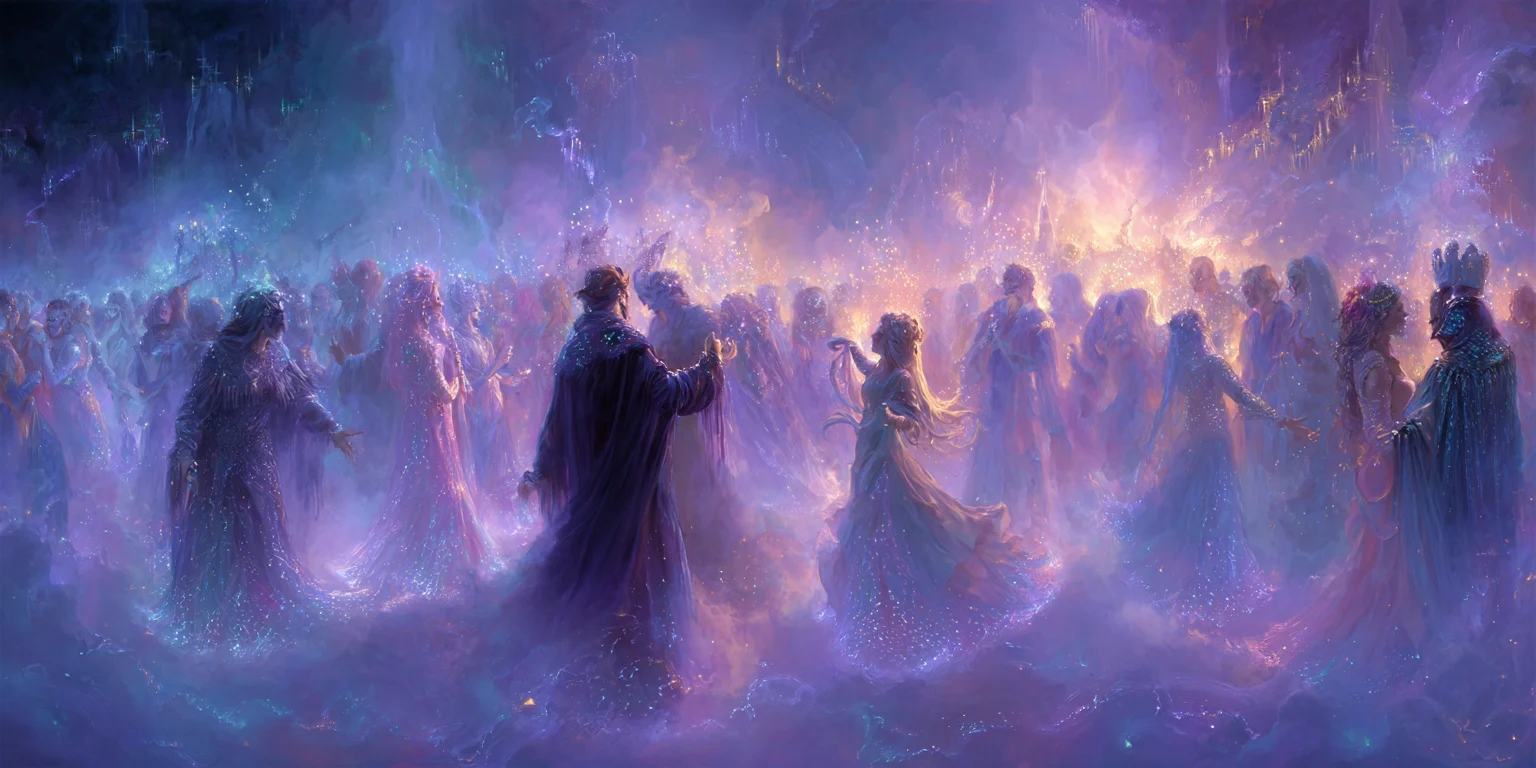
The Night of Souls is a night revered across all of Kena’an. Honoring Siona, the benevolent goddess of death and magic, it has grown through the ages into a moment when the living commune with the departed, sharing a fleeting hour of joy, remembrance, and quiet wonder.
Across the world, the festival takes many forms: on elven glimmering lakes, candlelit tribunaries shimmer like captured starlight; on the islands of the exiles, thousands of lanterns rise into the heavens and within the human empire, streets erupt in grand masquerades, music and laughter entwined with reverence. Yet in all these expressions, the essence remains: a sacred pause in the world’s turning, a moment in which the veil between life and death thins, allowing the living to glimpse the Astralyn and greet once more the souls they hold dear.
When Spirits Rise
Candles lit and lanterns shine,
Don your mask, the hour is nigh.
On this night, come spirits rise,
Dance with us beneath the skies.
Follow paths the living tread,
Twilight calls us to the dead.
Voices join in joy and longing,
Till stars give way to morning.
On this night we see you near,
Souls once lost, forever dear.
Dead and living walk as one,
Till the first light of the sun.
When dawn breaks in, we say goodbye,
But in our hearts, the night won’t die.
And in a year, we’ll still be here,
To sing away the weight of fear.
A Selfish Act of Mercy
"Once a year the goddess weeps, and with her tears She gives us joy.”
Legend says, the Night of Souls began not with mortals, but with Siona herself. The goddess, gentle and grieving, carries a sorrow that eternity could not ease. Long ago, in a time forgotten and in aeons long gone, she was forced to take her only son, Silanthas, and cast him into the mortal world, hiding him from the vengeance of Verana, whose wrath of his unexpected birth would have consumed him. Though she saved his life, her heart was left hollow, aching with a love she could not embrace.
And so once each year, it is said, Siona pierces the shroud that seperates her realm and ours. She does not do it for mercy or pity of mortals, but to look upon her son, to see him walking beneath stars he cannot touch. And when she opens that passage, the dead who linger in her halls awaiting her judgement slip through as well: mothers and fathers, daughters and sons, friends and lovers, all granted one fleeting night to rejoin those they left behind.
Thus, the people learned to kindle lights against the darkness, to don masks and dance, to feast and sing in welcome. For on this night the departed are not shadows and ghosts, but guests at the table, partners in the dance, voices in the song. And though the dawn will claim them once again, the living hold fast to this gift: that for a single night, the wall between life and death is but a door left ajar, and love is stronger than the grave.
A Worldwide Celebration
Upon the first night of the month Arcanae, when autumn leans toward winter’s breath, all the realms of Kena’an lift their eyes to the darkened heavens, for none may let the Night of Souls pass in silence. From the falling of twilight until the first light of dawn, the living gather to greet the departed. Lanterns are lit as guiding stars, offerings are laid upon graves - trinkets and treats beloved in life - and stories of lives past and gone are spoken aloud, so that memory becomes a bridge. And ever at the heart of the rite is the hymn "When the Spirits Rise", sung first at dusk, a beacon to draw the wandering dead homeward, and once more at dawn, a farewell as tender as it is sorrowful. In the singing, many swear the voices of the departed merge with their own, a chorus of two worlds joined, until the veil folds closed once more.
Customs of Light and Shadow
Though the heart of the Night of Souls beats the same across Kena’an, its face is many. Each people honors the dead in a manner shaped by their nature, their lands, and their hearts.
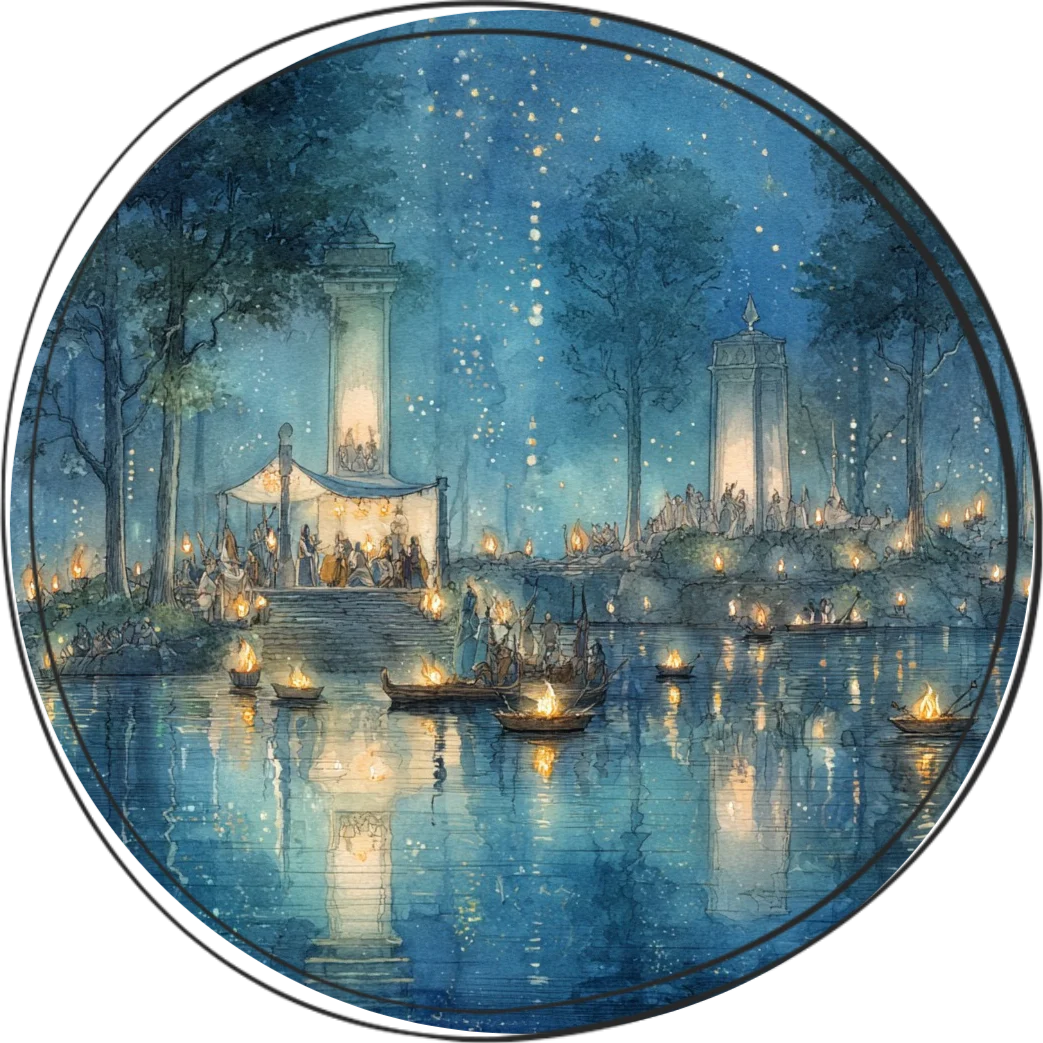
Among the elves of Zolirak, the night is a quiet symphony of art and reflection. Candlelit tribunaries float upon the water, mirroring the heavens above, while poets recite elegies and actors perform the lives of the departed. Each song and movement is a brushstroke upon the canvas of memory, and the spirits, it is said, linger among the living, drawn by the beauty of art and devotion.
In the islands of the exiles, in the vast Aerithia Archipelago the festival is a mosaic of customs, reflecting the many peoples who call these lands their home. The most spectacular event unfolds in Serpent's Fang, the pirate republic where thousands of lanterns are released from within the sea, drifting skyward like fireflies. In fishing villages and port towns, sailors cast small, glowing boats upon the waves, each carrying messages to those who once walked the oceans beside them.
The Fate of Silanthas
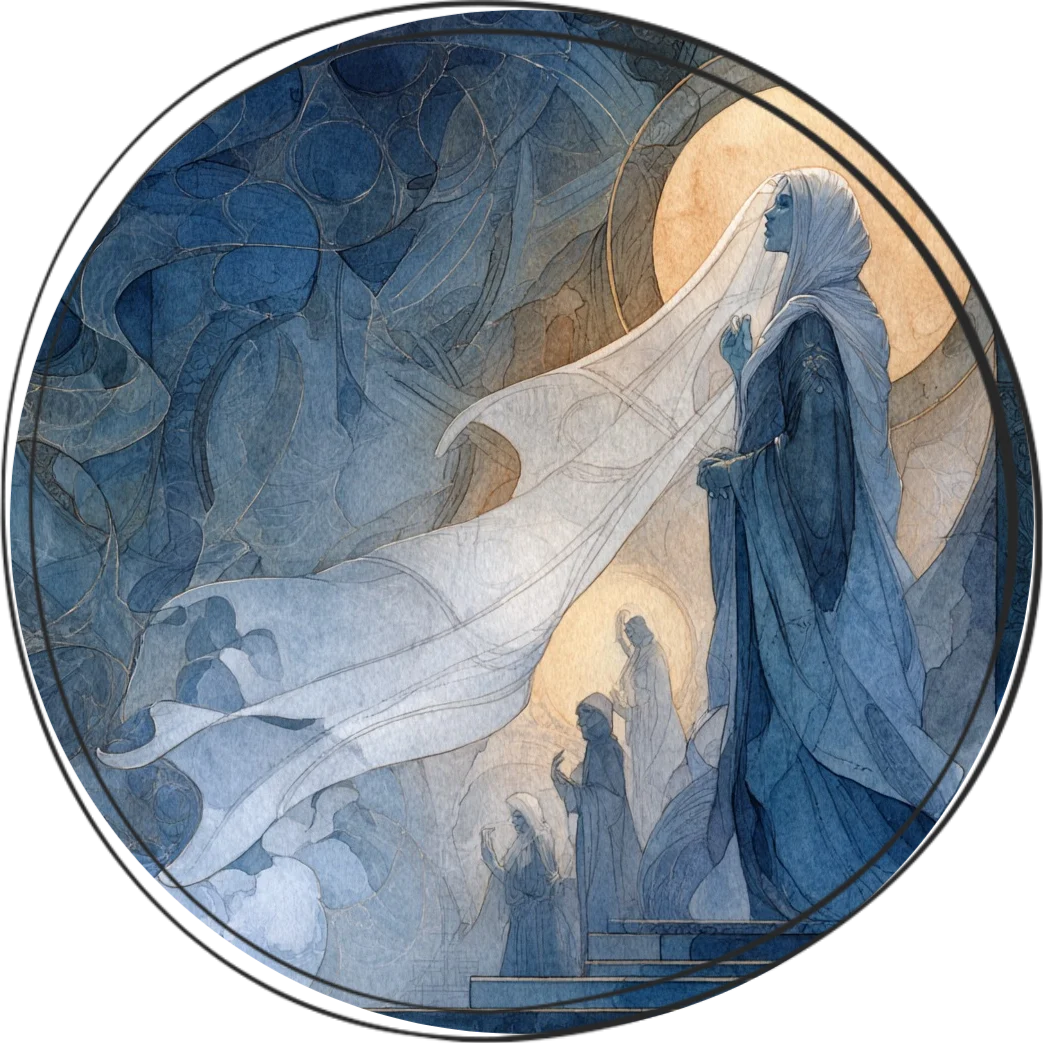
Aeons ago, Siona and Ephelion wove a bond of passion. Yet Verana, Seer of All Futures, had never foreseen such a union, and in that blindness she beheld a trespass upon her dominion. When their love bore fruit - a son of unearthly grace, Silanthas, whose beauty was said to outshine dawn itself - Verana vowed to correct what fate had denied her sight, and swore the child must die.
To guard him form the elder goddess' wrath, Siona acted in sorrow. With grief untold she veiled his radiance, remaking him as a twisted, broken thing, a pariah whom no gaze might linger upon. Thus, hidden from Verana's vengeance, Silanthas was cast into the mortal realm, to wander unseen among the living, beyond the easy reach of prophecy’s cruel hand.
"They say the dead walk among us on this night, guided by our lanterns and song. I laughed when I saw the masks and the candles, thinking it all a superstition. I saw shadows flit where none should be and heard voices carried on the wind, but I told myself it was lantern light and drunken song. Still, even in my doubt, a chill traced my spine, and I could not shake the feeling that some truth lingered just beyond my sight."
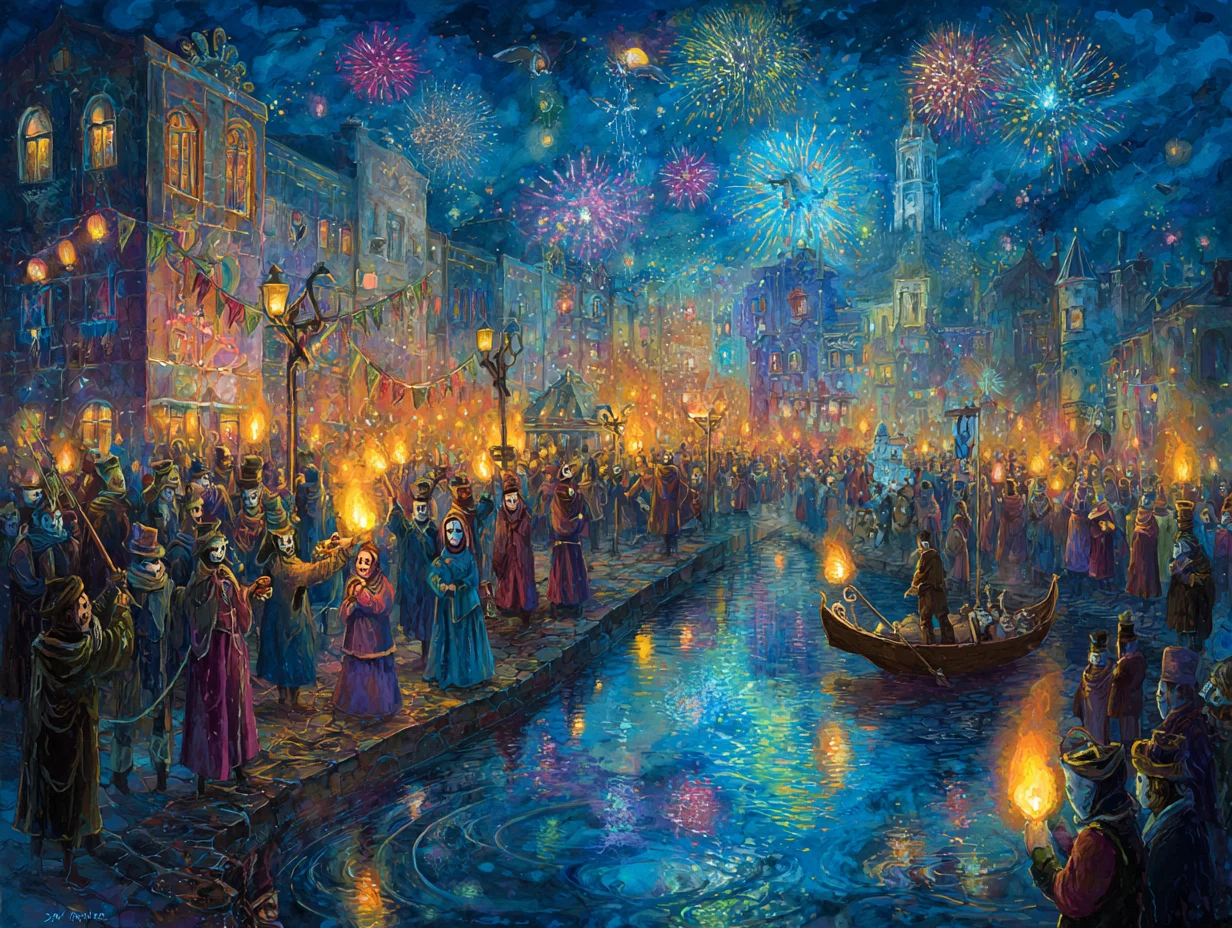
The Human Empire on the other hand, embraces the night with unmatched grandeur. In cities such as Parithon and Vandoria, streets are transformed into living theaters: masquerade balls held beneath lantern-lit avenues, faces painted in homage to the departed, pyrotechnics bloom against the dark sky, street musicians fill the night with song, and carnivals and fairs pulse with life. From twilight until dawn, the living and the dead dance together, joined in a fleeting, glorious communion.
In the harsh wastelands of Pariant, the nomad tribes of the Tir'naru honor the Night of Souls in profound ways. Fire pits are set upon sand dunes and the tribes gather to hear the tales of their ancestors, recited by the Talekeepers; those burdened with the sacred duty of remembering and recounting the lives and deeds of those who came before. Songs are simple yet powerful, carrying the voices of the living and the departed alike. Young warriors jump over the fires in a perilous dance that draws the fallen near. Here, the veil feels thinnest, and it is believed that spirits wander freely among the tribes, listening, watching, and sometimes guiding the paths of the travelers.
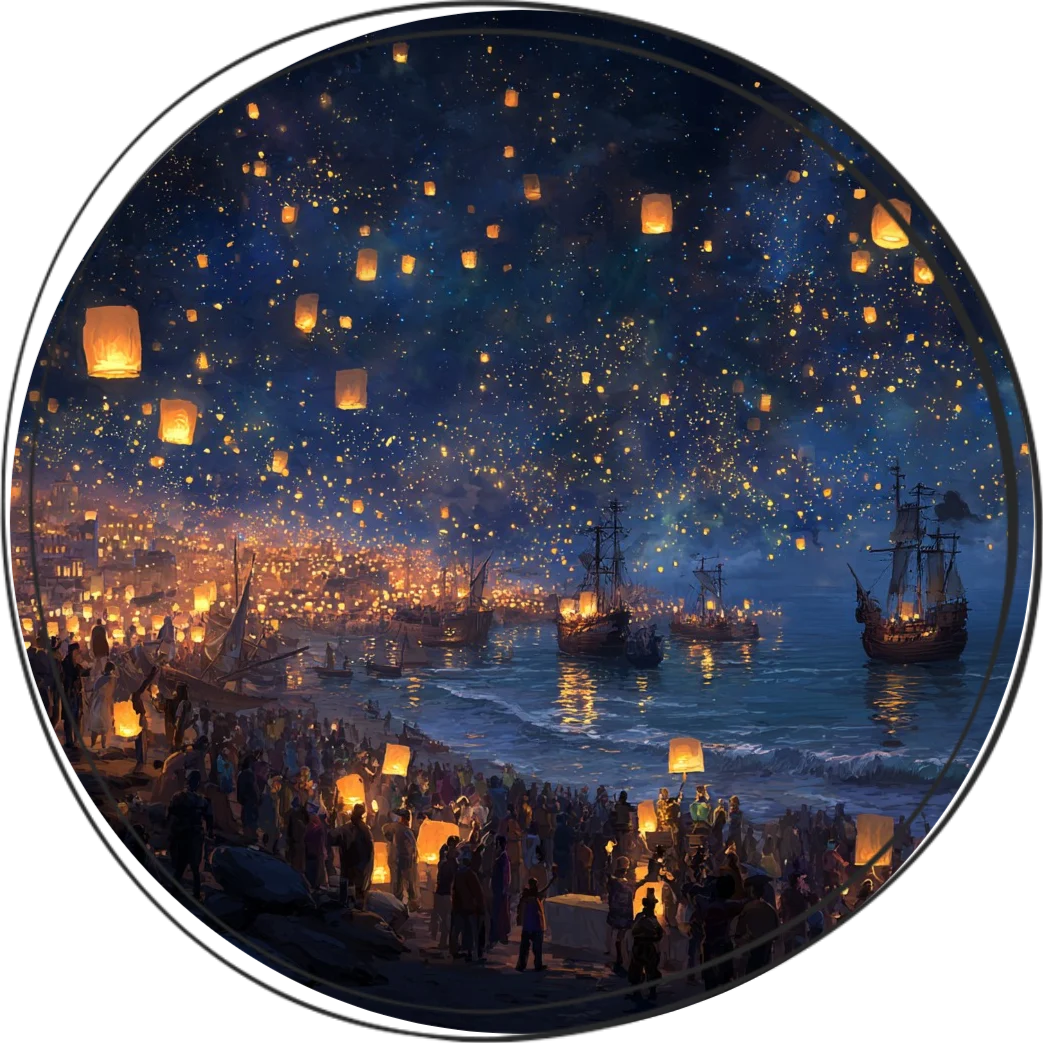
To the little folk, gnomes and halflings, celebrations are moments of warmth and whimsy. In their villages, tiny lanterns swing from every tree and doorway, illuminating streets of cobblestone with golden light. Families leave small treats for the departed, play spirited games in memory of lost kin, and children wear masks crafted from flowers and feathers. Many swear the spirits themselves laugh and dance along with them, while fairies drawn by the music and the treats mingle with them even though they do not understand the meaning of the celebration.
Even the Dwarves of Louthiran, whose lives end not in death but in slow transformation to stone, give their own quiet recognition. In surface cities prayers are murmured, acknowledging those who passed prematurely. It is a subtle observance, yet one that honors the bond of life and memory, a nod to the night when the veil thins and the departed draw near.
Symbols and Sights
Masks or face paint are the most universal symbols of the Night of Souls. By hiding the living face, it is believed that the spirits are freed from hesitation, able to approach without fear, guided not by sight but by the scent of emotions: love and longing. In this way, the living and the dead may meet, even if only for a brief night beneath the stars.
The souls linger among the living in the mystical atmosphere the Night of Souls holds, yet the most profound manifestations are rare and considered miraculous. In some of the most solemn celebrations, the departed are said to take on forms so vivid and lifelike that they might be mistaken for the living themselves. Scholars and priests argue that such appearances occur when Siona's gaze draws particularly near, as Silanthas wanders to close to the sight forcing the goddess’ attention. Others believe that the intensity of human emotion may allow the dead to briefly manifest in this way.
"I heard her laugh on the wind, soft as the lake’s ripple, and I saw her dancing in the floating candlelight. Every note of the hymn called her closer, and for a single moment, the years fell away. When she vanished, a tear of water caught the lantern’s glow - a quite sign,that she had seen me too.
All written content is original, drawn from myth, memory, and madness.
All images are generated via Midjourney using custom prompts by the author, unless otherwise stated.


Masterfully crafted. I can draw parallels between the legend of Silanthas and that of Persephone from Greek mythology, but in an inverted way. This piece tells the story of the living peoples' connection to their dead, which is fundamental to a society's identity. All worldbuilders, in my opinion, should explore this subject in such a manner.
Thank you for this lovely comment!! It makes me so happy you saw the hint of Persephone's myth behind the tale of Silanthas and Siona :)