

Bucco's Mega Stop
Founded by Archie "Rooster" Buchanon, in June of 1992, Bucco's expanded from a single Gulf Coast convenience hub into a vertically integrated chain of mega travel centers that supply food, fuel, vehicle maintenance, rest facilities, and a surprising number of civic services. From it's grassroots, Bucco's has risen to be come one of the leading energy suppliers for vehicles across both Lone Star highways and Floodlines. These chain stores are massive roadside hyper-markets notable for their massive retail centers and brightly branded travel plazas. These locations function as a combination of retails hubs, logistics nodes for shipping and transit, and community way-stations. Long-haul freighters, commuters, levee workers, and aquatic convoys frequent Bucco's, as these are often the only reliably stocked retail points for miles, along the Lone Star highway system.
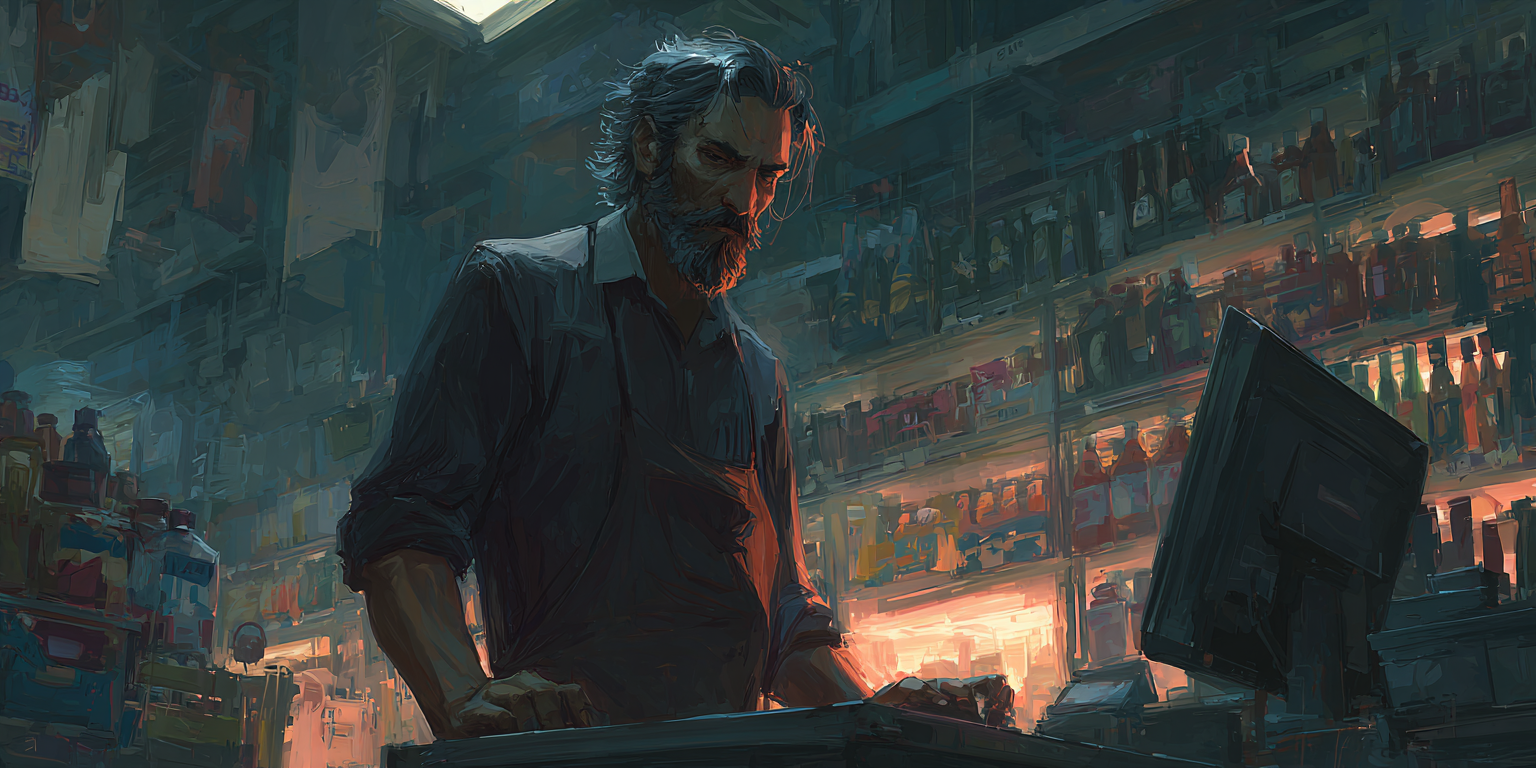 Eventually, in June 1992, Archie converted a diesel stop along Highway 146, near the Baytown ship channel outskirts. This first iteration of the franchise was labeled "Bucco's Bayou Stop" and catered to oil-rig crews, long-haulers, and distance commuters running along the Texas coast through Houston. The first branch of the up-and-coming franchise combined large fuel bays, clean restrooms, and a convenience store front stocked plentifully with all the good passing travelers could hope for, alongside a small food counter serving portable, but delicious foods. A key hallmark of the later success of Bucco's was Mr. Buchanan's undercutting of rivals by focusing on supply line efficiency, aggressive roadside advertising, and a focus on scaling of goods.
Site Layout
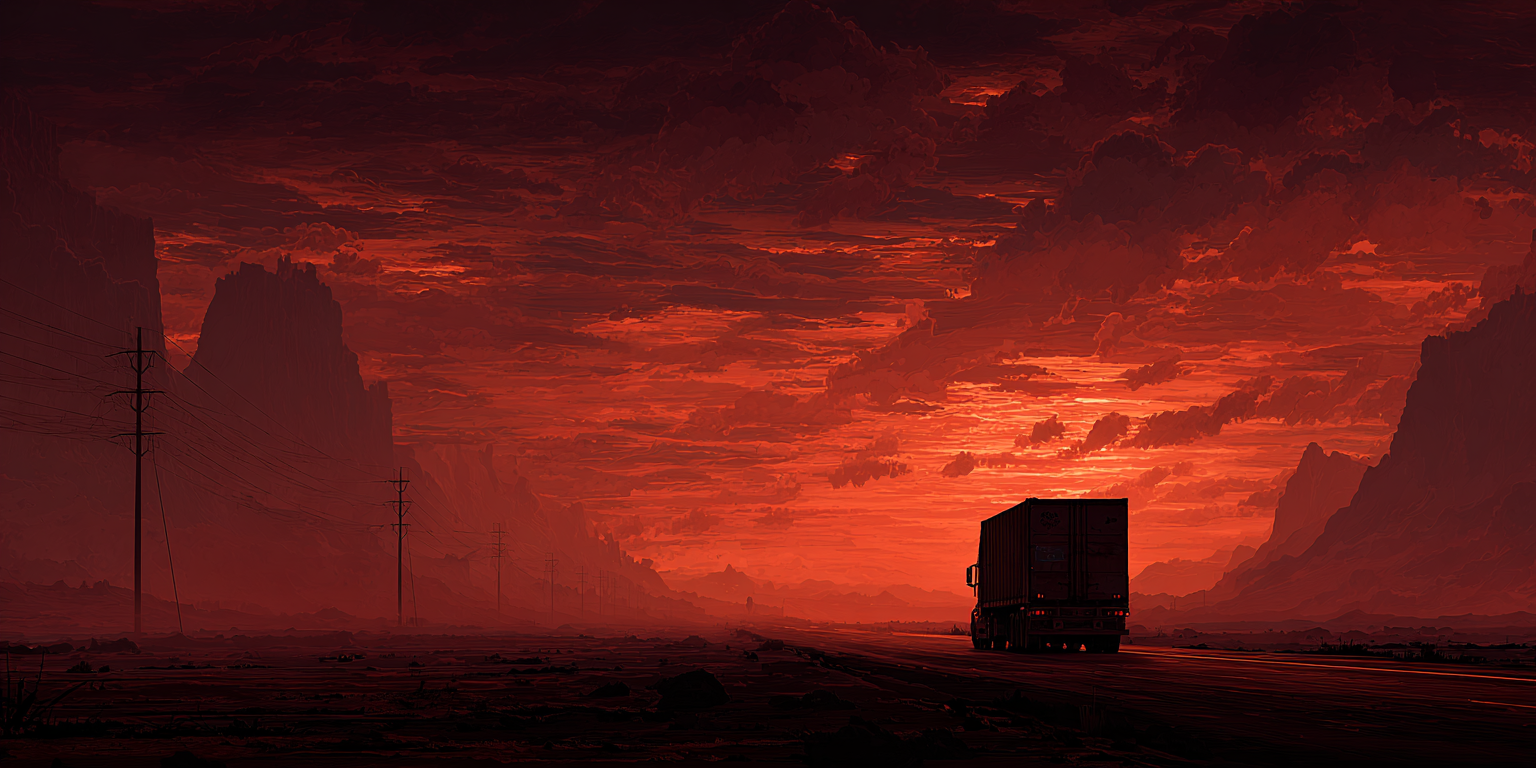
Bucco's Mega Stops are often built on 4 to 12 acre plots, with buildings sized between 5,000-25,000 m2 depending on regional location. These Mega Stops are massive highway mega stores and travel plazas that posses both retail hubs, corporate logistical nodes, warehouse spaces, and fuel depots. With some exceptions, floating Bucco's stations are equipped with much the same amenities as those positions on land routes. The Forecourt Fuel Plazas are designed to accommodate several dozen vehicle bays, with room for large trucks, AVs, hover tugs, and standard fuel pumps. Automated fueling arms are often used to facilitate quick refueling for larger or automated vehicles, while self-service remains the name of the game for personal or transit vehicles. Quick-service landing pads are also available for automated drones and transit AVs, often positioned above them main fueling stations. Wash stations are also available to use. The main retail hall is a sprawling open floorplan on the first level of each Bucco's location. Here, branded merchandise, vehicle hardware and maintenance equipment, emergency gear, and cyber-supplies are available for purchase. The second floor is typically dedicated to a large food court, able to accommodate several hundred people. The kitchens are fully staffed 24 hours a day, to prepare pre-packaged foodstuffs for sale, and to prepare fresh-made foodstuff for diner patrons who want to take a break from travel. Large segments of these diner bays focus on distribution of Bucco's food products to other locations. Warehouses and cold storage on site, allows supplies to be maintained for food products, logistical shipping, and resupply actions. Warehouses typically sit in the back lot of each Bucco's location and serve as part of the primary transit hub operations of the company. Automated drones and sorting conveyors ensure streamlined efficiency and hands-off servicing of supply needs. Vehicle services bays are manned with licensed mechanics, and offer services for all types of vehicles. Additional repair bays located in the service area cater to cyberware. Technicians, while unable to provide substantial cyber-enhancements to customers, have the ability to provide repair, tuning and minor upgrade services. Often cyberware work is limited to ocular cleaning, simple implants, battery swaps, and minor repair services. Administrative and security wings are typically restricted to outlying buildings on the Bucco's property, and are cordoned off from the public traffic. These offices typically contain management offices, a security command center and locker rooms for security personnel. Staff quarters for overtime shifts are located in the management wing, and corporate security maintains a small interrogation and holding room suite. For the public, several services such as public restrooms (often noted for their cleanliness and staff responsiveness), public showers, minor medical triage offices, desal water refill stations, and evacuation registration kiosks are provided. These can be accessed as needed by the public and are available at each Bucco's location. In addition, rooftop amenities are often available for a small fee, including an outdoor dining experience, raised shelter area with seating, solar arrays and charge stations for larger electronics of cyberware, and limited short-term use housing pods for use during storms.Security & Access
Access Control Measures:
Most Bucco's Mega Stop locations are entry controlled. Corporate vehicles and personnel can access the location via Bucco's loyalty or transport credchips. Public areas are typically accessible with a small toll at the entrance, and remain open for general use 24/7 throughout the year. Storerooms, parts bays, and other general administrative or security-restricted areas can only be accessed through biometric of corporate key-card access.Surveillance:
Each Bucco's location has a state-of-the-art sensor grid. Cameras are equipped with general CCTV and thermal functions. The use of automated security drone patrols and AI analytics further support the surveillance and security teams. On-site security personal are paid in-house, and equipped with high-end Militech response gear and arms.History
Archie Buchanan, born in 1957 was a third-generation Texan with a background in logistics and small-scale retail operations. During his time in the world of retail sales, he was considered to be a charismatic and customer-oriented service provider, manager, and logistics technician. He spent a lot of time on the road, traveling across the United States for work, often lamenting the difficulties in finding clean rest stops. Over the years, he began to see the opportunity in the sprawling Texas highway culture, as well as the state's booming petro-chemical industry.Early Growth (1992-2000)
In the early 1990's Archie leveraged several contacts within the various shipping agencies and port authorities to secure reliable wholesale supply lines. This early investment, in addition to his substantial investment in refrigerated transportation, centralized warehousing, and branded goods, gave Bucco's a keen edge against it's competitors. Even during regional shortages, Archie's logistical skills and up-front investments kept the Bucco's shelves stocked. Archie, being a fan of old westerns and cowboy memorabilia, initially named Bucco's after his favorite television character in childhood. The initial branding of Bucco's consisted of a cowboy hat logo, and a western aesthetic. However, with the expansion of his second location in 1997, the now famous rooster logo was adopted and distributed for all marketing campaigns, merchandise, and signage. As business began to take off, a focus on fun marketing along highways was adopted, with funny, pithy, and heavily branded content turning Bucco's into a destination, rather than just a pit stop along a journey. Since it's inception, marketing and service has been geared towards a 24/7 service model, as well as aesthetically fun and clean spaces, with their restrooms becoming a noteworthy feature of a stop at a Bucco's location. This was an unusual selling point, often emphasized by the company, especially during a time of irregular service at outlying rest stops. By the end of the 1990's, Bucco's added several new features to it's now three-location empire. Additional features included vehicle service bays, basic cyberware kiosks (for battery swaps, simple implants, and debugging), as well as a small commissary with ready-to-eat meals for those on the go, sealed in easy to handle packages for drivers. These extras helped cement the franchise's reputation as a staple in the Lone Star State.Franchise & Collapse (2015-2023)
After the success of the first location and the additional two Bucco's Mega Stops, Archie began selling franchise rights across the Lone Star State. Money earned from these franchises were largely reinvested into distribution centers across the Gulf Coast. In addition, the company negotiated exclusive supply contracts with local synth farms, seafood processors, and later orbital logistics suppliers, for specialty goods. These goods, including minimally modified foodstuffs, high-quality synth meats, and gen-enriched agricultural goods, were branded with the Bucco's logo and integrated into the main retail components of the Mega Stops. In the late-2020's, Bucco's went public, as Bucco's Holdings, giving Archie and his son-turned-business partner capital for expansion into fuel research, desalination kiosks, and automated drone logistical services. Investors were attracted to the steady traffic seen at all Bucco's franchise locations across the state, and quickly the company fomented itself into an essential service for Texas shipping, tourism, and logistical processing, in addition to a local icon. As the company began taking on additional investor's Archie's eldest son, Thomas Buchanan, worked to secure exclusive highway and levee concessions through backroom deals with politicians, megacorp executives, and private levee operators. At the cost of increased political entanglement, Bucco's gained access to prime real estate across the major shipping lanes of the Lone Star State.Floodline Era & the Time of the Red (2030-2045)
In the late 2030's, the sea levels began to rise along the Gulf Coast. Bucco's adapted to this by further expanding their corporate reach into the aquatic markets. Bucco's first floating fuel station was opened in 2039, off the coast of New Galveston, using pre-existing harbor infrastructure with newly built platforms and rig stations. While this semi-floating infrastructure did not cater to land travelers, the mega stop included many of the same amenities for nomad convoys, fuel riggers, and naval crews. During the corporate wars, Bucco's remained oddly neutral, instead capitalizing on the opportunities afforded by other corporation's reckless military spending. During the Time of the Red, Bucco's maintained it's supremacy as a staple key service across the state of Texas, with local economies becoming dependent on it's efficient shipping and logistics infrastructure to get by. Contracts with local governments and mid-range corporations for transit and shipping services helped fuel Bucco's continued expansion and growth even during the crash of the NET, in 2025, and during the reconstruction era. As the Bayou Shipping lanes are constructed across the flooded Houston city, Bucco's help fund large sections of the project, in the process securing exclusive rights to lock fees, levee access controls, and distribution rights across Texas. This further solidifies Bucco's dominance over transit across the Lone Star State.Independence in the New World (2053 - 2077)
In 2065, former Militech CEO Rosalind Myers is elected as the Third President of the New United States of America (NUSA).1 In 2069, the NUSA attacked the Free States with the goal of national reunification.1 At the end of the year-long-conflict, Texas refuses to sign the Alvin Accord (AKA the Treaty of Reunification, remaining a free state with sovereign autonomy.1,2 Bucco's becomes a primary provider of shipping and distribution across state lines, coordinating with NUSA corporations as well as allied Free State governments to maintain efficient trade routes. Most of this logistical process is spearheaded by smaller nomad groups and the use of AVs to autonomously send good across North America. After a series of suicide bombings at NUSA bases in New Mexico and Oklahoma2, Texas recieves the blame. The NUSA bombs several airports in Wellington and El Paso. Trade is restricted between NUSA cities and the Lone Star Republic and Bucco's began to turn its attention to trade inwards and with Free States. Towards the end of 2076, the NUSA and Texas had begun to repair the impact of economic restrictions, and Bucco's leverages former contracts to resume more frequent trade and shipping with NUSA corporations and regional governments in the South and Midwest regions of the country.References:
1Pondsmith, M, James Hutt, J Gray, and Bartosz Sztybor. “Edgerunner’s Handbook.” In Cyberpunk: Edgerunners Mission Kit. R Talsorian Games, 2024. https://www.drivethrurpg.com/en/product/482282/cyberpunk-edgerunners-mission-kit.2Fandom.com "Texas" In Cyberpunk Wiki. https://cyberpunk.fandom.com/wiki/Texas


Comments
Author's Notes
Bucco's logo designed using Midjourney for character generation, and Canva for layout and text. Article cover image generated in Midjourney. All other images generated using Midjourney.