
Dragofox
Basic Information
Anatomy
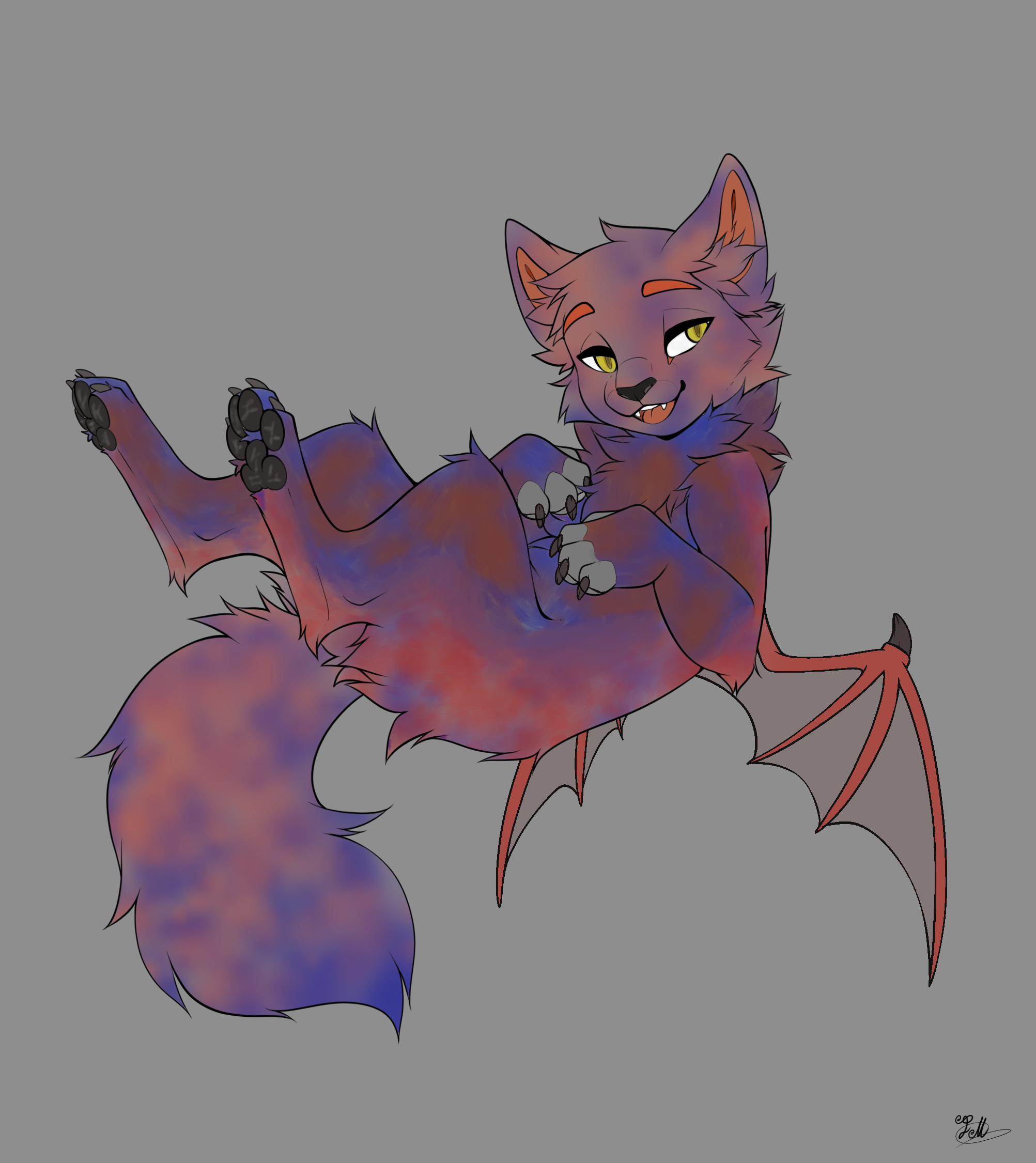
The anatomy is their face has bright yellow eyes and the body of a fox that is four legs and big ears with a snout. There are two wings and one fluffy tail.
The skeletal structure of a Dragofox is
Skull and head
- Skull: A sleek and narrow with long and sharp canines
- Foramen Magnum: A large opening at the skulls base where the skull and the spinal cord meet.
- Auditory Bullae: Where there is swelling at the base of the skull for the hearing structures.
- Cervical : Neck: Supports the head
- Thoracic :Chest:Ribs that are attacked here with a prominent spine for the muscle attachment
- Lumbar: Lower back: It is an angled side projections
- Caudal: Tail: There are a lot of small bones that forms the tail
- Sternum: The breastbone connecting to the ribs
- Ribs: There are Typically thirteen pairs. Some of the ribs are floating with no sternal connection
- Scapula: Shoulder blade: Attaches to the front limb to the body
- Forlimbs: Walk one toes and paw bones include carpals which is the wrist and metacarpels which are the hands and also the phalanges which are the toes of the paws.
- Dewclaw: a fifth toe that is elevated on the front paws that is for grasping on the prey.
- Hind Limbs: The hind limbs are longer and lack dewclaws.
- Partial Retraction: Claws can partially retrack
Growth Rate & Stages
Birth to one month They are born blind and in 9 to 14 days the eyes start opening and they start eating.
1 to 2 months They are weaned at 6 to 10 weeks and the fur changes to their permanent color and they get their eye color and their wings grow bigger.
3 to 6 months The hunting begins and they range away from the den, and they begin to get into their small family. The tail is fully grown.
9 to 12 months Reaching adulthood.
Dietary Needs and Habits
The dragofox food that they eat is plants like kelp, seaweed.
Additional Information
Perception and Sensory Capabilities
Hearing
- The Dragofox hearing is clear as day as their hearing is exceptionally acute, allowing them to hear even a small noise and vibrations.
- Precision: Can pinpoint where the sound is coming from within a degree between 700 hertz to 3 kHz
- Frequency Range: Can hear a wide range of sounds from low frequency to higher frequencies
- Mobile Ears: Their large ears can rotate in each direction about 150 degrees because of the ears being flexible
- Hunting Technique:Mousing: Where they leap high and dive headfirst to catch hidden prey
- Reflects light back through the retina and giving a boost to the low light vision with it causing eye to shine when they are hit by lights.
- Dragofox has a vertical slit pupils and can adjust rapidly. While the pupils open widely at night and closing their eyes when the bright light is shining for protection and focus
- A wide 200 degrees view helping them spot predators and prey
- They can see all colors
- Can see beyond the limits of ordinary eyesight
- can sense motion in the dark
- Silent movements
- Using sense of smell
- Flying in the air to be hidden and observe
- The dragofox can fly with their wings.
- The dragfox speed can hit up to 30-31 miles per hour.
Scientific Name
mammal reptile
Origin/Ancestry
hybrid of a dragon and a fox
Body Tint, Colouring and Marking
The body coloring is a coral with a light blue mixed. The claws are white and the wings are coral with the inside of the wings gray.
Geographic Distribution
Discovered by

Comments