Glass-eel nymph

They are tiny lights that dream they are people.
- Onda McKennah, Kelpwitch
 
After the disaster of 1712, most think of how the world changed in terms of ruins and strange forces that scarred the globe. Bizarre animals and near-mythical refugees like thayans, grimlings and others. Even nightmarish things, from monstrous, undead-like jellyfish creatures that stalk the sea, to mermaid-like sirens with deadly, sharp teeth. Then there were the wars fought over new continents that appeared overnight.
 
But not everything from the Crossing’s Fall cataclysm was destructive. Some of the most wondrous changes were small, and easily overlooked. One of those is the tiny creatures known as glass-eel nymphs. Small as a thumb and bright as a star, these creatures drift through tidebloom groves like the living memory of the sea itself.
 

Flickers of Dreams Given Breath

 
I’ve often thought these aren’t so much creatures as they are emotional barometers made flesh.
- Dr. Thaddeus Crane, Royal Institute of Otherworld Studies
 
Legends say they were born from the shimmer between the sea and sky. Glass-eel nymphs are tiny, luminous, fae-like creatures native to the lost Drowned Realm of Otherworld. On Earth they’re found in marshes and swamps, often in and around the tidebloom vine groves inhabited by kelpwitches. They go by as many names as there are coastlines—sea sprites, lanternlings, and to the kelpwitches? They’re called vinelings. But to scholars? They’re tiny, amphibious mysteries with wings.
 
These nymphs rarely grow longer than the average person’s thumb, but a swarm of them can light up a cove. Turning it into a drifting, flowing constellation of light. Wherever the nymphs gather, the air has a gentle hum, and even the surface of the water seems to flutter softly. In tidebloom groves and wetlands, kelpwitches claim glass-eel nymphs are essential caretakers. Cleaning decay from vines and even other plants, ensuring the next bloom. But for others, such as ordinary folk, they’re living proof that the world still remembers the magical wonder of the Etherwave Arcana.
 

A Unique Appearance

 
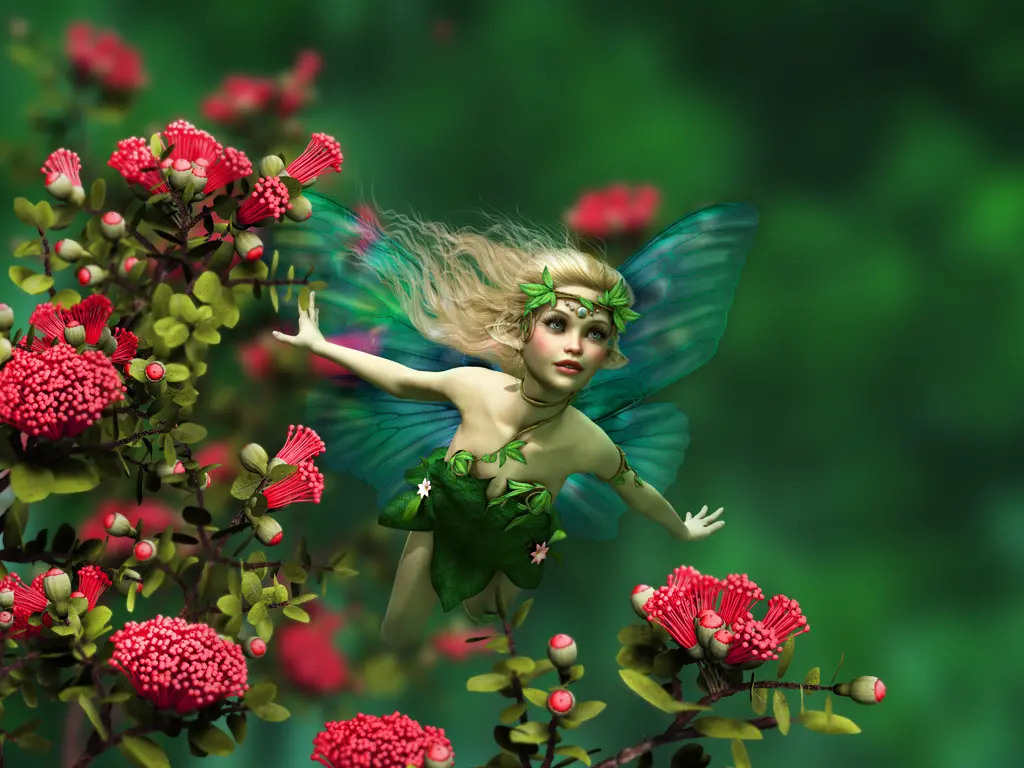
Glass-eel nymphs have a distinct appearance. Each one resembles an unusual, thumb-sized hybrid of human, salamander and dragonfly. They have a glassy, translucent skin that glows with the shimmer of pale sea glass, violet, or pale gold. Each one has a human-like body, head, and arms but a long, flexible tail like a young eel along with a salamander’s legs and feet. Those feet, like any for a salamander, allow a nymph to cling onto wet rock, bark, or tidebloom stems. On their upper body, they also have hair on their heads and tiny, human-shaped eyes. Their hair color is often straw-yellow, green, or brown. Eyes? Those are the color of tiny gemstones, such as emeralds, amber, rubies, and more. They also have ears, which come to a delicate point, just like thayan ears.
 
Last, glass-eel nymphs have four gossamer dragonfly wings on their back allowing them to hover or dart through the air. Unless they are standing still, their wings are a steady blur like a hummingbird’s wings, with a glow that complements their skin. As they fly, their wings give off a soft buzz mingled with the whisper of gentle chimes. Their characteristic glow varies by diet and mood, depending on what tidebloom petal or tiny fish they’ve eaten. But when they’re ill, the glow fades until it’s barely as bright as a fading candle. Their glow is the delight of any tidebloom grove where they live, like hundreds of tiny, living lanterns flitting between the blooms.
Glass-Eel Nymph
Sunshine Flyer by Stock Art from Deposit Photos (Majorgaine)
Alternate Names
sea-sprites, lanternlings, vinelings
Lifespan
rumored 15 - 20 years
Average Height
5–7 cm (2 to 2.8 inches)
Average Weight
4 to 11 grams (0.14 to 0.38 ounces)
Average Length
tail length is 2 to 3 cm (0.7 to 1.18 inches)
Commonly Found
Deep inside freshwater swamps, tidebloom groves, and bayous


Predator and Prey

 
In the tapestry of nature, there are predators and prey. So where would an Otherworld creature such as the glass-eel nymph rest? The truth? It’s as strange as they are.
 
Glass-eel nymphs seem to have no natural Otherworld predators. Not that they aren’t preyed upon, however. These nymphs are a favorite snack for many birds of prey, such as ospreys, marsh harriers, and more. In the water, alligators and crocodiles find the small, glowing nymphs a light snack at best, but only when they can catch one.
 
A glass-eel nymph’s lifespan is a mystery. They’re often found in and around tidebloom groves with kelpwitches. Kelpwitches won’t admit to how long the nymphs live, and anyone lucky enough to befriend one is quiet on the topic as well. It’s thought they might live only fifteen or twenty years. But they haven’t been on Earth from Otherworld long enough for anyone to say.
 
I’ve heard that when they pass on, their memories “drip” back into the tidebloom groves. Memories that eventually come back in another glass-eel.
- Primrose Stewart, Alchemist
 

Quick and Determined

 
These tiny creatures are a curious conundrum. On the one hand, their eyes glimmer with clever intelligence. Stories say they can recognize faces, mimic sounds, and can even solve simple puzzles. A few sailors claim the creatures seem to react more to emotion than words. As if they sense joy, grief, or anger and respond in kind. The accepted idea is that glass-eel nymphs are as intelligent as the average crow. While they can mimic sounds, they have no spoken language of their own. Instead, it’s a series of musical sounds and body language to communicate basic needs and emotions.
 
Typically, glass-eel nymphs aren’t found alone. Like crows, they are often found in groups called ‘shoals’ of ten to thirty individuals. Because of this, glass-eels are social creatures, which is one of the reasons it’s rare to find one away from their shoal in a tidebloom grove. When they are, glass-eels often attach themselves to a single person with intense loyalty. But glass-eel nymphs aren’t actually domesticated like a dog or parrot; nor are they truly wild. At best, they associate themselves with kelpwitches or even someone that fascinates them. So in that manner, it can be said they half-domesticate themselves.
 
These nymphs seem drawn to moments of strong emotion, such as mourners or celebrations. When they gather, they seem to whisper or sing sounds that resemble lullabies. Soothing tones as if they are memorizing the moment itself to enshrine it with honor. This is one of the many reasons they’re considered both helpers and omens by kelpwitches.
 
They help us tend the groves, but we often feel glass-eel nymphs are the lone guardians of something even we kelpwitches cannot touch. Memories that should never be put in a jar, but must be preserved in the nymphs’ tiny, collective lives.
- Onda McKennah, Kelpwitch
 

A Certain Style

 
Most stories about the glass-eels cover their appearance, glow, and superficial features. They rarely discuss the creature’s daily life. While known to be as smart as any crow, there are hints they may have a touch more potential than that. These nymphs fashion and wear clothes. Though it isn’t clothing as the average person might use.
 
Glass-eel nymphs seem adept at weaving a type of crude clothing from leaves and vines. They seem to mimic the styles worn by humans, thayans, and others. But they also show a spark of ingenuity as the nymphs will also add tiny polished shells, acorns, shiny bits of metal. Some researchers consider it just decoration; others wonder if this hints at a hidden social structure. So far, no one—not even kelpwitches—seem to know the answer.
 
Along with clothes, nymphs use a few simple tools that are all for practical use. Most are temporary, used for sewing their strange clothing. Others are for scooping nectar out of tidebloom blossoms, or needle-like spears for fishing.
 

Picky Eaters

 
Glass-eel nymphs have a particular diet that is tied to tideblooms and their groves. Typically, these are small fish common to the coves and bays a tidebloom grove is in. But their diet is not only that. Glass-eel nymphs also eat the nectar from tidebloom blossoms, decaying tidebloom petals, and luminous algae that grows at the edge of a grove. The nectar is what interests Otherworld researchers the most. Stories persist that tidebloom petals—if brewed as a tea—allow a drinker to ‘view’ the stored memories. But the nectar? No one’s sure. It’s thought that by eating the nectar, glass-eel nymphs eat traces of memories. Bits of emotions and recollections that seep back into the grove when a glass-eel nymph dies.
 
The sea keeps its memories close. Glass-eel nymphs? That’s how the sea smiles when it remembers us kindly.
- Unknown. Scribbled in the back of the legendary Drowned Almanac
 

Tall Tales and Folklore

 
It’s often been said that no one, not even the dangerous sea hags, has inspired more superstition than glass-eel nymphs.
 
Some advice? Careful what you say in front of one. You never know where they’ll take those words… or how…
- A warning etched into the tavern wall at the Proud Dog Pub in Kingston, Jamaica
 

Folklore

 
  • Sailor’s Lanterns. There are tall tales that suggest that these nymphs appear to guide the lost. Stories that say flickering lights ahead of ships are nymphs guiding the sailors through a fog, or circling a drowning sailor before fading toward shore. Either way, those who follow them are said to survive to tell their tale.
  • Echo Children. Many thayan cultures have myths that say glass-eel nymphs are echoes of children that danced along the shores of Afalon Isle, before Crossing’s Fall. Now they are echoes of laughter and bits of those memories dancing on the air. It’s for this reason alone most thayans are unusually gentle with glass-eel nymphs when they encounter them.
  • Grove Companions. Kelpwitches say the nymphs carry stray memories between blooms. Accidental couriers of emotions, bits of memories, and even parts of stories.
  • Superstitions

     
  • A glass-eel nymph that lands on your right hand before a voyage is a promise of calm seas.
  • If a sailor sees a dying nymph’s glow turn red, that means a storm will carry away the soul of someone they know.
  • To capture a glass-eel nymph in a jar attracts misfortune as the bits of memories are said to curdle and demand release.
  • I’ve often thought that glass-eel nymphs, no matter how annoying, remind us that even the smallest lives carry the weight of oceans with them.
    - Morowen Waxbend, sea hag of Port Royal
     

    Game Notes


    Glass-Eel Nymph

    Threat 0
    Suggested Complications
      Memory Swarm. A victim is swarmed by dozens of upset, angry glass-eel nymphs. They fill the air with buzzing and whispers until sounds, fleeting foreign emotions, and snatches of memories confuse the victim. It leaves them too confused to react or defend themselves at that moment.   Memory Drip. A nymph buzzes a victim’s ear, flooding them with a moment of overwhelming emotion. As a result, the victim momentarily dizzy as if drunk on the emotion.   Light Lure. Attracted to a character’s use of the Etherwave Arcana or even a bright flame, a small shoal of nymphs swarm the victim and causes the character to trip. This could mean they fail to channel the Etherwave Arcana, perform a delicate task, even accidentally knock over a lantern to start a fire, or worse.  


    Cover image: Midnight Oil by CB Ash using Krita and MidJourney

    Comments

    Author's Notes

    All Glass-eel nymph images are credited as follows:

  • Image is a stock art image from deposit photos and altered to fit the setting using ArtRage by CB Ash

  • Please Login in order to comment!
    Dec 8, 2025 22:57 by Dr Emily Vair-Turnbull

    I love them. I bet they are beautiful to watch when they are in swarms. I'm really curious if anyone will ever find out more about them and their social structure.

    Emy x
    Explore Etrea | WorldEmber 2025
    Dec 9, 2025 00:16 by C. B. Ash

    Thank you! And yep... once I wrote this I suddenly had so many ideas. So I'll certainly be adding more later after WorldEmber that will touch on that!