
Construct Horse
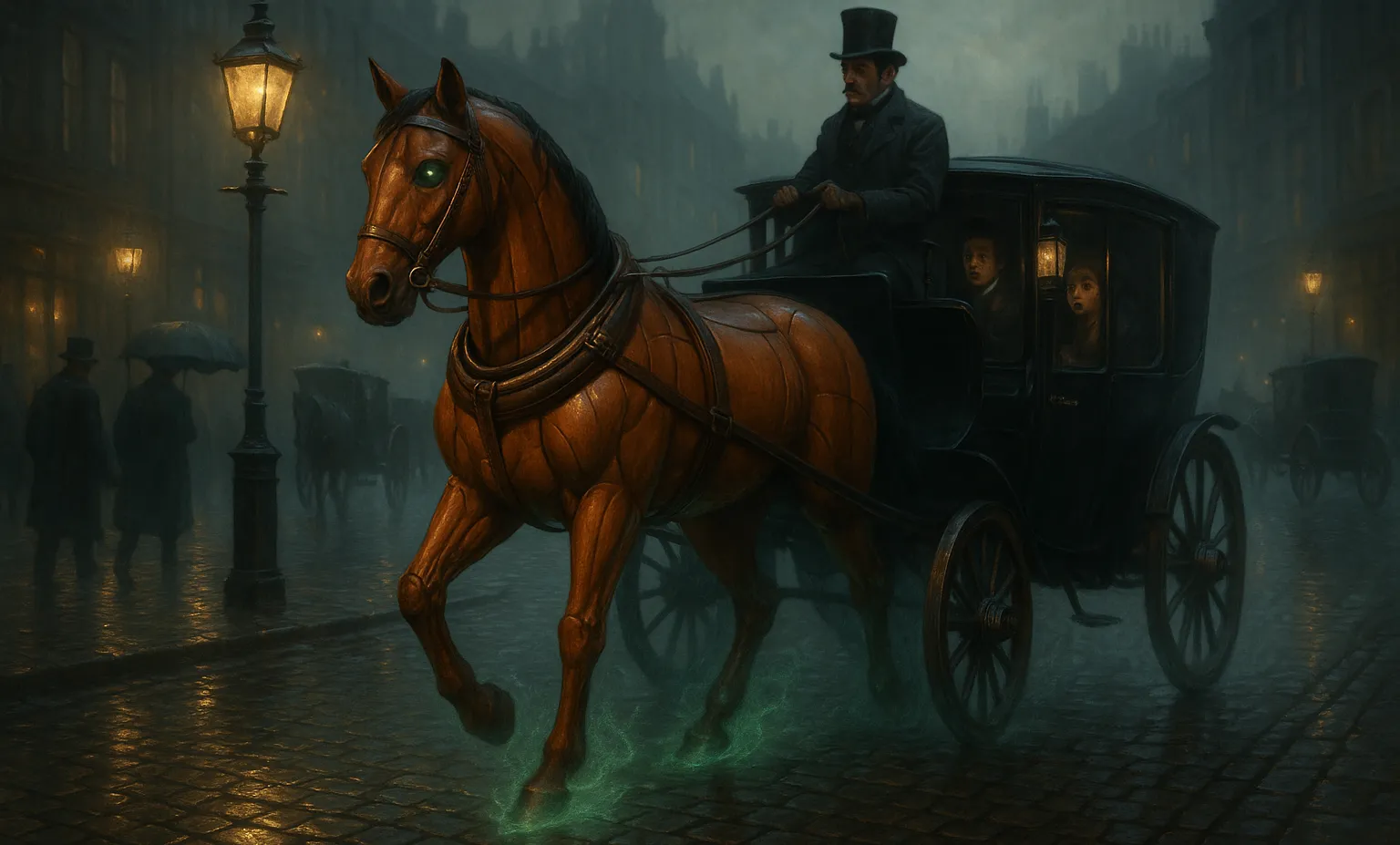
When James Brooke first demonstrated the practical applications of Embodiment, he could hardly have imagined the radical change it would bring to the world. The ability to craft bodies and animate them with captured spirits fueled a profound transformation, as flesh and blood labor was replaced with contrivances that did not need to eat, sleep, or receive medical care. The most visible sign of this change was the introduction of the Construct Horse.
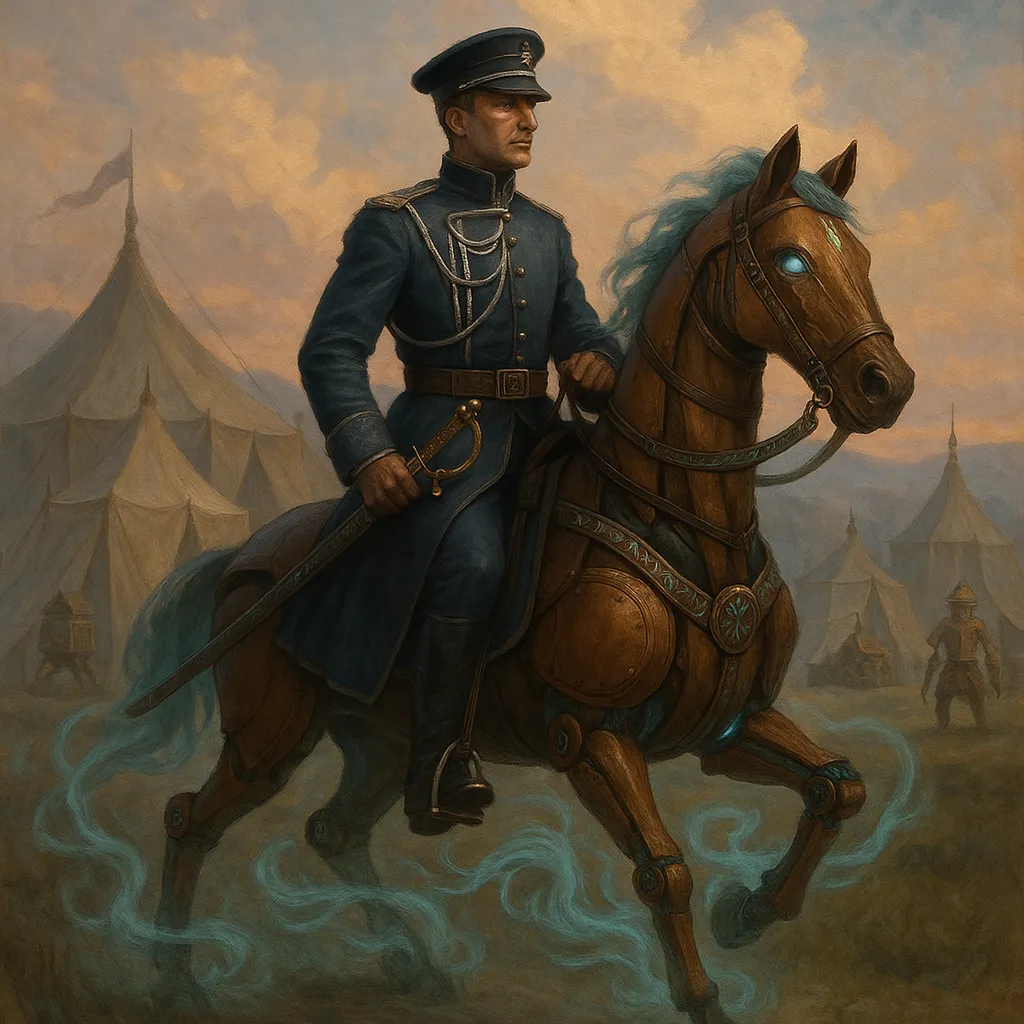
These thaumaturgical creations have bodies shaped from wood and leather and are animated by a spirit of wind, granting them speed and grace. First introduced in 1743, they have replaced the common horse throughout most of the Empire and in much of the continent as well. Construct horses pull coaches and cabs through imperial streets and bear Army officers in the field. They run faster than living horses, never tire, never need food, and can last a lifetime with proper care for the frame. Even when the body is too damaged to contain the wind spirit, a Construct Horse is still cheaper to replace than a living one, needing only to be built rather than raised and trained over many years.
Building A Horse
When designing one of the new horses, Brooke had to make several decisions about both the body and the spirit to use. The frame and the spirit had to be compatible with each other; one could hardly expect a wooden body to contain a fire elemental for long. The specific combination of form and soul also has the curious effect of determining a construct's exact abilities. A bronze bull bearing fire within can belch a cone of flame, while a bronze man cannot. This naturally leads to questions about the construct's intended purpose. A spirit of earth is not suited to swift movement, while a spirit of good or evil thoughts can be difficult to control under many circumstances. In seeking a suitable replacement for the horse, one that was obedient, swift, and reliable, he eventually settled on a spirit of wind as the best choice.
As for the body, he found that clay tended to shatter under the strain of a horse's movement. Metal bodies housing wind spirits attracted an alarming amount of lightning, an undesirable trait in any mount. In the end, he found that a body of wood and leather produced the best results, and he advised riders not to wear too much metal. While the body does not need to resemble a horse precisely, most craftsmen attempt to emulate the form closely. A head may be functionally unnecessary on a construct, but customers tended to be unsettled when it was left off. Even so, some prefer variety, and there are construct horses shaped like lions, tigers, bears, and dragons, though the last has fallen sharply out of favor in the past thirty years.
Whatever the details of the form, the essential components remain the same. They are always four legged and roughly the size of a horse; alterations to these traits tend to skew a construct's abilities in unpredictable ways. They can run with remarkable speed, reaching up to sixty miles per hour when carrying a single rider, and they can pull loads far faster than any mortal horse. They are not gifted with unlimited strength, and they cannot hope to match The Albion Railway in tonnage, but they never tire and can maintain a full gallop far longer than their rider can. They respond to verbal commands as well as to a harness or reins. One caution is worth repeating: constructs have no concern for their own survival and will run off cliffs or into burning buildings without hesitation. A rider must keep watch on the course the construct is following and adjust it as needed. On the other hand, they can be trained to remember specific places, and the older Construct Horses of Lundeinjon can even be told to go to certain landmarks or addresses and will navigate there on their own.
If a construct is damaged so badly that it can no longer contain its spirit, the elemental exits at once in a violent gale that often leaves nothing but splinters behind. This is rarely dangerous, though some carriage drivers claim they have been harassed by the wind for weeks after such an incident, and there are stories of people being abruptly defenestrated by a sudden blast of air inside a building. Such cases are extraordinarily rare, and the thaumaturges who build the horses assure their customers that these tales are nothing more than idle rumors on the wind.


Bonus points for defenestration! I don't know how I would feel holding on for dear life as my construct horse galloped along at 60mph. Terrified, probably. I love the thought that has gone into what they would be made of and the spirit they would use.
Explore Etrea | WorldEmber 2025
Defenestration is a fun word :) It's a little rougher than a motorcycle, yep!