

The Stranger
No one remembers the first time they met him—only the moment they realized he had already been there.
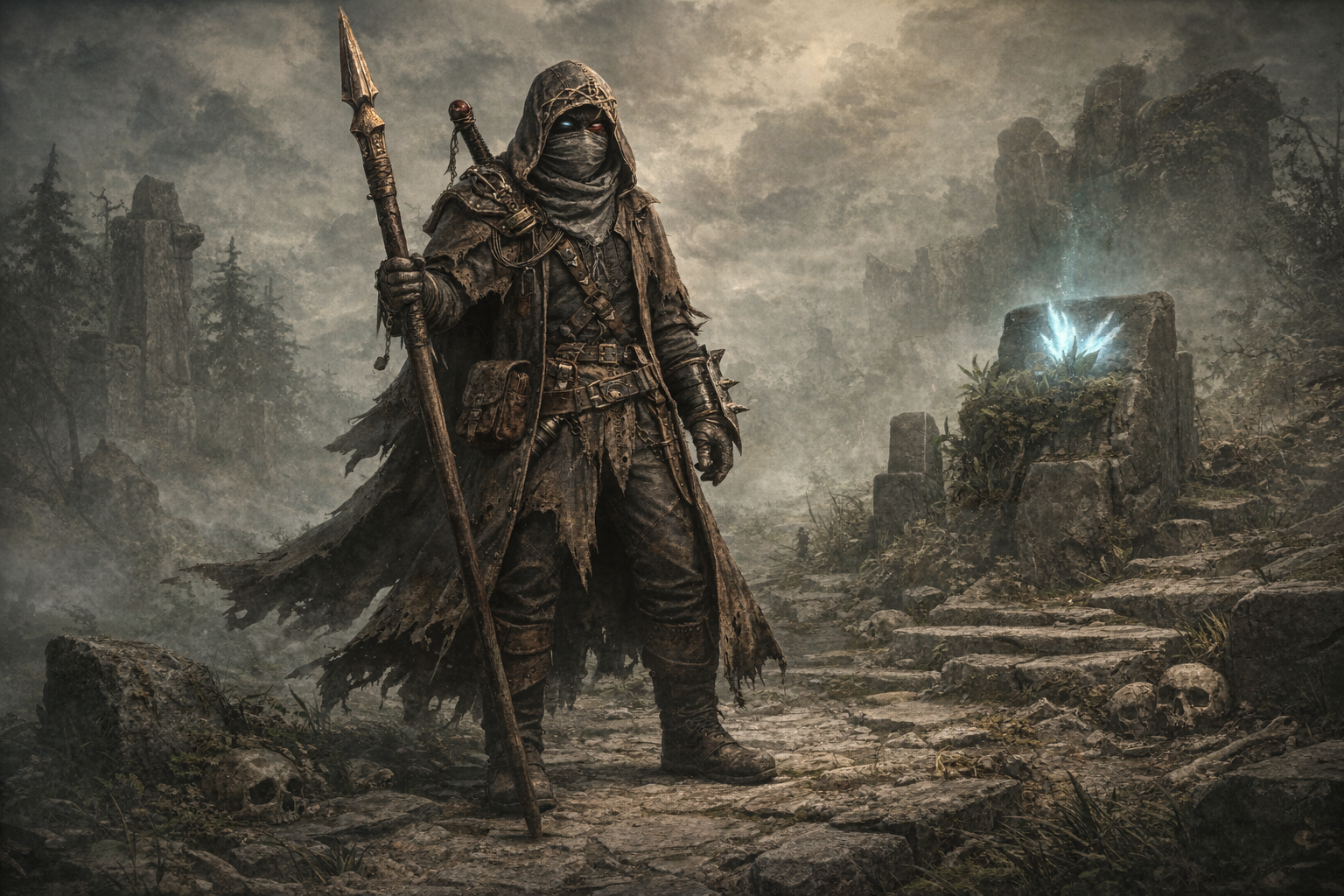
He walks wrapped in old, dust-choked leather, a long coat hanging from his shoulders like a traveler’s shadow. The armor beneath is scarred and patched, repaired countless times by hands that knew exactly how it should fit. A stitched hood is always drawn low, and a gray scarf conceals his face, leaving only his eyes visible—one pale, one dark, both unnervingly sharp. From each eye trail faint, permanent marks, as though tears of blood once carved paths down his skin and never fully faded.
He speaks rarely. When he does, his voice is calm, measured, and strangely distant, as if each word is being weighed against memories he cannot access. He never initiates conversation and answers questions simply, often sidestepping those that touch too close to his past. For all his silence, his understanding of the world is unsettlingly deep. He knows the customs of distant cultures, recognizes ruins long erased from maps, and identifies weapons and relics from eras most consider myth. Yet when asked his name, his origin, or how he learned any of it, he has no answer.
He does not remember who he is.
Whether his condition is the result of profound amnesia or a deliberate magical severing is unknown—even to him. His past feels not lost, but removed, as though something vital was cleanly cut away and cauterized. On rare nights, he is troubled by dreams that end before they begin: flashes of fire, screaming steel, and a sensation of falling through endless gray. He wakes without clarity, only with the certainty that forgetting was not an accident.
The tools he carries hint at a life of violence and purpose. An ornate scimitar rests strapped to his worn leather pack, its craftsmanship far too refined for a simple wanderer. He rarely draws it, but when he does, his movements are precise and instinctive, guided by muscle memory rather than conscious thought. In his other hand, he wields a spear of unmistakably ancient design—its shaft etched with symbols worn smooth by centuries, its balance perfect despite its age. Upon his left arm is a bracer fitted with two curved, vicious claws, clearly meant for close, brutal combat. He has never been seen sharpening them, yet they are always ready.
Despite his grim appearance, the Stranger is not cruel. When he comes across those in desperate need—a village beset by monsters, a caravan cornered by raiders, a lone soul facing certain death—he intervenes without hesitation. He asks no payment, offers no explanation, and seeks no gratitude. Once the danger has passed, he simply turns and walks away, vanishing down the road or into the wilds as quietly as he arrived.
Some say he is driven by guilt he cannot remember. Others believe he is bound by an oath made before his memories were taken. A few whisper that he was once something far greater—or far worse—and that the loss of his past is the only thing keeping the world safe.
All that is certain is this: the Stranger walks forward, never backward. Whatever he once was, whatever he once did, lies buried behind a wall he cannot breach. Until that wall breaks—or is broken—he remains what he is now: a silent guardian of chance encounters, a relic of an older age, and a man searching for a past that may not want to be found.
He walks wrapped in old, dust-choked leather, a long coat hanging from his shoulders like a traveler’s shadow. The armor beneath is scarred and patched, repaired countless times by hands that knew exactly how it should fit. A stitched hood is always drawn low, and a gray scarf conceals his face, leaving only his eyes visible—one pale, one dark, both unnervingly sharp. From each eye trail faint, permanent marks, as though tears of blood once carved paths down his skin and never fully faded.
He speaks rarely. When he does, his voice is calm, measured, and strangely distant, as if each word is being weighed against memories he cannot access. He never initiates conversation and answers questions simply, often sidestepping those that touch too close to his past. For all his silence, his understanding of the world is unsettlingly deep. He knows the customs of distant cultures, recognizes ruins long erased from maps, and identifies weapons and relics from eras most consider myth. Yet when asked his name, his origin, or how he learned any of it, he has no answer.
He does not remember who he is.
Whether his condition is the result of profound amnesia or a deliberate magical severing is unknown—even to him. His past feels not lost, but removed, as though something vital was cleanly cut away and cauterized. On rare nights, he is troubled by dreams that end before they begin: flashes of fire, screaming steel, and a sensation of falling through endless gray. He wakes without clarity, only with the certainty that forgetting was not an accident.
The tools he carries hint at a life of violence and purpose. An ornate scimitar rests strapped to his worn leather pack, its craftsmanship far too refined for a simple wanderer. He rarely draws it, but when he does, his movements are precise and instinctive, guided by muscle memory rather than conscious thought. In his other hand, he wields a spear of unmistakably ancient design—its shaft etched with symbols worn smooth by centuries, its balance perfect despite its age. Upon his left arm is a bracer fitted with two curved, vicious claws, clearly meant for close, brutal combat. He has never been seen sharpening them, yet they are always ready.
Despite his grim appearance, the Stranger is not cruel. When he comes across those in desperate need—a village beset by monsters, a caravan cornered by raiders, a lone soul facing certain death—he intervenes without hesitation. He asks no payment, offers no explanation, and seeks no gratitude. Once the danger has passed, he simply turns and walks away, vanishing down the road or into the wilds as quietly as he arrived.
Some say he is driven by guilt he cannot remember. Others believe he is bound by an oath made before his memories were taken. A few whisper that he was once something far greater—or far worse—and that the loss of his past is the only thing keeping the world safe.
All that is certain is this: the Stranger walks forward, never backward. Whatever he once was, whatever he once did, lies buried behind a wall he cannot breach. Until that wall breaks—or is broken—he remains what he is now: a silent guardian of chance encounters, a relic of an older age, and a man searching for a past that may not want to be found.
Children

Comments