

Crowell “Double-Crossed” Smithy
Crowell “Double-Crossed” Smithy
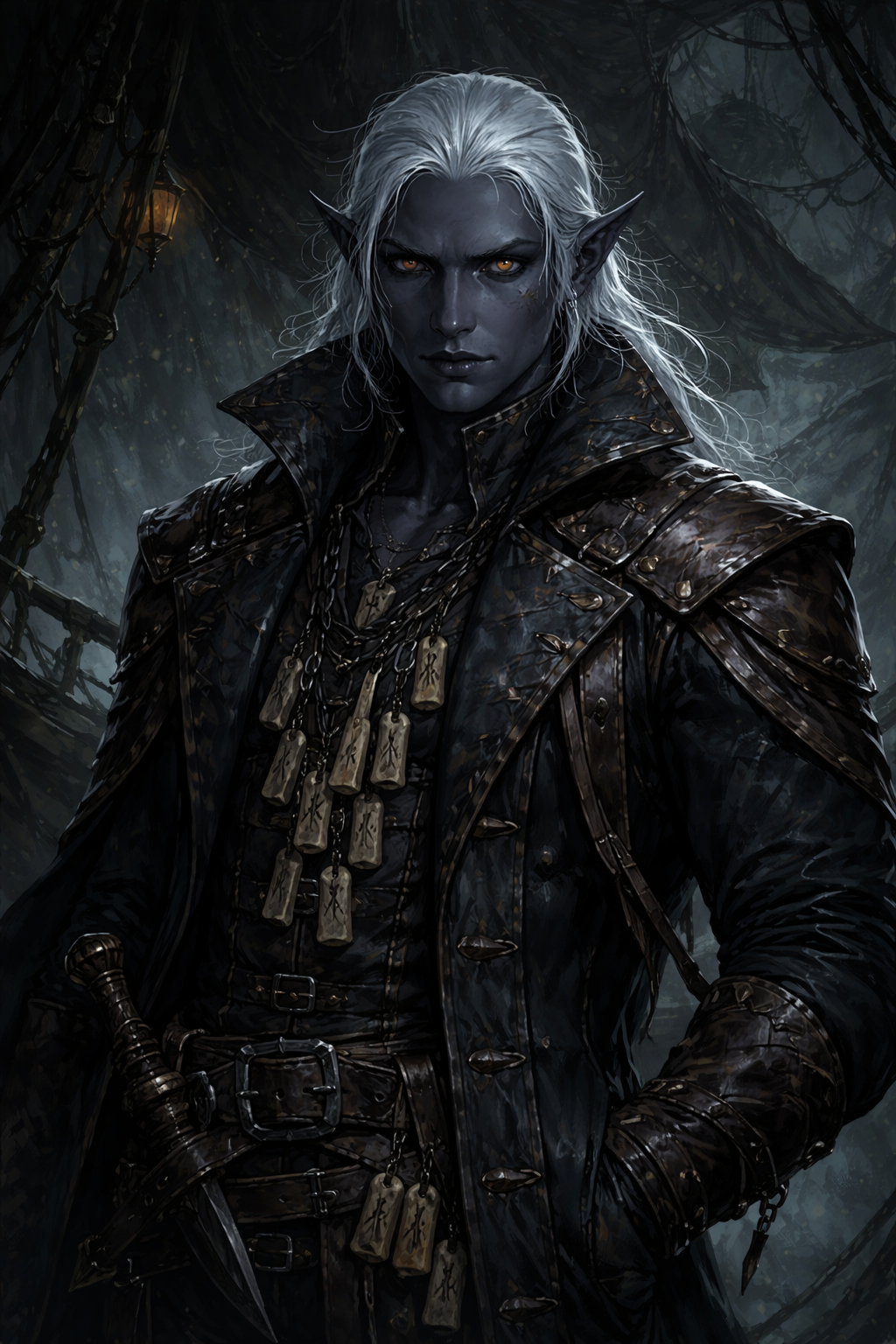
Drow | Boatswain of the Darkwake Corsairs
The Name He Keeps
No one knows Smithy’s birth name.
“Crowell” is a name he took, not inherited—claimed after the first captain who betrayed him learned what it meant to underestimate a drow who understands contracts better than loyalty. The second betrayal earned him the title Double-Crossed, a warning masquerading as a joke.
Smithy keeps the name because it reminds others that betrayal is not unique—it is repeatable, and so is retribution.
Before the Dark
Smithy began as a surface drow privateer, licensed violence in the name of crowns that pretended not to see him. He learned quickly that legality was a veneer—when expedient, contracts were rewritten, payments delayed, and scapegoats found.
Smithy was crossed once by a patron who withheld his cut. He was crossed again by a captain who sold him out to avoid political consequence.
Both died screaming, but not before Smithy learned the lesson:
Order is not given. It is enforced continuously.
Following Verda
When Verda Rivers was betrayed and cast into the dark, Smithy followed.
Not out of loyalty. Out of assessment.
He recognized something rare in her: a leader who understood that discipline and cruelty are tools—not indulgences. Where others saw madness in the Underdark, Smithy saw clarity.
He never asked permission to stay. He simply made himself necessary.
Boatswain of the Darkwake
Smithy runs the ship like a ritual site.
Every rope has a place. Every watch has a schedule. Every violation has a consequence.
His discipline is methodical:
Minor infractions earn public correction
Repeated failures earn blood
Betrayal earns silence
Punishment is never emotional. It is procedural.
The crew learns quickly that Verda decides why someone dies. Smithy decides how fast.
The Bone Tokens
Smithy keeps a tally of every offense aboard the Darkwake.
Each infraction earns a carved bone token, etched with symbols only Smithy fully understands. The tokens are worn beneath his coat, clicking softly when he moves—a sound the crew associates with imminent pain.
Some tokens are small. Some are polished smooth from handling. A few are blackened and cracked.
No one knows how many he carries. No one asks.
Those whose tokens are removed do not return to duty.
Ritual Violence
Smithy believes violence must be predictable to be effective.
Beatings occur at set hours. Executions are announced in advance. Bodies are disposed of efficiently.
This creates something worse than fear: anticipation.
The crew does not wonder if punishment is coming—only when.
Relationship with Verda
Smithy and Verda do not pretend friendship.
They share an understanding:
She calculates outcomes
He enforces process
Smithy does not question Verda’s decisions unless inefficiency is involved. Verda does not interfere with Smithy’s discipline unless it risks profit or crew cohesion.
Each keeps a ledger.
Neither wants to be written into the other’s.
Reputation
Among Underdark ports, Smithy is known as:
“The Quiet Whip”
“The Man Who Makes Crews Behave”
“The Drow Who Doesn’t Blink”
Slavers, smugglers, and mercenaries alike know that hiring the Darkwake means accepting Smithy’s rules—or bleeding for ignoring them.
The Man Beneath the Coat
Smithy is not sadistic.
He is thorough.
He believes chaos invites death, and death without purpose is waste. Pain teaches faster than words, and scars last longer than promises.
When alone, he polishes his tokens and murmurs names—not prayers, not curses. Accounting.
The Truth of Double-Crossed
Smithy does not fear betrayal.
He expects it.
And because he expects it, he is always ready.
Those who serve under him learn a final truth:
Verda Rivers decides your fate. Smithy decides how cleanly it happens.
Drow | Boatswain of the Darkwake Corsairs
The Name He Keeps
No one knows Smithy’s birth name.
“Crowell” is a name he took, not inherited—claimed after the first captain who betrayed him learned what it meant to underestimate a drow who understands contracts better than loyalty. The second betrayal earned him the title Double-Crossed, a warning masquerading as a joke.
Smithy keeps the name because it reminds others that betrayal is not unique—it is repeatable, and so is retribution.
Before the Dark
Smithy began as a surface drow privateer, licensed violence in the name of crowns that pretended not to see him. He learned quickly that legality was a veneer—when expedient, contracts were rewritten, payments delayed, and scapegoats found.
Smithy was crossed once by a patron who withheld his cut. He was crossed again by a captain who sold him out to avoid political consequence.
Both died screaming, but not before Smithy learned the lesson:
Order is not given. It is enforced continuously.
Following Verda
When Verda Rivers was betrayed and cast into the dark, Smithy followed.
Not out of loyalty. Out of assessment.
He recognized something rare in her: a leader who understood that discipline and cruelty are tools—not indulgences. Where others saw madness in the Underdark, Smithy saw clarity.
He never asked permission to stay. He simply made himself necessary.
Boatswain of the Darkwake
Smithy runs the ship like a ritual site.
Every rope has a place. Every watch has a schedule. Every violation has a consequence.
His discipline is methodical:
Minor infractions earn public correction
Repeated failures earn blood
Betrayal earns silence
Punishment is never emotional. It is procedural.
The crew learns quickly that Verda decides why someone dies. Smithy decides how fast.
The Bone Tokens
Smithy keeps a tally of every offense aboard the Darkwake.
Each infraction earns a carved bone token, etched with symbols only Smithy fully understands. The tokens are worn beneath his coat, clicking softly when he moves—a sound the crew associates with imminent pain.
Some tokens are small. Some are polished smooth from handling. A few are blackened and cracked.
No one knows how many he carries. No one asks.
Those whose tokens are removed do not return to duty.
Ritual Violence
Smithy believes violence must be predictable to be effective.
Beatings occur at set hours. Executions are announced in advance. Bodies are disposed of efficiently.
This creates something worse than fear: anticipation.
The crew does not wonder if punishment is coming—only when.
Relationship with Verda
Smithy and Verda do not pretend friendship.
They share an understanding:
She calculates outcomes
He enforces process
Smithy does not question Verda’s decisions unless inefficiency is involved. Verda does not interfere with Smithy’s discipline unless it risks profit or crew cohesion.
Each keeps a ledger.
Neither wants to be written into the other’s.
Reputation
Among Underdark ports, Smithy is known as:
“The Quiet Whip”
“The Man Who Makes Crews Behave”
“The Drow Who Doesn’t Blink”
Slavers, smugglers, and mercenaries alike know that hiring the Darkwake means accepting Smithy’s rules—or bleeding for ignoring them.
The Man Beneath the Coat
Smithy is not sadistic.
He is thorough.
He believes chaos invites death, and death without purpose is waste. Pain teaches faster than words, and scars last longer than promises.
When alone, he polishes his tokens and murmurs names—not prayers, not curses. Accounting.
The Truth of Double-Crossed
Smithy does not fear betrayal.
He expects it.
And because he expects it, he is always ready.
Those who serve under him learn a final truth:
Verda Rivers decides your fate. Smithy decides how cleanly it happens.
Children

Comments