The
Brandy (
Brandy: ꛗꛌꛡꛉꚠꚱ꛱ꚩ, buṛuwāndi) are an
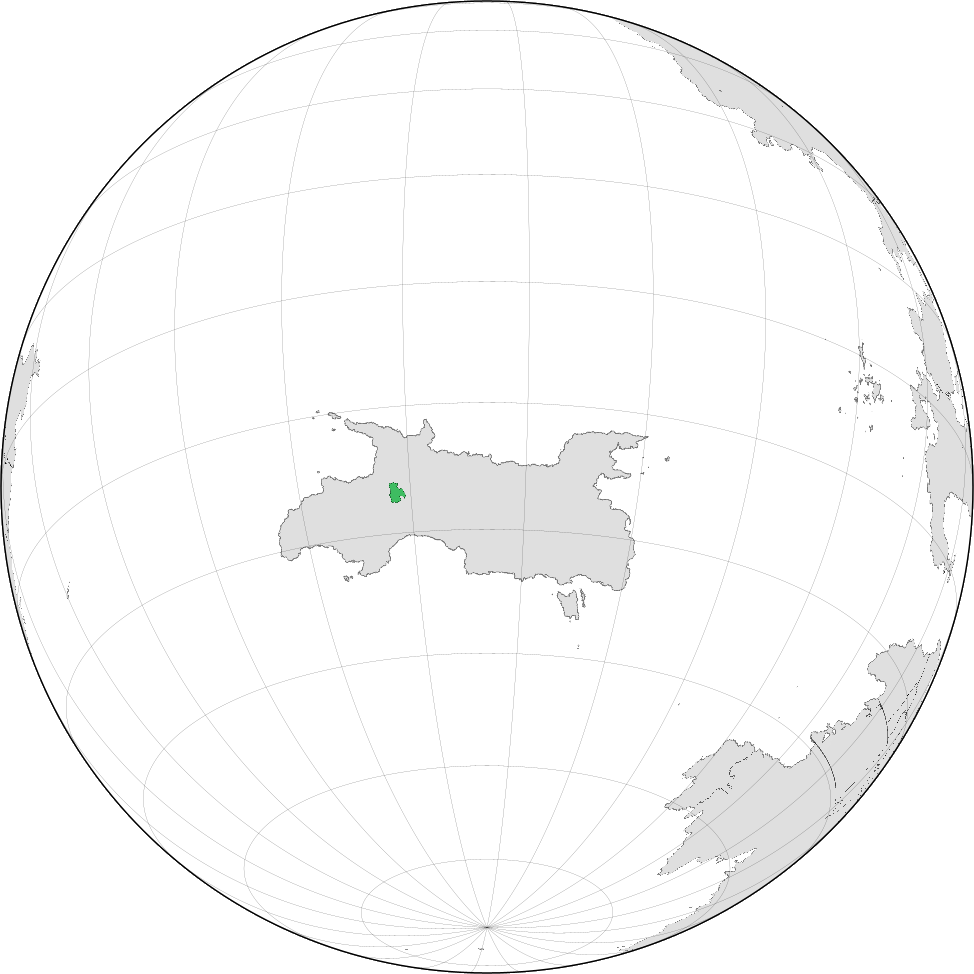
elven tribe of the Bourgain Desert of western inland
Nagain, living mostly around the upper stretch of the Etal River. They are perhaps most well known for their fierce resistance to the Othians during the latter’s conquest of the continent, holding out until 2825, and rebelling several times in the following decades before their most recent treaty in 2876.
Culture
Social Structure
Like many elven societies, the Brandy are matrilineal and matriachal, being ruled by a female ruler often called a queen or chieftess. The Brandy word is
popor (ꛈꚧꛈꚧꛌ꛰), while the Othians refer to her in their treaties as
gywedd (гиѡеԁ), a word meaning something akin to “duchess”, “countess”, or other similar noble title below queen (the Othians reserving their word
manon (мâнôн) for rulers they thought of as closer to “equals” like the queens of Darnau and Ponu). The current queen of the Brandy, Nibur, ascended in 2818, during the Time of
Lands designated for the Brandy by the Othian government
Tumult but before either the Othians or Oecumenians had made their way to the Brandy’s territory.
Outside the royal family, there is little in the way of social hierarchy. Labour tends to be divided between the sexes, with men hunting while women gather and farm. Child-rearing is more or less evenly split between the sexes. While royal women are also trained warriors, they do not participate in hunting besides ceremonial hunts involving captive animals.
Polyandry is common among the Brandy, particularly among the royal family.
As with many other desert tribes, the Brandy are predominantly hunter-gatherers, with limited, supplemental agriculture. Brandy dwellings are typically made of cob, adobe formed in a single unit rather than individual mudbricks. They are typically round, with a domed roof with a central hole covered over with twigs to create a chimney. A firepit is thus common in the centre of the dwelling. The walls are smooth and painted with various patterns similar to their tattoos which are meant to protect the house.
Relationship with the Outside World
The Brandy have ties to many of their neighbours, frequently trading or warring with them. They trade particularly with the peoples to their north in the less arid regions, trading minerals, particularly gold and copper, for various materials they can’t acquire in the desert like hardwoods and seashells. Much of their tin has historically come up from the southeast, ultimately from the mines of northwest Otha.
Their first contact with true outsiders was the 2821 expedition led by
Taminil explorer Ference đu Bourgain meant to penetrate deep into the continent. Bougain noted the Brandy in his record of the expedition, noting them as “still just as jaundiced in complexion, but markedly lighter in shade than their neighbours, yet still able to avoid burning under the high sun despite their stark nakedness. Unlike any other group I have yet encountered, they do not wear any sort of cover or gourd, instead proudly displaying their whole bodies, men and women alike. The men cover themselves head to toe in tattoos tracing along their bodies. Their crafts are of similar make to the others I have seen, but notable is the large amount of gold they ornament themselves with.” He also recorded they were as of yet unaware of the conquests of the Othians, but were aware of the opening of the country courtesy of the people to their north. Bourgain’s note of the large quantities of gold among the Brandy led him to petition the
Taminil government that he might establish a colony in the region with the aim of prospecting for gold deposits. He returned two years later to set about establishing his colony, expecting the same curious greeting he had received previously, only to be killed by the Brandy who were now at war with the Othians and their allies encroaching on their territory. Bourgain was flayed and his skin preserved. His skin, his pistol, and his sabre were eventually confiscated by the Othians and returned to Taminily to be buried in 2861.
As with other elven peoples of Nagain that did not adopt Oecumenian military technologies during the Time of Tumult, they were trivially defeated by the musket- and cannon-armed Othians. They were defeated in 2825 and forced under Othian suzerainty before being formally incorporated into
Is Nagain with the Edict of Unification in 2846.
Today, they remain an insular people with little contact with the rest of Nagain. As such, following their contact with Bourgain and later the Othians, the Brandy have so far largely shunned outside technologies introduced by the opening of the country such as iron, firearms, various foodstuffs, etc. An exception is soap, which has been adopted as a replacement for yuyuba oil for bathing. Soap was popularised by queen Nibur following its inclusion in a peace basket from the Othians following their defeat in 2825. Today, with soap industrially produced in Is Nagain, the Brandy seem to favour the
Aicallug brand, a eucalyptus-scented, vegetable-based bar soap.
The Othians have attempted to crack down on several practices of the Brandy, particularly their customs of duelling and polyandry, both illegal under Othian law codes extended throughout Is Nagain by the Levelling Acts of 2846. Attempts at enforcement and punishment have been met with strong resistance from the Brandy. Following the arrest and public execution of a tribesman for participating in a duel and killing his opponent in 2827, the Brandy revolted against the Othians. This revolt was quickly crushed and the Brandy made to assent to another treaty affirming their being subject to Othian law. Despite this, enforcement is low due to the remoteness of the Brandy. Public nudity, a cultural requirement of the Brandy but also illegal under Othian law, has never been attempted to be enforced apart from during surrender negotiations in 2825.
Aside from the occasional Othian presence, due to the presence of gold in the region, illicit prospecting is also common. Entry to the lands designated for the Brandy is completely restricted for
ьину олух (foreign elves) and
бедріх (non-elves), and even native Naganians do not have permissions to prospect the land, making prospecting a dangerous proposition as they are at risk of being killed by the Brandy and cannot seek legal protection. Despite this and government warnings to avoid Brandy land, it’s estimated around 150–300 kilograms of gold are illicitly extracted by individual prospectors from Brandy lands annually.
Warfare and Weaponry
The Brandy are famed for their warriors. Armed with bronze spears, axes, and maces, Brandy warriors would charge into battle wearing nothing but extensive tattoos covering their bodies acting as magic wards against harm. Brandy weapons are fairly typical of the desert tribes, with leaf-bladed spears and swords, both typically around 20–35 cm in length, largely of utilitarian, non-decorated, and materially conservative make. Spearheads are socketed and swords are typically a single cast piece with either a bare handle or one wrapped in creosote fibres. Maces are made either of stone or bronze, and arrowheads are exclusively stone. Due to the lack of tall, sturdy trees in their territory, the Brandy trade for the wood required to make long spear handles. Warriors in Brandy society are male, with the exception of females of the royal line.
Clothes and Jewelry
Traditionally clothing among the Brandy is purely ornamental, with jewelry being perhaps a better term for what the Brandy typically wear. Piercings, necklaces, and bracelets are common, made with various materials such as bronze, gold, electrum, mica, bone, and shells.
The genitals are considered a source of power, or
buru, and as such are never covered. Men wear a string tied around the base of the penis and scrotum called a
bambir meant to make them more prominent. Many decorate their
bambir by hanging strings off it, sometimes with small beads or shells attached. Brandy do not tattoo near their genitals, as they believe if they do, the tattoos will ward their
buru from being projected outwards and also render them sterile.
An exception to the lack of genital covering are female members of the royal family, who cover their genitals with a cloth belt called an
amboo which has a long tail that drapes down their front to cover the vulva. They wear this as a way to demonstrate the strength of their
buru: that they can project it even through the covering. Royal women receive their
amboo as part of their coming of age ritual around the age of 70. When fighting, they tuck the tail of their
amboo into their waist to project the full force of their
buru outwards. When meeting with the Othians to surrender in 2825, queen Nibur and her guard were made to wear
xerlludw, the traditional Othian garment (similar to the classical Oecumenian
stola or
peplos). Covering oneself was simply viewed as normal, natural, and polite, while among the Brandy it was viewed as the ultimate insult to their queen and their people. While they wear the
amboo, wearing a full body garment would be forcing them to render themselves completely powerless by warding all their
buru with the garment. It almost caused an incident, with Nibur and her daughters threatening to personally fight the Othians to the death rather than wear the garments. They were eventually forced at gunpoint to don them.
Tattoos
The Brandy are well-known for their tattooing, which is typically present across the body except the hands, feet, and genitals. As the tattoos are meant as a magical ward, only warriors are tattooed. These tattoos are geometric in pattern, typically a pattern of broad, curved lines, often with flared ends. Dots, chevrons, circles, and polygons are also common patterns. Tattoos on the face and head are more consistent, with straight lines descending from the bottoms of the eyes and mouth and solid colour at the tips of the ears. All Brandy receive facial and ear tattoos as part of their coming-of-age, while warriors also receive the customary war tattoos acros their bodies only after they have trained sufficiently as a warrior to be deemed not to need the wards to fight.
General Appearance
As with other elves, they are of distinctly yellow skin, though, as originally noted by Bourgain when he first encountered them, they are of noticeably lighter shade than most of the neighbouring desert tribes. They also have a much higher rate of white hair than nearby groups, with the royal line being white-haired. This indicates little historical out-marriage among the Brandy, at least among their women, being a matrilocal society. Both sexes typically shear their hair short with the exception of the sidelocks, which are kept long.
Royal Customs
The royal family consists of the queen and her direct descendants (due to custom, when a new queen ascends, her non-immediate family are killed). Their husbands are treated with a similar reverence, but not considered part of the royal family. Polyandry is frequently practised, with one “primary” or “breeding” husband, and other consorts. Due to Is Nagain’s outlawing of polygamy, secondary husbands are recorded on the census and family register as single and of their own household.
While most Brandy warriors are men, the royal women are also trained fighters called
otamboo. These
otamboo wear a cloth belt called an
amboo wrapped around their waists with a long tail that drapes down the front. When the queen dies, her daughters fight each other to the death, and the last one standing becomes the new queen. She then strangles her nieces and their father(s) to death with her
amboo upon her ascension. The last such contest took place in 2818, with Nibur, third of queen Pedja’s eight daughters, becoming the queen of the Brandy. The Brandy now owing their allegiance to Cergoth of Otha, it remains to be seen what will become of this tradition, with such acts of familicide outlawed throughout Is Nagain.
There is no record of any member of the royal family ever giving birth to a son in memory. Among the Brandy, this is thought to be due to the strength of the royal women’s
buru overpowering the father’s. Some amount of magic is assumed to be responsible for this, but the mechanism is unknown.


Comments