
XI Boötis
Geography
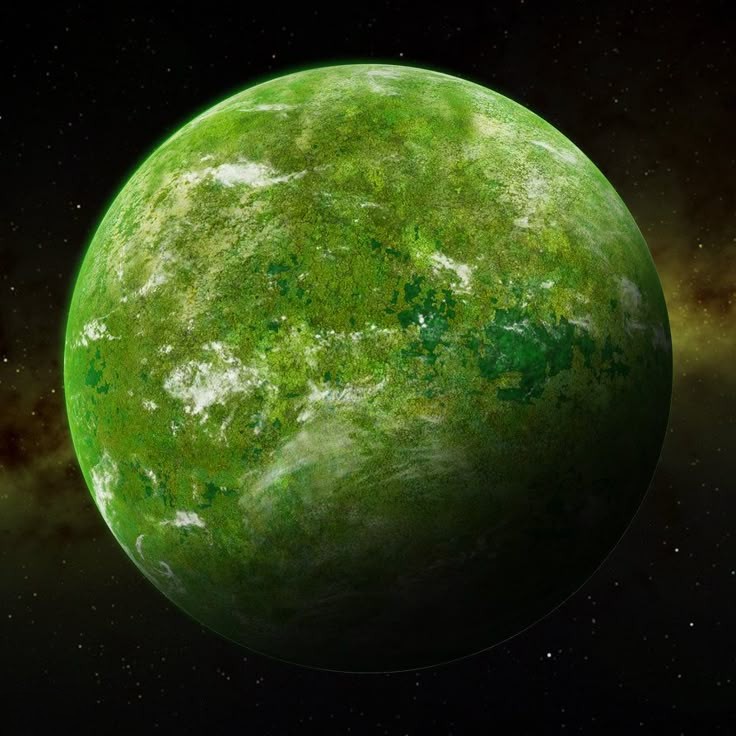
Xi Boötis is a medium-radius terrestrial world measuring approximately 3,500 miles across its equator, categorized under the "Wetland Dominant Terrestrial" planetary class. The surface topology is defined by extensive lowland flood basins, intercontinental swamp deltas, and elevated mesa ridgelines that form natural partitions between major biomes. The planetary crust shows signs of intense tectonic dormancy, having mainly remained seismically stable for centuries, allowing uninterrupted hydrological expansion across the equatorial and mid-latitude regions.
Due to its triplet-moon orbital system, Xi Boötis experiences complex gravitational pull cycles that directly influence its tidal systems, fog banks, and seasonal rainfall shifts. The resulting topography resembles a global archipelago of partially submerged landmasses, connected by natural land bridges, mangrove floodways, and kilometer-wide river deltas that pulse with seasonal flow.
Key Terrain Types
The planetary surface can be divided into five major geographic classifications:
1. Submerged Wetland Lowlands (Dominant Biome)
- 65% of the landmass exists as shallow marshes, sink basins, or flooded rainforests.
- In most wetland zones, depth ranges from 0.5 to 6 meters, with tree-root systems forming floating land mats known as "bog platforms."
- These zones are rich in mineral-laden sediment, which is used for agriculture. They also serve as natural defensive terrain during military operations.
- Notable Region: Obal Lowlands – the most extensive continuous marshland in the southern hemisphere.
2. Elevated Swamp Plateaus
- High-elevation mesas and ridgelines interrupt wetland spread, forming dry land corridors above flood levels.
- These are typically where cities like Zruuver and Klando were built, as the foundations are secure for heavy infrastructure.
- Underground aquifers and geothermal vents provide strategic energy nodes and backup water sources.
- Natural defense zones are due to limited access routes and hardened geological structures.
3. Fungal Forest Belts
- Dense jungle-like swamplands, often called "fungal forest biomes," cover much of the temperate equatorial region.
- Towering fungal growths, some reaching over 200 meters, create a multi-tiered canopy that blocks orbital scanning and absorbs EM signatures.
- The Elaris Reaches, named after Colonel Nyria Elaris, are a prominent example. They are now designated a military reserve and sanctuary.
4. Volcanic Floodplains (Quiescent)
- Historically active but now geothermally dormant fields dot the far eastern quadrant.
- Crust layering in this region is rich in basalt and shallow quartzite deposits, lightly mined under UCG regulation.
- Steam fissures, mud geysers, and sulfur vents provide natural hazards and minor energy harvesting potential.
5. Estuarial Coastal Zones
- Narrow shorelines are reinforced with both natural and artificial levee systems.
- These zones host key transit hubs, high-speed ferry terminals, and floating industrial rigs.
- Notable: The Southern Spur, a region near Sulton, is the central logistics interchange between the UCG and Lionheart Industries' maritime operations.
Hydrological Network
The planet has slow-moving water arteries, marsh rivers, braided deltas, and estuarial fingers that flow from inland basins to shallow inland seas. The hydrological grid is natural but highly adapted; major UCG projects have redirected certain rivers into hydro-agricultural cycles, feeding large zones around Kraikoa and Tresdon. The Department of Environmental Control & Water Purity (DEWP) patrols and monitors these artificial channels.
Flash floods, seasonal overflows, and deep fog cycles remain standard atmospheric phenomena in these regions. Geo-prediction satellites assist in forecasting hydrotides and monsoon surges to prevent infrastructure damage.
Strategic and Defensive Topography
From a military geostrategic perspective, Xi Boötis is an ideal terrain for defense, ambush, and guerrilla warfare. Many of the swamplands can only be traversed by hovercraft, VTOL, or submersible transports, limiting conventional heavy armor mobility. DMDF forces have retrofitted many of the larger root-bridges and ridgeline passes into modular combat zones, complete with pop-up turrets, sensor blisters, and mobile comms bunkers.
Notable fortified features include:
- Arkanis Plateau: A highland fortress zone defended during the 2562 Defense of Xi Boötis (IV), it has been converted into a military base with deep trenches and long-range artillery platforms.
- The Mistline Ravines: Subsurface canyons beneath fungal groves near Klando, known for hosting stealth recon units and AI-piloted scout drones.
- Zone Hydra: A restricted area near Tresdon, home to the largest reservoir-connected logistics depot on the planet.
Geological Stability and Hazards
Xi Boötis sits on a relatively stable tectonic plate, but occasional sinkholes, methane burst vents, and biotic bloom collapses pose unique hazards to infrastructure. Most modern UCG infrastructure includes geo-flex bracing and hover-anchored pylons to adapt to minor surface shifts and swamp liquefaction events.
Orbital scans confirm no magnetic instability zones, though dense atmospheric ionization during monsoon periods can disrupt long-range communications.
Environmental Control Zones
Due to the intensity of the natural biome, all UCG urban centers are built on raised ferrocrete plinths supported by maglev access systems and atmospheric shielding domes. These "urban domes" elevate populations above flood risk and regulate air quality, temperature, and spore filtration.
Each major city is encircled by:
- Bio-barrier rings – microdome layers that shield against invasive fauna.
- Fog repulsion towers – electromag generators that suppress fog density near military launch pads and orbital comms towers.
- Vertical agriculture towers are used in Tresdon and Sulton for food production during the flood season.
Conclusion
Xi Boötis is a planet where land and water blur into a living system of adaptive terrain. Every city is an island, every road a bridge, and every storm a test of colonial resilience. Its geography has shaped its culture, its military doctrines, and its economy, making it one of the most geostrategically valuable assets in the UCG Outer Colonies.
Ecosystem
The Xi Boötis ecosystem is one of the most complex and biologically aggressive environments cataloged in the UCG's colonial expansion effort. Owing to its saturated wetlands, high ambient oxygen levels, and thick fungal canopy cover, life on Xi Boötis has evolved into layered micro-biomes, each fiercely competitive, chemically reactive, and often predatory.
All observed interactions between fauna, flora, and atmospheric cycles point to a biotic hierarchy based on moisture, light availability, and spore cloud migration. The system is largely self-sustaining, with several unique predator-prey relationships and mutualistic symbioses that operate under entirely alien chemical principles.
Through UCG biological mapping protocols and joint exploratory missions with Lionheart Biotech, multiple organisms, many homologous in behavior to Faerûnian species from ancient Terra's mythological classifications, have been observed, named, and cataloged under UCG-XENO adaptation standards.
Biotic Tiers of Xi Boötis
The Xi Boötis biosphere is organized into four ecological strata based on light, water level, and chemical saturation:
1. Canopy Predators and Sporespine Hosts
Dominant lifeforms reside within the towering fungal forests and swamp cypress analogues, using light penetration and chemical discharge for hunting and reproduction.
- Adapted Fauna: "Swamp Manticore" (Chimerae Mycomorphus)
- A flying, spined predator with insectoid wings and a chitin-clad tail that secretes neurotoxins. It constructs vertical nests in fungal towers and uses sonar clicks to navigate fog. Reports suggest they hunt in mating pairs during the bloom cycle.
- Adapted Flora: "Myconid Colonies" (Fungorum Integra)
- These semi-sentient spore clusters maintain biome-wide communication through pheromone pulses. While mostly passive, they defend territory with aggressive hallucinogenic cloud bursts and have been known to form temporary alliances with symbiotic fauna.
2. Mid-Level Strata: Marshland Fauna and Mutualists
This layer houses water-dwelling species and migrating grazers that form the foundation of the planet's biomass.
- Adapted Fauna: "Bulwog Skirmisher" (Anura Militaris)
- Amphibious bipedal pack predators with reflective skin patterns. These creatures resemble a blend between bullywugs and Terran toads. Intelligent enough for ambush coordination, they are often seen using reeds as makeshift spears or throwing sticks.
- Adapted Flora: "Roper Stalkers" (Plantus Constricta)
- Camouflaged tentacled plants embedded in riverbeds. Their tendrils extend through the shallows, latching onto anything that disturbs the water. Reclassified from passive to aggressive after multiple colonist fatalities.
3. Subsurface Biozones and Fungal Caverns
Underground chambers beneath the swamp's root systems serve as lairs and spawning grounds.
- Adapted Fauna: "Chuul Alpha" (Charybdus Subterranea)
- Crustacean monstrosities have high psionic sensitivity and can detect movement through tremors and heat plumes. Their armored plating is resistant to standard UCG small arms, requiring Titan-class weaponry or advanced ionic disruptors.
- Adapted Flora: "Shrieking Bloom" (Floris Sonorax)
- A sensitive flowering stalk that emits deafening screeches upon contact, often used as natural alarms for underground colonies. Sometimes bio-engineered by Lionheart field agents to serve as perimeter warnings in DMDF outposts.
4. Sky Layer and Aerial Apex Lifeforms
Above the canopy lies a distinct biome dominated by massive spores, sky-borne fauna, and semi-photosynthetic creatures.
- Adapted Fauna: “Peryton Vector” (Volucris Predatus)
- Large avian-reptilian lifeforms that resemble Terran Perytons. These predators dive through fog banks with precision and often consume airborne biogels and smaller creatures mid-flight. Their screeches can disorient both man and mech sensors.
- Adapted Flora: "Spore-Trees" (Fungor Arboris Aerum)
- Miles-wide fungal organisms that deploy floating spore clouds, both reproductive and defensive. These clouds influence weather patterns and have corroded ship hulls over prolonged exposure.
Symbiosis and Evolutionary Uniqueness
- Symbiotic Interactions:
- Many Xi Boötis creatures engage in cooperative mimicry, where one lifeform serves as bait and another as ambusher. This is common among Bulwog-Shrieking Bloom pairings and Myconid-Manticore territories.
- Adaptive Evolution:
- Within two generations, species show xenogenetic reformation in response to urban development. Example: Roper Stalkers near Klando now exhibit electromagnetic pulse sensitivity, likely reacting to UCG reactor pulses. Lionheart Industries has isolated several of these genetic switches and begun splicing them into proprietary agro-security fauna.
- Environmental Dependency:
- Many apex creatures require high humidity and ion saturation to maintain metabolic function. If removed from the swamp, they rapidly decay. This keeps the ecosystem self-contained but presents high barriers to off-world specimen transport.
Human Interaction & Containment Protocols
The UCG classifies Xi Boötis as a Level III Ecosystem Hazard, requiring all civilian and military personnel to pass XEN-BIO Indoctrination Clearance before deployment. Key protection methods include:
- Bio-sealed armor systems for DMDF infantry.
- Mycelium-neutralizing mist turrets on urban perimeters.
- Spore filtration towers are integrated into all city domes.
UCG operatives stationed on Xi Boötis are trained in Sporeflow Combat Doctrine, a counter-biological strategy developed in cooperation with Lionheart's BioCombat Division.
Conclusion: The Living Maw of the Outer Colonies
The ecosystem of Xi Boötis is not merely alive; it is aggressive, evolving, and protective of itself. Every plant may be aware, and every creature may serve a greater purpose in a decentralized biotic intelligence. While colonists reap its agricultural bounty and military forces use its terrain for ambush doctrine and defense, the truth remains: the swamp is not tamed. It merely tolerates.
Ecosystem Cycles
Xi Boötis is governed by a dual-lunar orbital system and a binary tidal influence resulting from its three moons, Velth, Shanai, and Orros, which exert irregular gravitational pressure on the planet’s aquatic biomes. Combined with a slow axial wobble and a dense, high-moisture atmosphere, this creates a two-season ecological cycle: the Verdant Monsoon and Fogfall Dormant. These cycles define the rhythm of life on the planet and shape the behavior of every organism, from sentient Myconids to apex predators like the Swamp Manticores.
Verdant Monsoon Phase (Cycle: 7 Standard Months)
Local Colloquial Term: "The Awakening"
UCG Designation: Growth Epoch Alpha
This is the dominant and most active period of the year, marked by near-constant rainfall, lightning-saturated superstorms, bioluminescent bloom surges, and reproductive migrations across nearly all mobile species.
Key Characteristics:
- Rainfall Frequency: 4–6 downpours per planetary day.
- Humidity Index: Above 95% across most equatorial and subequatorial regions.
- Spore Activity: Peak dispersal season for Myconid colonies and Spore-Trees; entire canopies emit pollen clouds visible from orbit.
Flora undergoes hyper-growth, expanding its root systems into new territory and often overtaking abandoned or battlefield-scarred areas. This phase witnesses increased aggression in predatory species and swarming behaviors in organisms such as Bulwog Skirmishers and Chuul Alphas, who utilize the dense weather as cover to strike isolated prey or patrols.
For the UCG and DMDF, this period is considered High Risk for Bioterrain Encroachment (HRBE). Perimeter defenses in cities like Zruuver and Kraikoa are being reinforced, and aerial reconnaissance is being scaled back due to lightning interference.
Human and Industrial Impacts:
- Agriculture in Tresdon accelerates but requires full-scale fungal filtration infrastructure.
- Lionheart's atmospheric processors are pushed to maximum capacity to prevent acid-spore saturation in orbital docks.
- Military operations are scaled to Tier II Weather-Adaptive Combat Protocols during this phase.
Fogfall Dormancy Phase (Cycle: 5 Standard Months)
Local Colloquial Term: "The Breathing Still"
UCG Designation: Dormancy Epoch Gamma
As the moons fall into gravitational alignment, the weather shifts from torrential rainfall to thick, unmoving fog. Temperatures drop by 7–10°C on average, and the entire planetary surface seems to slow, allowing organisms to rest, decay, and prepare for the next cycle.
Key Characteristics:
- Visibility: Often reduced to 2–5 meters across most jungle floors and riverbanks.
- Bioluminescence: Peaks as light-bearing flora emit gentle ambient hues.
- Predator Behavior: Solitary hunting resumes; apex predators shift to nesting, gestation, or pupation.
Mycelial networks retract their bloom stalks and enter a passive state of nutrient recycling. This is also when Roper Stalkers retreat underground to fortify their root systems, while mobile sentient fauna establish temporary migratory colonies atop floating bog mats.
Interestingly, the Fogfall Dormancy phase is when Myconid colonies are most likely to engage in inter-tribal fusion, exchanging genetic memory nodes through root-tongue exchanges in what Lionheart Xeno-Psych Division calls the "Spore Congress."
Strategic Value of the Fogfall:
- UCG Harvesters and Surveyor teams prefer this season due to lower threat levels and predictable mobility corridors.
- Military installations increase reliance on automated drone patrols, as EM interference is significantly reduced.
- The fog acts as natural camouflage for UCG covert assets; ONI operatives have been known to exploit this to infiltrate UNSC remnants or insurgent supply lines.
Transitional Sub-Cycles: The Equatorial Fluctuations
Twice per planetary year, at the boundary between the Monsoon and Fogfall periods, Xi Boötis undergoes brief but violent Equatorial Fluctuation Storms. These last 5–9 days are marked by:
- Sudden barometric drops.
- Spontaneous bio-disintegration events (due to organismal oversaturation).
- Rapid fungal decomposition and atmospheric release of psychoactive compounds.
These transitional periods require extreme caution, and most settlements activate Seal-Lock Alpha, a complete lockdown protocol that shuts down bio-domes and moves all personnel into subterranean safe rooms.
Conclusion: A World in Rhythmic Conflict
Xi Boötis is a planet that breathes violence and stillness in equal measure. Its ecosystem is not dictated by temperature or orbit alone but by chemical interdependence and biological decision-making. Life here evolves not just seasonally but rhythmically, reacting to unseen fungal intelligence and gravitational ballet.
To live here is to adapt, to learn the pulse of the swamp, and to know that when the skies go quiet, the ground is listening.

Comments