
Starvein Plum
“People like to pretend history is written in grand halls and war rooms. I have sat in both, and I will tell you something uncomfortable: more often, history is written in fields and gutters, by what a world can still grow when the shooting stops. The Starvein Plum does not look like a banner, or a medal, or a fleet. It is small, easy to overlook, easy to dismiss as ‘just a fruit.’ But when I read reports from a reclaimed colony, I do not just look at troop strength and fleet tonnage. I look to see if their orchards are taking root. I look to see if the Starveins are glowing.”
“Understand this: we engineered that tree for the worst places we had. Scarred soil, glassed valleys, slagged cities, places the galaxy had already written off as graveyards. It is not a delicate thing. It sinks its roots into broken ground, pulls what it can from the ash, and gives back something that feeds both flesh and morale. That is why it matters to me. It is honest. It does not lie about the cost. You can see the struggle in its tannin, in the way the juice stains and will not wash out. It is the frontier made edible. It is what you chew when you decide you are not done with this world yet.”
“When I visit a recovered system, I do not ask for a parade. I ask for a walk through the orchards. I want to see the trees that were planted when no one was certain they would live long enough to taste the harvest. I want to see hands stained violet from picking, and crates lined up for markets that did not exist five years earlier. The Starvein Plum is not the symbol the poets would choose for the United Colonial Group. It is the symbol reality chose. We are not a people of clean hands and untouched soil. We are a people who plant in ruins and call it the beginning. And so long as those dark little fruits keep growing where the galaxy expects nothing to grow, I will know our work is not finished, and neither are we.”
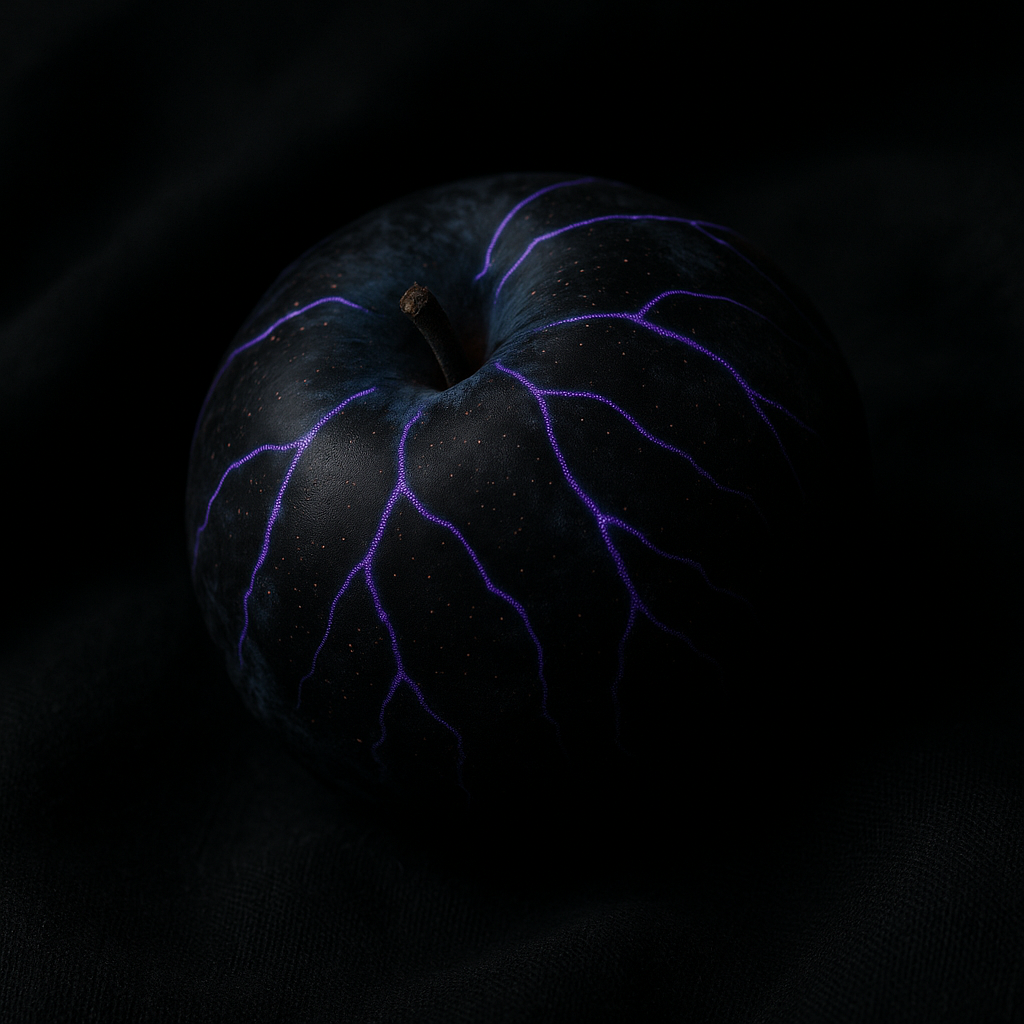
The Starvein Plum is, at its Core, the fruit of desperation successfully weaponized into stability. Developed from fused genetic lines of Terran stone fruits and frontier-engineered cultivars, it was designed to do what ordinary crops could not: anchor itself in exhausted, contaminated, or bomb-fractured soil and still produce something edible, nutritious, and transportable. Its small, dense form and dark, almost void-black skin conceal a deep purple flesh laced with faintly glowing "starveins" that emerge when the fruit is cut or bruised. This bioluminescent trait is not merely aesthetic; in power-rationed settlements and half-ruined farmsteads, that soft glow doubles as a crude visual indicator of ripeness and damage. To those who live under broken skies and intermittent power grids, the sight of crates of Starvein Plums is not quaint; it is reassurance that someone, somewhere, still plans for their tomorrow.
In daily life, the Starvein Plum functions as a foundation food for the Outer Colonies. Fresh fruit fills markets, mess halls, and DMDF field tents; dried slices and ration-integrated bricks accompany patrols and work crews into the wastes; preserves and reductions transform otherwise joyless staple meals into something with genuine flavor. Its tart-sweet profile, followed by a characteristic tannic finish, keeps it from becoming cloying even when eaten repeatedly, which matters in places where variety is a luxury. The same fruit that a dockworker devours over an open drain becomes a carefully plated component in officers' messes, paired with roasted meats and dark grains. This versatility allows the Starvein Plum to cross class lines without losing its identity, rare among frontier staples, which are often either "poor food" or guarded luxuries.
Economically and strategically, the fruit is a quiet but essential tool in the Regime long game. Starvein cultivation contracts, fertilizer shipments, and processing rights are used as levers of compliance and reward: cooperative worlds receive better infrastructure, export access, and preservation facilities; uncooperative ones find their support throttled, not enough to trigger overt rebellion, but enough to remind them who controls the flow of survival. At the same time, Starvein shipments are so ubiquitous across Outer trade routes that they have become favored covers for smuggling operations: weapons, illegal medical supplies, encrypted cores, and dissident literature all disappear beneath pallets of violet-stained crates. Thus, the fruit exists at the crossroads of official policy and unofficial resistance, a commodity claimed by the Regime but constantly repurposed by those living under it.
Culturally, the Starvein Plum has accumulated meanings far beyond its caloric value. In the stories of refugees and frontier-born citizens, it appears again and again as the crop that carried a settlement through its worst winter, the taste of the first year after bombardment, or the last sweet thing a family shared before evacuation. Harvest festivals center on it; mourning rituals mark doors and memorials with its staining juice; small sects and philosophers fixate on the way its glowing veins trace fragile paths of light through darkness. For analysts watching the Genesis Saga unfold, the presence or absence of Starvein groves has become an unofficial metric of a world's trajectory. Where new orchards go in, someone is betting that the planet, and the people on it, will still be there long enough to see the trees bear fruit. In that sense, the Starvein Plum is more than a fruit; it is a small, stubborn declaration that life intends to remain.
Common Names & Classification
- Everyday Name – "Starvein Plum"
Among the Outer Colonies under UCG Regime authority, this fruit is almost universally known as the Starvein Plum. The name comes from the faint, veinlike bands of bioluminescence that trace through the flesh when the skin is pierced in low light, resembling stellar filament maps or slipspace charts. For colonists and DMDF troopers alike, the word "Starvein" carries a double meaning: a nod to both the fruit's appearance and its reputation as a hardy crop that thrives in soils others would call exhausted or "starved." - Regime Standard Designation – "Pluma Astrae-Venata, Class II Nutritional Fruit"
Within UCG agricultural codices and logistics manifests, the Starvein Plum is officially recorded as Pluma Astrae-Venata, typically classified as a Class II Nutritional Fruit. This classification indicates a produce item with moderate caloric density, high micronutrient value, and dependable yield under suboptimal environmental conditions. In Dawns March Defense Force provisioning schedules, its shorthand appears as PAV-2F, and it is a standard line item in Outer Colony ration allocations. - Scientific-Botanical Classification
UCG botanists classify the Starvein Plum as a temperate drupaceous fruit, genetically related to pre-Collapse Terran plums but heavily modified through frontier-era bioengineering protocols. The species is believed to be a stabilized descendant of several hybridized stone fruits, with grafted traits for low-light resilience and high mineral uptake from depleted or swamp-tainted soils. Archaeological data records consistently place it among the top five most reliable fruit cultivars for marginal, war-damaged, or post-glassing environments. - Outer Colony Nicknames – "Glowpits," "Widow's Ink," and "Poor Man's Winefruit"
In taverns, mess lines, and refugee markets across the Genesis Saga's Outer frontier, the Starvein Plum accumulates a constellation of nicknames. Dockworkers call them "Glowpits" for the way their sliced halves glimmer in dim hold-light. Street vendors, more cynical, refer to them as "Widow's Ink", noting how the juice stains uniforms, contracts, and condolence letters alike with stubborn violet smears. Among poorer colonies lacking true vineyards, the fruit is also known as "Poor Man's Winefruit," cherished as the backbone of cheap fermented drinks. - Military & DMDF Slang – "Purple Rations" and "Vein-Bombs"
Within DMDF and Regime-aligned security forces, Starvein Plums show up under several bits of barracks slang. "Purple rations" refers to mixed ration tins that include dried Starvein slices, turning everything inside a dusky violet hue. Field medics sometimes call fresh plums "vein-bombs", joking that the juice can ruin a uniform faster than shrapnel tears through it, and that one careless bite can permanently incriminate a trooper trying to sneak food into restricted areas. - Trade Codex & Customs References
On shipping manifests and customs declarations, particularly in contested systems or at Lionheart-linked neutral ports, the fruit is usually marked under "Outer Colonial Orchard Produce, Tier-II: Starvein Variety". Smugglers and opportunistic traders exploit its ubiquity, since crates of Starvein Plums draw slight suspicion; hidden compartments in fruit shipments are a known problem for port authorities, turning the humble plum into a background element in black market logistics. - Botanical Category & Usage Class
Functionally, the Starvein Plum is classed as a dual-purpose staple fruit within the Genesis Saga food-web: suitable both as direct consumption produce and as a transformative ingredient for preserves, sauces, fermentation, and ration enhancements. Its classification in agricultural planning models often pairs it with frontier grains and nutrient tubers, forming a predictable triad: grain for base calories, tubers for stability, Starvein Plums for morale and micronutrients.
Physical Description
The Starvein Plum is a small, dense stone fruit, usually no larger than a child's palm, with a satisfying weight that feels disproportionate to its size. Its skin is a near-black violet, so dark that in standard lighting it reads as matte indigo or even void-black, absorbing rather than reflecting ambient light. Only when held at an angle under direct illumination does a softer spectrum emerge, hints of midnight blue, bruised purple, and a faint, dusty Bloom reminiscent of old Terran plums. This understated exterior, almost plain at a distance, is part of what allows the fruit to blend into the background of Outer Colony markets and DMDF mess tables.
Up close, the star of the show is the vein network hidden under the skin. When the flesh is cut, bitten, or otherwise broken open, especially in low-light environments like ship corridors or underground habitats, thin lines of pale, bioluminescent glow flicker into view. These "starveins" form branching, irregular patterns that run along the interior of the skin and shallow layers of the flesh, radiating from the central pit like improvised constellations. The glow is subtle, never bright enough for functional illumination, but unmistakable when a trooper bites into one in a darkened hold, and their hand suddenly gleams faint violet along the juice tracks.
The flesh itself is a deep wine-purple, thick and slightly firmer near the skin, softening progressively as it approaches the pit. When sliced cleanly, the Starvein Plum reveals concentric gradients: darker, almost black-purple near the rind, fading toward a translucent burgundy closer to the center. The single internal stone tends to be small and slightly elongated, with fine ridges and a faint mineral sheen, a reminder of the fruit's engineered hardiness. In well-grown specimens, the flesh around the pit is syrupy, forming a concentrated pocket of near-jam consistency.
To the touch, the skin of a ripe Starvein Plum is smooth but not slick, with a very faint waxy film that helps resist dehydration and exposure in harsh colonial climates. Pressing lightly with a thumb yields only a modest give, as the flesh is more resilient than many traditional orchard fruits. Overripe plums, however, collapse easily, their juice bleeding through microfractures in the skin and tracing luminous thread-lines as it escapes. In storage crates and hanging nets, these streaks become a visual indicator of age, spoilage, or rough handling.
The aroma of the Starvein Plum is modest until the skin is broken. Whole fruit emits only a faint, earthy-sweet scent, often drowned out by stronger market smells: fried street food, engine lubricant, wet ferrocrete. Once sliced, however, the fragrance blooms into a layered bouquet of dark berry, red wine, and a slightly tannic undertone reminiscent of black tea or bark. This scent lingers on fingers, cutting boards, and fabrics long after the fruit is gone, reinforcing its association with stubborn stains and the indelible nature of frontier life.
In large quantities, piled high in market baskets, lined in DMDF ration bins, or hung in mesh storage aboard cargo haulers, the fruit presents a distinct visual signature: cascades of midnight orbs with the occasional glimmer of vein-light where skins have split or been sampled. To a veteran of the Outer Colonies, such a sight is immediately recognizable. It speaks of harvest windows, supply stability, and the quiet, persistent labor that keeps fragile, contested systems alive in the long shadow of war.
- Size & Shape
The Starvein Plum is generally spherical to slightly oval, averaging 4–6 centimeters in diameter, with a compact, stone-like heft. Its proportions are consistent enough that crates can be packed with near-mechanical uniformity, a trait appreciated by logistics officers and market vendors alike. - Skin & Surface Details
The skin is smooth, taut, and matte, with a subtle natural Bloom that dulls harsh light. Minor surface imperfections, tiny scars, shallow pits, or faint striation lines often reflect environmental stress, such as periods of drought, nutrient scarcity, or exposure to trace contaminants in soil or atmosphere. - Internal Vein-Luminescence
The faint bioluminescent veins sit just beneath the skin and along shallow channels in the flesh, lighting only when juice flow is disturbed by cutting, bruising, or biting. The glow typically lasts for several minutes after the fruit is damaged, slowly fading as biochemical reactions stabilize and oxygen exposure equalizes. - Flesh & Pit Structure
The fruit's flesh is thick and robust near the skin, transitioning into a softer, almost custard-like texture near the stone. The pit itself is slender, ridged, and slightly metallic in appearance, resistant to casual cracking and often repurposed by colonists as minor crafting material, worry-stones, or game pieces. - Aroma & Residual Scent
Once opened, the aroma blends notes of dark berries, fermented must, and tannic wood, creating a sensory cross between a rustic wine cellar and a forest after rain. This scent clings to skin and fabric, marking those who've been sorting, cutting, or feasting on plums with an easily identifiable, lingering fragrance. - Staining Juice & Visual Traces
The juice is heavily pigmented, creating dark violet to almost black stains on cloth, leather, untreated wood, and porous stone. These stains can map out where fruit was eaten, processed, or thrown, leaving ghostly trails of violet splatter and handprints that forensic-minded observers analysts can sometimes read like a crude historical movement.
Flavor & Texture Profile
In its raw form, the Starvein Plum presents a layered, evolving flavor that begins with a sharp, tart bite before melting into a deep, almost wine-like sweetness. The first impression on the tongue is bright and puckering, awakening the palate with an acidity reminiscent of underripe berries and sour cherries. Within moments, the sweetness surges forward, rich and dark, coating the mouth like a thin syrup and leaving a lingering taste of concentrated jam and dried fruit.
The texture is equally complex. The outer flesh near the skin offers a firm, crisp resistance when bitten into, making the first bite feel almost like crunching through a thick-skinned grape. As the teeth sink toward the Core, the resistance fades into a softer, yielding interior where the fibers have partially broken down into a velvety pulp. Near the pit, in fully ripe specimens, the flesh can be so soft as to verge on liquid, creating a burst of thick, syrupy juice that floods the mouth in a single, decadent surge.
A subtle tannic dryness follows each bite, particularly noticeable along the gums and the back of the tongue. This astringency is not overwhelming but persistent, akin to drinking a robust red wine or strong black tea. It keeps the sweetness from becoming cloying and encourages repeated bites, each mouthful a cycle of tart spark, sweet swell, and drying fade. Many Outer Colony workers joke that Starvein Plums are "self-regulating"; you can eat a lot, but the tannins slow you down.
When cooked or reduced, the Starvein Plum's character shifts into a darker, more concentrated profile. Boiled into preserves or glaze, the tartness diminishes, and the sweetness thickens into something closer to burnt sugar and molasses, with faint smoky undertones. The tannic bite remains in the background, granting sauces and spreads a structural backbone that pairs well with proteins, starches, and rye breads. DMDF cooks often use Starvein reduction to disguise the blandness of mass-produced field meals.
In fermented forms, such as cheap plum wine or fortified "purple spirits," the fruit reveals yet another personality. Its natural acidity and tannins translate into a surprisingly stable, rustic wine that can range from dry and puckering to syrup-sweet, depending on the colony's traditions and the quality of fermentation vats. Even in its roughest incarnations, the Starvein base tends to produce drinks with a heavy body and persistent aftertaste, sometimes pleasant, sometimes punishing, but always memorable.
A distinct, semi-sweet aroma accompanies every stage of consumption. Fresh fruit smells of dark berries and wet wood; cooked preserves add notes of caramel and faint smoke; fermented liquors suggest stained oak casks, iron, and the ghost of orchard soil. For many colonists and troopers, this aromatic profile is intimately tied to memory, harvest festivals, cramped starship bunks, long nights on garrison duty, or the quiet, shared act of splitting a plum under the low growl of distant artillery.
- Raw Flavor Notes
Raw Starvein Plums strike first with a bright, assertive acidity that wakes the senses, followed by a deep, jam-like sweetness that lingers on the tongue. Secondary notes include hints of blackberry, sour cherry, and a faint metallic edge that some attribute to mineral-rich colonial soils. - Textural Layers
The outer ring of flesh is firm and slightly crisp, giving each bite a tangible snap before yielding to softer, more yielding pulp toward the center. Riper fruits develop an almost custard-like Core that collapses into thick juice, while slightly underripe specimens maintain a more uniform, chewy texture throughout. - Tannins & Aftertaste
A moderate tannic component dries the gums and back of the tongue, creating a lingering sensation that can feel either pleasantly structured or mildly abrasive, depending on the eater's preferences. This aftertaste encourages slow, deliberate eating and makes the fruit pair naturally with water, tea, or light breads. - Cooked & Preserved Forms
When boiled into jams, chutneys, or syrup reductions, the Starvein Plum's sharp acidity softens into a mellow, rounded sweetness with subtle smoky and caramel notes. These preparations cling well to grain rations, roasted meats, and root vegetables, transforming utilitarian meals into something approaching comfort food in even the most austere outposts. - Fermented & Alcoholic Variants
Starvein-based wines and spirits tend to be dark, heavy-bodied, and intensely flavored, with a flavor arc that can range from robustly dry to almost dessert-sweet. Even low-quality brews retain a recognizable backbone of dark fruit, tannin, and faint spice, making them distinct from other frontier fermentations derived from grain or synthetic sugars. - Aroma & Cross-Sensory Experience
The fruit's aroma evolves with each preparation style, but it always carries a signature fusion of dark fruit and Earth: berries laced with soil, bark, and the faint tang of stone. This multilayered scent binds closely with its flavor and texture, creating a holistic sensory imprint that Outer Colonists can identify even blindfolded or from across a crowded mess hall.
Habitat, Growth & Cultivation
The Starvein Plum is a fruit of the margins, born not from gentle orchards on Core worlds, but from the bruised soils and scarred atmospheres of the Outer Colonies. Its baseline cultivar is engineered to root itself in nutrient-poor, overworked, or chemically stressed ground, thriving where other Terran-derived fruits wither or mutate. The tree prefers temperate to mildly cool climates. Still, in the Genesis Saga era, the Regime has pushed its range aggressively through genetic tuning and controlled crossbreeds, allowing Starvein groves to exist on worlds with acidic rain cycles, light-metal contamination, or irregular seasons. Colonists sometimes joke that "if the soil can hold a fence post, it can hold a Starvein."
In the wild, or what passes for "wild" after centuries of colonial intervention, Starvein Plum trees tend to cluster along transitional zones: the edges of reclaimed farmlands, embankments of artificial canals, the peripheries of abandoned mining complexes where remediation efforts have begun. Their root systems are aggressively penetrative, designed to chew through compacted regolith and fractured ferrocrete alike, drawing trace minerals and binding loose soil into something vaguely stable. This makes them popular as bio-stabilizers in erosion-prone districts and on war-damaged ground, where they serve a dual purpose: hold the land together, and feed the people working it back into shape.
Under controlled cultivation, the trees are planted in tight, disciplined rows in Regime-standard orchards, often interspersed with hardier grains or tubers. Each tree grows with a slightly twisted, angular trunk and a dense, storm-tossed canopy, giving Starvein groves a silhouette that looks almost defensive from a distance, like low, rooted fortifications spreading across the horizon. Leaves are long and dark, with a faint waxy sheen that protects against chemically tainted rains and airborne particulates. In Outer Colony dusk, when bruised skies hang low, and the first bioluminescent veins in ripening plums begin to glow, these orchards take on an almost otherworldly radiance: rows of darkness studded with points of dull violet light, like starfields fallen to ground level.
Propagation of the Starvein Plum is a carefully managed balance between frontier pragmatism and Regime standardization. Most new groves begin from grafted saplings produced in controlled agri-labs or orbital nurseries, where baseline genetics are kept clean and free from local mutagenic drift. Saplings are shipped in sealed nutrient crates to Outer Colony staging hubs, then distributed along logistics routes to settlements, DMDF garrisons, or reclamation projects. Once established, however, colonists often propagate the trees more informally, using cuttings, pits, and even volunteer seedlings that spring up around waste dumps or refuse pits where spoiled fruit has been discarded. Official Regime Doctrine frowns on uncontrolled propagation, but enforcement is lax; no bureaucrat is foolish enough to ban a food tree on a hungry world.
The growth cycle of a Starvein tree is deliberately accelerated compared to pre-Collapse orchard stock. In optimal conditions, a sapling can reach productive maturity in three to five local years, depending on world rotation and seasonal length. The trees flower with modest, star-shaped blossoms, white with faint violet centers, that release a slightly astringent, resin-sweet scent, drawing in both imported pollinators and engineered micro-drones used in high-security or low-biodiversity environments. Fruit sets soon after, developing through a series of color phases: harsh green, bruised blue, then finally the signature near-black violet. The internal vein-luminescence only fully emerges in the last stage of ripening, providing a natural, visual indicator for harvest readiness in low-light settlements or during power rationing cycles.
Harvesting is a mix of hand labor and mechanized assistance, dictated by the wealth and strategic importance of the colony. On better-supplied worlds, compact hover-rigs equipped with soft-grip manipulators glide between rows, scanning for optimal ripeness via spectral analysis and gently twisting fruit free into insulated collection bins. In poorer or newly reclaimed systems, harvest is more old-world: workers with stained hands and woven baskets, DMDF conscripts pressed into seasonal labor, and children climbing low branches to gather what machines cannot reach. Timing is critical; if left too long, overripe plums rupture on the branch or underfoot, bleeding luminous juice that attracts vermin, insects, and in some biomes, more dangerous scavengers mutated by conflict-era fallout or exotic flora.
- Preferred Environmental Conditions
Starvein Plum trees are engineered to tolerate a broad spectrum of marginal conditions. However, they still perform best in cool to temperate climates with moderate rainfall and at least partial access to untainted groundwater. They can endure acidic rains, trace heavy metals, and irregular light cycles, making them a favored choice for post-conflict worlds, swamp-edged colonies, and regions where orbital bombardment or industrial abuse has rendered traditional crops unreliable. - Soil & Remediation Role
The trees exhibit an aggressive, deep-reaching root system that anchors loose or contaminated soil, drawing up and locking away certain harmful minerals into non-edible tissues. While not a perfect cure for environmental devastation, Starvein groves are often the first living structures planted on reclaimed battlefields or abandoned strip mines, stabilizing terrain so that more sensitive crops and settlement infrastructure can follow in subsequent decades. - Propagation & Genetic Control
Official Regime agricultural Doctrine prescribes grafted saplings and licensed cuttings as the only acceptable propagation methods, maintaining uniform genetics for yield prediction and disease management. In practice, colonists and frontier farmers frequently spread the fruit using pits and wild seedlings, creating local sub-strains adapted to microclimates; these "unregistered" trees sometimes show variant traits, stronger glow, sharper tartness, or increased tannin levels, that become part of local identity and pride. - Growth Duration & Lifespan
Starvein Plum trees reach fruit-bearing age much faster than traditional Terran orchard lines, entering productive cycles within a few standard years of planting. Their peak yield period typically spans a decade or two, after which production slowly declines, but their structural resilience means older trees are rarely removed immediately; instead, they remain as shade, windbreaks, or symbolic relics of the colony's early struggle years. - Harvest Practices & Labor
Harvest season is a social and economic event in many Outer Colonies. In wealthy or strategically vital systems, automated pickers and agri-drones handle most of the work under the supervision of Regime agronomists. In poorer worlds, harvest becomes a community affair involving families, conscript labor, and DMDF detachments, with payment rendered in fruit allotments, ration credit, or temporary tax relief, tying the Starvein Plum directly into local survival economics. - Post-Harvest Handling & Storage
Freshly picked plums are sorted by ripeness and intended use: highest grades go to direct consumption and export, mid-grades feed preservation vats and fermenters, and bruised or overripe fruit is diverted to livestock feed, fertilizer, or biofuel mash. The fruits store reasonably well in cool, dry holds, but once the skin is compromised, the clock starts ticking; experienced handlers use juice leakage and vein-luminescence patterns to identify crates that must be processed first quickly. - Tech & Aetheric Support (High-Value Worlds)
On a handful of high-priority or more mystical-adjacent worlds within the Genesis Saga, Starvein groves are supported by microclimate domes, Arc-reactor powered irrigation, and, in rare cases, low-level aetheric field stabilizers that subtly influence plant health and growth. While the fruit itself remains mundane, legends accumulate around these enhanced orchards: tales of plums that glow brighter under war-clouded skies, or trees that seem to bear heavier during years of looming conflict, as if the land itself anticipated the needs of those who fight in its name. - Ecological Interactions
The presence of Starvein groves reshapes local ecosystems by providing dense, predictable food sources for small fauna, pollinators, and in some regions, semi-domesticated scavenger species that live on dropped fruit. This creates a halo of life around grove perimeters, songbirds, small mammals, and opportunistic predators that can transform otherwise bleak colonial landscapes into pockets of unexpected biodiversity, even under the iron shadow of Regime occupation and ongoing war.
This finishes out the Habitat, Growth & Cultivation section for the Starvein Plum cleanly for your Genesis Saga wiki. The next natural step would be Cultural Role & Symbolism, Trade & Economics, or Culinary Uses, depending on where you want to slot it in your item template.
Culinary Uses & Preparation
In most Outer Colonies under Regime control, the simplest and most common preparation of the Starvein Plum is also the most honest: eaten raw, straight from crate, branch, or market stall. Workers crack the skin with a thumb, let the first bead of luminous juice run, and bite in while standing over drains, irrigation ditches, or open ground. Among DMDF troopers, the ritual is nearly identical: helmet off, ration break, a plum rolled in gloved fingers until a vein flares faintly, then devoured in a few efficient bites. Fresh fruit is prized for its ability to cut through the monotony of processed rations and nutrient bricks, the tart edge resetting a palate deadened by weeks of synthetic meals.
The most widespread processed form is Starvein preserve, a thick jam or paste made by slowly boiling down the fruit with minimal added sweetener. In Outer Colony kitchens, massive communal vats simmer through the night, filling prefab housing stacks and settlement corridors with the scent of dark fruit and steam. The resulting paste is spread on grain ration loaves, folded into dumplings, or used as a filling for cheap festival pastries. In military contexts, a more concentrated version, Starvein reduction, is sealed into small polymer ampoules that can be squeezed onto standard-issue ration bars, turning bland, shelf-stable food into something soldiers can at least pretend is home-adjacent.
Starvein Plums also anchor a range of savory dishes, where their acidity and tannins play against proteins and fats. On agrarian worlds, cooks slow-braise tough cuts of vat-grown or local livestock meat in a slurry of plum, stock, and bitter herbs, creating a thick, dark stew that stains bowls and spoons but keeps laborers fueled through long shifts. In DMDF field kitchens, a simplified variant exists as "purple stew" or "plum-pot," using rehydrated meat, preserved vegetables, and dehydrated Starvein slices boiled together in one pot. The fruit's tannic finish helps mask metallic notes from recycled water or low-grade protein stocks that might otherwise turn stomachs.
Fermented forms are a culture all their own. Nearly every colony with access to Starvein orchards develops its own take on plum wine, cordials, or fortified spirits. At the lower end of quality, these drinks are rough, strong, and unapologetically staining, served in metal cups that hide their color and their sediment. At the higher end, on more stable or wealthy Outer worlds, Starvein wines can be surprisingly nuanced, aged in reclaimed wood casks or Arc-treated ceramic amphorae, developing complex flavor layers of smoke, fruit, and mineral. Some settlements produce a thick, almost syrup-like dessert liquor that clings to the glass like oil and is consumed in tiny, reverent sips.
Preservation techniques vary with tech level. Low-tech communities rely on drying, smoking, and sugaring: sliced plums laid on wire racks in filtered sun, smoked over reclaimed wood or fungal charcoal, or candied into tough, jewel-like morsels carried by travelers and scouts. High-tech colonies employ vacuum dehydration, flash-freezing, and stabilization gels, producing ration-compatible Starvein chips and pucks that retain most of the fruit's nutrients and a surprising amount of flavor. In both cases, the goal is the same: take a fragile harvest and stretch it through the lean months of orbital winter, supply disruption, or siege.
There are also taboos and traditions tied to how the fruit is eaten. On some worlds that endured famine or blockade, it's considered disrespectful to waste Starvein juice; children are scolded for letting it drip freely, and festival games involve catching the first burst in a cup or on bread. Specific DMDF units adopt informal rules: no eating the first Starvein Plum of the season without sharing at least one slice, or always saving a single fruit from the last crate to be split among the squad before redeployment. A few frontier sects even forbid fermenting the fruit at all, viewing intoxication from "a survival crop" as tempting misfortune.
- Raw Consumption
Eaten fresh, the Starvein Plum serves as a portable, morale-boosting snack for colonists and soldiers alike, often consumed on the move or during brief work halts. Its staining juice forces a certain mindfulness; those who eat it learn to lean over gutters, fields, or drip-catch cloths, turning even casual snacking into a small, practiced ritual. - Preserves & Reductions
Starvein preserves range from rough, seed-filled jams boiled in communal vats to precise, reduced syrups crafted in Regime-efficiency kitchens. These spreads and glazes are used to enrich grain rations, coat roasted proteins, and sweeten otherwise joyless staple foods, making them a vital part of both domestic and military culinary life. - Savory & Stew-Based Dishes
When added to stews, braises, or hotpots, the fruit's acidity breaks down tough fibers while its sweetness rounds out harsh flavors from low-grade ingredients. Frontier recipes often combine Starvein Plum with bitter greens, root vegetables, and cheap cuts of meat, resulting in thick, dark meals that are as much about psychological comfort as caloric value. - Fermented Beverages
Starvein wines, cordials, and spirits form the backbone of many Outer Colony drinking cultures, ranging from harsh "plum-burn" spirits distilled in jury-rigged stills to carefully aged vintages coveted by officers and merchants. These drinks are often served during commemorations, farewells, and quiet wakes for the fallen, their heavy flavor matching the gravity of the occasions. - Dried & Travel Rations
Dried Starvein slices, chips, and compressed fruit bricks appear frequently in travel kits, scout packs, and DMDF long-range patrol rations. Light, stable, and rich in micronutrients, they function as high-density emergency food, able to sustain individuals for long stretches when more elaborate meals are impossible. - Festival & Specialty Foods
On less hard-pressed worlds, the fruit finds its way into festival pastries, sweet rice cakes, tarts, and glazed meats served during harvest celebrations or Regime commemorative days. Intricate lattice pies filled with Starvein Plum are a particular regional specialty in some systems, their bubbling violet juices forming star-like patterns beneath golden crusts. - Taboos, Etiquette, & Ritualized Eating
Cultural prohibitions may dictate that Starvein fruit not be wasted, fermented, or eaten in specific contexts, such as during memorial vigils, oath-taking ceremonies, or before battle. In other regions, specific etiquette governs who cuts the first fruit, who receives the ripest specimens, and how the juice stains are worn or washed away, turning simple eating habits into subtle social language.
Cultural Role & Symbolism
The Starvein Plum occupies a strange dual position in the cultural fabric of the Outer Colonies: at once utterly ordinary and quietly sacred. For many frontier families, it is simply "what there is to eat", a constant presence in meals, harvest workloads, and market stalls. Yet in memory and myth, the fruit becomes a symbol of endurance in scarcity, representing the colony's refusal to die even when the soil is poor, the sky hostile, and the supply ships overdue. Old stories say that as long as the starveins still glow, the colony's heart still beats.
In Regime propaganda, the fruit is subtly repurposed as an emblem of loyal productivity. Posters and broadcast segments show neat rows of uniformed workers harvesting dark plums under the watchful gaze of DMDF overseers, the violet veins glowing faintly in stylized hands. The message is clear: the Regime provides the tools to make dead worlds live again, and the humble Starvein Plum is proof of that power. In some state-approved educational holo-reels, children are shown biting into a plum as a narrator speaks about "finding strength in the margins" and "drawing life from the ashes of disobedience and collapse."
At the grassroots level, however, the fruit carries more intimate symbolism. It features prominently in local harvest festivals, often as the first or last crop celebrated each season. Families bring baskets of their best plums to communal tables to be baked, boiled, or shared raw in ceremony. In some settlements, a single especially luminous fruit is selected as the "Heart of the Orchard" and set aside on an altar, shrine, or simple crate to receive offerings, small coins, folded paper prayers, or worn dog tags from the fallen. When the fruit finally spoils, its pit is planted in a marked place, creating micro-groves of memorial trees.
The Starvein's staining juice also becomes a medium of symbolism. Children smear it on their faces during festival play, tracing crude constellations or war paint patterns. Grieving families might mark their doorframes with a thin streak of plum juice during mourning, letting the dark smear fade and crack over time as a visible, slow-motion record of grief. Some DMDF units adopt the practice of dragging a thumbful of Starvein juice across their squad emblem or gauntlet plates before deployment, creating a temporary mark that says: We remember the soil we fight for.
For devout groups or small spiritual movements in the Genesis Saga, the fruit's vein-glow becomes the subject of quiet metaphors. Faiths that emphasize resilience, rebirth, or the sanctity of labor liken the starveins to paths of light within darkness: hope moving through hardship, or souls traveling through the void of war toward some distant rest. A few Outer Colony sects hold night-time "Vein Watches," where families sit in darkened rooms, cut plums open, and silently watch the glow ebb, using the fading light as a meditation on impermanence, sacrifice, and the thin line between survival and collapse.
The fruit also threads itself into everyday sayings and slang. To call someone a "hard Starvein" is to name them stubborn, unyielding, and willing to grow where nothing should. To accuse a politician of "selling the starveins" is to suggest they are trading away the colony's survival fundamentals for short-term gain or off-world favor. Among soldiers, "purple-mouthed" can describe someone who speaks beautifully about sacrifice and duty, but has never bled or worked; their words stain, but do not nourish.
- Symbol of Frontier Survival
Starvein Plums embody the will of Outer Colonies to endure, standing as a living reminder that life can take root even in exhausted, war-scarred soil. Groves planted in reclaimed zones become physical monuments to survival, each season's harvest a quiet act of defiance against famine, abandonment, or orbital terror. - Regime Appropriation & Messaging
Through curated imagery and educational media, the UCG Regime reframes the fruit as a testament to state-enabled prosperity, highlighting its engineered resilience as proof of the Regime competence and benevolence. This narrative often omits the unpaid labor, coercion, or forced relocations that made many orchards possible, transforming hardship into propaganda. - Harvest Festivals & Community Rituals
Many colonies hold annual gatherings centered on the first or final Starvein harvest, featuring shared meals, games, song, and the communal processing of fruit into preserves and drink. These festivals act as social glue, reaffirming bonds between families, workers, and even garrison troops, who are sometimes invited to participate and share in the symbolic abundance. - Memorial & Mourning Practices
The fruit appears in mourning rituals as both offering and marker: placed at improvised shrines, left at the feet of memorial statues, or smeared on walls and doorframes to signify loss. Planting the pits of such memorial fruits can result in small stands of trees that double as quiet graveyards and living archives of local sacrifice. - Faith, Philosophy & Vein-Light Metaphors
Spiritual traditions interpret the fruit's faint glow as light traveling through hardship, a metaphor for souls, memories, or ideals passing through dark times. Meditation practices that involve watching the slow fade of cut fruit encourage contemplation of mortality, resilience, and the fleeting nature of comfort in a war-torn Galaxy. - Idioms, Jokes & Everyday Language
Common expressions reference the fruit to describe character, honesty, and struggle, from praising someone as "deep-rooted as a Starvein" to mocking an empty gesture as "juice without flesh." Humor and complaint often revolve around the fruit's stains, with colonists jesting that some things, like Starvein juice and Regime taxes, never really wash out.
Trade & Availability
Within the Outer Colonies, the Starvein Plum is a staple commodity, woven into the ordinary flow of life and logistics. On most Regime-controlled worlds, it is one of the first fruits you see in a settlement market: piled in cracked crates, stacked in mesh bags, or tumbling through automated sorting hoppers. Prices at this level are low and relatively stable; the fruit is cheap enough that even the poorest laborer can buy a handful, and common enough that DMDF garrisons can fold it into standard provisioning without needing special requisitions. In the daily economy of frontier life, Starvein Plums are not a luxury; they're part of the baseline expectation of "a world that hasn't yet given up."
Control over its supply is nominally centralized under UCG agricultural ministries and contracted corporate partners, who set quotas, approve new groves, and manage export assignments from high-yield systems. In practice, however, the sheer number of minor orchards, family plots, and unofficial groves makes total control impossible. Regime-aligned agri-cartels dominate significant export flows and large-scale processing facilities, but at the local level, smallholders, co-ops, and even DMDF officers quietly redirect portions of the harvest into side trades. On some worlds, the official numbers reflect only three-quarters of the actual yield; the rest moves through informal channels, paying debts and buying favors.
The fruit's price and availability fluctuate most dramatically along the frontier shipping lanes, particularly in systems under intermittent conflict, blockade, or pirate activity. When convoys run on schedule, Starvein-derived products, jams, dried slices, and cheap wines are abundant and affordable even in orbiting stations and forward operating bases. When ships go missing, slipspace corridors destabilize, or naval priorities shift, the flow constricts; suddenly, a crate of preserved plums that would have been routine cargo becomes a highly prized luxury, used to smooth negotiations with station administrators, militia captains, or desperate civic leaders trying to quiet a hungry populace.
Beyond the Outer Colonies, in more stable or affluent systems, Starvein Plums occupy a strange mid-tier between staple and symbol. Fresh fruit is less common, mostly appearing in specialty markets that brand themselves as "authentic frontier purveyors," or in curated shipments meant for Regime officials and wealthy civilians with Outer Colony roots. There, the fruit is often sold at higher margins, marketed with romanticized imagery of wind-scoured orchards and stoic colonists. Processed goods, especially well-made preserves and properly aged wines, can fetch significant prices among connoisseurs, though they rarely rival truly rare delicacies or aether-touched produce.
Because the fruit's crates and processed forms are so ubiquitous and visually unremarkable along frontier routes, Starvein shipments have become a favored cover for smuggling and black-market logistics. Contraband arms, stolen data cores, off-the-books medical supplies, and even dissident pamphlets vanish into cleverly modified pallets of plum crates. Customs officers know this, of course, and high-security ports often perform random puncture-scans, spectral sweeps, and weight variance checks on "routine" Starvein shipments. Still, the sheer volume moving through some hubs makes perfect enforcement impossible, ensuring the fruit's continued Role as a quiet partner to illicit trade.
The UCG Regime periodically attempts to leverage the Starvein supply chain as a tool of economic pressure and reward. Cooperative colonies might receive increased shipments of high-grade processed plum rations or reduced export taxation on their orchard yields; rebellious or merely uncooperative worlds may find their access to fertilizer, graft stock, or export licenses quietly throttled. Because the fruit is hardy and self-propagating once established, outright embargo is rare and difficult to maintain, but even partial interference in trade can cause shortages of processed goods, striking directly at morale, variety of diet, and local income streams.
Despite these undercurrents, the Starvein Plum is not typically treated as contraband in and of itself. It moves freely through most ports, appears openly in market stalls, and circulates in DMDF and civilian provisioning with minimal bureaucratic ritual. Its rarity and the intensity of competition around it spike only when other systems fail: during sieges, environmental crises, or prolonged Fleet redeployments that leave supply lines thin. At those times, the appearance of a single cargo hauler with intact Starvein stores can stabilize a colony's economy, sway negotiations, or spark a black-market frenzy that echoes across the local grid.
- Outer Colony Staple Commodity
In frontier systems, Starvein Plums are treated as ordinary, high-volume produce, available in nearly every settlement market, station commissary, and garrison supply depot. Their low cost and predictable harvest cycles make them a cornerstone of local food security and a standard component of tax-in-kind obligations to the Regime. - Regime Oversight vs. Local Reality
Officially, supply is governed by UCG agricultural ministries and licensed corporate partners, who set production quotas and export targets. Unofficially, countless smallholders and community orchards operate in the gray zones between policy and survival, diverting excess fruit into informal markets, barter networks, and localized aid efforts that never appear in central ledgers. - Price Fluctuations & Supply Line Vulnerability
On stable worlds with intact shipping routes, prices hover at affordable, predictable levels. Under conditions of blockade, raiding, or logistical reprioritization, prices for fresh and preserved Starvein goods can spike dramatically, turning what was once a background staple into a contested resource and subtle currency. - Inner-System Specialty & Status Goods
In Core systems and affluent hubs, Starvein products are sold more as cultural and emotional imports than necessities, fruits and preserves that evoke "frontier authenticity" or personal nostalgia. While never as rare as actual luxury items, carefully curated vintages and branded imports can Command impressive premiums among the politically connected and fashion-conscious. - Smuggling Vectors & Hidden Cargoes
The ubiquity and innocuous appearance of Starvein shipments make them ideal camouflage for contraband, from illegal weaponry and restricted tech to unlicensed medical supplies and banned literature. Security forces know to treat large Starvein manifests as potential red flags, but sheer throughput ensures a steady trickle of illicit goods still rides in on violet-stained pallets. - Instrument of Pressure & Patronage
The Regime wields Starvein trade as a tool of soft control, adjusting access to fertilizers, graft stock, processing equipment, and export permits to reward compliant worlds and punish troublesome ones. These interventions rarely create outright famine, but they can undermine local economies, strain public patience, and remind populations that their everyday fruit remains entwined with distant, iron-handed authority. - Perceived Rarity by Region
To a child in a newly reclaimed glassed world, a Starvein Plum might feel like an almost miraculous gift; to a dockworker on a mature orchard planet, it is little more than background sustenance. This regional disparity of perception means that the same fruit can be seen simultaneously as a mundane ration, a modest luxury, or a rescuing symbol, depending entirely on where in the Genesis Saga's fractured map it is found.
Variants, Hybrids & Mutations
- Obsidian Lineage – Baseline Starvein Plum (Standard Cultivar)
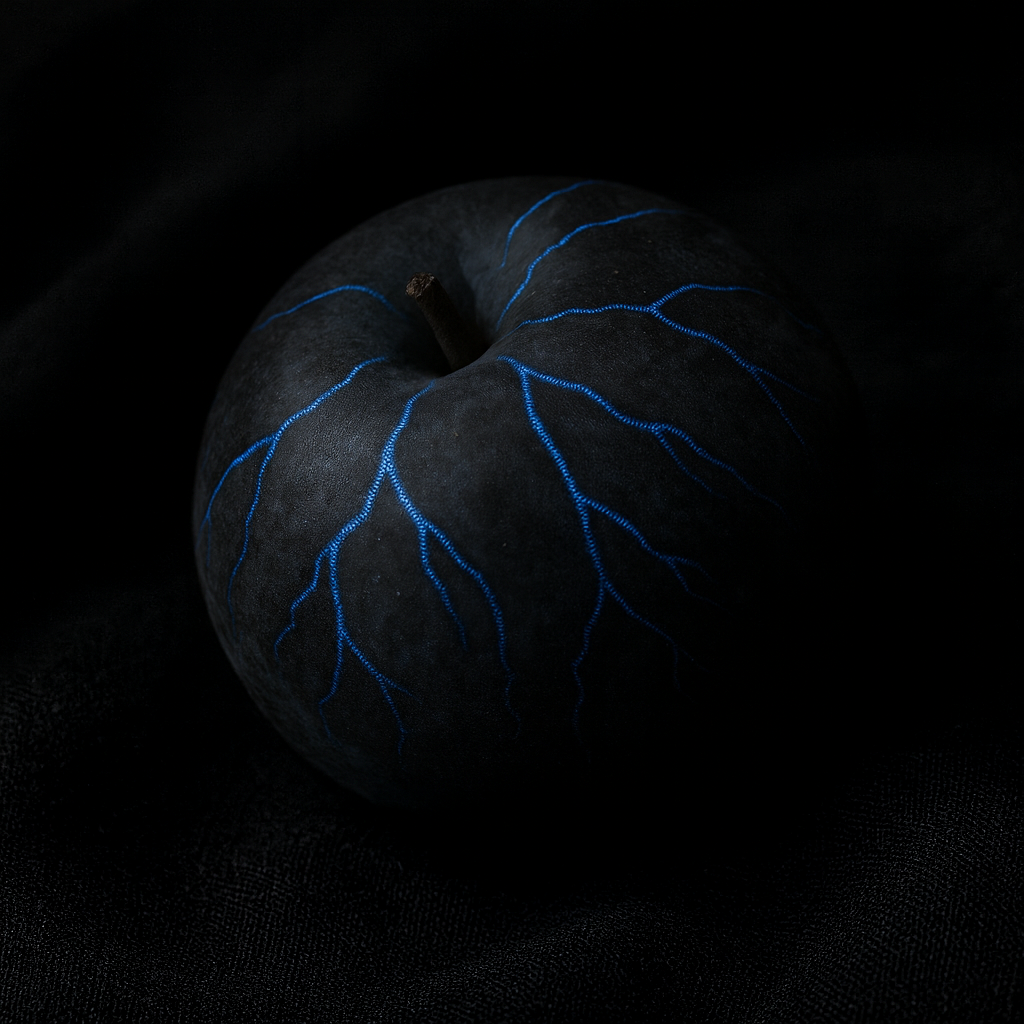
The most widespread strain across the Outer Colonies is the Obsidian Lineage, the standard Starvein Plum encoded into UCG agri-codices. Its skin is near-black violet, its glow a soft, pale lilac web beneath the surface when cut. Taste and tannin levels are "balanced for mass consumption": tart-sweet, moderately drying, and highly consistent from harvest to harvest. This is the version that fills DMDF ration bins, appears in Regime pamphlets, and defines what most citizens think of when they hear the words Starvein Plum. All other variants are measured against this baseline.
- Frostvein Starvein – High-Latitude & Cold-World Cultivar
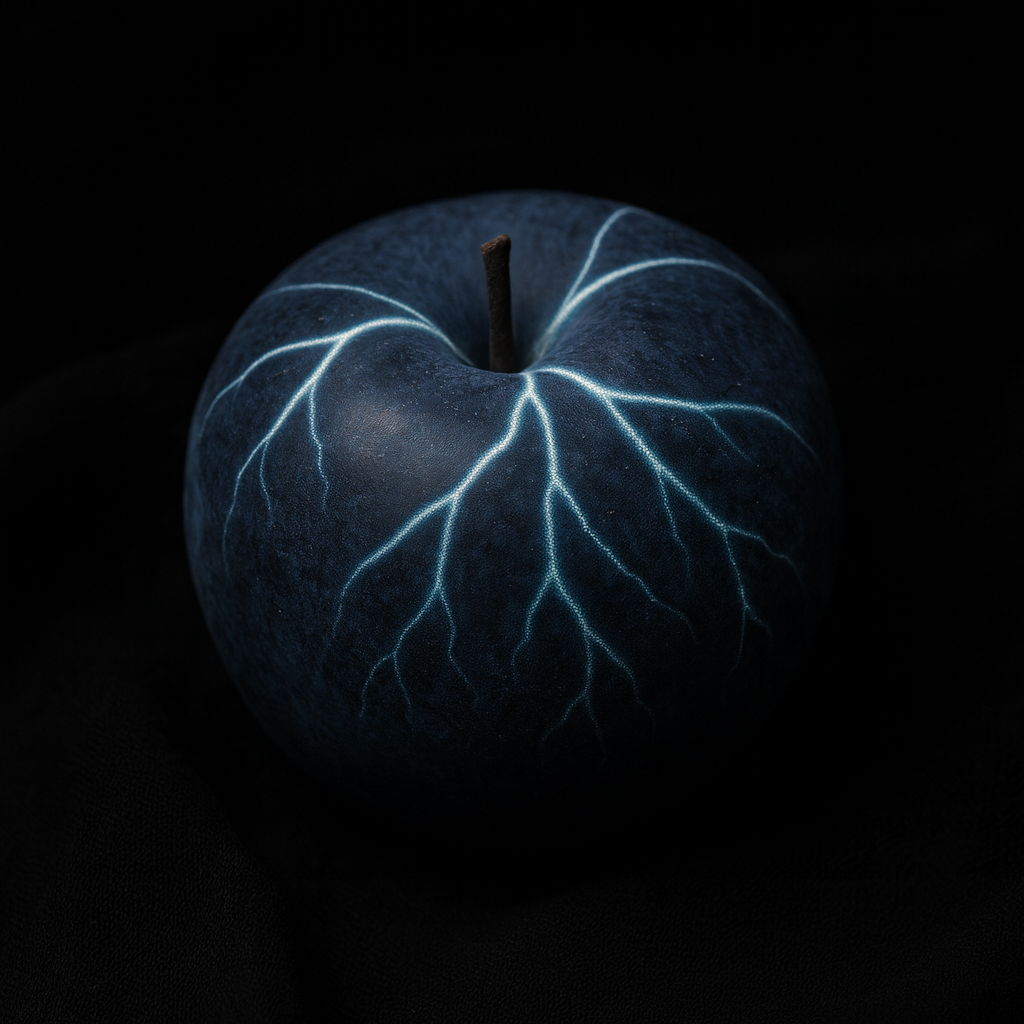
The Frostvein strain was engineered for orbital-winter colonies and high-latitude settlements on frigid worlds. Its trees grow shorter and denser, with heavy, frost-resistant bark and leaves that curl tightly against chemical winds. The fruit's skin is a duskier blue-black, and its bioluminescent veins shimmer in cool white or pale cyan rather than violet, creating a ghost-lantern effect on snowed-in orchards at night. Frostvein flesh runs sweeter and less tannic than the Obsidian baseline, trading some of its astringent "bite" for a mellow, honeyed finish that helps combat palate fatigue in long, cold seasons.
- Redshift Starvein – High-Sugar, Festive Variant
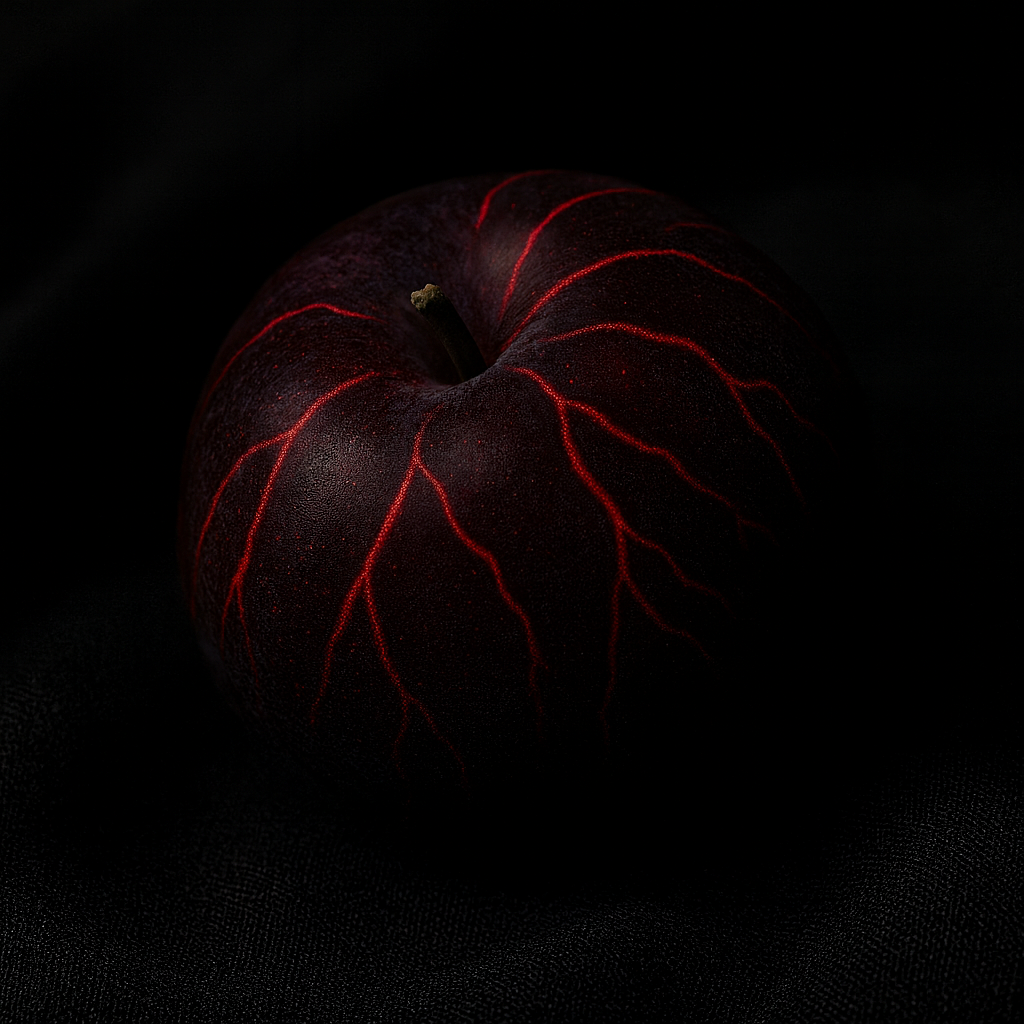
The Redshift cultivar was born in wealthy agrarian systems that wanted a Starvein better suited for confectionery and high-end wines. Its skin is still dark, but under intense light, it reveals subtle maroon and rust undertones, and its internal veins glow a deeper, almost sanguine red when cut. The taste tilts strongly toward sweetness, with lower acidity and softer tannins, making it ideal for syrups, desserts, and richly layered pastries served during Regime ceremonies or private galas. Redshift plums are rarely issued as rations; instead, they travel in marked crates destined for officers' messes, merchant dynasties, and off-duty celebrations.
- Ashglass Starvein – Reclamation World Strain
On glassed or partially vitrified worlds, UCG agronomists developed the Ashglass strain, designed to root in shallow layers of regolith laid over fused, bomb-slick bedrock. The trees are spindly but tenacious, with roots that cling to fractured glass like anchors. The fruit itself is slightly smaller, its skin showing a dull, smoky sheen, as if dusted with ash. Its bioluminescent veins burn noticeably brighter and for longer after the flesh is broken, creating stark streaks of violet in the ruins at night. Flavor is sharper and more mineral-forward, with a faint "stone" note that some locals swear they can taste; to reclamation crews and survivors, Ashglass Starveins are both food and proof that shattered worlds can still host life.
- Warden's Veil Starvein – Low-Stain, Officer-Grade Hybrid
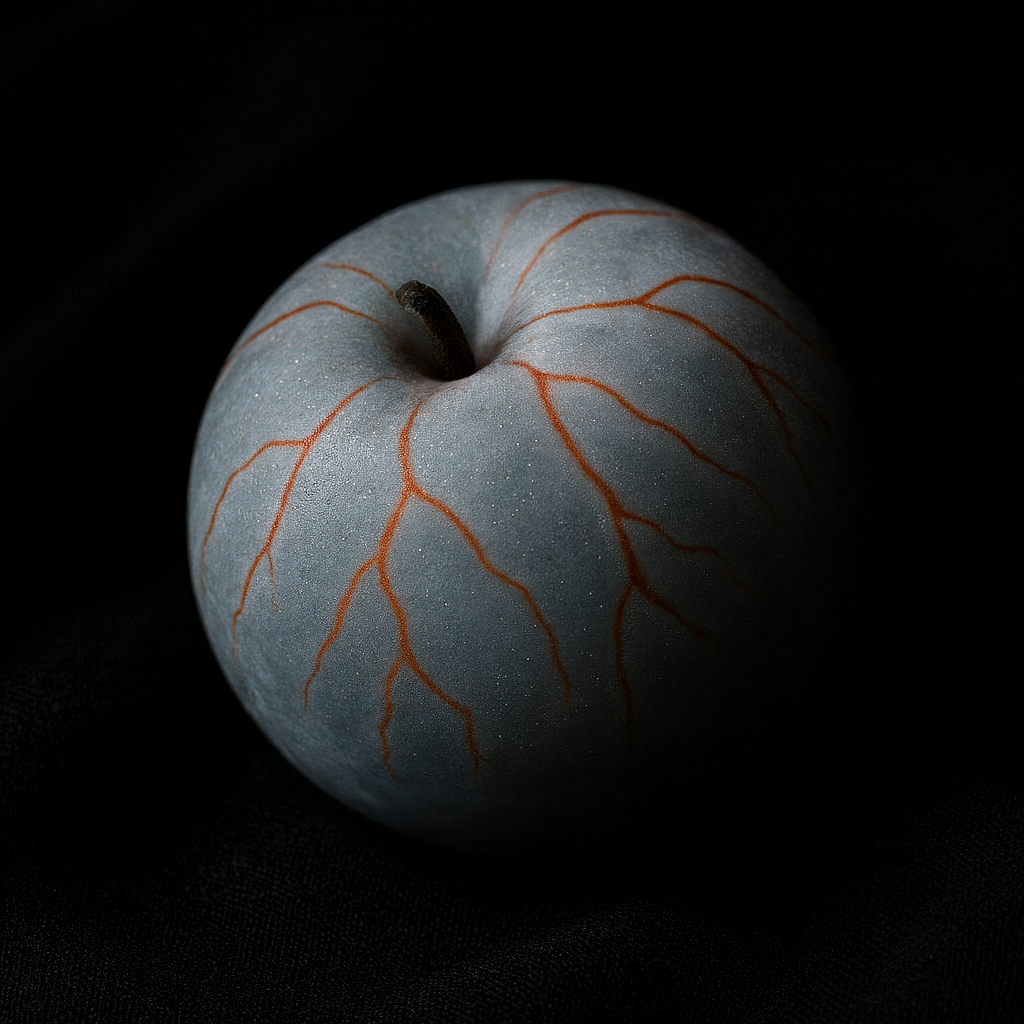
The Warden's Veil hybrid was an attempt by Regime logistics to produce a Starvein suitable for formal uniforms, shipboard functions, and high-level staff who wanted the taste without the chaos of stains. Its juice is still violet, but significantly less pigmented; the bioluminescent veins glow a more subdued silver-lilac, and the pulp, while flavorful, leaves only faint marks on treated fabrics. The tradeoffs are a reduction in tannins and micronutrient density, making this strain less robust as a survival crop. It is therefore grown in relatively modest quantities, primarily near Command hubs, ceremonial sites, and staff world arcologies.
- Dockhand Starvein – Feral Portside Mutation
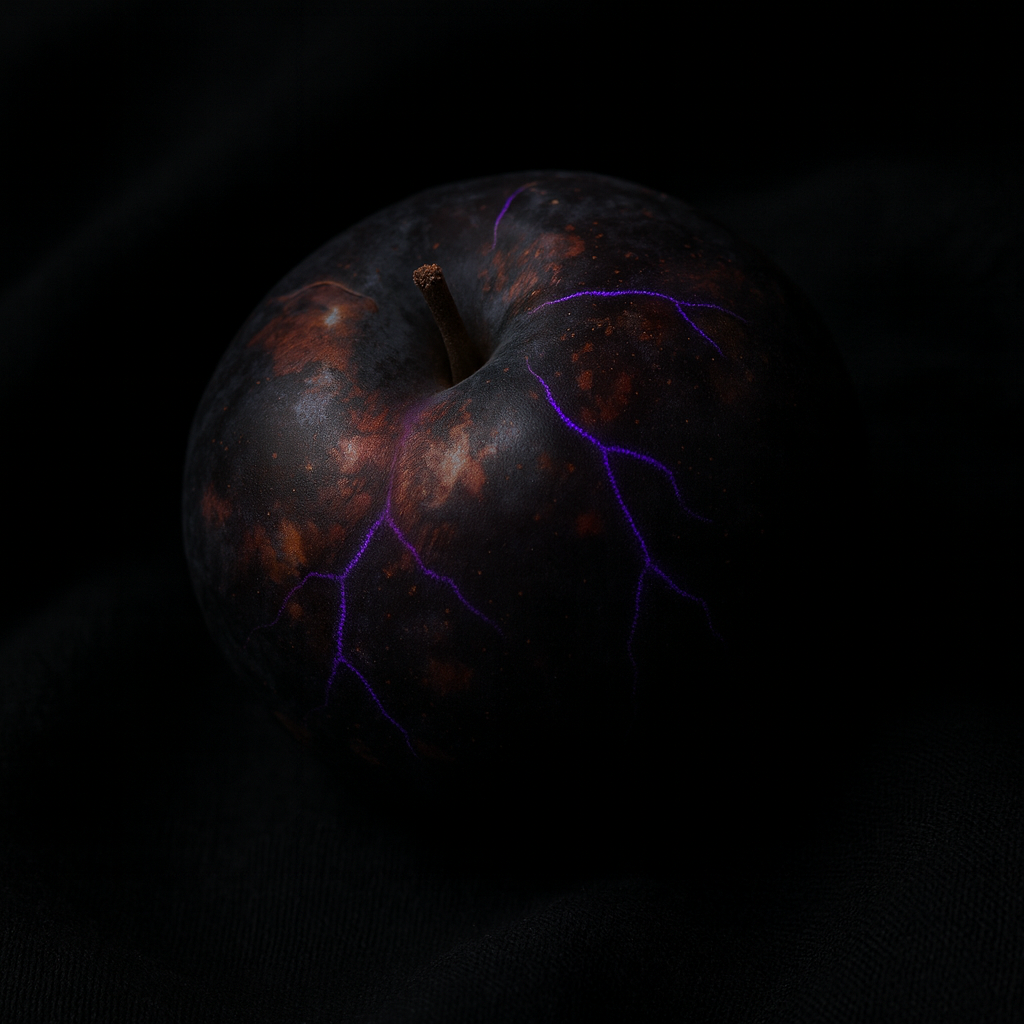
Around major orbital elevator bases and port cities, a semi-feral strain nicknamed Dockhand has emerged from constant cross-seeding, soil contamination, and casual neglect. These trees sprout in drainage ditches, under cargo scaffolds, and along rusting fences, drawing from oil-tainted dirt and runoff. Dockhand plums are uneven in shape, their skins scuffed and patchy, with bioluminescent veins that sometimes flicker irregularly or cluster into blotches instead of neat webs. Their flavor is unpredictable, anything from aggressively sour to surprisingly delicious. Port workers chew them anyway, half for the taste and half for the satisfaction of eating something that grew where nothing was supposed to.
- Nightbloom Starvein – High-Glow, Borderline Toxic Feral Strain
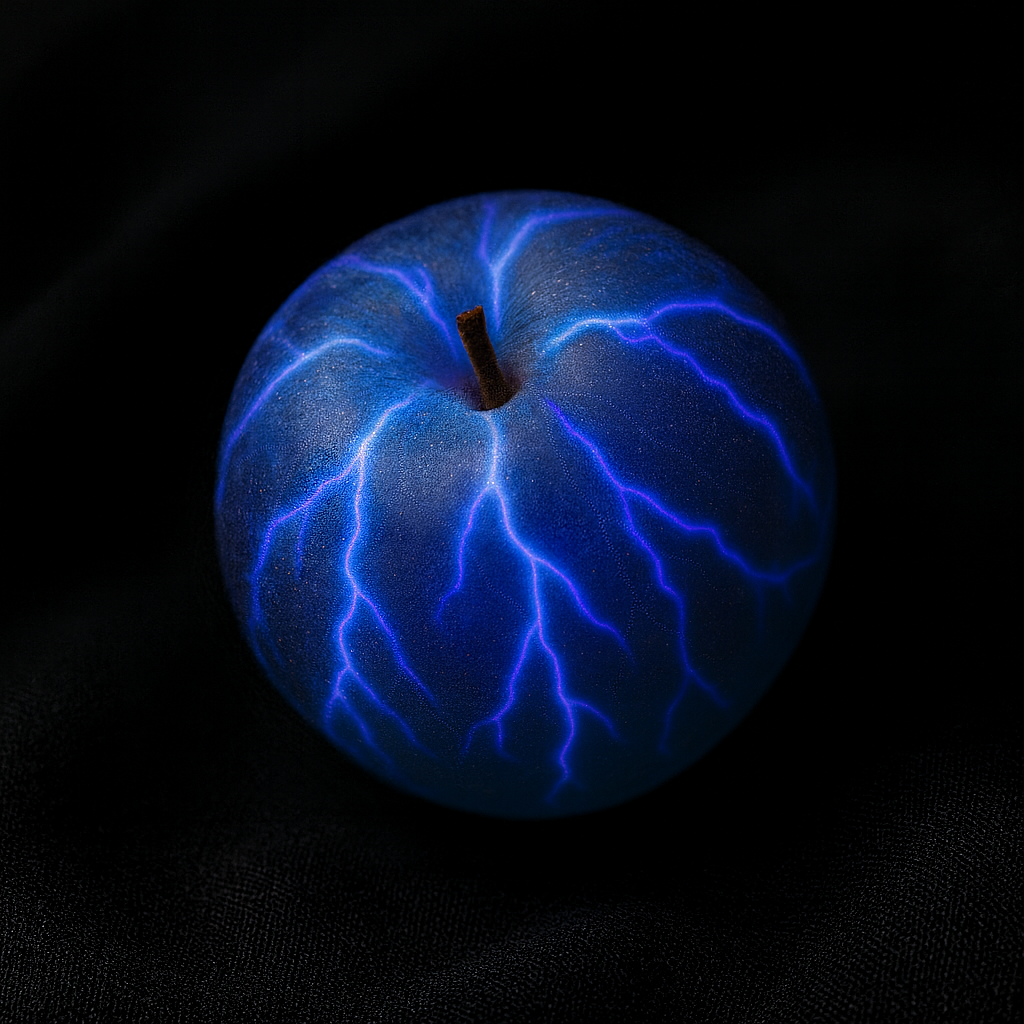
On a scattering of worlds exposed to exotic radiation, chemical spills, or aetheric anomalies, Starvein groves have thrown off the controlled genetics of the Obsidian Lineage and birthed the Nightbloom strain. These fruits are smaller, with thin, almost translucent skins and intensely bright bioluminescent veins that flare like tracer Fire in the dark. The glow can persist for an hour or more after the fruit is cut. The catch: Nightbloom plums carry elevated levels of certain alkaloids, making them mildly toxic in quantity, causing numb lips, tingling extremities, and vivid, sometimes disorienting dreams. Locals treat them like a dangerous delicacy or a poor man's recreational drug, while medics analysts view them as biohazards to be cataloged and watched.
- Slipvein Starvein – Aether-Touched Anomaly
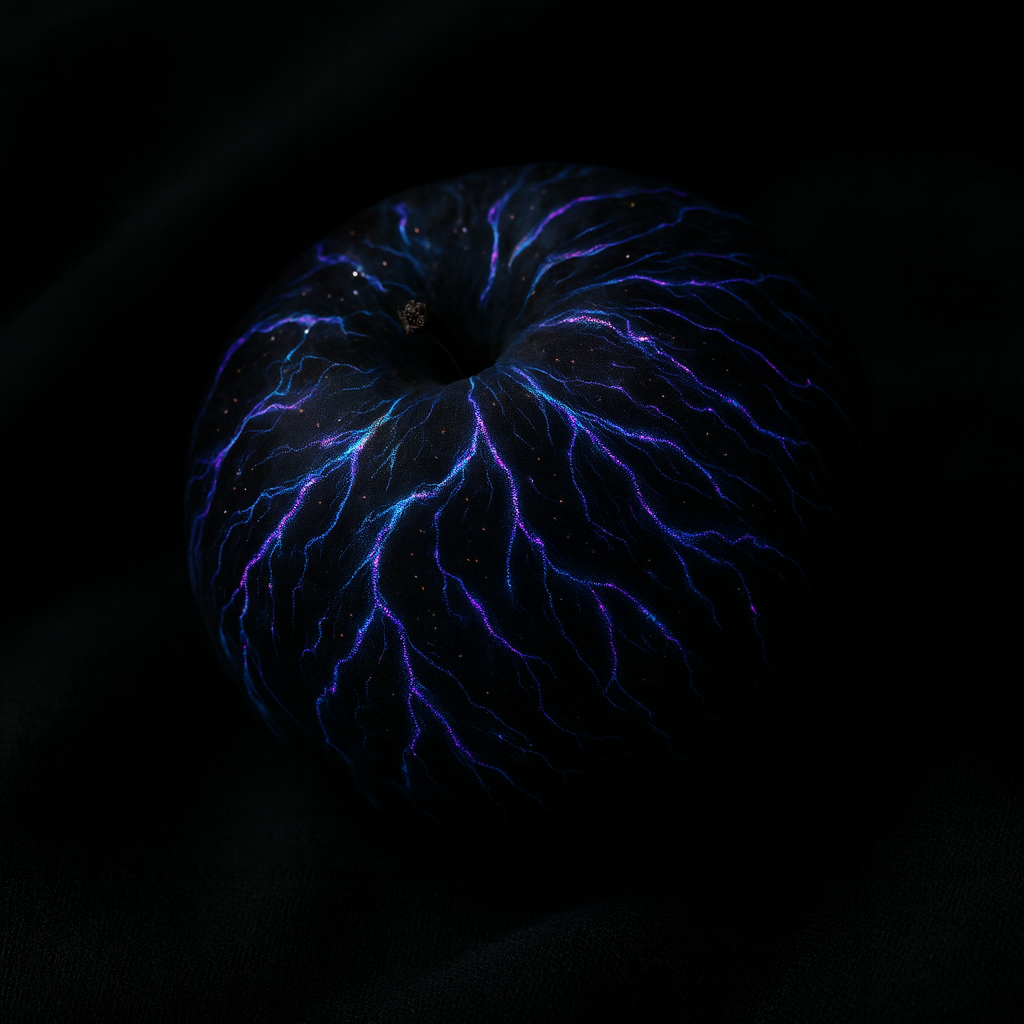
Rare tales from the more aether-turbulent regions of the Genesis Saga speak of Slipvein plums, fruits whose internal veins do not simply glow, but seem to drift and reconfigure over time, tracing new patterns even after harvest. Their illumination has a faint blue-violet hue, with occasional white flares along the branching paths. Some small esoteric cults and aether-practitioners claim that Slipvein patterns echo navigation routes, battlefield fronts, or even future events, treating sliced fruit as temporary oracles. Whether this is superstition layered on random pattern-seeking or evidence of deeper aetheric resonance is vigorously debated in off-the-record Lionheart research threads.
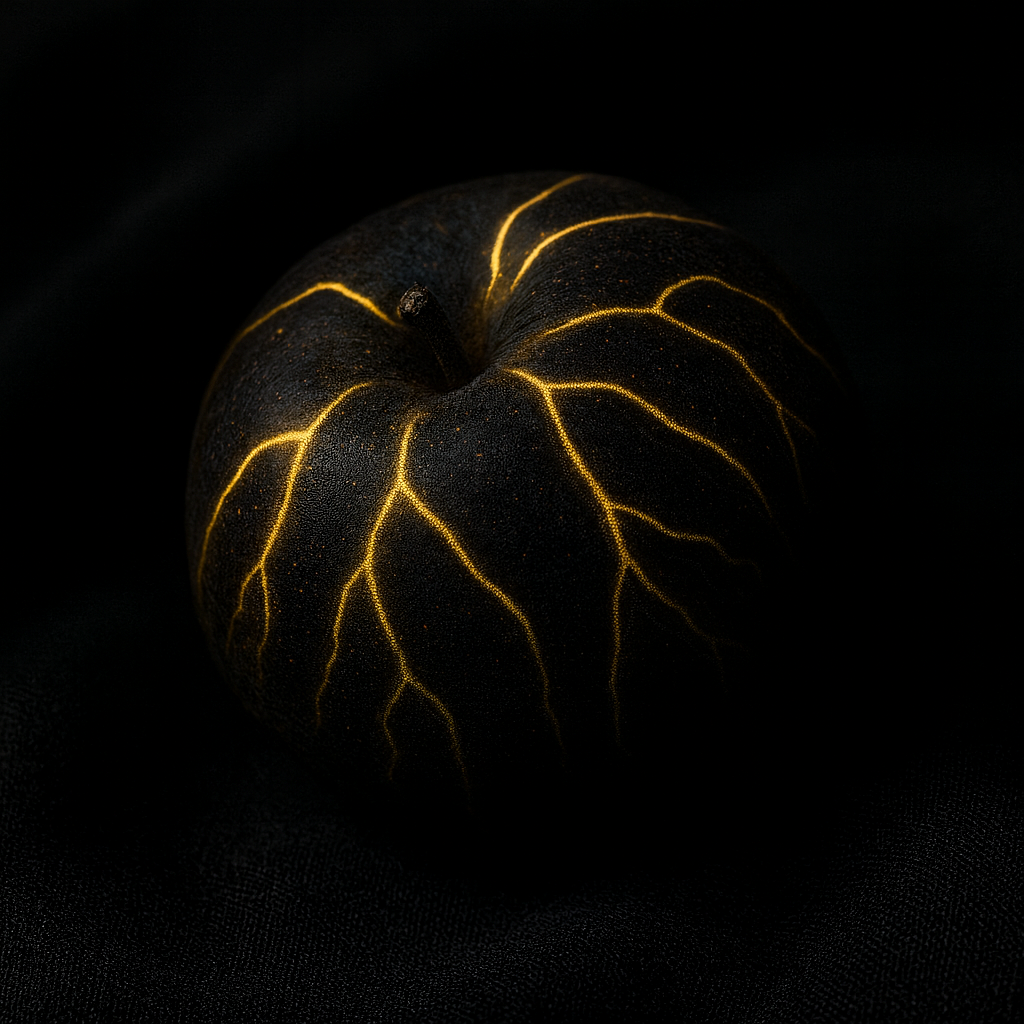
- Auric Starvein – Lionheart Dome Hybrid
Within a handful of high-tech Arc-fed domes associated with Lionheart interests or Arc reactor testbeds, an experimental hybrid known as the Auric Starvein has been quietly cultivated. These plums retain the dark skin of their progenitors, but their bioluminescent veins shimmer in gold-white, and under certain lighting, the flesh itself exhibits faint, prismatic flecks. Auric fruits are bred for extremely high nutrient density, calibrated micronutrient profiles, and exceptional resilience under accelerated growth cycles. They are rarely seen outside controlled environments; when they do slip onto the open market, they Command extraordinary prices among both health-obsessed elites and those who believe the fruits carry subtle Arc side effects.
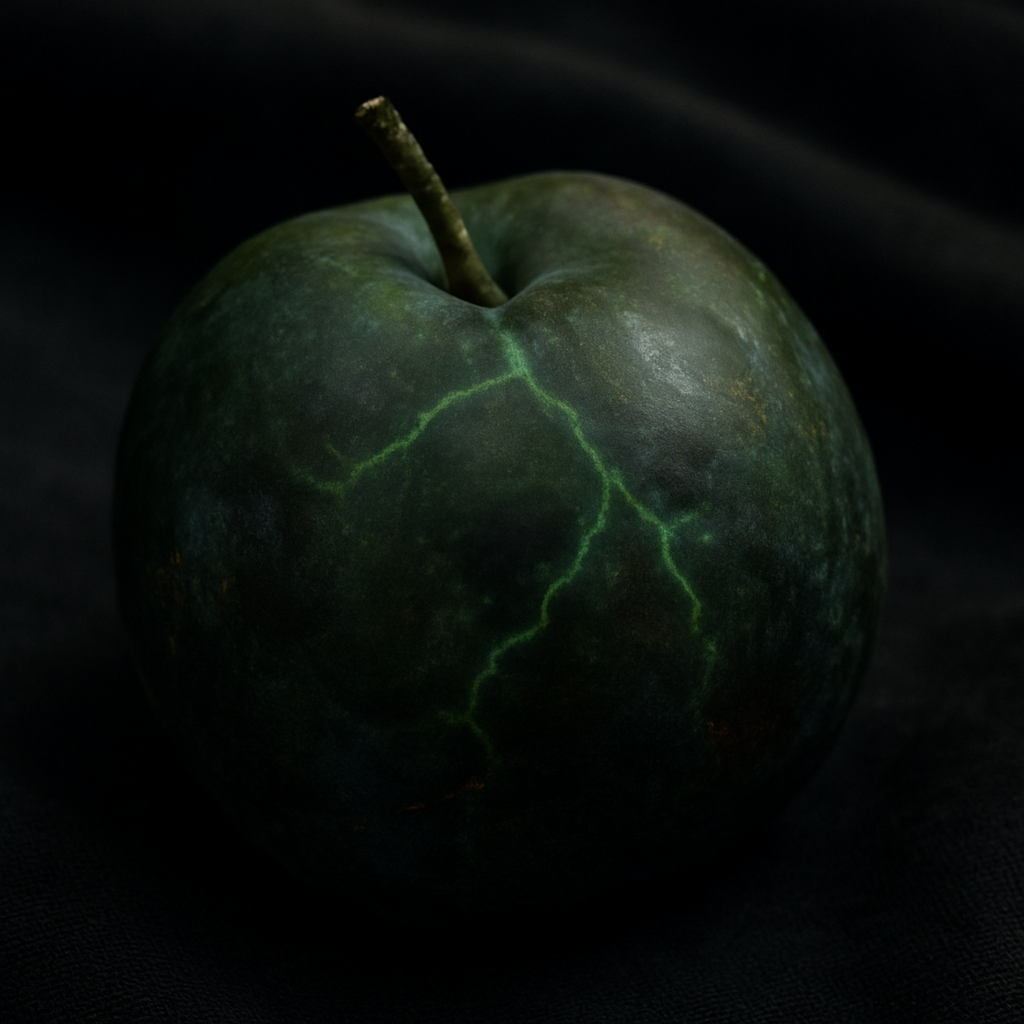
- Grimroot Starvein – Root-Grafted Survival Hybrid
In devastated or siege-bound colonies, desperate farmers sometimes graft Starvein stock onto hardy local root systems or even semi-edible shrubs, creating survival constructs collectively nicknamed Grimroot. These trees look wrong: warped trunks, uneven bark textures, and leaves that don't match known patterns. The fruit is often misshapen and sparse, with uneven vein-glow and muddled flavors, but it grows in places where no sanctioned cultivar will take hold, trenches, rubble fields, bomb craters. Inhabitants speak of Grimroot plums with a mix of gratitude and unease; they are food, yes, but also a visible reminder of how far beyond "normal" life the colony has slipped.
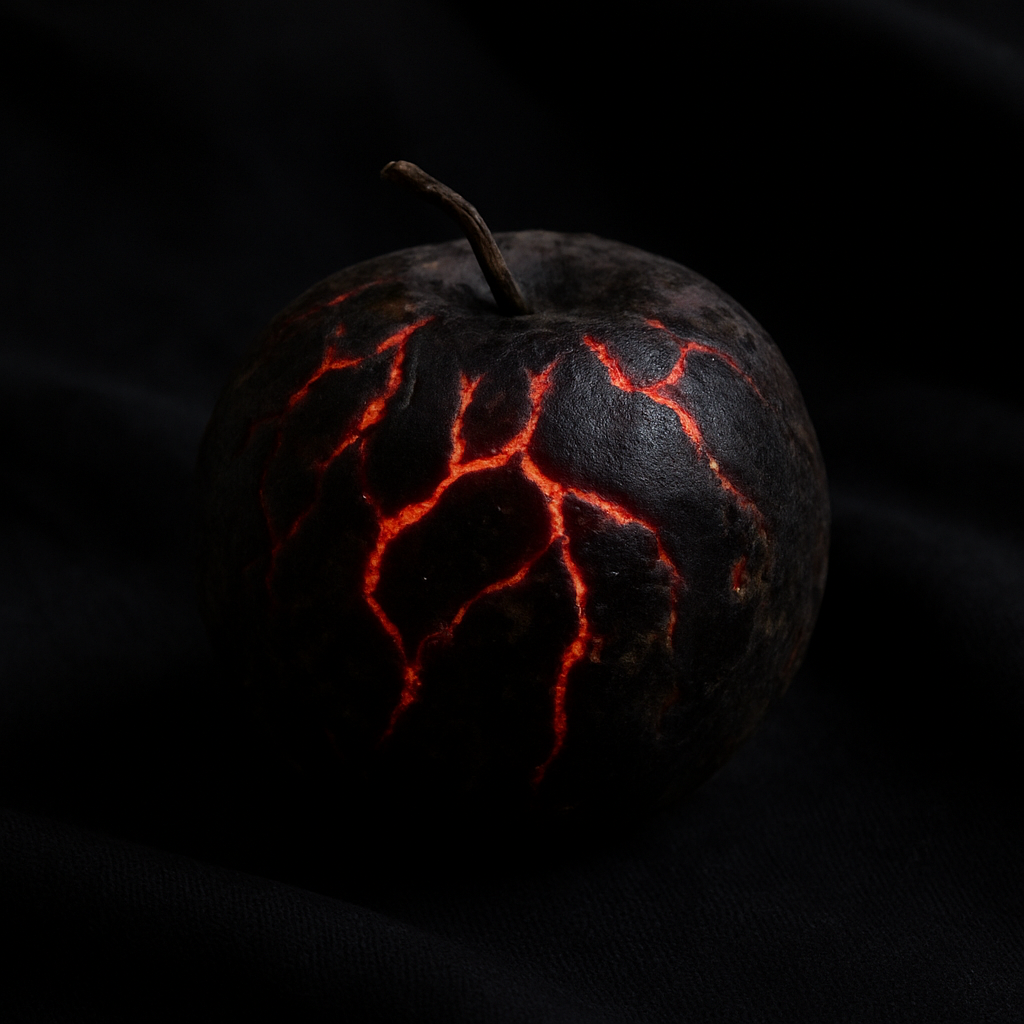
- Rotvein Blight – Pathogenic Mutation & Quarantine Marker
Not all mutations are gifts. The Rotvein Blight is a fungal-pathogenic complex that has emerged in several high-density orchard worlds, corrupting Starvein trees from root to fruit. Infected plums display blackened, over-bright veins that pulse unevenly, sometimes emitting a faint, unpleasant scent of metal and rot even before the flesh collapses into sludge. Consuming blighted fruit causes severe gastrointestinal distress, hallucinations, and, in rare cases, organ damage. Regime authorities treat Rotvein outbreaks as both an agricultural and security threat, enforcing strict quarantines, burning groves, and sometimes using the presence of Rotvein as a pretext to tighten control over "non-compliant" regions.
- Ceremonial "Heartseeds" – Selective High-Glow Pits
Over generations, some colonies have quietly practiced pit-selection rituals, keeping and replanting seeds only from the brightest-glowing, sweetest, or most symbolically significant fruits, often those chosen as festival offerings or memorial plums. The result is a slowly diverging micro-line usually referred to as Heartseed stock. While visually similar to Obsidian Starveins on the outside, these trees tend to produce fruit with more elaborate vein patterns and slightly more decadent, more complex flavors. Heartseed groves are seldom large; they're often planted near shrines, memorial walls, or old battlefields, producing fruit that is eaten during specific ceremonies or reserved for guests of honor rather than sold freely in markets. - Contraband "Veinburn" Splice – Illegal Enhancement Project
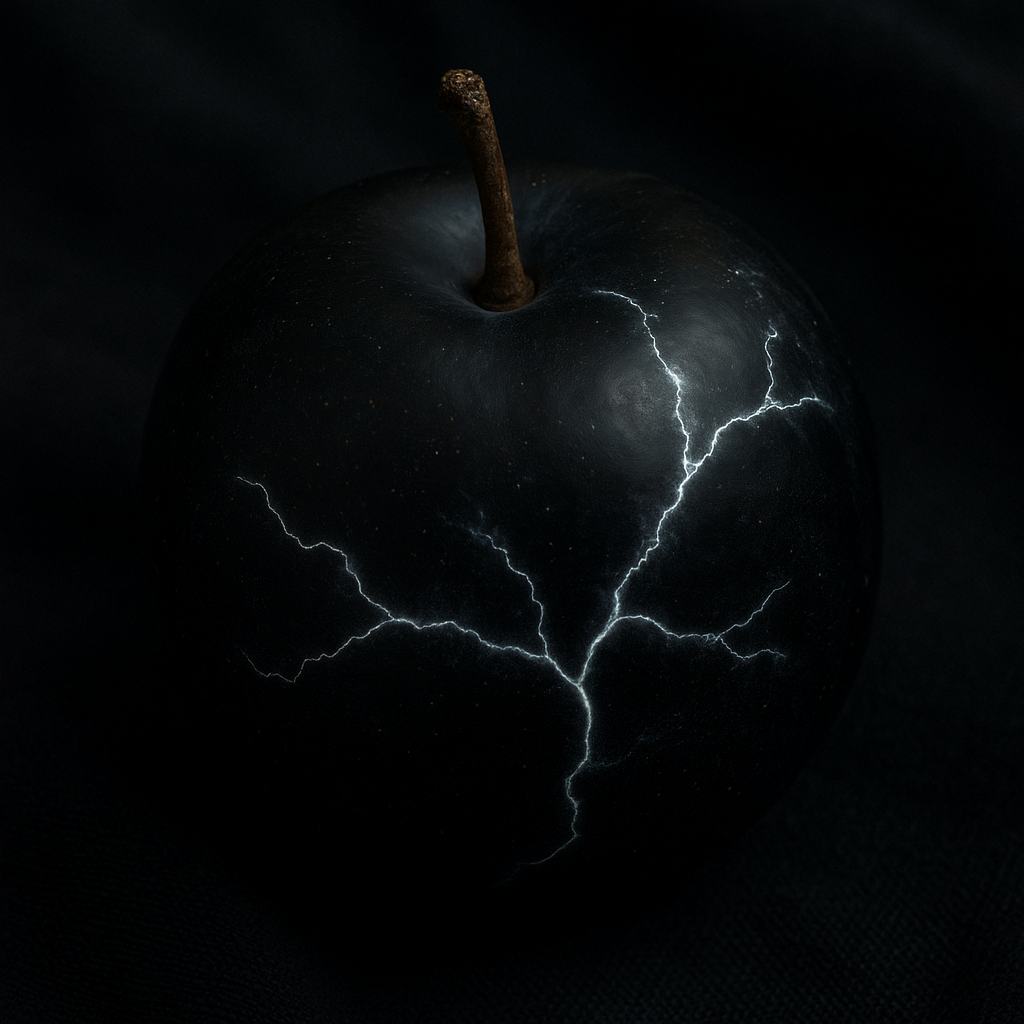
Whispers in certain smuggler circles and black-lab rumor mills mention an outlaw variant called Veinburn: a Starvein strain clandestinely spliced with aggressive stimulant-producing botanicals or pharmaceutical genes. Supposed Veinburn plums are described as having jagged, lightning-like veins that flash brightly when bitten, delivering an intense, short-lived rush of energy, heightened focus, and significant cardiovascular strain. Whether Veinburn truly exists is just a myth stitched from Nightbloom stories and combat-drug fear, or sits in some hidden lab as a shelved prototype, it has already become a cautionary tale in frontier gossip, proof that even a humble fruit can be twisted into a weapon if someone with enough desperation and gene-access decides to try.
Storage, Preservation & Processing
In its fresh form, the Starvein Plum is relatively forgiving but not immortal. On most Outer Colonies, newly harvested fruit is first moved into shaded, ventilated storage sheds or underground cellars, often repurposed from old bunkers, cargo containers, or cooled utility tunnels. The fruit is kept in shallow crates or mesh baskets to prevent crushing, with workers trained to spot the telltale glimmer of damaged skin: once a plum begins to bleed luminous juice, its shelf life drops sharply. The dim, violet trails along crate slats become a rough visual language for handlers; bright webs mean "move this crate now," while intact, dark-skinned fruit marks a slower priority. Properly stored in cool, dry conditions, fresh plums can remain edible for several weeks.
Traditional low-tech preservation methods form the backbone of Starvein longevity on poorer worlds and siege-stricken settlements. Families and co-ops slice the fruit into thin rounds or wedges and lay them out on wire racks under filtered sunlight or hanging above cooking fires. The result is dried Starvein chips, chewy, intensely flavored morsels that keep for months in sealed cloth or leather bags. Smoking the slices over fungal charcoal or seasoned wood adds layers of aroma and dark, almost savory complexity. These dried forms are prized in travel rations, caravan supplies, and long patrol kits, where weight, stability, and resilience to temperature swings matter more than aesthetics.
Where fuel and equipment allow, larger settlements and Regime-run facilities rely on industrial-scale processing. Massive rotary dryers, vacuum dehydration arrays, and low-temperature ovens strip moisture from sliced or pulped fruit, depositing the result into standardized "bricks" and flakes designed for DMDF ration integration. In some hubs, plums are fed whole into automated pits-and-pulp machines that separate seeds for future planting while grinding flesh into a uniform mash ready for jam, concentrate, or fermentation. These facilities often run day and night during harvest season, their exhaust vents releasing faintly sweet, violet-tinted steam over the skyline.
At the higher end of technology, and on more strategically critical worlds, Starvein Plums are sometimes moved into stasis-aligned or cryo-assisted vaults. Large, Arc-fed storage chambers or gravity-controlled cargo holds aboard Fleet tenders can sustain fruit in near-fresh condition for transit over interstellar distances. In these environments, the bioluminescent veins dim almost to nothing, as slowed biochemical activity leaves the fruit in a suspended, pre-ripening state. When thawed or reintroduced to standard ambient conditions, the veins gradually re-ignite, giving the unsettling impression of fruit "waking up" for consumption. This level of preservation is expensive and usually reserved for tribute shipments, officer-grade provisions, or long-term hedge reserves against famine.
Beyond stability, processing changes the fruit's Role and value. Simple drying and smoking keep it a humble staple, but refining it into ultra-smooth preserves, clarified syrups, or culinary reductions elevates it into a sought-after ingredient for chefs and quartermasters who care about morale as much as nutrition. In some advanced hubs, Starvein pulp passes through filtration membranes and micro-centrifuges that separate pigment, tannins, and sugars into distinct fractions. The pigments become dyes and forensic reagents, the tannins feed into pharmaceutical experiments and field-tannin tablets, and the sugars and aromatics become high-grade syrups or bases for carefully controlled wines. The same fruit that sells for almost nothing in raw crates can, after processing and branding, reappear as luxury goods with price tags out of reach of the people who grew it.
Finally, there is the shadow economy of improvised processing: jury-rigged stills in bombed-out warrens; rooftop smoke-drying lines strung between tenements; "forbidden vats" where fermenting mash bubbles away without permits or safety checks. These operations produce wildly variable quality, some beloved, some lethal, but they are vital to the psychological ecosystem of the Outer Colonies. In places where official supply is thin or untrustworthy, people will always find ways to stretch, reshape, and preserve the Starvein Plum into whatever form the times demand: food, medicine, intoxicant, or quiet rebellion in bottled form.
- Fresh Storage Practices
Fresh Starvein Plums are typically stored in cool, low-light environments, cellars, shaded warehouses, or retrofitted bunker spaces, to slow ripening and prevent premature rupture. Crates are kept shallow and loosely packed so that handlers can quickly identify any plums whose glowing juice indicates damage, spoilage, or priority for immediate processing. - Traditional Drying & Smoking
Low-tech methods rely on sun-drying, air-curing, and smoke preservation, turning sliced fruits into leathery chips or smoky strips. These simple techniques require minimal infrastructure, making them ideal for subsistence settlements, nomadic communities, and militia camps that cannot rely on stable power or climate control systems. - Industrial Dehydration & Ration Integration
In more developed hubs, plums are processed through mechanized dehydration lines, producing standardized flakes, powders, and compressed bricks that slot neatly into DMDF ration systems. This form sacrifices some of the fruit's fresh character but guarantees shelf stability, easy transport, and predictable caloric and micronutrient profiles on campaign. - Cryo & Stasis Vaults
High-priority Starvein shipments destined for distant systems or elite tables may be stored in Arc-supported cryo-vaults or stasis-aligned cargo bays, dramatically extending freshness. While costly to maintain, these vaults allow planners to move "live" fruit across long distances and hold strategic reserves against future shortages or political contingencies. - Refinement & Fractionation
Advanced processing facilities can separate the plum's components, pigments, sugars, acids, and tannins into distinct output streams using centrifuges, membranes, and chemical capture media. This yields specialized products: stable dyes, flavor concentrates, tannin tablets, medicinal extracts, and ultra-clear syrups that Command higher market prices and diversified trade routes. - Fermentation, Distillation & Illicit Vats
Licensed wineries and distilleries convert Starvein mash into regulated wines and spirits, but countless unlicensed stills also bubble away in forgotten corners of the Outer Colonies. These unofficial micro-distilleries create everything from beloved local brews to dangerously contaminated "burn," reinforcing community identity while quietly eroding Regime monopolies on production and profit. - Flavor Shift Through Preservation
Each preservation method alters the Starvein's sensory profile: drying concentrates sweetness and tannin, smoking adds earthy bitterness and heat, freezing softens acidity, and fermentation unlocks complex notes of wood, mineral, and dark sugar. These shifts create cultural sub-palates, where different colonies come to associate "true Starvein taste" with their dominant preservation style.
Historical Notes & Origin Stories
The official Regime History of the Starvein Plum traces its origins to an early pre-Regime agri-engineering project undertaken in the aftermath of cascading collapses and resource wars. With multiple frontier worlds facing soil exhaustion, orbital bombardments, and supply shortfalls, a consortium of corporate agronomists, later absorbed under UCG authority, began work on a hardy, rapidly maturing orchard fruit capable of rooting in damaged terrain. The project, archived under names like Astra-Vena Initiative, sought to combine Terran plum genetics with stress-tolerant lines from other stone fruits, layering in engineered traits for heavy metal tolerance, deep root penetration, and high micronutrient storage.
The first truly stable Starvein cultivars were field-tested on borderline failed colonies, worlds where population numbers had thinned, and morale was as eroded as the soil. Early reports describe settlers watching the first orchards take hold in cratered ground and slagged industrial districts, the dark fruit clusters glowing faintly at dusk. In Regime propaganda, these trials were portrayed as triumphs of enlightened governance and technocratic mercy; in local oral histories, they are remembered as desperate, improvisational, and sometimes deadly experiments, with more than a few failed orchards turning toxic before the strain stabilized.
As the UCG consolidated power and the Dawns March Defense Force spread across multiple systems, the Starvein Plum transitioned from experimental remedy to standardized tool. Logistics planners loved it: a single species that could double as a soil bandage and ration stock, feeding both the land and the people repairing it. Supply officers began including Starvein saplings or seeds in reclamation kits for newly "pacified" colonies, and agri-teams followed DMDF landings almost as surely as artillery and Command relays. A newly conquered or reclaimed world with its first Starvein groves became a quiet milestone, a sign that the Regime expected to keep this world, not merely strip it and move on.
For the people on the ground, the fruit accumulated layers of myth and memory. Refugees tell stories of the "first Starvein harvest" that kept a settlement from starving through a particularly harsh orbital winter, or of a single preserved crate that arrived through shattered slipspace lanes just as food riots were about to erupt. Some worlds weave tales that the bioluminescent veins carry the ghost-light of lost stars or ships, or that the fruit first grew where a burned Regiment buried its dead and watered the ground with their blood. These stories are rarely written into formal histories, but they live in lullabies, toasts, and whispered vows around campfires.
The Starvein Plum has also, at times, played a direct Role in political and military turning points. In one often-cited Outer Colony incident, a Regime governor attempted to divert nearly an entire planetary harvest to a coreward trade convoy in exchange for personal favors, leaving local populations with only minimal ration bricks and no preserved stock for the coming season. The resulting unrest spiraled into strikes, garrison mutinies, and eventually a full-scale oversight inquiry; the scandal, informally nicknamed the "Purple Tithe Affair", ended with several officials quietly removed and new regulations imposed on how much of a colony's staple crops could be extracted in any given year.
As the Genesis Saga timeline marches into open war, glassing events, and deepening fractures between factions, Starvein Plums continue to appear at the margins of key events. They are present in siege diaries, where defenders describe stretching dried slices across impossible weeks. They appear in peace talks, set out as humble offerings from Outer delegates who want negotiators to taste something of the worlds at stake. They show up in Lionheart analysis logs, flagged not just as agricultural data. Still, as indicators of planetary resilience, where Starvein orchards are being planted, someone is betting on a future.
- Corporate Genesis & the Astra-Vena Initiative
The fruit's engineered ancestry lies in corporate labs tasked with solving the dual problem of soil collapse and food scarcity on frontier worlds. Project Astra-Vena blended Terran plum genetics with ruggedized horticultural lines, creating a prototype that could thrive in chemically stressed, war-damaged environments, an invention later nationalized and folded into UCG infrastructure. - Early Field Trials on Failing Worlds
Initial deployments targeted colonies teetering on the brink of abandonment, where traditional crops had already failed. Success stories speak of orchards blooming in bomb-scored ground; failure reports, less publicized, detail toxic mutations, failed grafts, and quarantined groves that left early adopters wary of "gifts from orbit." - Adoption by the Dawns March Defense Force
As DMDF ground campaigns and reclamation efforts expanded, Starvein stock became a standard component of long-term stabilization packages, accompanying engineers, med teams, and occupation forces. Its appearance in a war zone signaled a strategic decision: this world was to be held and rebuilt, not simply fought over and discarded. - Myths of First Harvest & Survival
Many settlements preserve stories of a pivotal "first Starvein harvest" that carried them through a famine, siege, or catastrophic supply disruption. These narratives elevate the fruit from mere crop to cultural savior, casting the orchards as quiet heroes standing alongside soldiers, medics, and smugglers who kept the colony alive. - Political Scandals & the Purple Tithe
Attempts by corrupt officials or overzealous planners to over-export Starvein harvests have repeatedly sparked unrest, riots, and policy shifts. The famous "Purple Tithe Affair" is only the most documented example of how mishandling a supposedly humble fruit can destabilize local governance and draw unwanted scrutiny from higher authorities. - Indicators of Future Intent & Ownership
In the eyes of analysts and ordinary citizens alike, the planting of new Starvein groves is read as a signal of long-term intent, by the Regime, by local councils, or by external powers like Lionheart. Where the trees go into the ground, someone expects people to still be there in a decade, and to be still eating. - Legendary & Esoteric Interpretations
Aether-touched storytellers, sects, and fringe philosophers sometimes imbue the bioluminescent veins with mystical significance, claiming they echo lost slipspace routes, fallen fleets, or the paths of souls. Whether regarded as superstition or subtle truth, these beliefs fold the fruit into the broader spiritual tapestry of the Genesis Saga, binding its History not just to hunger and politics, but to meaning.
Significance
The Starvein Plum sits at a strange crossroads of the Genesis Saga, too humble to be called legendary, too omnipresent to be ignored. For most people in the Outer Colonies, it is not a delicacy or a symbol that appears on banners; it is simply there, woven into meals, markets, and memories until its absence becomes more shocking than its presence. Yet when historians, analysts, and Lionheart archivists trace the survival arcs of contested worlds, the same pattern keeps emerging: where the Starvein Plum takes root, communities tend to endure. Its significance lies in that quiet, stubborn Continuity; it is the fruit that shows up when everything else has failed to arrive.
To the UCG Regime, the Starvein Plum is a convenient emblem of their chosen narrative: that Order and technology can coax life from ash. Official histories point to the Astra-Vena Initiative and subsequent agri-programs as proof that the Regime does not merely conquer worlds, it rehabilitates them. Propaganda reels frame Starvein orchards as the green signature of UCG stewardship, the visible promise that "even shattered soil can serve the Flame." This framing is not entirely false; DMDF reclamation operations genuinely lean on Starvein groves as both food and stabilizing biomass. But for the people harvesting under watchful eyes, the fruit's significance is double-edged: it represents both survival and the shadow of the power that claims credit for that survival.
On the ground, among workers, troopers, and colonists, the fruit carries a more intimate weight. It is what people remember chewing during sieges, what children trade in alleyways, what someone's mother turned into jam when there was nothing else sweet in the house. A soldier might recall the taste of dried Starvein slices on the night before a doomed defense; a widower might remember his partner's hands stained violet during harvests that paid their taxes and bought their medicine. In that sense, the plum becomes a vessel for lived History, each generation layering new associations of hunger, relief, grief, and celebration onto the same dark skin and faintly glowing veins.
Symbolically, the Starvein Plum has become a shorthand for worlds that refuse to die. A colony with fresh Starvein groves is one that still believes in its own future, however cautiously. Planting those first saplings after bombardment or famine is a quiet, collective act of faith: the trees will not bear fruit for years, and those who dig the holes and haul the water may not live to taste the best harvests. When a community chooses to plant Starveins instead of purely short-term crops, it is declaring, without speeches or proclamations, that it expects children to be here still, biting into violet-stained fruit under the same alien sky.
Strategically, the fruit has also become a barometer for outside observers. Field reports and Lionheart situation briefs sometimes include Starvein metrics alongside troop counts and slipspace stability, how many orchards survived the last campaign, where new groves are being laid out, and which worlds are exporting preserves instead of importing them. These details tell a quiet story: which planets have recovered enough to share their bounty, which are barely hanging on, which have been so broken that even a notoriously hardy crop cannot gain a foothold. In that way, the Starvein Plum functions as a living indicator of the wider war's hidden cost.
Ultimately, the significance of the Starvein Plum is not that it is rare, glamorous, or miraculous. It is ordinary in places where ordinary things are constantly under threat. In a Galaxy that shatters cities from orbit and writes History in Fire, the Starvein Plum embodies another kind of story: one of people who keep planting, picking, preserving, and sharing, even under regimes, bombardments, and blockades. It symbolizes the small, stubborn insistence that life should not only continue, but continue with flavor, with something tart and sweet and staining that says, we were here, and we planned to be here tomorrow.
The Starvein Plum is a hardy, bioluminescent stone fruit cultivated across the Outer Colonies of the United Colonial Group. Recognizable by its near-black skin and faint glowing vein patterns beneath the flesh, it serves as both a staple food and a living symbol of survival in war-scarred, resource-poor worlds. Engineered to root in damaged soils and yield dependable harvests, the Starvein Plum quietly underpins countless colonial economies, rations, and reclamation efforts throughout the Genesis Saga.
Despite its evocative appearance and engineered resilience, the Starvein Plum is decidedly not rare within the regions that matter most to its story. Across the Outer Colonies of the Genesis Saga, it ranks among the most common orchard fruits, a staple planted wherever the soil can still support trees and where Regime or local planners have prioritized long-term food stability. On war-touched worlds, especially those slowly clawing their way back from glassing, industrial poisoning, or evacuation, Starvein groves may be patchy or localized, but wherever people are trying to reclaim the land, the fruit is rarely far behind. It is "special" only in the way that water, bread, and breathing are extraordinary: so fundamental that its absence is more notable than its presence.
In the Core systems and elite circles, however, Starvein-based goods occupy a more nuanced position. Fresh plums are less common there, often arriving as part of tribute shipments or specialty imports that emphasize their frontier origin. High-grade wines, aged reductions, and carefully curated preserves from particular Outer worlds can become minor status symbols, with connoisseurs debating which colony's soil yields the best tannin balance or glow intensity. Even so, the fruit is never framed as exotic in the way of truly rare reagents or aether-touched delicacies; it is acknowledged as a humble, dependable export of the hard edges of civilization, ubiquitous where the Regime grasp is roughest, and only selectively elevated elsewhere when it suits fashion, nostalgia, or political theater.

Comments