
How to Build Transport and Communication Networks in Any Genre
Connecting Your World
How to Build Transport and Communication Networks in Any Genre
Every world needs a way for people to move and talk. Roads, rivers, messengers, trains, ships and starports. They all help your world feel real. They shape trade, travel and culture. They also give you many chances to create drama and story.
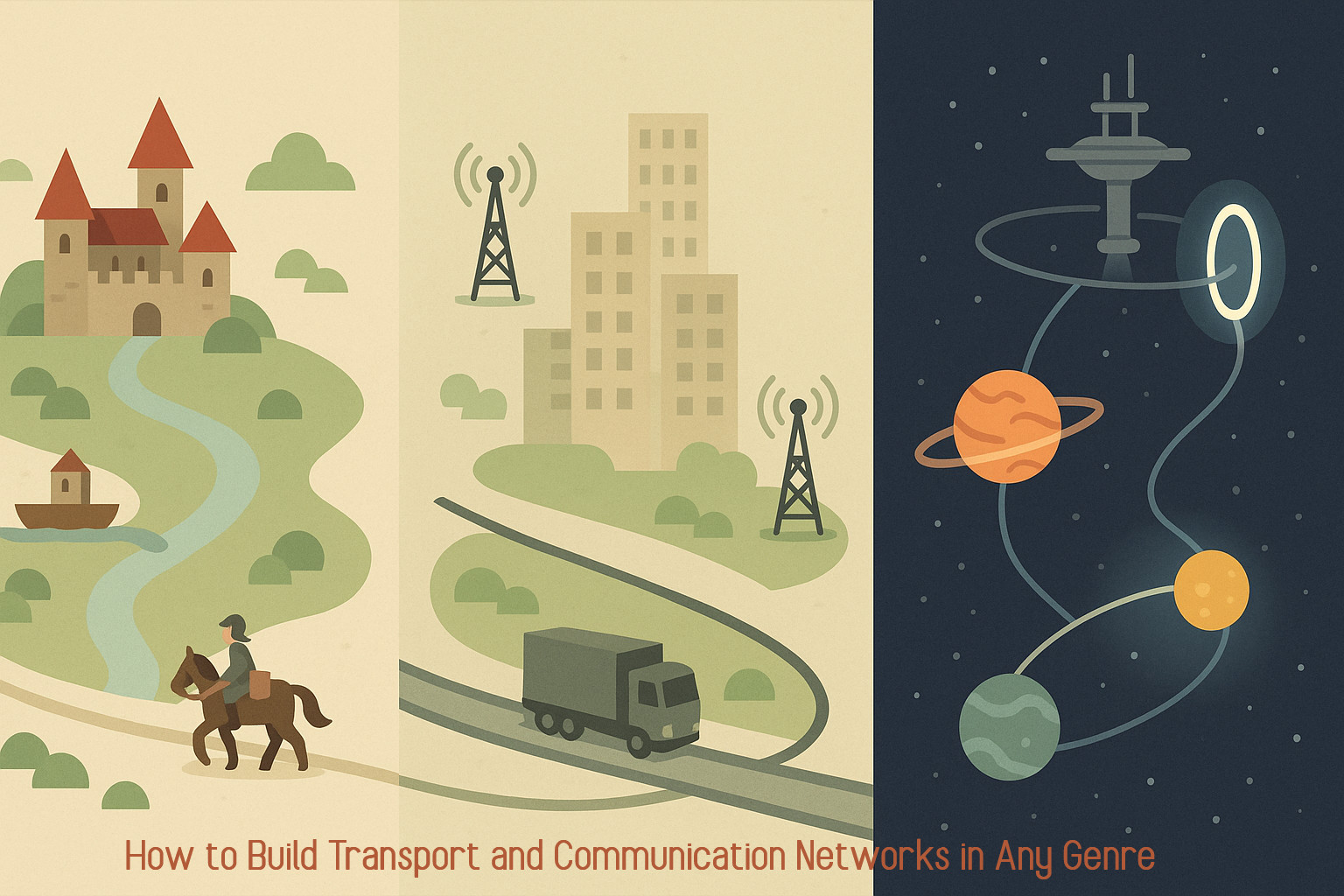
This post gives you a simple guide on how to build these networks. It covers fantasy worlds, modern worlds and far future worlds. You can use it for, worldbuilding, creative writing, games and stories.
Why networks matter
Transport and communication tell us how fast people can share news or goods. They also show who has power. When roads and messages flow through one place, that place grows strong. When they break, chaos follows. This gives you many ideas for quests and stories.
Start with the land
Look at the shape of your world. Mountains slow travel. Rivers help it. Cold lands freeze paths. Hot lands tire travellers. Some places become natural meeting points. These become towns, ports, forts or stations.
Think about your dangers. Bandits on the old road. A haunted pass. A storm belt in space. These shape the routes people choose.
Fantasy and old world networks
In fantasy settings people often use roads, river boats and sea ships. Messengers ride horses. Beacon towers send light from hill to hill. You can add magic if you wish. A portal stone can link two far realms. A mage guild may control long range messages. This creates conflict and story.
Think about how rare magic is. If magic is common, travel is fast. If magic is rare, local life is slow and close.
Good story ideas here include a broken portal, a blocked mountain pass or a river monster that stops trade.
Modern networks
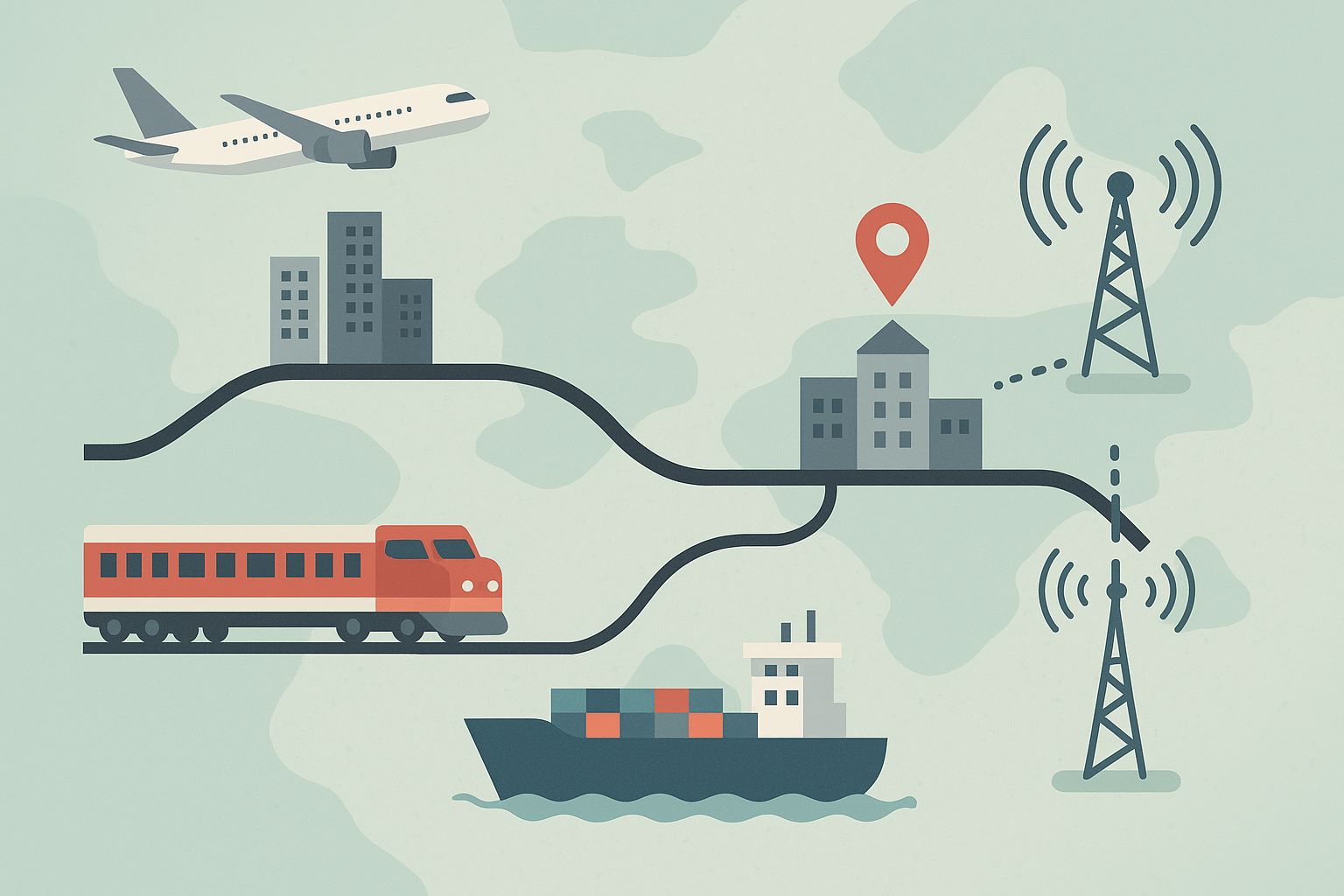
Modern worlds have trains, long motorways, busy airports and networks of shipping ports. Cities have buses and underground systems. Goods race across continents. People send messages through cables, phones and satellites.
These networks grow and break. A rail strike can stop a whole region. A fallen bridge cuts a city in two. An internet outage sparks panic. All of these can become story ideas.
Future and science fiction networks
Future worlds can use jump gates, wormholes, giant space docks or orbit lifts. Ships travel along safe lanes. Stations act as hubs for whole sectors. Messages may use quantum links. A single relay can hold a star system together.
If a relay fails, whole worlds fall silent. Pirates may hide in the dark between lanes. A great power may claim every gate as its own. This gives you rich story threads.
Build your nodes
A node is a place that holds the network together. It can be a town at a crossroads. A fortress at a river bend. A starport near a jump gate. A stone circle that holds portal magic. Think about why the node matters. Think about who rules it. Think about what happens when it falls.
Most networks have steps from small to large. A village road joins a market town. The town joins a trade city. The city links to the capital or the core starport. The more links a place has, the more important it becomes.
Culture shaped by routes
Fast travel brings many cultures together. Slow travel keeps them apart. A world with fast messages will spread news and ideas with ease. A world with slow messages will grow myths and local tales.
When travel breaks, people feel fear. That fear can start wars, riots or quests.
Simple tools to help
Draw a map. Mark paths, ports and gates. Think about the age of each route. Old roads hold secrets. New roads show growth. Make notes about who keeps the routes safe. Another simple solution is to use mind maps when planning your transport networks.
If you use World Anvil you can link your towns, routes and organisations. This helps you keep track of who controls each part of the network.
Final thoughts
A world is like a body. Roads and paths act like veins. Messages act like nerves. When these networks grow, your world becomes alive. When they break, your world shakes. Use this to inspire your stories and games.
