

Saber of Canto
Fate/Canto's name is a reference to multiple servants in the HGW. With Canto's use in medieval poetry referencing the multiple letters & poems written by Nobuyuki.
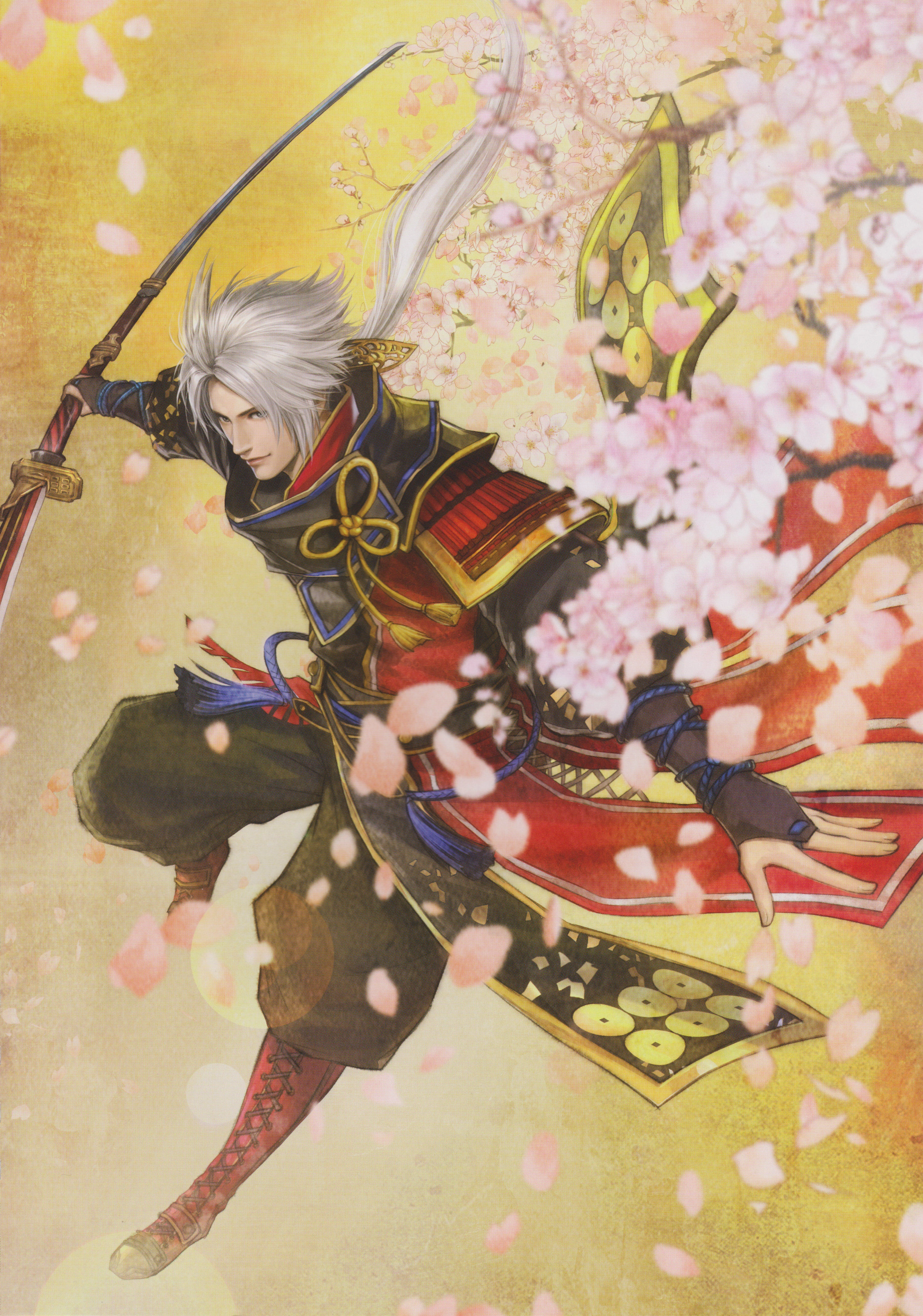
Lion of Shinano Nobuyuki Sanada (a.k.a. Genzaburō, Ittōsai)
Noble Phantasm:
Ueda Castle (B): Nobuyuki spawns Ueda Castle. Inside Nobuyuki will gain advantage, grow in size, & Miki will inflict curse.
Sanada no Kōkei-sha (Successor of Sanada)(B+): Nobuyuki throws Miki through six ethereal coins, getting bigger when it passes through each of them.
Skills: Riding, Tactics, Mad Enhancement, Weak Constitution, Protection from Arrows
Holy Grail War: Fate/Canto
Dream: His bloodless fight at Toishi Castle.
Death:
Ueda Castle (B): Nobuyuki spawns Ueda Castle. Inside Nobuyuki will gain advantage, grow in size, & Miki will inflict curse.
Sanada no Kōkei-sha (Successor of Sanada)(B+): Nobuyuki throws Miki through six ethereal coins, getting bigger when it passes through each of them.
Skills: Riding, Tactics, Mad Enhancement, Weak Constitution, Protection from Arrows
Holy Grail War: Fate/Canto
Dream: His bloodless fight at Toishi Castle.
Death:
Physical Description
General Physical Condition
While his legendary counterpart was noted to use his stature to boldly intimidate his rivals, the real Nobuyuki would be plagued with illnesses throughout his adulthood. There were many days where he would be bedridden or attempting to treat himself with a carefully planned series of thermal baths. Recovery efforts for his health were entrusted to his acquaintances & personal retainers.
Mental characteristics
Personal history
Nothing is concretely written about Nobuyuki's infancy. It is assumed that since Masayuki was the 3rd son & not a candidate for clan head, Nobuyuki had lived a normal childhood & would have been raised to follow his father's footsteps as a Takeda retainer. His uncles' sudden deaths at Nagashino led to the Sanada clan being leaderless. While Nobutsuna's will stated that leadership should be passed onto Masateru's descendants, Masayuki's family records argued that the present circumstances could not to allow it. His older brother's children were ruling the distant Fukui Domain, & the gap left by Nagashino was too immediate to be left empty for long. Takeda Katsuyori sided with Masayuki on the matter. On his orders, a 10-year-old Nobuyuki was swiftly married to Nobutsuna's daughter to ensure that Masayuki's descendants would be deemed legitimate heirs. To ensure Masayuki's loyalty to Katsuyori, Nobuyuki & his mother were sent to be hostages to the Takeda. In November 1579, Nobuyuki was granted his right to manhood ceremony with Katsuyori's son, Nobukatsu. The "Nobu" in his name is argued to be granted either in the late Shingen's honor or under Nobunaga's name in Katsuyori's attempt to appease the temporary Takeda-Oda peace treaty. By this time, the Sanada family records recognized Nobuyuki as the clan successor, addressing him as "Young Lord". 3 years later, the Takeda ranks fell against the Oda. Nobuyuki & his mother fled & returned to Masayuki in Ueda. Soon after Honnōji, a civil war regarding the ownership of the Takeda legacy & Oda influence within the east began. Masayuki initially supported the Hōjō to defeat Takigawa Kazumasu at Kannagawa. He made the 17-year-old Nobuyuki a commander for the conflict with command of his own unit. Nobuyuki was locked out of the loop regarding the nature of the conflict & was confused into a standstill. Once Toshimasu informed him that Nobunaga had died, Nobuyuki readied himself to assist his father's forces. Around the same time, Uesugi Kagekatsu caused confusion by arriving with troops at Kaizu Castle. Convinced by Yoda Nobushige & Sanada Nobutada, Masayuki decided to claim independence & fought the Hōjō forces. While Masayuki dealt with the Uesugi, Nobuyuki led 700 cavalry to counter the Hōjō supporter, Tominaga Shuzen, at Numata. To save their allies against their enemy's force of 5,000, Nobuyuki ordered Sanada retainer Karasawa Genba to ride ahead & lay troops in ambush. Paranoid by the Sanada's tactics, the Hōjō kept their eyes to the front & held themselves in place at Tengomaru Castle. Meanwhile, Nobuyuki ordered a smaller special unit to infiltrate the northern wing of Tengomaru Castle. Their mission was to set fire to the keep while spreading the lie that it was caused by a traitor. With the Hōjō ranks turning against one another in the chaos, Nobuyuki then led the charge with 50 men & a spear for the fight. The Sanada efforts took out 100 men, & their guerrilla tactics led to Tengomaru Castle's brisk defeat. Nobuyuki would continue to support his father in his plans for Sanada independence, including the assassination of Muroga Masatake. Despite temporary treaties being made, open aggression for the Sanada ignited again when Tokugawa Ieyasu tried to move into the Kai region in 1585. By then, the Sanada were independent so Masayuki banned his entry on the grounds that a treaty did not grant him ownership to any Sanada property. While Ieyasu withdrew to Hanamatsu, Masayuki negotiated with the Uesugi to reinforce his stand against the incoming Tokugawa-Hōjō alliance. Masayuki stationed himself at Ueda Castle by the middle of the year. Ieyasu employed Sugihara Nagauji as a general, who looted from the neighboring villages around Shioda Castle & set up a fort at the foot of Komayumi Mountain. Nobuyuki was stationed with an approximate 300 men at Toishi Castle, one of the supporting fortifications for the battle. Nobuyuki was mounting his horse when he was approached by a man named Mizuide Daizō, the head of the stables. Daizō told Nobuyuki: "The front of this castle looks solid, but the back parts of it are missing. So you should have the infantry shoot from the back so we can use the front for cover." He acted on Daizō's plan & his suggestion to raise multiple war cries to distract their opponents with the mountain's echo during the attack, leading to a Sanada victory. Nobuyuki would later remark that Daizō's observations about their surroundings would have been logically obvious to everyone present, yet the stableman was the first to draw attention to it. Nobuyuki praised Daizō's resourcefulness of the land for saving Toishi & rewarded him for the effort. Many of Nagauji's men were captured alive by Nobuyuki's troops & personally brought before Masayuki. His father said to Nagauji specifically, "You are a venerable one. Someday, you may be useful to me." They were spared & allowed to return to Ieyasu, an act of mercy that was said to have made the Tokugawa generals grateful. Nobuyuki noted that about 1,300 men fell at the mountain, though the Mikawa Monogatari records an approximate 300 were lost. In 1589, Toyotomi Hideyoshi oversaw reconciliation between his new Sanada & Tokugawa vassals. It was agreed that the Sanada would assist the Tokugawa as a condition of their peace. Ieyasu was impressed with Nobuyuki's talents & arranged a meeting with him at Sunpu Castle. Shortly after, he was married to Komatsuhime. While they fought for Hideyoshi's conquests, Nobuyuki befriended Mitsunari. During the Odawara Campaign, Nobuyuki was one of the generals stationed at Matsuida Castle, which surrendered quickly to the massive Toyotomi army. It was around this time of history that the Sanada became famed for their crimson armor, as Hideyoshi specifically addressed them to do so around 1593. He was given the rank, Junior 5th Rank, Governor of Izu-no-kami in 1594, receiving a promotion at the same time as his younger brother. Nobuyuki is not recorded to have taken part in the Korean Campaign, but he was known to have traveled as far as Nagoya in Bizen in its duration. In 1600, the Sanada had their individual obligations. In Nobuyuki's case, Mitsunari appealed to him to join the Western army. Around the same time, Ieyasu was trying to lead a preemptive strike on the Uesugi in Aizu & called for Nobuyuki's aid through Ōkubo Tadachika, one of Hidetada's messengers. When no reply came, Ieyasu sent a letter to Masayuki a month later stating that the Toyotomi forces in power were neglecting their written oath to protect the infant Hideyori. A copy of the secret document signed by the Five Commissioners was given to the Sanada. Despite the Tokugawa's suspicions of Nobuyuki's possible allegiances to Mitsunari, Nobuyuki answered Ieyasu a week after Masayuki's letter: his father & younger brother have joined Toyotomi & left for Ueda; he would stay. Ieyasu quickly wrote back with his gratitude. Within the same missive, Ieyasu figuratively granted Chiisagata District to Nobuyuki & promised that he would not confiscate it in the future. About 3 months later, Nobuyuki was ordered by Ieyasu to join Hidetada's forces in attacking the Chiisagata District. Specifically, he was to reunite with Hidetada's forces as they attempted to cross Nakasendō from the east. Honda Masanobu, Hidetada's strategist, had Nobuyuki march towards Toishi Castle. The castle he once defended was now under Nobushige's command. Many of the Sanada troops felt torn over the confrontation due to their respect for both brothers & decided to withdraw. Alternatively, it's said that the troops refused to have the brothers fight against one another and chose to surrender. Nobuyuki's fast & relatively bloodless takeover of Toishi Castle was one of the few advantages that the Tokugawa forces had for the Ueda Castle siege. From his station, Nobuyuki provided support & protection for Hidetada's troops. Like his father & brother, the Ueda Castle conflict caused his absence at Sekigahara.When the Western Army's defeat at Sekigahara was announced to the forces at Ueda, both forces were at a standstill. Masayuki held himself within Ueda Castle & refused to answer any Tokugawa inquiries. It wasn't until he received news that Yamanote-dono was safe from his own messengers approximately 2 weeks later that he began to communicate with Nobuyuki, who was still at Toishi Castle. On behalf of his father & younger brother, Nobuyuki traveled to the Sanada manor in the capital. Ieyasu wanted to have Masayuki & Nobushige executed to join the fates of others who stated their open defiance to Ieyasu or Hidetada. Stories go on to say that Nobuyuki went to his father-in-law, Honda Tadakatsu. After sharing news of Masayuki's consent to defeat, Nobuyuki burst into tears on his knees & pleaded for a way to spare Masayuki & Nobushige. Aware of his lord's intentions, Tadakatsu passed Nobuyuki's plea to Ieyasu & purportedly warned, "If you should fail to heed this wish, be prepared for another war." After Tadakatsu shared his opinion, Ii Naomasa & Sakakibara Yasumasa voiced similar sentiments. Ieyasu was said to have been stunned by the support Nobuyuki received. Alternatively, Tadakatsu would fight his lord if he did not grant the request or that Nobuyuki's steadfast loyalty & friendship with Hidetada caused Ieyasu to stay his hand. In December 1600, Masayuki & Nobushige were ordered to leave Ueda Castle with a Tokugawa assigned escort, & a modest number of Sanada retainers & soldiers who swore loyalty to either lord chose to follow them into exile. Nobuyuki was present at the time of their departure to watch them go. Though they were forbidden to see one another, Nobuyuki would continue to communicate with Masayuki & Nobushige in the years that they were apart. His letters would range from summarizing the political changes in Ueda, addressing retainer complaints & requests, to common observations of the weather. At his personal expense, Nobuyuki provided for the exiles in Kudoyama. On December 13, Ieyasu revoked Masayuki's titles & property. As he promised, he gave them to Nobuyuki. To politically distance himself with being associated with Masayuki, Nobuyuki changed the spelling of his name in written documents. Shortly after he appointed Nobuyuki as the lord of the Ueda Domain, Ieyasu ordered Ueda Castle to be destroyed & rebuilt; the ruling for the rebuilt castle would later go to the Sengoku clan. Nobuyuki was given 95,000 koku & made Numata Castle his main keep. As the clan head, he was given the task to oversee the reconstruction efforts of Ueda in the aftermath of the second castle siege. In the years that would follow, these efforts would be strained by Mount Asama's eruptions, disease epidemics, food shortages, & other natural disasters. Nobuyuki employed various plans in the struggle to stabilize the populace such as draining the castle moat to help distribute water, cutting the pay of his retainers to expedite recovery efforts, & focusing on plans that maintained the castle-town. Though he himself suffered in his health, Nobuyuki faithfully fulfilled his two major responsibilities to his lord and his family. Accommodations arranged by Komatsuhime's handmaidens were made, yet Masayuki died due to illness in 1611. Upon learning of his father's death, Nobuyuki requested for the shogunate to permit him to arrange a funeral. This time, he was denied outright. Nobuyuki sank into a deep depression upon hearing the news, lamenting that he couldn't even be allowed to pay proper rites or visit his father's gravestone. Masanobu was sympathetic & scribed a letter to Nobuyuki to explain the shogunate's justifications. Even if the eldest brother had repeatedly proved his loyalty to the shogunate, Masayuki had still raised arms against them. The shogunate could & would not express such a luxury towards a criminal without paying the repercussions from others. During the Ōsaka Campaigns, Nobuyuki had taken ill. His sons had taken to the field in his stead. In 1622, Hidetada ordered for Nobuyuki to be transferred to the Matsudai Domain with 130,000 koku. As a wealthy individual, his reputation in the court increased. When tales of his heroics spread through gossip, he was supposedly famed as the "Lion of Shinano". With the early deaths of his eldest son, Nobuyoshi, & his infant heir, Nobuyuki passed inheritance of the Sanada clan to his 2nd son, Nobumasa. Nobuyuki retired in 1656. 2 years later, however, Nobumasa suddenly died. The right for the 3rd leader of Matsudai turned into an ugly civil dispute between the Sanada daimyo. The 2 candidates that were considered by them were Nobutoshi (Nobuyoshi's second son) & Yukimichi (Nobumasa's 5th son). After the issue was brought to the shogunate's attention, it was decided that Yukimichi should be the legitimate heir. Since he was only 2 years old and fatherless, Nobuyuki was assigned to foster the child into his new responsibilities. Months later within the same year, Nobuyuki fell ill. He died when he was 93. His death poem is roughly translated as: "In this world of ever-present change, I cannot imagine it as a dream." Retainer & common folk were said to have prayed for his spirit & mourned his passing.
Failures & Embarrassments
When Nobuyuki learned that the shogunate approved Sengoku Tadamasa's transfer to Ueda without consulting him, Nobuyuki personally burned all of Tadamasa's legal documents. Nobuyuki's sentiments towards Mitsunari had soured before Sekigahara, so much so that he wanted any ties to him to be destroyed. He only stayed his hand out of respect to his aunt being married to Mitsunari. The destruction of either papers would have been bothersome to him if found so he kept them hidden in a lacquered box that kept an allegedly cursed dagger that Ieyasu had gifted him, knowing that the box's fanciful reputation would have deterred people from opening it. Another story regarding Nobuyuki's purported rage occurred when Nobushige left his exile in 1612. Nobuyuki wanted to keep tabs on his brother & employed the task to Baba Mondo, a Sanada shinobi. Mondo assisted the brothers' secret communication with one another. When the Ōsaka Campaign took place, however, Mondo lost his nerve for war & fled. While on the run, he raped a farmer's daughter & was reported to shogunate authorities. His existence led to rising suspicions of Nobuyuki colluding with the Toyotomi. Hearing the rumors made Nobuyuki incensed & order for Mondo's immediate assassination. Nobuyuki personally hunted for Mondo &, once the shinobi was caught, he insulted the shinobi in his fury before personally executing him.
Mental Trauma
Nobuyuki's father, Masayuki, died to illness in 1611. Upon learning of his father's death, Nobuyuki requested for the shogunate to permit him to arrange a funeral, but was denied outright. Nobuyuki sank into a deep depression upon hearing the news, lamenting that he couldn't even be allowed to pay proper rites or visit his father's gravestone. Masanobu was sympathetic & scribed a letter to Nobuyuki to explain the shogunate's justifications. Even if the eldest brother had repeatedly proved his loyalty to the shogunate, Masayuki had still raised arms against them. The shogunate could & would not express such a luxury towards a criminal without paying the repercussions from others. Today in the Sanada family archives there remains an undated & unsent letter written by Nobuyuki addressed to his father. Within it, he fondly shares news of his younger brother. Nobuyuki often wonders if he regretted its existence or kept it as a memento to remind himself of better times.
Intellectual Characteristics
Nobuyuki was skilled in war & strategy. His successes were in his practical & methodical approach to conflicts. He would be open-minded to suggestions from any who served him, including those without a rank. If bloodless deception could work, he would use it. Nobuyuki preferred to conduct himself in a prudent & conservative manner while on the job, taking every measure & procedure with absolute consideration & seriousness. Outside of the court, Nobuyuki was noted to be witty, benevolent, & pleasant. An elderly Nobuyuki would gladly regale the Edo period youth with his war stories. Many of his retainers & admirers respected him as "a true lord worthy of serving."
Personality Characteristics
Likes & Dislikes
Likes:
Dislikes:
Dislikes:
Social
Reign
Head of Sanada for 58 years. Lord of Matsushiro for 40 years. Lord of Numata for 56 years. Lord of Ueda for 22 years.
Contacts & Relations
Nobuyuki was known to be friends with Mitsunari, Tokugawa Hidetada, & Maeda Toshimasu. After he received her mentoring with literature & poetry, he shared poetic letters of friendship with the first Otsu no Ono.
- Mitsunari Ishida: While they fought for Hideyoshi's conquests, Nobuyuki befriended Mitsunari. Nobuyuki's sentiments towards him had soured before Sekigahara, so much so that he wanted any ties to him to be destroyed. He only stayed his hand out of respect to his aunt being married to Mitsunari. Nobuyuki's sentiments towards Mitsunari had soured before Sekigahara, so much so that he wanted any ties to him to be destroyed. He kept letters from Mitsunari hidden in a lacquered box that kept an allegedly cursed dagger that Ieyasu had gifted him, knowing that the box's fanciful reputation would have deterred people from opening it.
- Tokugawa Hidetada:
- Maeda Toshimasu:
- Ieyasu Tokugawa: Ieyasu's perceptions for the future is the first to intellectually challenge Nobuyuki, compounding his inner dilemma regarding the war & leadership. Nobuyuki gradually respects Ieyasu & Ina for their devotion to him.
- Ha
Family Ties
Sanada Nobuyuki was the eldest son of Sanada Masayuki & Yamanote-dono, Masayuki's known wife. As the eldest legitimate son, he was named Masayuki's heir & later the clan head. His older sister was Lady Muramatsu & his younger brother was Sanada Yukimura. His first wife was Sanada Nobutsuna's daughter & his cousin, Seion'in. After Nobuyuki's marriage to Komatsuhime, the Sanada family records were later edited to favor Komatsuhime as his first wife & cut Seion'in's sole mention to being his eldest son's mother. 2 of his debatable concubines were Ukyō no Tsubone, Tamagawa Hidemasa's daughter, & a nameless handmaiden serving his manor. He is the accredited father to 6 children, his successor being his 2nd son, Nobumasa, & his illegitimate child said to have been Dōkyō Etan.
- Sanada Masayuki: To ensure Masayuki's loyalty to Katsuyori, Nobuyuki & his mother were sent to be hostages to the Takeda. In 1582, after the Takeda had fallen to the Oda, Nobuyuki a& his mother fled returning to Masayuki in Ueda. After Masayuki & Nobushige's defeat at the hands of Tokugawa, Nobuyuki pleaded for their lives & both of them were exiled from Ueda Castle. Masayuki died to illness in 1611. Upon learning of his father's death, Nobuyuki requested for the shogunate to permit him to arrange a funeral. He was denied outright. Nobuyuki sank into a deep depression upon hearing the news, lamenting that he couldn't even be allowed to pay proper rites or visit his father's gravestone. There is an undated & unsent letter written by Nobuyuki addressed to his father. Within it, he fondly shares news of his younger brother. Nobuyuki wonders if he regretted the letter's existence or kept it as a memento to remind himself of better times.
- Sanada Yukimura: Nobuyuki adores his younger brother & is always stressing himself to protect him. He chastises his brother's recklessness & rejoices Yukimura's deeds with open if formal praise. At the same time, Nobuyuki suffers from an inferiority complex, feeling that his brother's indomitable warrior spirit far outclasses anything he could ever accomplish. Unable to let go of their happier & simpler childhood, Nobuyuki subconsciously wishes to remain as his brother's reliable idol through his actions. He chooses to hide his personal weaknesses from Yukimura in his debut to avoid worrying him.
- Komatsuhime (Inahime): Nobuyuki gradually respects Ieyasu & Ina for their devotion to him. When Ina catches onto his anxieties, he appreciates his wife's emotional support. He acknowledges her with reserved adoration. Becoming warmer & forthright with his devotion towards her.
Wealth & Financial state
Nobuyuki is fairly wealthy due to his ties with Tokugawa.
Alignment
Lawful Good
Age
92
Date of Birth
1566
Date of Death
November 12, 1658
Life
1566 AD
1658 AD
92 years old
Circumstances of Birth
Son of Sanada Masayuki & Kansho-in.
Birthplace
Japan
Children
Pronouns
He/Him
Sex
Male
Gender
Man
Presentation
Masculine
Eyes
Blue.
Hair
Medium, white.
Skin Tone/Pigmentation
White.
Height
6'1"
Quotes & Catchphrases
"The rightful home of the Sanada. Ueda Castle! I shall continue to make my clan proud!"
"Sanada shi no seitōna honkyochi. Ueda Castle! Korekara mo jibun no ichizoku ni hokori o atae tsudzukemasu!"
"See my skills first hand! Successor of Sanada!"
"Watashi no sukiru o chokusetsu mitekudasai! Sanada no kōkei-sha!"
"In this world of ever-present change, I cannot imagine it as a dream."
"Sanada shi no seitōna honkyochi. Ueda Castle! Korekara mo jibun no ichizoku ni hokori o atae tsudzukemasu!"
"See my skills first hand! Successor of Sanada!"
"Watashi no sukiru o chokusetsu mitekudasai! Sanada no kōkei-sha!"
"In this world of ever-present change, I cannot imagine it as a dream."

Comments