
House Drusennus
“Where the Empire ends, we stand.”
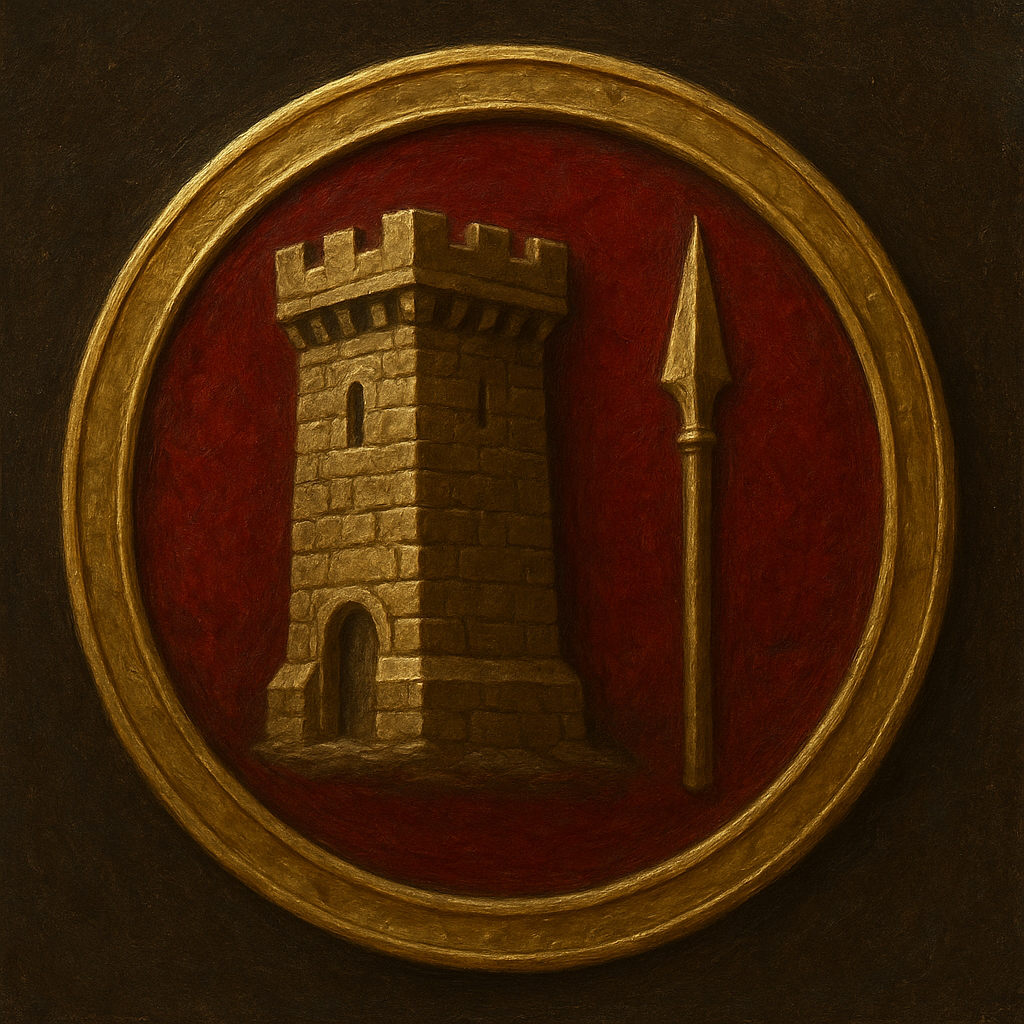
House Drusennus is one of the Imperium’s oldest martial lineages, tracing its ancestry to Gnaeus Drusennus, a senior officer of the legion Rifted into Exilum Novum eight centuries ago. While many of the original legionaries were resettled in the growing heartlands around Novaium, the Drusennus line remained in the far northern marches, where the first Imperial outposts faced relentless pressure from Warborn incursions. What began as a practical assignment soon crystallised into a defining legacy: the Drusennus would guard the Empire’s most vulnerable edge.
Over the centuries, the house earned a reputation for harsh discipline, candid speech, and unwavering loyalty. Their estates lie in a land of wind-scoured plateaus, dark forests, and fortified hamlets — a world that shapes its inhabitants into practical, hard-edged pragmatists. While they lack the wealth and polish of central patrician families, no house commands more respect among frontier garrisons. When the Empire faces danger from the north, it is the Drusennus whom commanders consult first.
The family has supplied countless wardens, scouts, and officers to the legions, often serving in postings that others quietly avoid. Their loyalty is unquestioned, but their candour often strains relations with the Senate: Drusennus representatives are known for blunt assessments of border security, a trait that has earned them equal measures of irritation and admiration within the capital.
Where Aureliata represents cultured authority and Draconis represents earned honour, the Drusennus embody endurance — a house defined not by ceremony or acclaim but by the simple, immovable promise of their ancestors: to stand where the Empire needs them most.
Culture
The culture of House Drusennus is shaped by the unforgiving land they call home. Life on the northern marches demands vigilance, communal resilience, and a stoicism that borders on asceticism. Drusennans grow up with frostbitten winters, distant war drums, and the knowledge that safety is never guaranteed. As a result, they value practicality above ornament, action above rhetoric, and endurance above comfort.
Children are raised to observe the land as much as they study history — they learn to judge weather fronts, track footprints through snow, and read the subtle signs that indicate a Warborn scouting party has passed nearby. Their games mimic patrol drills; their rites of passage test survival and composure under pressure. To a Drusennan, soft living is not merely undesirable — it is dangerous, a weakening of the instincts that keep their people alive.
Discipline is the family's defining virtue. Meals are simple, celebrations modest, and the concept of honour is tied not to glory but to reliability. A Drusennan does not promise what they cannot deliver, nor do they tolerate excuses from those who shirk duty. They speak plainly, often to the discomfort of more refined houses, but their bluntness is respected for its sincerity.
Despite their severity, the Drusennus possess strong familial warmth expressed through shared hardship rather than displays of affection. Sitting watch beside a sibling, repairing a neighbour’s palisade after a storm, or escorting travellers through dangerous passes — these acts form the emotional vocabulary of the house. They respect strength, but not bravado; loyalty, but not subservience.
Assets
House Drusennus commands modest material wealth but substantial strategic value. Their chief holdings lie in the northern frontier estates, clusters of stone-built halls, fortified farmsteads, and defensive outworks positioned along key passes and river crossings. These lands generate limited agricultural surplus due to the harsh climate, but they provide essential logistical support for Imperial patrols operating in the region.
Their most significant assets are their watch-fortresses — small, disciplined garrisons maintained in cooperation with the legions. These structures, though technically Imperial property, have been managed by Drusennus wardens for generations, giving the family an intimate knowledge of northern terrain and troop movements. Their halls also house detailed frontier maps, records of Warborn movements, and ancestral logs dating back to the Rift itself.
The family’s income derives from senatorial stipends, frontier defence allocations, and the labour of the hardy tenant communities who have lived under Drusennus protection for centuries. They maintain no mercantile enterprises and own no urban villas in Novaium; their influence is not economic but operational — the Empire depends on their vigilance.
Their greatest intangible asset is their credibility. When a Drusennus reports trouble on the border, the legions listen.
History
House Drusennus was founded in the first decades after the Rift by Gnaeus Drusennus, a centurion whose tactical acumen and calm under pressure marked him as one of the most trusted officers of the original Roman legion. During the chaotic early years of settlement, he led multiple expeditions northward to secure the Empire’s flanks and assess the threat posed by the Warborn. These missions were dangerous, often carried out with minimal support, and forged deep bonds between the officer and the lands he was tasked to tame.
When early Imperial planners sought volunteers to establish permanent outposts along the frontier, Gnaeus and his cohort stepped forward. Their service proved indispensable: they repelled raids, scouted untouched regions, and built the first defensive towers that would one day evolve into the Empire’s northern watch-forts. In recognition of this enduring commitment, the Senate formalised House Drusennus in 38 NE, granting the family hereditary stewardship over key stretches of the frontier.
Over the centuries, the Drusennus line became synonymous with northern defence. They supplied commanders during the great winter incursions of the 300s, provided scouts for operations against the Warborn grand clans, and maintained crucial communication routes even during magical disruptions following Rift cycles. Though rarely present in the politics of Novaium, they have shaped the Empire’s security more than many houses with far greater wealth.
Their relationship with the Senate has fluctuated: respected in times of war, neglected in times of peace, and often the loudest voices warning against complacency. Yet the family never wavered in its loyalty. Through blizzard, bloodshed, and political indifference, House Drusennus has remained exactly what Gnaeus intended: the shield at the Empire’s edge.
Infrastructure
The infrastructure of House Drusennus reflects its frontier purpose. Their ancestral seat, Holdfast Drusennus, is a fortified stone keep built atop a ridge overlooking one of the major northern passes. Designed originally by soldiers rather than architects, it prioritises defensibility over comfort: high curtain walls, narrow windows, layered courtyards, and a central hall used as much for council meetings as for sheltering nearby villagers during attacks.
Surrounding the holdfast are smaller outworks — palisades, watchtowers, supply depots, and signal-hearths used to relay warnings across great distances. These structures evolved piecemeal over generations, each addition responding to new threats or terrain changes. Though maintained with austere diligence, they are neither uniform nor decorative; a Drusennus structure exists to withstand weather and Warborn steel, not to impress senators.
The family also oversees several frontier roads and river crossings, ensuring they remain passable for legion patrols and trade caravans. These routes are often the first to freeze in winter or the first targeted during raids; maintaining them is a year-round labour involving entire tenant communities working under Drusennus direction.
Within their halls, artefacts of practical value far outnumber those of beauty: armour repaired across generations, tactical maps, weather logs, and an ancestral record documenting eight centuries of border vigilance. Their infrastructure is a living testament to endurance — built not to shine, but to last.

Comments