

The Feast Amiss
“Water and bread for the stranger, wine and flesh for the honored—
but woe to those who serve death at their table,
for the Prophet devours both guest and host alike.”
— Common Barish proverb
The Tale
It is said in Barasar that the Sultan’s justice is swift, but the Prophet’s justice is patient. One strikes in courts, the other in silence, waiting for sin to ripen. The story tells of a Malqir of Qathar, a desert lord grown fat with caravan gold. His daughter was promised to a rival, not for love, but to secure control of the wells that fed their caravans. The feast was set in his palace: long tables of roasted goat and lamb, saffron rice, and pyramids of figs dripping with honey. Wine was poured until the floor ran sticky with it, and slaves brought forth bowls of spiced blood as tribute to Ishmar. But the Prophet does not bless bargains struck only for greed. At the height of the feast, when the marriage was to be sanctified before the priests, a stench rolled across the hall. The meat blackened, splitting open to spill live worms onto golden plates. The figs burst with beetles, their shells clattering against stone. Guests clawed their throats, coughing up fat white grubs that writhed in their cups of wine. When the groom pulled back his bride’s veil, her face had collapsed inward, skin sloughing from bone, eyes clouded with rot. She had been dead for seven days, embalmed in perfumes and saffron to hide the truth. The guests fled, but none left the palace alive. Some say the worms ate their flesh while they still screamed. Others claim the Prophet himself drank their blood through their open mouths, feasting on the liars who dared profane his law with false unions. By dawn, the palace stood empty, its tables bare, its wells dry. The city around it withered within a season, abandoned to the desert. The palace is now nothing but sand-swallowed stone, a ruin where jackals feed and no caravan dares rest.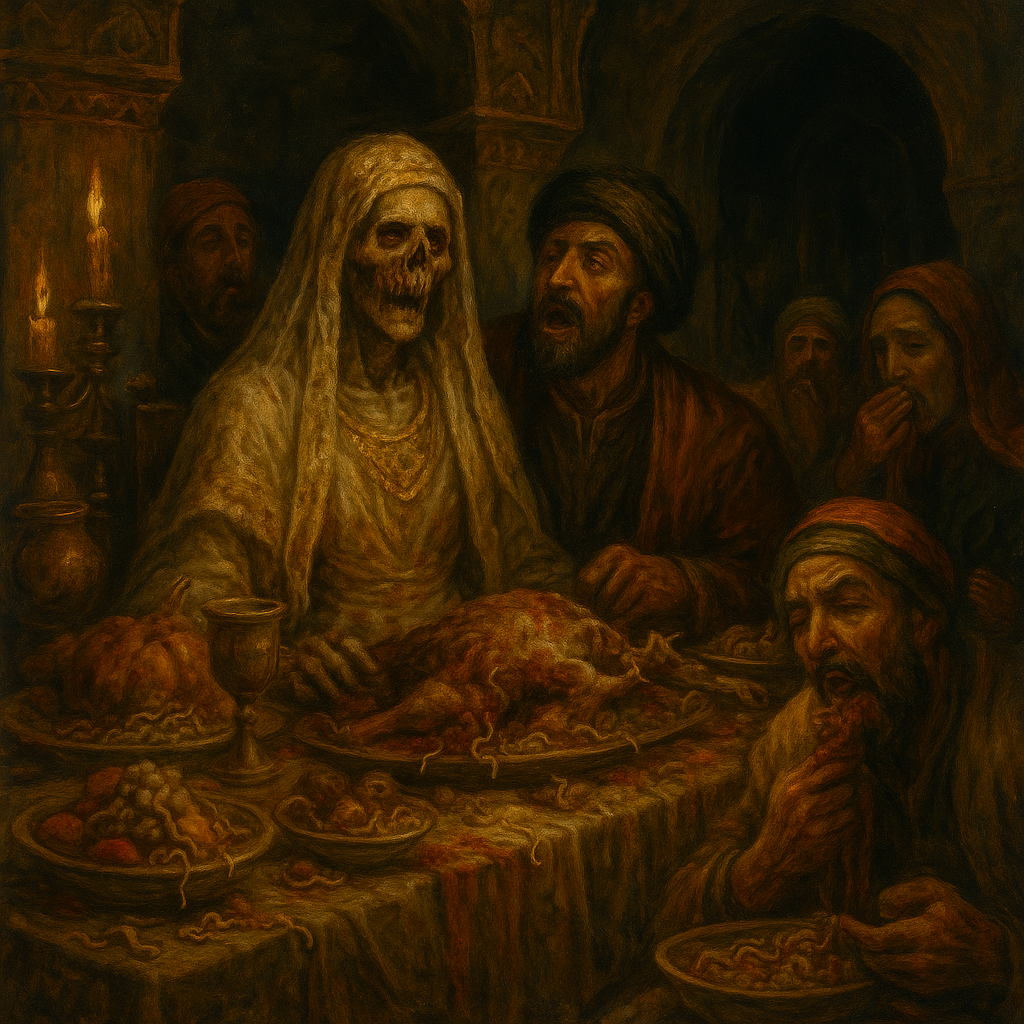

Comments