
Heroic Domains of Ysgard
Valor and bravery are the ideological pillars that support everything in the Heroic Domains of Ysgard. And how does one prove valor and bravery? Through combat, of course, or so believes the dominant powers of Ysgard, and the battlefields of the plane are thick with armies trying to prove their worth in the eyes of their godly peers.
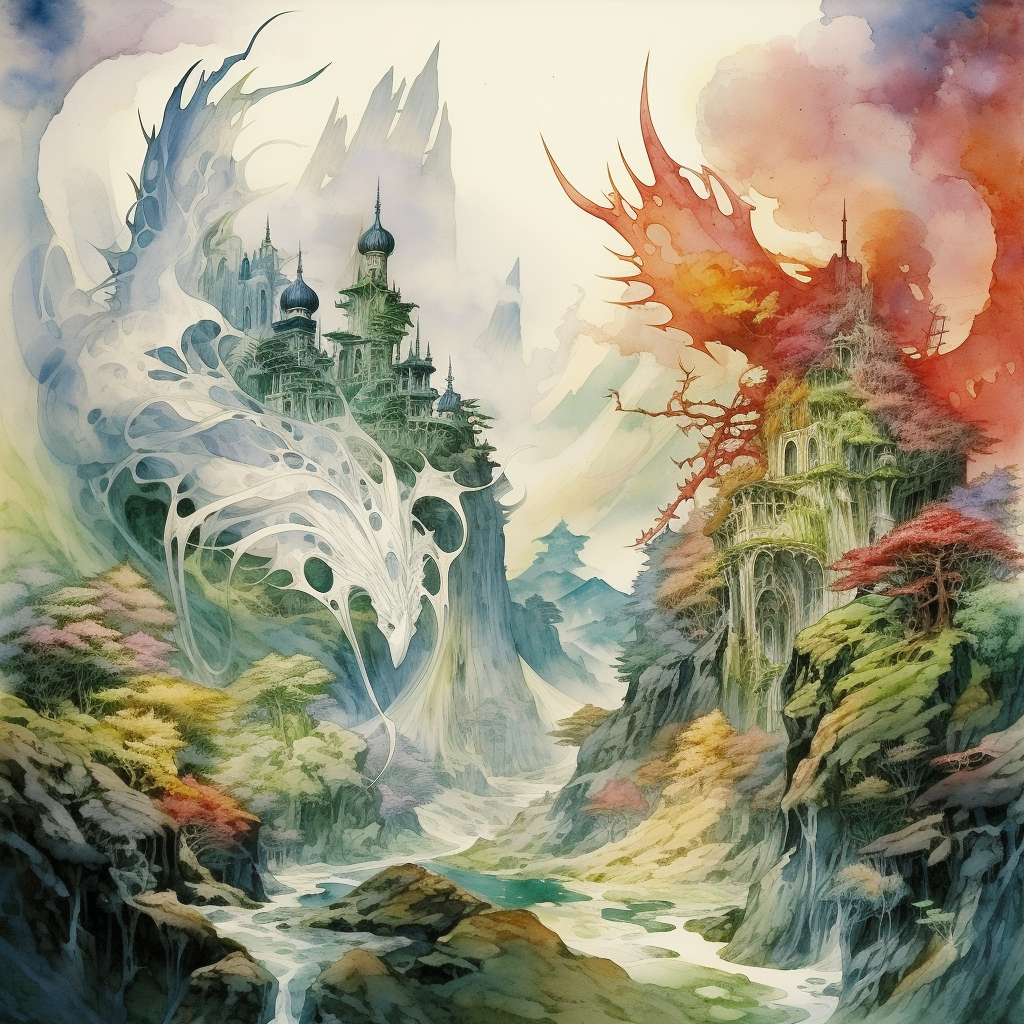
Ysgard could be easily mistaken for a Material Plane, especially the top layer, but everything is on an epic scale. Mountains soar into the veil of clouds, hiding dangerous secrets in their roots, and bitter winds blow across mighty fjords, ice plains, titanic rivers, and ancient forests. The seasons are as sharp as any blade, changing seemingly at random between scorching summers, crisp autumns, bleak winters, and flourishing springs.
The top layer shares the plane's name, and it is comprised of countless continents floating in an infinite sky. These break up the realms into grand islands, and smaller pieces known as earthbergs float and crash into one another constantly. It’s not as inherently violent as the clanging cubes of Acheron, but the movement still underscores an air of conflict that permeates the very fabric of Ysgard.
The underside of each floating island and earthberg rages with crimson fire, providing a flaming ceiling for the layer of Muspelheim. Here, refugees from the Plane of Fire mingle with the glory-obsessed natives among ribbons of earth between an infinite inferno sea. Sharp volcanic rocks jut from the land at irregular intervals, occasionally moving among the lava floes, and everywhere is baked by an excessive heat not unlike the Plane of Fire. Below Muspelheim, the layer of Nidavellir sits in an infinite underground expanse with broad caves and tunnels crisscrossing the length.
Ysgard is the home of heroes and villains on a grand scale, and the native celestial creatures meet that scale. These celestials are known as jotuns, and they resemble giants, slightly smaller in stature; they embody the virtues and vices of Ysgard. Many are good-natured warriors, but some are black-hearted creatures who delight in destruction, mischief, and mayhem.
The floating earthbergs of the first layer are home to a wide variety of warriors, many of whom died glorious or valorous deaths across the planes and have come to Ysgard as their final reward. The most numerous residents are the vanir, who have built a strong warrior culture, honoring a legion of powers known as the Aesir. The Aesir are mighty but supremely petty gods that include Odin, Frigg, Thor, and Balder. They meddle constantly in the affairs of the Vanir and wage wars with one another to prove their strength over all others.
Elves can be found in Ysgard, living in a wild enchanted forest known as Alfheim, and dwarves and gnomes dwell in the depths of Nidavellir. The cavernous lowest layer of the plane also holds duergar and drow, beings normally associated with evil purposes, but in Nidavellir, they mostly want to be left alone. Rarely they organize raids on neighboring kingdoms, but for the most part, the peace of solitude and isolation reigns in the lowest layer.
Most residents of Ysgard skew towards good alignments, but they have a ritualistic fascination with battle, war, and conflict. They must prove themselves, whether to the Aesir or other powers, and to be found worthy on the field of battle is the greatest honor. Wars rage between large clans regularly, and they also have the formidable monsters that dwell in the wilderness to deal with. A rampaging hildisvini, or battle swine, can decimate a clan hall if left unchecked, but to kill one is not an evil act – it is a triumph of personal glory over the dangers of the wilderness.
Ysgard is a dangerous place for the unprepared. Still, for those willing to stand up in combat, whether against a foe in a practice ring or against a horde of gibbering trolls, glory can be found along with the rich rewards of personal honor and bravery before incalculable odds. Death is rarely the end of a person’s journey in Ysgard, thus creating a never-ending cycle of birth, valor, death, and rebirth that fuels the plane and keeps the residents moving.
Getting There
Spontaneous gates frequently appear across the multiverse, leading to Ysgard in places of great military conflicts. The crescendo clashing of mighty armies on a sunbaked field can suddenly throw warriors from all sides tumbling to a similar field on Ysgard, and these temporary gates usually only last a brief moment. Particularly impactful battlefields, the ones that saw the death of a great hero or the triumph of lesser forces over a mighty foe, can sometimes create permanent portals as well, and these are frequently accessed by personal items of soldiers who participated in those momentous battles.
Ysgard is also the home of Yggdrasil the World Tree, an enormous ash tree whose roots spread out from a hidden earthbag across the multiverse itself. The roots form tunnels that pass through the planar borders, finding exit points in many Upper and Material Planes. Usually, these appear in a cavernous opening below a particularly ancient ash tree, accessible only by speaking the name Yggdrasil in the Celestial language.
Yggdrasil’s main root complexes spread between the three layers of Ysgard and also connect to Pandemonium, where many of the jotuns spend a great deal of time, especially the laughing jotuns who keep their secrets far from the prying eyes of the Aesir.
Traveling Around
The difficulties in traveling around Ysgard are entirely dependent upon which layer is being traversed and how familiar the traveler is with the secret functions of the plane. On the top layer, movement on an individual earthberg is unimpeded, but to travel between them requires flight of some kind, or passage on one of the sky viking longships and other vessels that ply the skies.
Far below the earthbergs of Ysgard sits the fiery landscape of Muspelheim, a simple enough, if dangerous, journey of simply going down for several miles. The lava flows between the earth ribbons that wind through the molten realms.
The tunnels of Nidavellir seem the safest, but these tend to expand and contract like the veins of a great living organism. The earth in this layer acts more like a sea of stone, usually still but occasionally rocked by a wave that pushes, pulls, collapses, and expands tunnels in its wake. The dwarves, drow, and other residents magically protect their realms from the worst of the shifts, but creatures and travelers out in the wilds of Nidavellir had best be cautious.
Lay of the Land
Ysgard is a plane larger than life, and the landscape reflects that. Everything is bigger and grander across the layers, from the majestic mountains and chilly glaciers atop floating continents to the raging sea of fire topped with obsidian shards to the isolated underground tunnels and caverns filled with mystery and danger. Visitors are often caught off guard by the sheer scope of Ysgard, and it can be incredibly daunting for the unprepared.
Ysgard
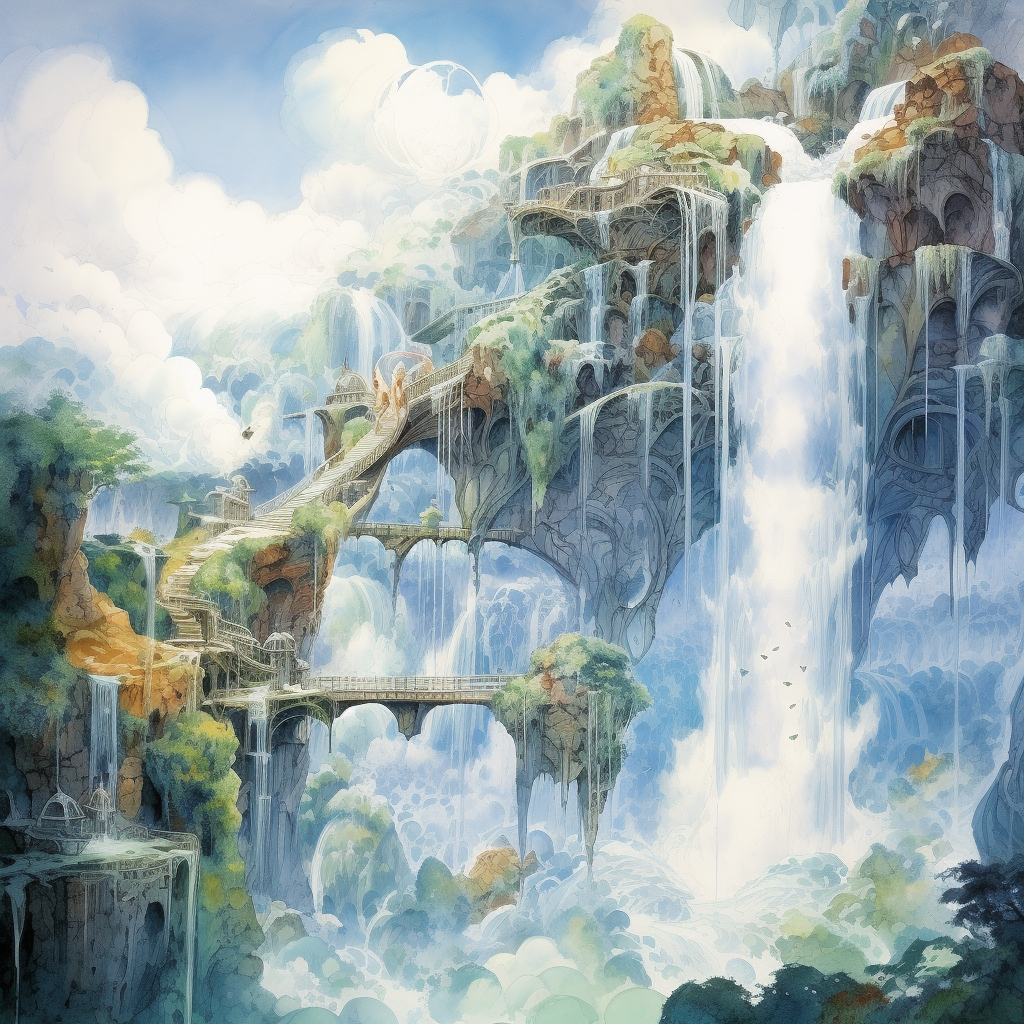
The top layer shares its name with the plane itself and contains most of the heroic domains Ysgard is known for. The domains here are titanic earthbergs floating amidst clouds and brilliant skies, each topped with grand scenery that is both breathtakingly beautiful and starkly dangerous. Forests, mountains, swamps, and more can be found here, but there always seems to be something of grand importance about each one. A range of mountains may have been carved from the sword of an Aesir-born hero, while a forest holds a tree that has stood untouched for thousands of years.
Navigating around the earthbergs of Ysgard can be tricky. One clan of warriors is known as the Sky Vikings, and they build great longships capable of soaring on the winds. Other clans simply wait for an earthberg to collide and then join in battle against whomever is on the other side. The spirits of the honored dead, einherjar, are capable of carrying a large number of warriors across the sky as well.
Yggdrasil the World Tree
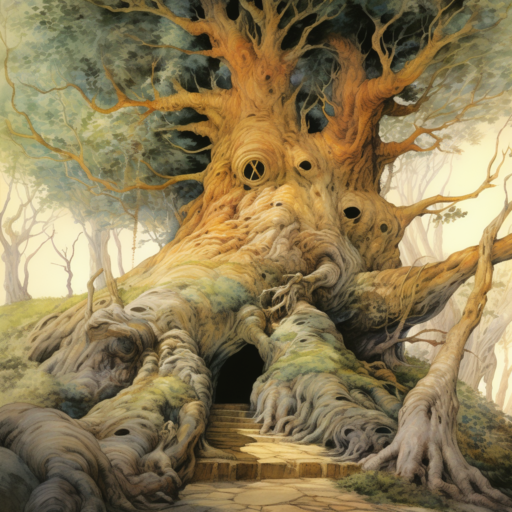
On a remote earthberg floating in the sky of Ysgard sits a singularly unique feature in all of the multiverse. Yggdrasil, known as the World Tree, is a monstrously huge oak tree whose branches reach into a thickly clouded ceiling beyond which the vast distances of Ysgard shrink and rearrange to suit the twisting branches’ paths. Each branch ends up on a different earthberg, usually in a forest with a thick cloud constantly hanging overhead, allowing for quick travel throughout Ysgard.
The branches are only part of the strange wonder of Yggdrasil. Below ground, the roots are wide and unusually hollow. Through these natural tunnels, a traveler can travel to other earthbergs, Muspelheim, Nidavellir, and even beyond the planar boundaries of Ysgard. Some of the roots extend into Hades and Pandemonium, and some go even further than that, creating a confusing maze of interplanar pathways hidden from most eyes.
Unfortunately, both the branches and roots of Yggdrasil are confounding to navigate. Travelers wishing to traverse them safely are advised to look for the dryads of the World Tree, who can offer aid and guidance in exchange for small trinkets or favors. Dark things dwell in Yggdrasil as well, such as evil blights twisted by a nearness to a negative energy well, along with darker and more foul beasts. But for those in a hurry and without other means of planar transportation, Yggdrasil offers an option that is better than none.
Muspelheim
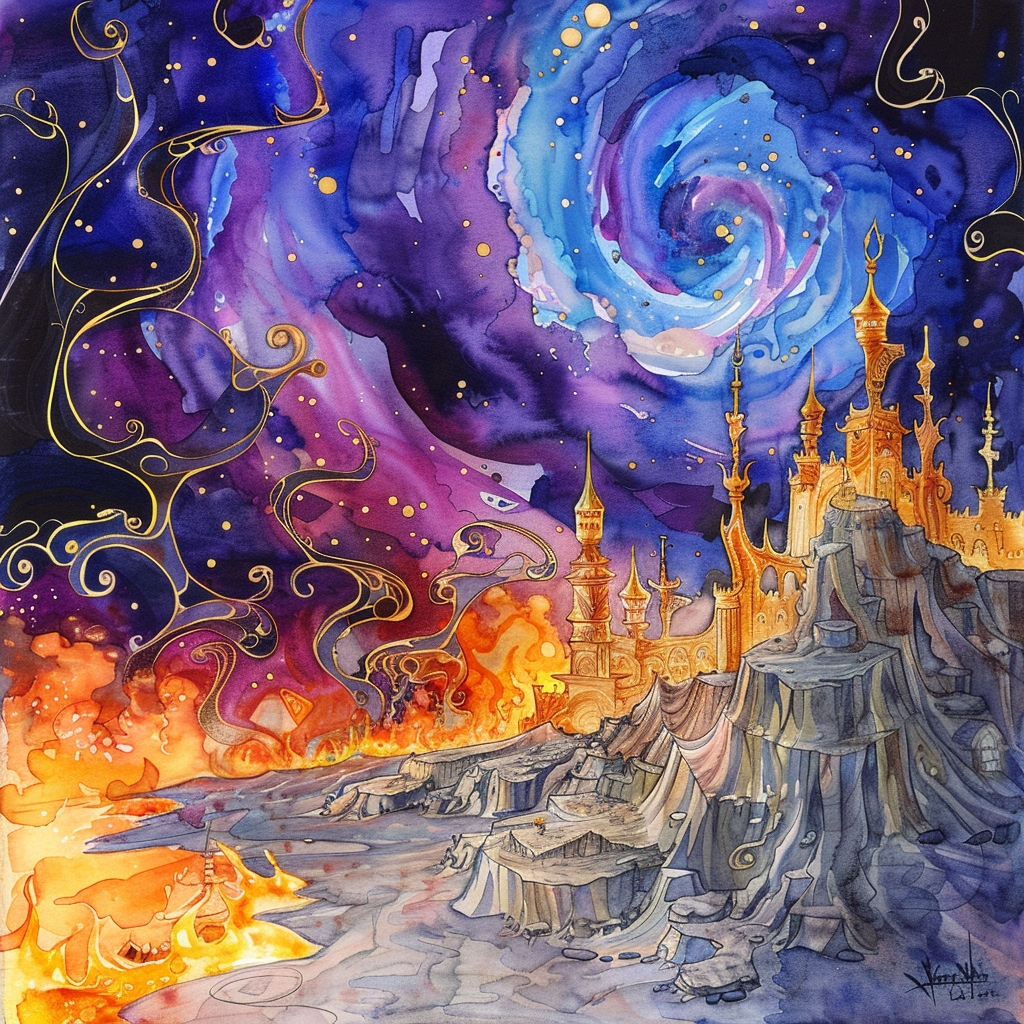
The bottom side of each Ysgardian earthberg is a crimson field of spouting flames. This provides the ceiling to Muspelheim, the realm below the earthbergs, and it shares many traits with the Plane of Fire. Ribbons of earth run through an infinite sea of moving, shifting lava, and titanic shards of obsidian rise up regularly to pierce the reddened sky. Fire giants, smoldering jotun, and numerous creatures of fire and brimstone occupy Muspelheim, and while it is largely inhospitable, it isn’t necessarily evil.
Many jotuns maintain enormous forges in Muspelheim using ore mined from the floating earthbergs or dug up from Nidavellir below. The largest of these is the massive complex called the Brimstone Forge, where jotuns of all kinds come to craft mighty weapons and armor.
Nidavellir
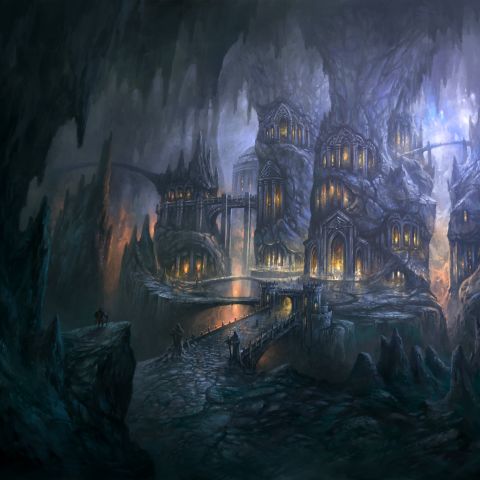
Nidavellir is a dark, cavernous realm below the burning landscape of Muspelheim. It is a vast ocean of stone, and like an ocean, waves rise up and down, shifting the landscape. Countless tunnels cut through the earthen sea of Nidavellir, serving as roads between the isolated homes of dwarves, gnomes, drow, duergar, and other underground creatures. Exiled forlorn jotun wander the tunnels as well, angry and alone.
One of the great themes of Nidavellir is self-sufficiency. The residents pride themselves on never asking for help from outsiders, though that doesn’t mean they don’t need it from time to time. Possessing stubborn pride is a point of honor for the natives, and even if they do accept help, they offer little in terms of rewards or congratulations.

Comments