
Whistler
Basic Information
Anatomy
These avian creatures have a squat muscular frame with a pair of feathered wings, hook clawed talons, and a single prominent beak
Genetics and Reproduction
These avians are oviparous. Laying eggs in clutches averaging around 10
Ecology and Habitats
These cavern-dwelling avians use their acute psychic sense to become deadly ambush predators in the caverns of Lavitica. They are nicknamed "Whistlers" by those who hear the sound they make as they charge through the air at their targets. They first try to stun the target with a close-fisted talon to the skull, then strike with their strong beak to subdue the target.
Dietary Needs and Habits
Whistlers are omnivorous but prefer meat. They often target small game and aquatic creatures found in caves.
Behaviour
This predatory species prefers living in caves and closed spaces. Their psychic sight is overwhelmed without such enclosures, causing them to fear the outdoors.
Additional Information
Perception and Sensory Capabilities
These avians use a psychic sense that allows them to detect the environment around them and sense living creatures within. They have no visual perception, and also lack the ability to taste or hear. They do have a basic sense of touch.
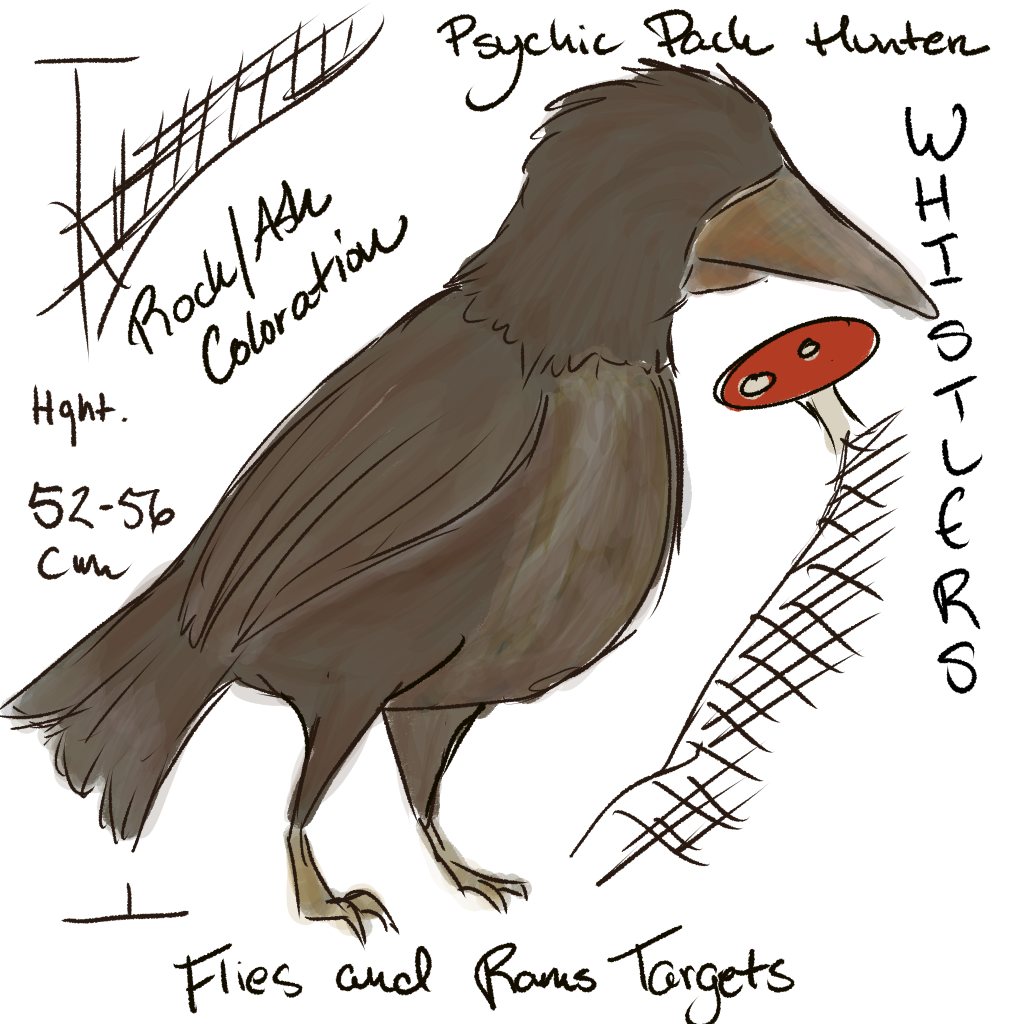
by Sheckles
Average Height
54 cm
Body Tint, Colouring and Marking
Coloration is typically characterized by mottled grays and browns on the feathers. The feet and beak of the creature tend to exhibit a slightly more ivory tint.
Geographic Distribution
Comments