

Slaventa Bulb
The Slaventa Bulb is a beautiful and distinctive flowering plant, easily recognized by its silver petals marked with yellow speckles and its brilliant yellow central bulb. Highly sought after by healers, apothecaries, and adventurers alike, the plant is prized for the restorative sap it produces.
Slaventa Sap is widely used in basic bandages, wound treatments, and healing potions, valued for its ability to accelerate natural healing. While the sap is effective in its raw form, its restorative properties are greatly enhanced when properly refined and combined with specific ingredients.
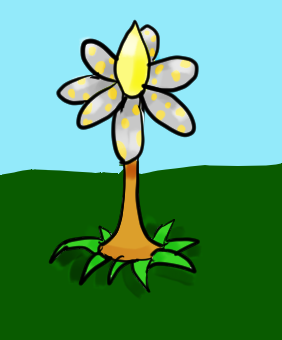
by Valcin (Marc Zipper)
Basic Information
Anatomy
It has strong roots that anchor it deep into the soil, feeding a rigid tan stem. From this stem blooms a crown of silver petals marked with soft yellow speckles. At the flower’s center rests a large, brilliant yellow bud that glows with quiet vitality.
Biological Traits
Slaventa Sap possesses restorative properties that aid in healing and closing small wounds. It can also store restorative energy, becoming more potent over time. In addition, this coating protects the seeds and provides them with nourishment during the long winter months, sustaining them until conditions are right for growth.
Genetics and Reproduction
Inside the bulb, alongside the sap, are numerous seeds. When the bulb grows too full, it releases them, allowing the wind to carry them away. Wherever a seed comes to rest, it burrows into the soil and begins the slow process of growing into a new Slaventa Bulb.
Growth Rate & Stages
Beginning as a seed, the plant remains dormant through the colder months. Once exposed to sufficient heat and light, it awakens and takes approximately 8 to 12 weeks to sprout and fully bloom.
After blooming, the central bud continues to grow over the next 4 weeks, gradually filling with sap. When the bud becomes saturated, it releases its stored seeds, which are carried away by the wind to spread the Slaventa Bulb.
Following seed dispersal, the flower continues to live for an additional 8 weeks before withering.
Ecology and Habitats
They are most commonly found in grasslands and open plains, though they can also grow in forest clearings and, more rarely, in deserts. In truth, they can thrive in nearly any region that provides rich nourishment and abundant light. As a result, Slaventa Bulbs are found across much of the world.
Additional Information
Uses, Products & Exploitation
Harvesting Slaventa Sap:
The optimal time to harvest Slaventa Sap is just before the plant releases its seeds. The entire flower should be collected, as harvesting only the bulb causes the sap to leak, rapidly diminishing its potency and strength. If the seeds have already been dispersed, the plant retains significantly less sap and much of its restorative potency is lost.Uses:
Slaventa Sap is commonly used in the creation of healing potions and various healing salves designed to mend small wounds. It may also be used as a spell component for healing magic; while not as potent as rarer components, it remains a reliable and widely available option.
Lifespan
4 Months
Average Height
1.5 foot
Body Tint, Colouring and Marking
Yellow spotted silver petals bright yellow bulb

Comments