




Scáil (SKAWL)
The Veil
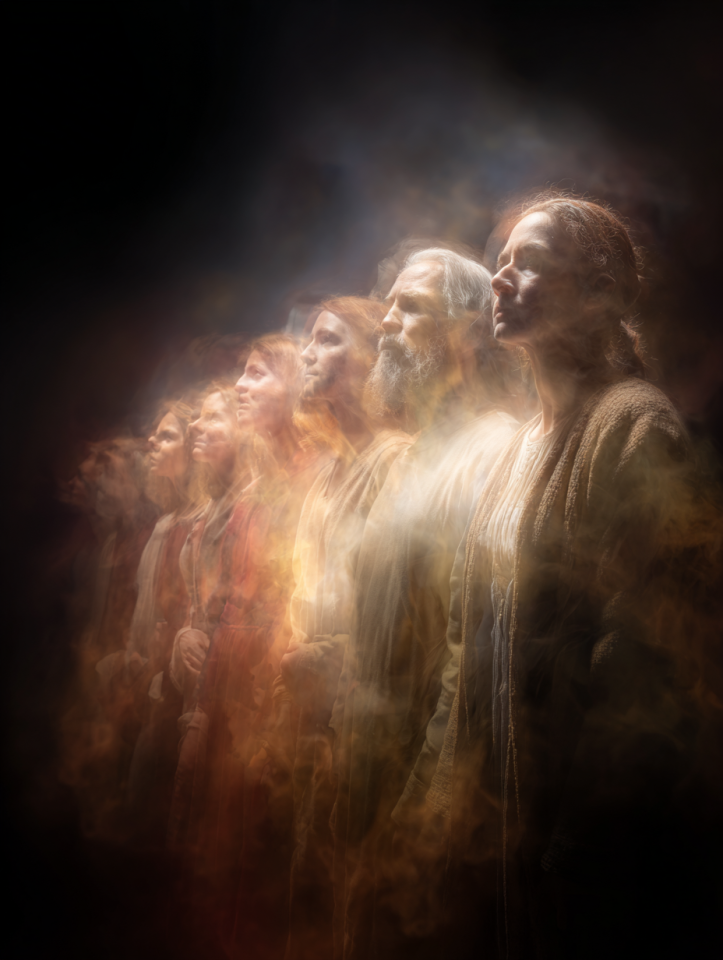
Known as Scáil in the sacred lexicon of Tir na nÓg, the Veil is not a wall nor a barrier, but a membrane of transition—the space-between-spaces through which realms shift and layers of being overlap. It is not seen so much as felt: a sudden hush, a shimmer in air, a moment of misalignment where time seems to stagger. Scáil holds no fixed location; it is a phenomenon of proximity, arising wherever borders grow thin—between sleep and waking, life and death, silence and song. It is not passive. It breathes.
In metaphysical theory, Scáil functions as a dynamic boundary. Unlike a threshold, which may be crossed with intent, the Veil responds to states of awareness. One does not open it—it thins. When emotion, ritual, or environment reaches a point of attunement, the Veil adjusts accordingly. It may part slightly to allow passage or thicken to protect. There are no doors within it, no permanent rifts—only tides of permeability. Those with heightened perception may feel the tug of it, like the tension between one breath and the next.
While Scáil often marks the boundary between the Mortal Realm and the deeper frequencies of existence, it is not a dividing line between good and evil, physical and spiritual, or known and unknown. Rather, it is the field of relational resonance—the space in which realities acknowledge one another. Spirits do not reside behind it. Beings do not hide within it. Instead, Scáil is what allows both presence and distance to coexist without contradiction. It is the mechanism of coexistence, not separation.
In Tir na nÓg, Scáil is respected as a sacred ecology. Sites where it is especially active are not exploited, but tended—quiet groves, standing stones, abandoned stairways. To dwell too long near it without purpose is considered a kind of overexposure, not because of danger, but because it can unmoor the sense of here-ness. Lorekeepers note that Scáil holds memory differently than time does—echoes accumulate in its fabric, gently shaping how it behaves. In this way, the Veil is both threshold and archive, both the hush and the answer whispered through it.
Scáil (The Veil)
| OBSERVATION |
|---|
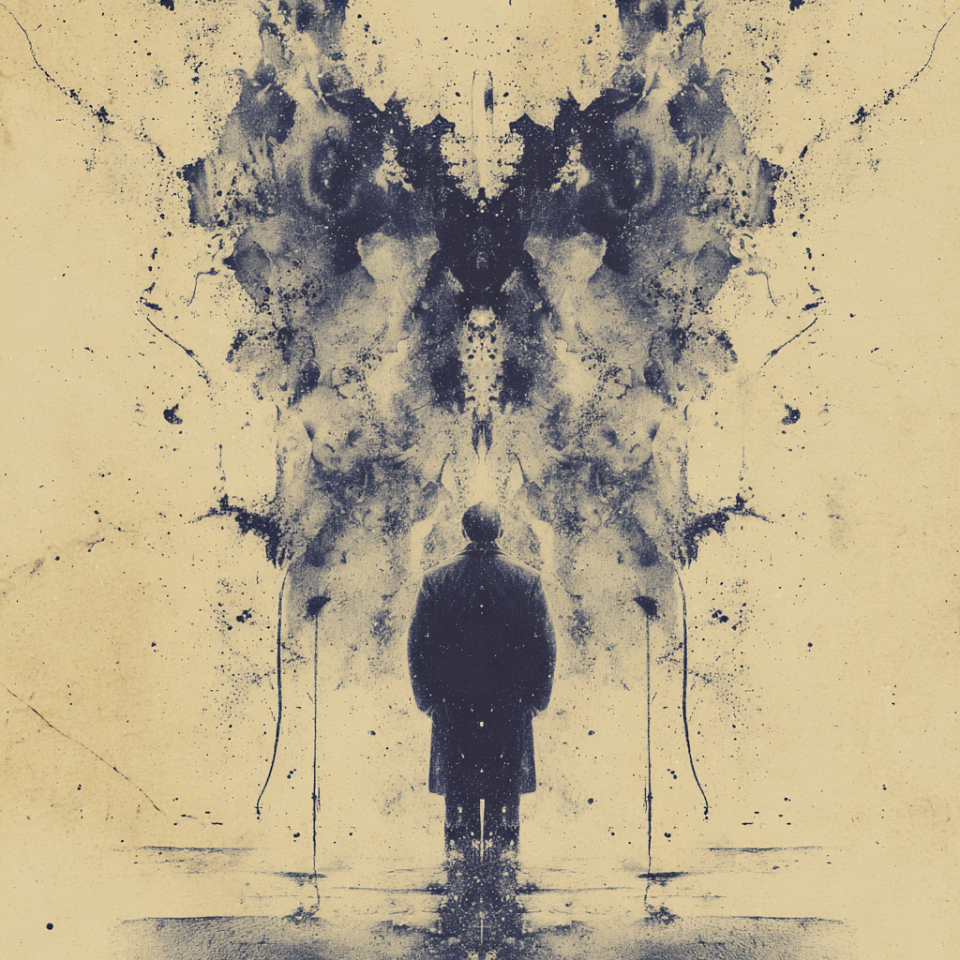
| Scáil is observed as a condition of altered proximity where distinctions between states become less defined. It is consistently reported as a shift in perception—silence intensifying, air seeming heavier, or temporal continuity appearing to falter. These observations occur most often in transitional contexts such as waking, dying, or shifting environmental boundaries, suggesting that Scáil emerges in correlation with points of overlap rather than fixed locations. Applied in practice, Scáil is engaged through ritual, heightened emotion, or environments that encourage concentrated attention. Groves, stone structures, or abandoned passageways are frequently identified as sites where its presence is most noticeable. Structured practices involving quiet, repetition, or symbolic movement are used to register its thinning or thickening, though no direct control is observed. Its activity appears dependent on contextual alignment rather than deliberate manipulation. From these observations, it is assumed that Scáil functions as a dynamic field mediating coexistence between otherwise distinct conditions. It neither separates nor merges entirely, but maintains adjustable permeability. The prevailing inference is that Scáil provides a stabilizing framework for interaction between realms or states of being, ensuring that overlap occurs in measured degrees rather than uncontrolled collapse. |
Scientific Name
Miotasach;



