Onatar
Onatar, Sovereign of Fire and Forge, steady my hands and sharpen my mind, that I may shape what is raw into something worthy.
Onatar is the Sovereign of Fire and Forge, the one who stands beside every anvil, every workbench, every careful hand that turns raw material into something useful. He guides mundane smiths and inspired artificers alike, and in a world built on craft and arcane industry, his influence is everywhere. If you have ever trusted a blade, relied on a tool, or watched an invention work on the second try and called it a miracle, you have brushed against Onatar’s domain.
What Onatar Represents
Onatar represents creation through effort. Fire as warmth and as transformation. The forge as a place where mistakes are burned away and what remains is stronger. He is the Sovereign of tools and weapons, but more broadly he is the Sovereign of making, of improvement, of the stubborn belief that tomorrow’s work can be better than today’s.
To the faithful, Onatar is not simply “craft.” He is ingenuity and iteration, the slow climb from crude stone to fine steel to wonders that blur the line between mundane and magical.
Worshipers and Everyday Devotion
Onatar is revered by smiths, craftsmen, artificers, dwarves, and even a small proportion of warforged who feel a kinship with the concept of being made and remade. Wizards and psions with strong ties to fire also honor him, treating flame as both elemental force and sacred tool.
Many Vassals who do not consider themselves artisans still nod to Onatar in daily habits. A touch to a hammer before a hard job. A murmured thanks when a repaired hinge finally stops squealing. An offering in a workshop when a new apprentice begins, because everyone remembers being terrible at something once.
Legends and Gifts to Mortals
Vassal legend credits Onatar with introducing tools and weapons to the mortal races and urging them to refine what they were given. Another tale says he gave fire to mortals so they could survive cold winters, which is either a heartwarming myth about divine generosity or a reminder that before fire, winter was not “cozy,” it was “fatal.”
These stories all carry the same lesson: civilization is built, not granted. Onatar provides the spark, but mortals must do the work.
Divine Relations
Onatar is traditionally described as the husband of Olladra, Sovereign of Feast and Fortune. Together they represent a very practical pairing: craft and chance, labor and luck, the work that fills the pantry and the fortune that decides whether the pantry stays full.
They are said to be the parents of Kol Korran, Sovereign of World and Wealth, and the Keeper of the Dark Six. It is an uncomfortable family tree, but it fits the world. Creation and fortune can produce prosperity, and they can also produce hunger for more than anyone should have.
Iconography and Forms
Onatar is most often portrayed as a dwarven smith, broad shouldered and soot streaked, the ideal craftsperson made divine. Less commonly he is depicted as a brass dragon, a living furnace of intellect and heat, perched in judgment over the work of lesser hands.
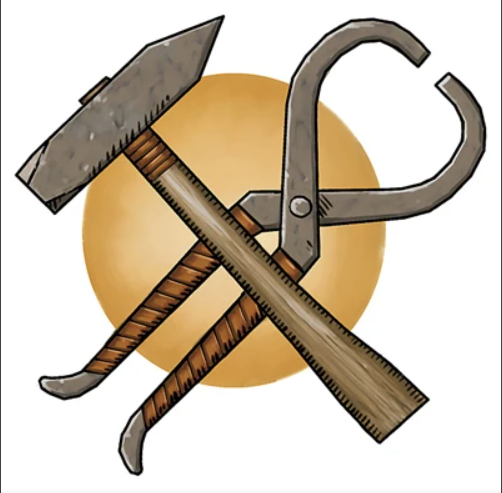
His symbols are the obvious ones: an anvil, hammer, tongs, flame, or a stylized forge. In some places, the “symbol” is simply a well kept tool that has been passed down, because reverence and maintenance look suspiciously similar.