Arawai
Arawai, Sovereign of Life and Love, bless our fields and our hearts, and let your gentle rain fall where it is needed most.
Arawai is the Sovereign of Life and Love, and if you have ever eaten food, enjoyed a warm breeze, or watched a storm politely choose another coastline, you have benefited from her work. Vassals call her the gentle face of nature: fertility, growth, good weather, and the quiet abundance that keeps a community alive. Farmers revere her openly, rangers and druids respect her as the breath in the living world, and sailors offer her prayers because a calm sea is not something you should take for granted.
What Arawai Represents
Arawai is not just “the harvest goddess” in the way a child labels jars in a pantry. She is life that multiplies and love that binds, the promise that the planted seed becomes something more. In the everyday, her blessings look like steady rain, full orchards, healthy births, and the kind of seasonal rhythm that lets people plan for tomorrow without feeling foolish.
In the theology of the Host, her portfolio sits firmly on the side of benevolence. Nature has plenty of moods, but Arawai is the one you thank when it is kind.
Worshipers and Everyday Devotion
Arawai’s worship is practical and constant. Farmers and herders offer prayers at planting and harvest. Midwives and families invoke her when new life is near. Rangers and druids honor her when they ask the wild to provide rather than punish. Sailors whisper to her when the sky darkens, because there is a fine line between “bracing weather” and “the sea trying to kill you.”
Even people who do not consider themselves devout often nod to Arawai in small ways, because gratitude is easy when your pantry is full.
Divine Family and Vassal Myths
The Host loves its family trees almost as much as it loves its hymns, and Arawai’s stories are tangled like roots.
She is said to be the sister of Balinor and the Devourer. In some traditions, she is also the mother of the Fury, with grim tales claiming the Fury was born from Arawai after an assault by the Devourer. These stories are not gentle, and they are not meant to be. They are theological explanations for why the world can produce both beauty and brutality from the same soil.
Different temples tell these myths differently. Some speak plainly. Others wrap the truth in metaphor. Either way, the point is consistent: life and love exist in a world where destruction and rage are always close by.
Iconography and Forms
Arawai’s appearance is famously inconsistent, which is exactly what you would expect from a faith that believes the gods are principles first and people-shaped second. She is commonly depicted as human, half-elf, or halfling, depending on the culture and the artist. Some traditions have portrayed her as a bronze dragon, because sometimes the faithful see divinity most clearly when it has wings and a shadow big enough to cover a field.
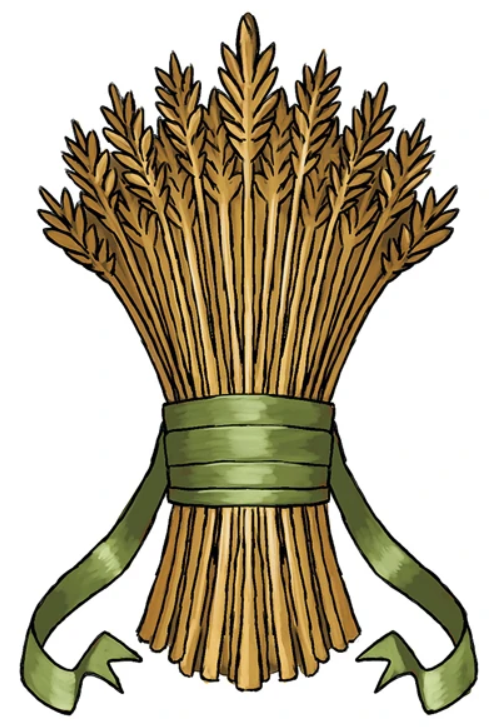
The safest way to recognize Arawai in art is not her face, but her presence: grain, blossoms, gentle rain, fruit heavy on the branch, and the sense that the world is growing in your hands instead of slipping away.