

Step 2: Harvesting Components
Characters may harvest and preserve Components from the corpse of a slain creature using monster harvesting tools. Alternatively, characters can extract the animus from a dead foe using an animus extraction kit provided they have a suitable vessel.
Harvesting monster components or extracting its animus must begin within ten minutes of the creature’s death. After this time, the magical energy within the parts fade and the animus passes to the ether. After this time, any remaining Components from a monster’s corpse are no longer usable for creating magic items.
No ability checks are required to successfully harvest monsters or extract an animus. As long as a character has the time, tools, and proficiency, they always successfully collect one monster Component from a creature’s corpse.
The toolkit provides everything a character needs to extract and preserve parts from any creature.
Monster Harvesting Tools. This kit contains skinning knives, a cleaver, syringes, a hammer, scissors, scalpels, a bone saw, hooks, as well as a collection of vials, vessels, watertight containers, and wrappings.
Monster Components
When the characters decide to harvest a monster’s corpse, the Game Master determines which Components can be harvested from a monster, if any. In this book, each monster entry lists the Components available from that creature, and you can find supplemental downloads listing suggested Components for the monsters in the Fifth Edition Core Rules online.
Component Rarity
The rarity of all parts are determined by the CR of the monster as presented by the table earlier in this chapter.
Component Categories
- Each Component belongs to one of the following categories:
- Animus. This special Component is described below.
- Bones. This includes the skull, spine, or the stem of a plant monster.
- Dust. Detritus left behind by magical creatures or undead.
- Fluid. Most often monster blood, as well as ectoplasm, sap, or mucus.
- Hair. Any fur or feathers.
- Hide. Includes the monster’s skin, scales, carapace, bark, or plates.
- Natural Weapons. Almost any natural weapon from the monster’s game statistics, such as teeth, claws, horns, tentacles, etc.
- Organs. A broad category which includes both internal body parts and sensory organs, such as the heart, brain, glands, eyes, or gut.
Magical Animus
In the world of Drakkenheim, magic items are created by imbuing a physical object with a metaphysical animus. This vital energy must be properly extracted from a magical creature. A creature’s animus is formed from the latent magical energy held within its body, but it is distinct from a creature’s soul.
Aberrations, Celestials, Constructs, Dragons, Elementals, Fey, Fiends, Giants, Monstrosities, Plants, Oozes, and Undead all possess a magical animus. Beasts and Humanoids typically do not possess an animus.
When a creature is slain, its animus lingers momentarily before fading into the ether. However, a creature’s animus can be collected and contained within a vessel of some kind, which is then used to make a magical item. It is impossible to extract the animus of a creature without killing it.
Creating magic items requires the animus of one or more suitably powerful creatures. However, some magic items may call for a specific type of animus, such as the animus of a fey creature or dragon. In rare cases, a magic item may require the animus of a much more specific monster.
Animus Vessels. An animus must be collected and stored in a specially prepared magical vessel. Traditionally, these vessels were minor magic items in their own right: often rune-etched gemstones infused with magic and created in a laborious process. However, the world of Drakkenheim was transformed by the arrival of delerium: the eldritch crystals function as suitable vessels in their raw state. A delerium crystal filled with magical animus glows with a brilliant octarine light, similar to how the crystals resonate with energy when exposed to magic.
Harvest and Extraction Time
Once started, collecting Components or animus takes ten minutes of diligent work. During this time, the character must remain within 5 feet of the corpse. If the process is interrupted, the harvesting must resume within ten minutes, or the Com ponents are lost. A player character may only harvest Components from one creature at a time, regardless of its size. Several characters can work together to harvest multiple parts from the same corpse. No matter how many characters harvest a single corpse, they must all spend ten minutes harvesting.
Collector’s Choice
Each character may harvest one component from a creature’s corpse per encounter.
Characters can work together to harvest several different parts from one monster, or they may split up and harvest parts from several different creatures at once. A monster’s body usually provides only one of each available part, so two characters harvesting parts from the same corpse must choose to collect different parts, unless the Game Master determines that the unique physiology of the creature allows for multiples of the same part to be collected. For example, a Game Master might allow both horns from a Minotaur to be harvested, but it would take the work of two characters to collect both. Other parts may be more abstract in quantity: it’s enough to know that the characters collected a bag of dragon fangs or a vial of troll blood without worrying about a specific measurement.
When the player characters decide to butcher a carcass for Components, the Game Master lists all the possible Components available from the body. Each character may then choose one Component to collect. All other Components are lost and unusable, either because they were damaged in battle, ruined in the harvesting process, or deemed of unsuitable quality for magic item crafting.
Example Harvesting
For example, suppose the player characters defeat a Gorgon. They decide to harvest parts from its corpse. The Game Master describes that the Gorgon has the following Rare Components: eyes (organ), a skull (bones), monster blood (fluid), plates (hide), horns (natural weapon), glands (organs), and its animus. There are three player characters, and all work together to harvest parts from the Gorgon. Sebastian decides to collect the Gorgon’s Animus, Pluto decides to take the Gorgon’s plates, and Veo decides to take the Gorgon’s monster blood. All the other parts are lost. In another case, suppose four player characters defeat a small horde of ten Ratling Warriors. The party would only be able to collect parts from four of them. The parts from the other monsters are lost.
Keeping Records
When recording what monster parts the player characters have collected, it’s important to note to identify the Component’s name category, as well as the name, creature type, and rarity of the creature. For example, a character might record the following Components:
- Minotaur, horns (natural weapon). Uncommon Monstrosity.
- Vampire, undead dust (dust). Rare Undead.
- Troll, skin (hide). Uncommon Giant.
- Adult Red Dragon, monster blood (fluid). Legendary Dragon.
Recording how many bones characters collect from a slain red dragon, or how many vials of blood characters drain from the corpse of a dead troll, isn’t necessary. Regardless of a creature’s actual size or dimensions, a character harvests enough material from its corpse to fulfill the ingredients required for a single magic item. Simply recording “Red Dragon monster blood” or “Troll hide” is sufficient. If characters collect the blood or hide from multiple dragons or trolls, simply record “3x Red Dragon blood” or “3x Troll’s hide.”
Component Weight. In general, most Components weigh no more than 1 pound each. When tracking the weight of individual Components, consider the final weight of the constructed item it will be used to create. Most weapons, wondrous items, and consumables weigh between 1 and 5 pounds, so most Components should fall within this range. The Game Master may determine that certain Components intended for use in medium or heavy armor (or other bulky items) weigh substantially more. For ex ample, dragon scales or gorgon plates collected for use in scale or plate armor could weigh as much as 50 pounds
Buying and Selling Components
Talented arcanists, artificers, craftspeople, and forgesmiths alike frequently eschew the adventuring life, preferring to commission adventurers to procure rare Components for magic item crafting on their behalf.
Buying and selling Components is an optional downtime activity characters can engage in between their adventures.
Most often, those purchasing Components are looking for a specific Component or two, and seek the services of dedicated monster hunters to retrieve their materials. Even the industrious Amethyst Academy rarely makes an unsolicited purchase, and the mages are seldom willing to purchase anything presented to them.
Typically, finding a seller or buyer for a monster Component takes a number of days equal to the Challenge Rating of the monster.
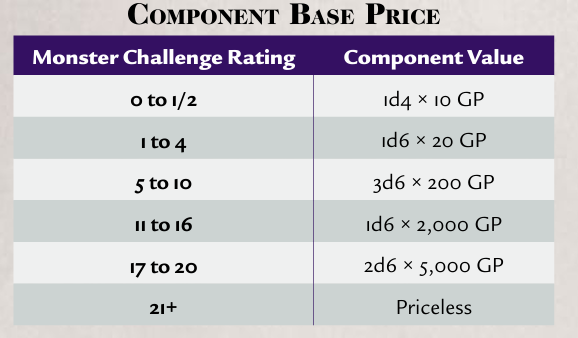
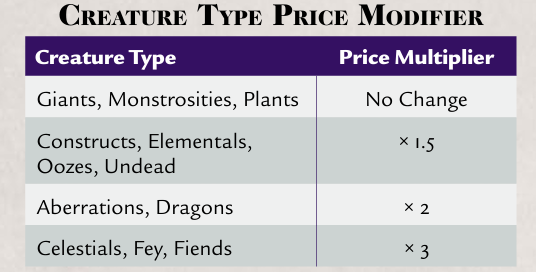
Additionally, some creature types are more difficult to find than others, resulting in an increase in component prices as follows:

Comments